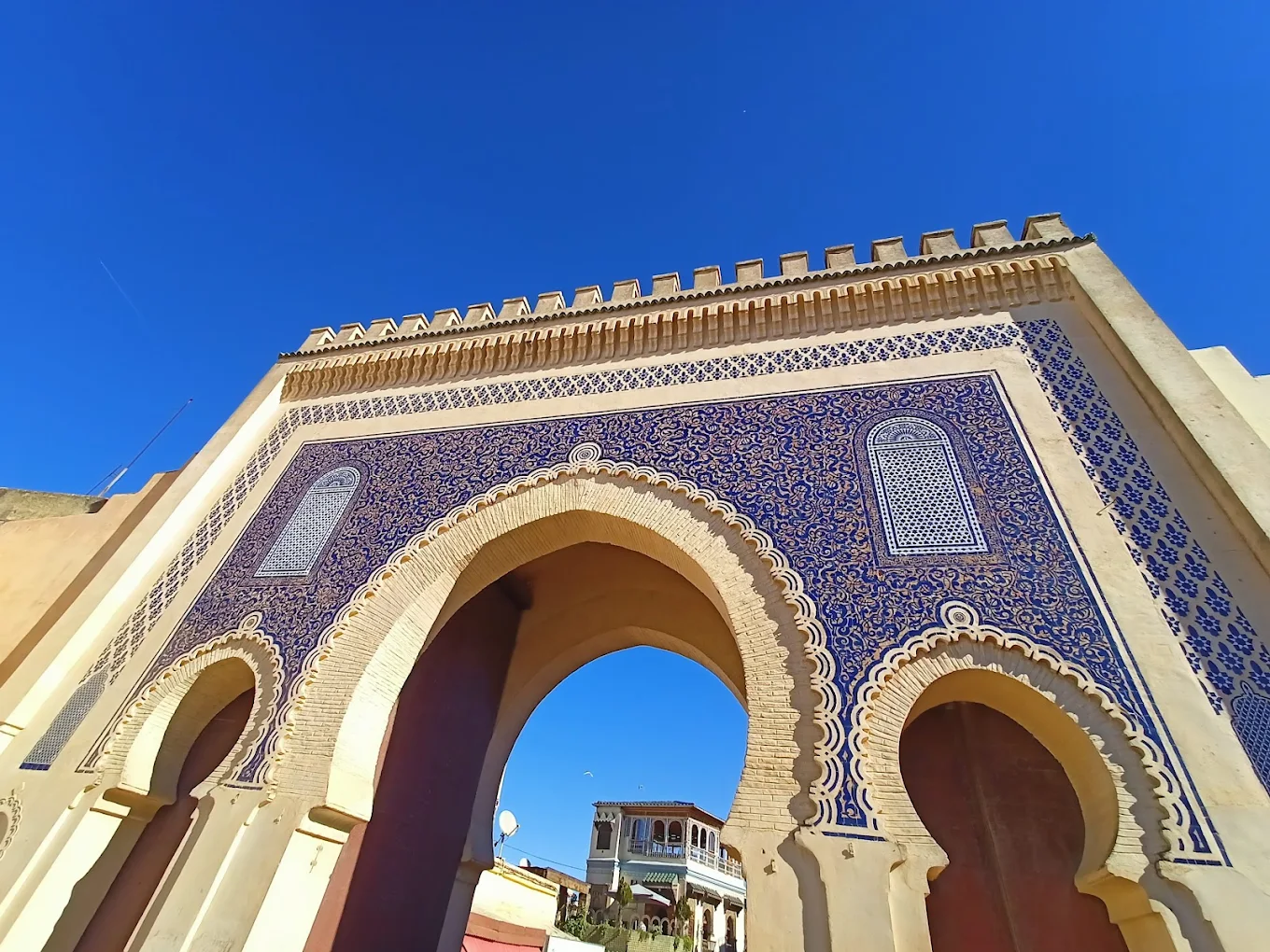
Student Travel Morocco: The Complete Guide for School and University Groups
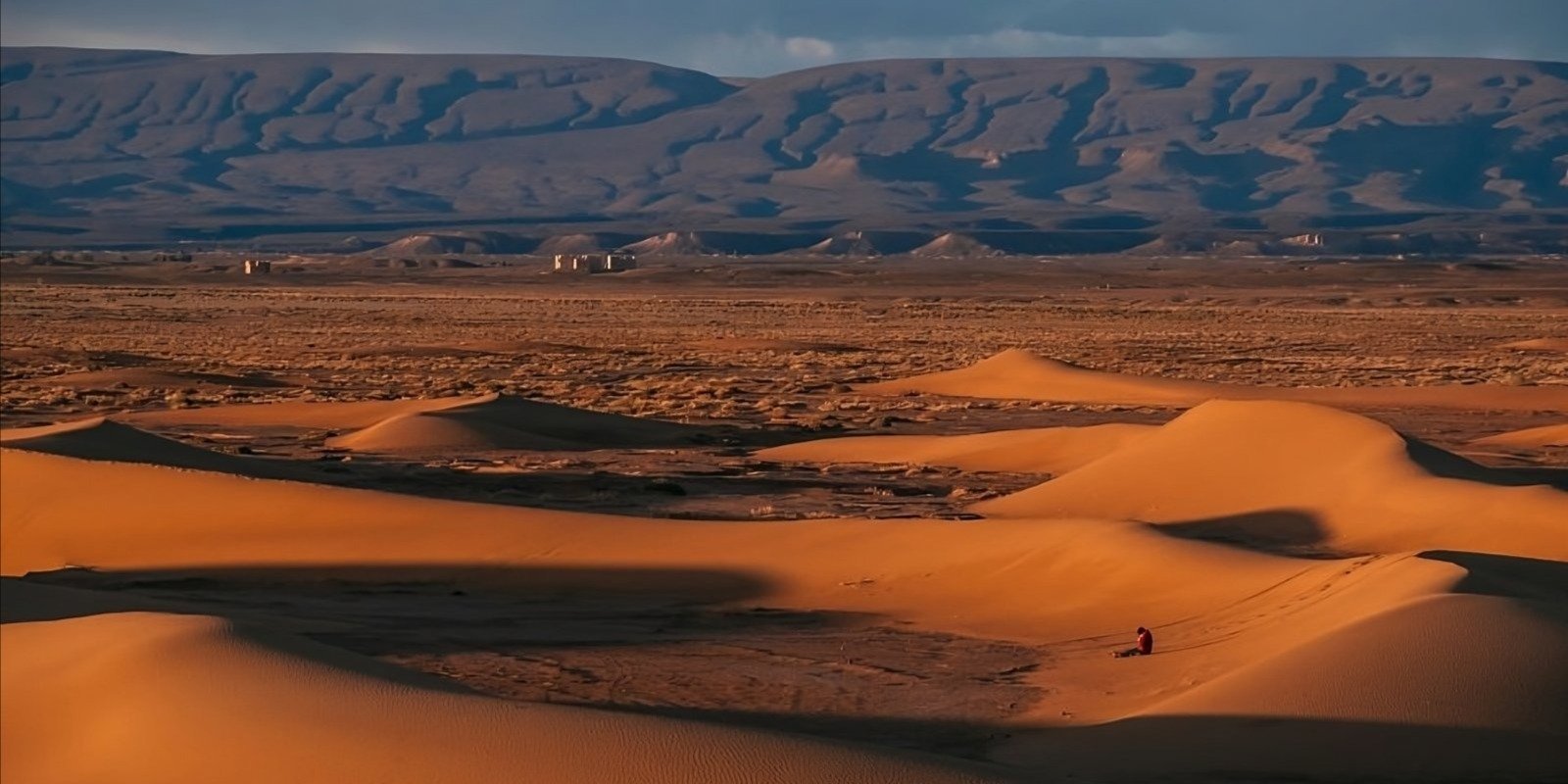
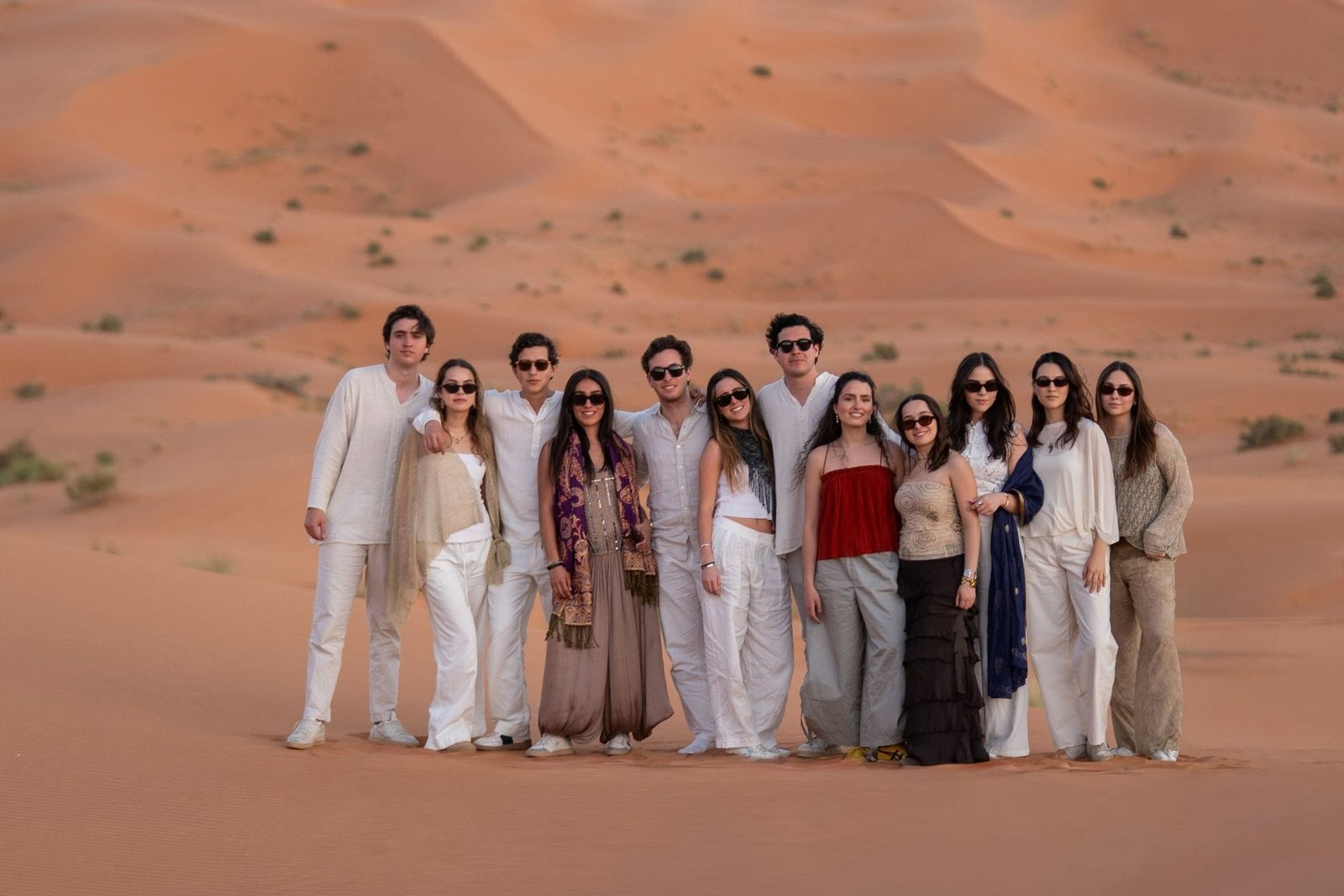
Student travel Morocco is one of the most rewarding educational journeys within a few hours’ flight of Europe. In one trip, students move from the medinas of Marrakech and Fes to the High Atlas, the red kasbahs of the south and a night under the stars in the Sahara.
This guide is written for teachers, group leaders, parents and university students who are planning student travel Morocco for the first time. It covers the main trip types, sample itineraries of three, five and seven days, safety, documents, health, food, money, packing and the best season. It is honest about the long drives too.
Student Travel Morocco: The Short Answer
| Detail | Information |
|---|---|
| Trip length | 2 to 10 days, most often 3, 5 or 7 |
| Group size | 8 to 50 students plus teachers or leaders |
| Transport | Private air-conditioned minibus or coach with a driver-guide |
| Main stops | Marrakech, Ait Benhaddou, Dades, Merzouga, Fes |
| Ages | Secondary schools, universities, language schools, youth clubs |
| Price | Free quote on WhatsApp |

Why Choose Student Travel Morocco?
Student travel Morocco works because the country is close, safe for organised groups and full of real-life lessons. A group can fly into Marrakech, visit a UNESCO ksar, walk in a gorge and sleep in a desert camp within three days. Few destinations offer that range so near to Europe.
It also suits school budgets. Because the group shares one vehicle and one driver-guide, the cost per student stays reasonable, and local meals and guesthouses are simple and good value.
- Variety: cities, mountains, oases and dunes in one short trip.
- Culture: Berber, Arab and Andalusian traditions in daily life.
- Language practice: French, Arabic, Amazigh and English are all heard.
- Hands-on learning: geography, history, art, religion and ecology come alive.
- Private and flexible: your teachers set the pace and the priorities.
Types of Student Travel Morocco Trips
Not every group wants the same thing. Here are the main styles we organise, so you can match the trip to the class.
| Trip style | Best for | Typical length |
|---|---|---|
| Desert adventure | Geography and outdoor groups | 3 to 4 days |
| Imperial cities and culture | History, art and language classes | 5 to 7 days |
| Atlas and Berber villages | Environmental and community projects | 3 to 5 days |
| Grand tour | University groups and study-abroad | 7 to 10 days |
For ready-made routes, see the student desert tour Morocco, the Morocco student tour guide and the Morocco trip for students overview.
A 3 Day Student Travel Morocco Plan
Three days is the minimum for the desert in student travel Morocco, and it works well for groups with a short school break.
- Day 1: Marrakech to Ait Benhaddou over the Tizi n’Tichka pass, then on to Zagora.
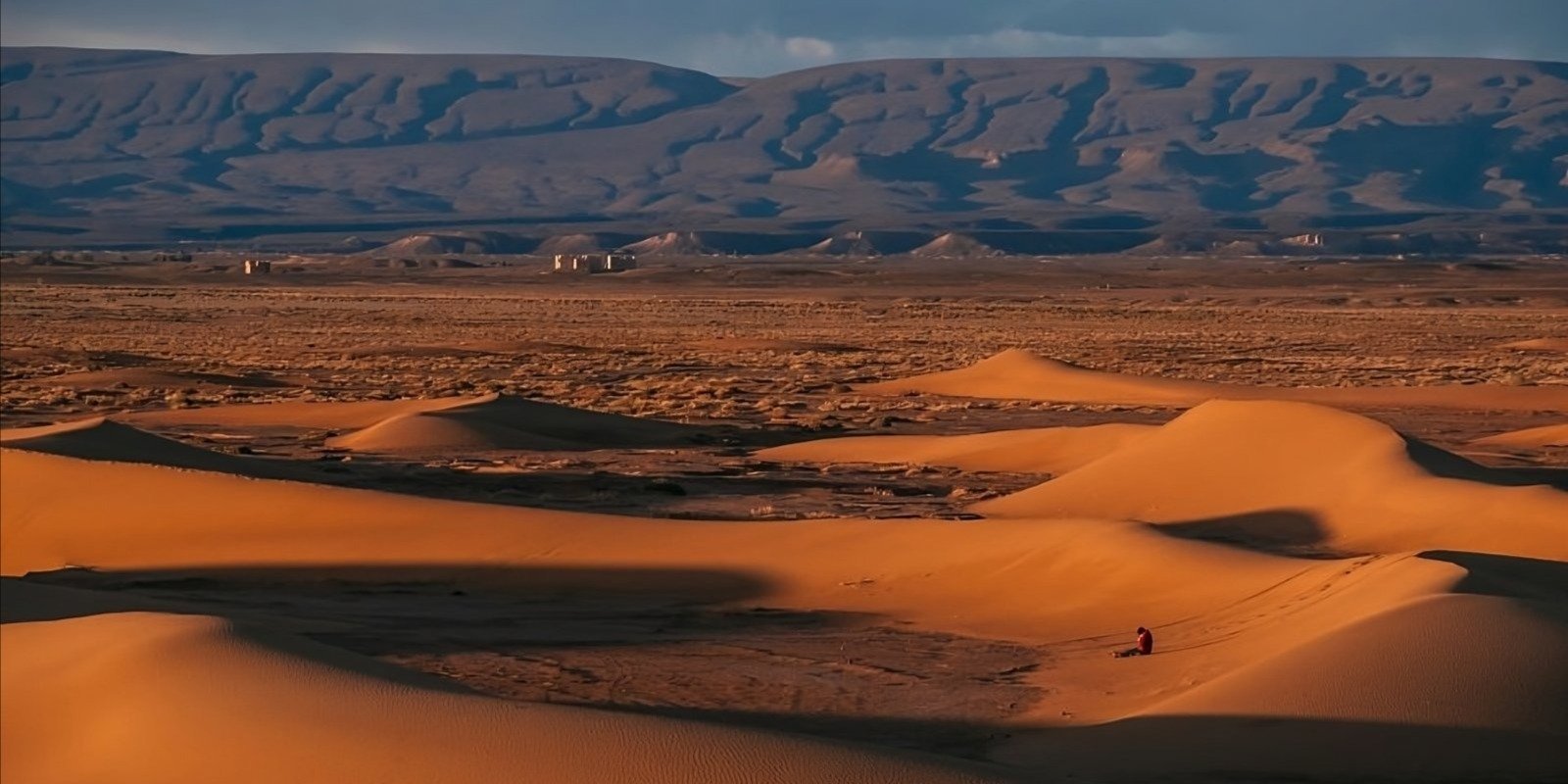
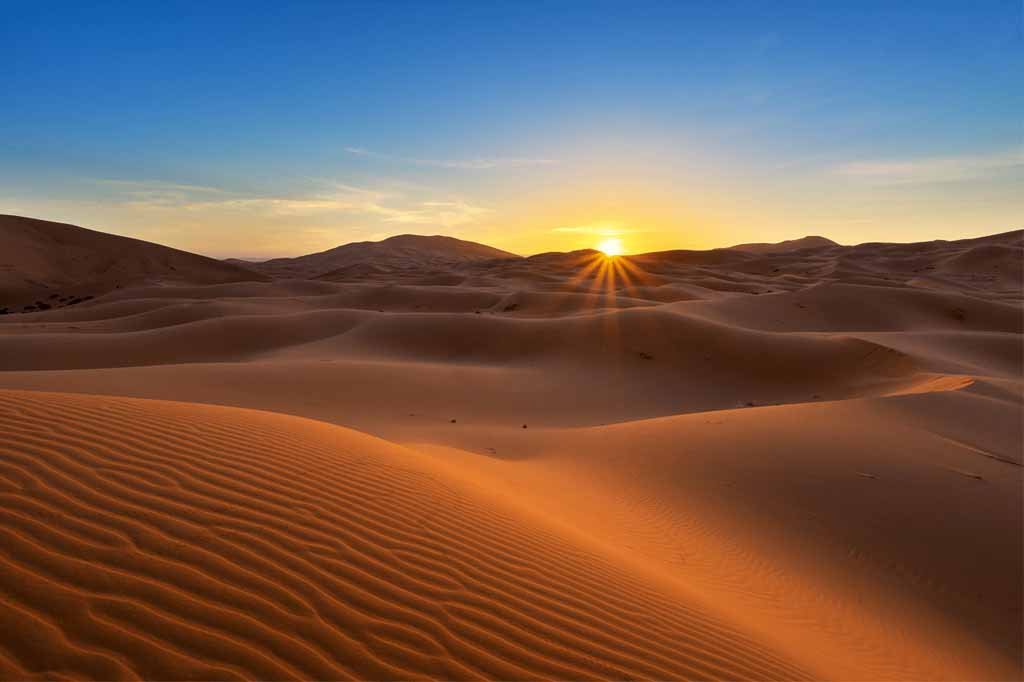
- Day 2: camel ride at sunset, a night in a desert camp and sunrise on the dunes.
- Day 3: return through Tamegroute and Ouarzazate to Marrakech.

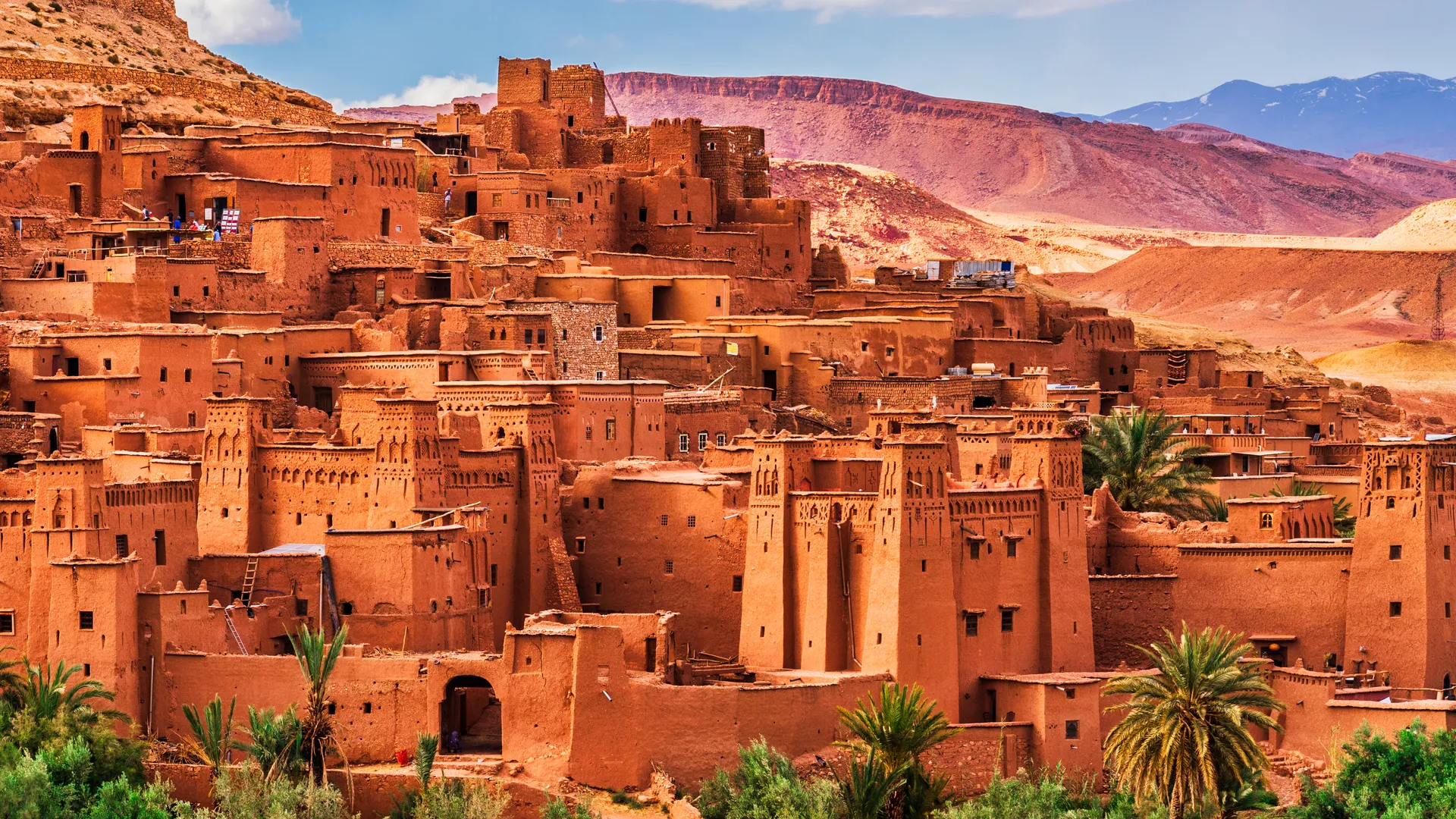
Read the full version in 3 days student trip in Morocco. The ksar is on the UNESCO World Heritage list.
A 5 Day Student Travel Morocco Plan
Five days adds the big dunes of Merzouga and a second imperial city. It is the most popular length for student travel Morocco.
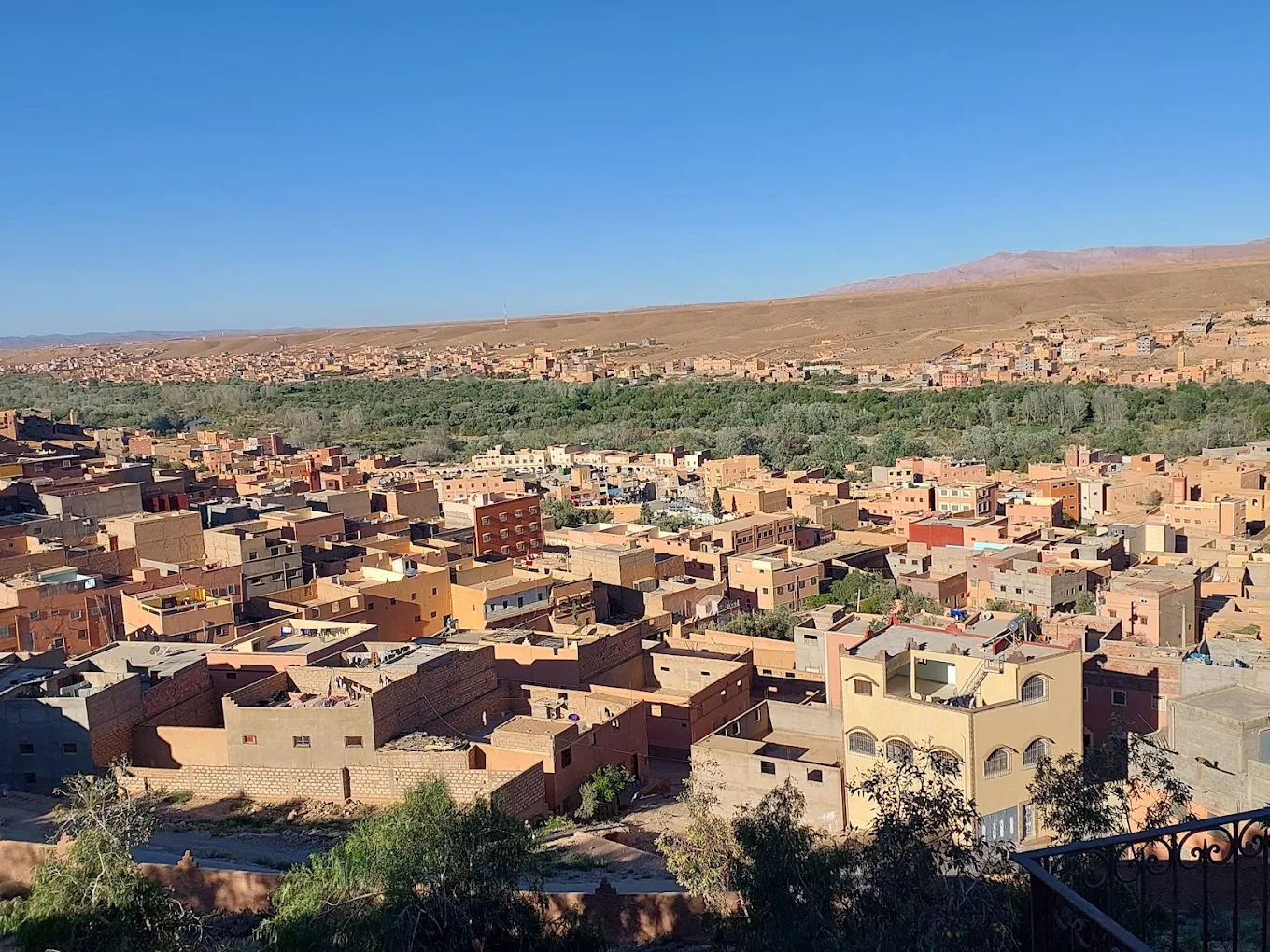
- Day 1: Marrakech, the Atlas, Ait Benhaddou and the Dades Valley.
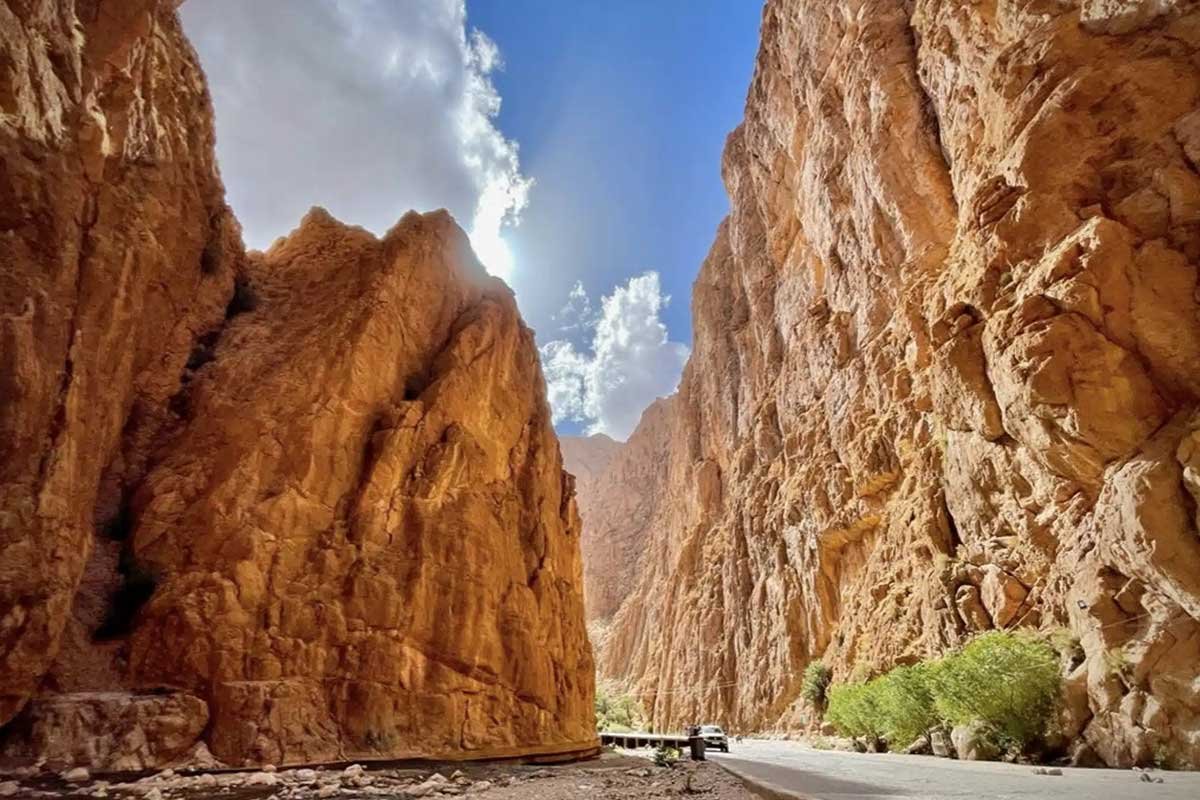
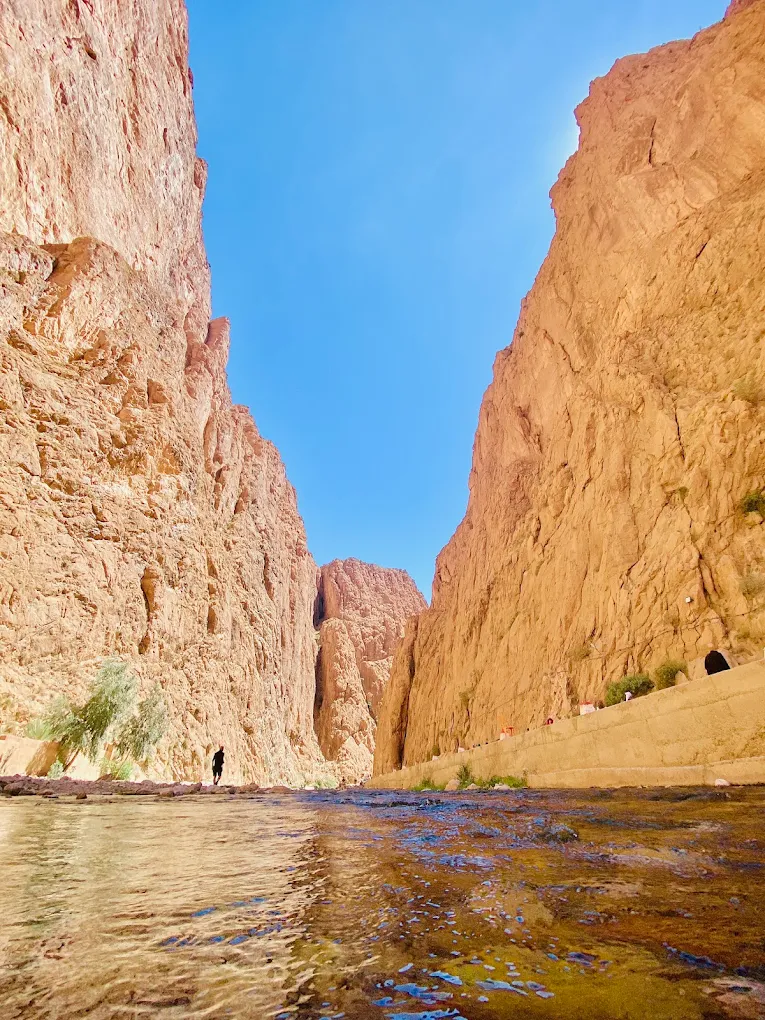
- Day 2: Todra Gorge and the first Merzouga camp night.
- Day 3: a free day in the dunes with sandboarding, music and a sunset trek.
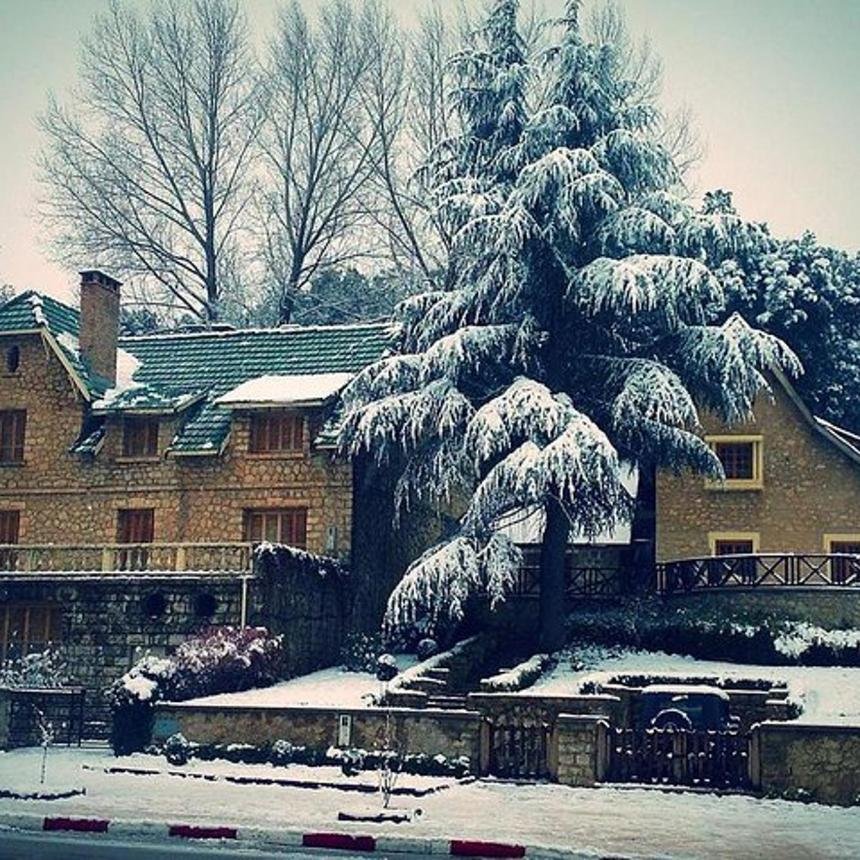
- Day 4: the Ziz Valley, Midelt and the cedar forest to Ifrane.
- Day 5: Fes medina visit and drop-off.
Compare the options: 5 days student trip Marrakech to Fes and 5 days student trip Fes to Marrakech.
A 7 Day Student Travel Morocco Plan
A week of student travel Morocco lets the group slow down. Fewer hours in the bus each day mean more time for visits, workshops and free time.
| Day | Plan | Night |
|---|---|---|
| 1 | Arrive in Marrakech, medina walk and Jemaa el-Fna | Marrakech |
| 2 | Atlas crossing, Ait Benhaddou, Dades Valley | Dades |
| 3 | Todra Gorge and arrival in Merzouga | Desert camp |
| 4 | Free dune day and Khamlia music | Desert camp |
| 5 | Ziz Valley, Midelt and Ifrane | Ifrane or Fes |
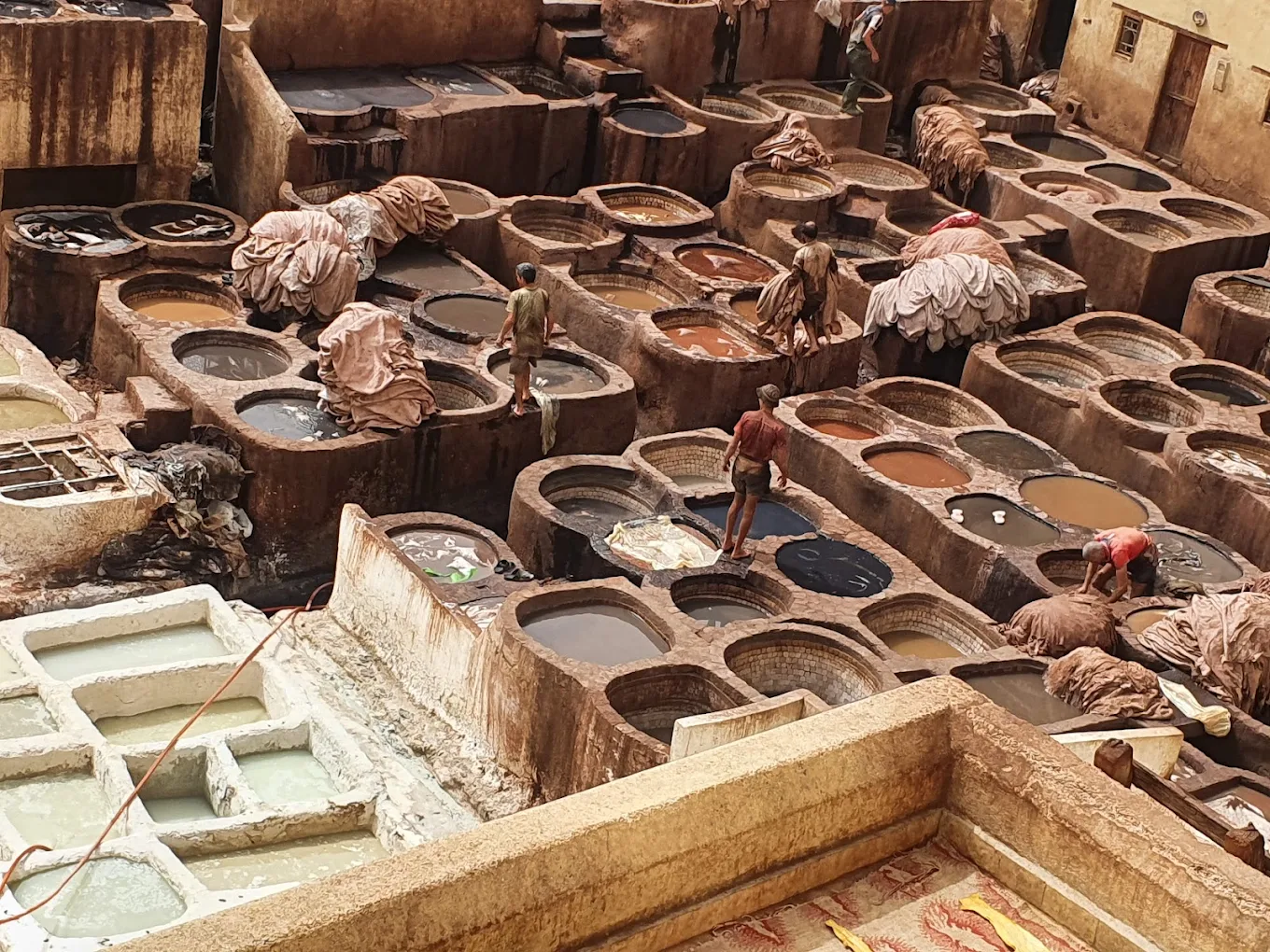
| 6 | Fes medina, tanneries and craft workshops | Fes |
| 7 | Meknes and Volubilis, then departure | Fes or airport |
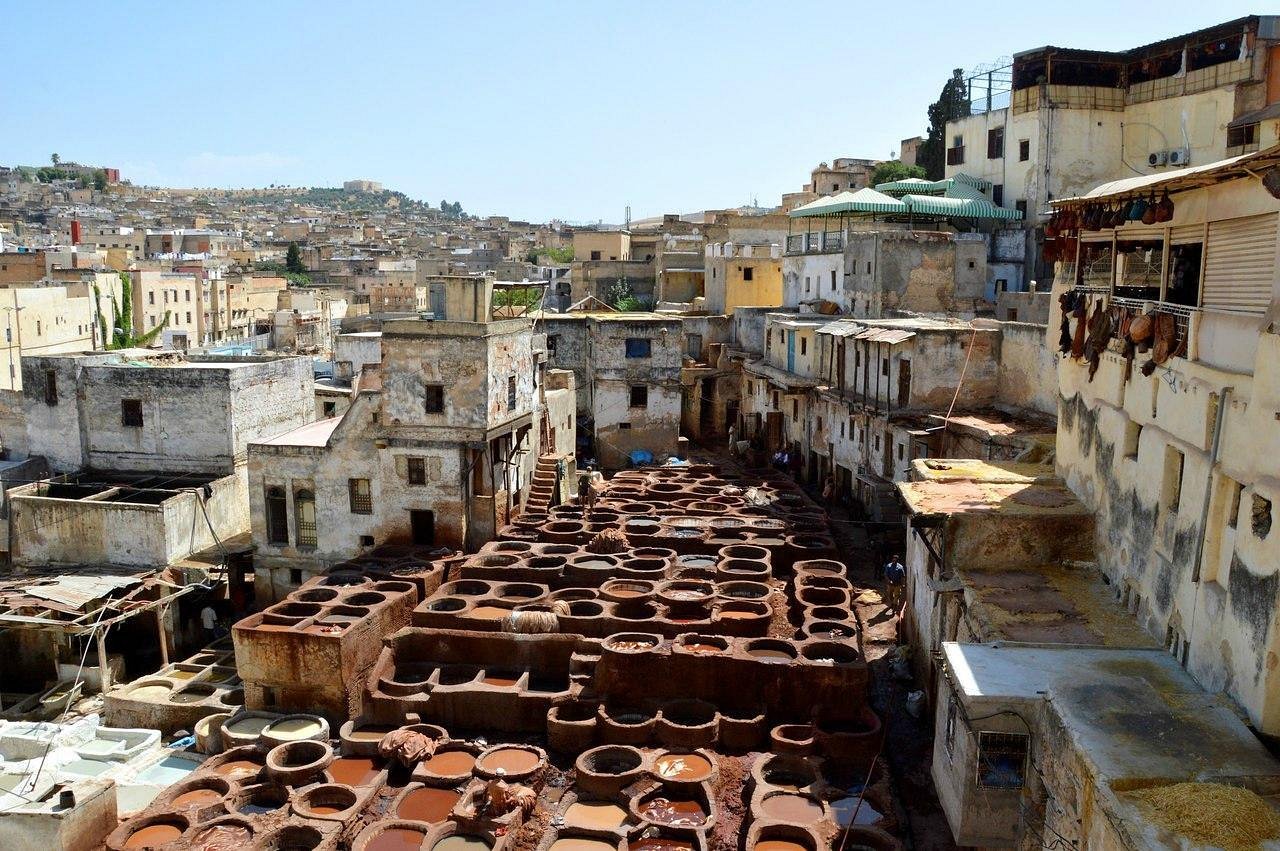
Fes is on the UNESCO World Heritage list. Add the day trip from Fes to Meknes and Volubilis for Roman history.
Cities Students Love on a Morocco Trip
Marrakech
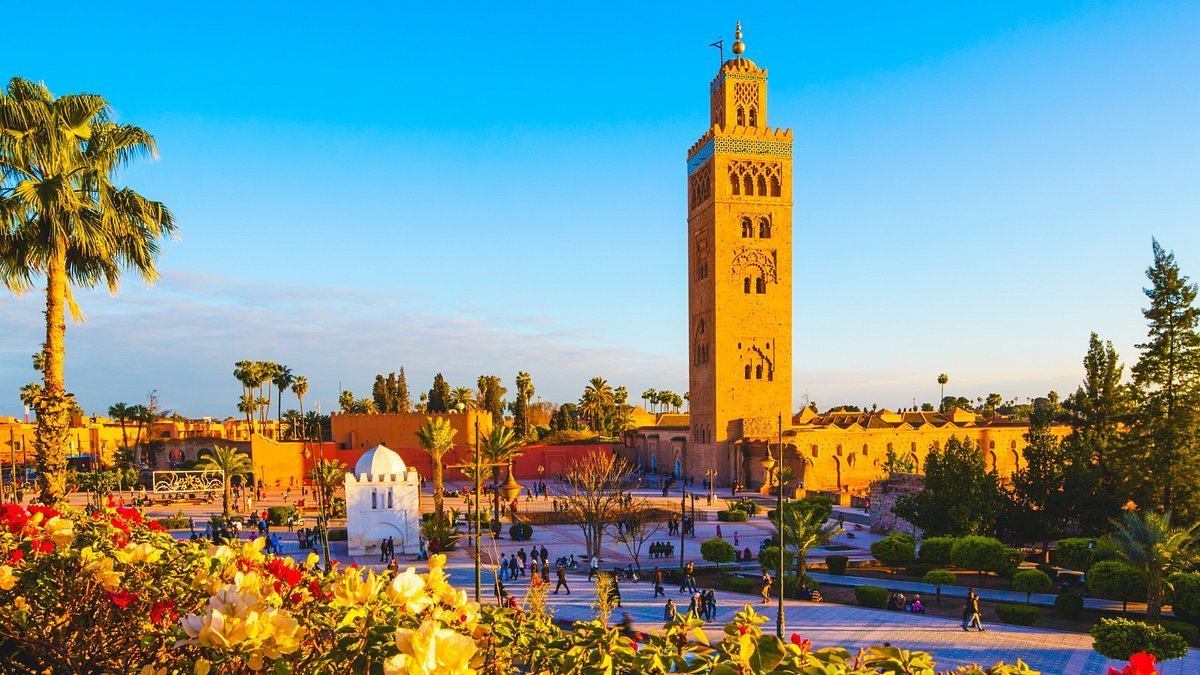
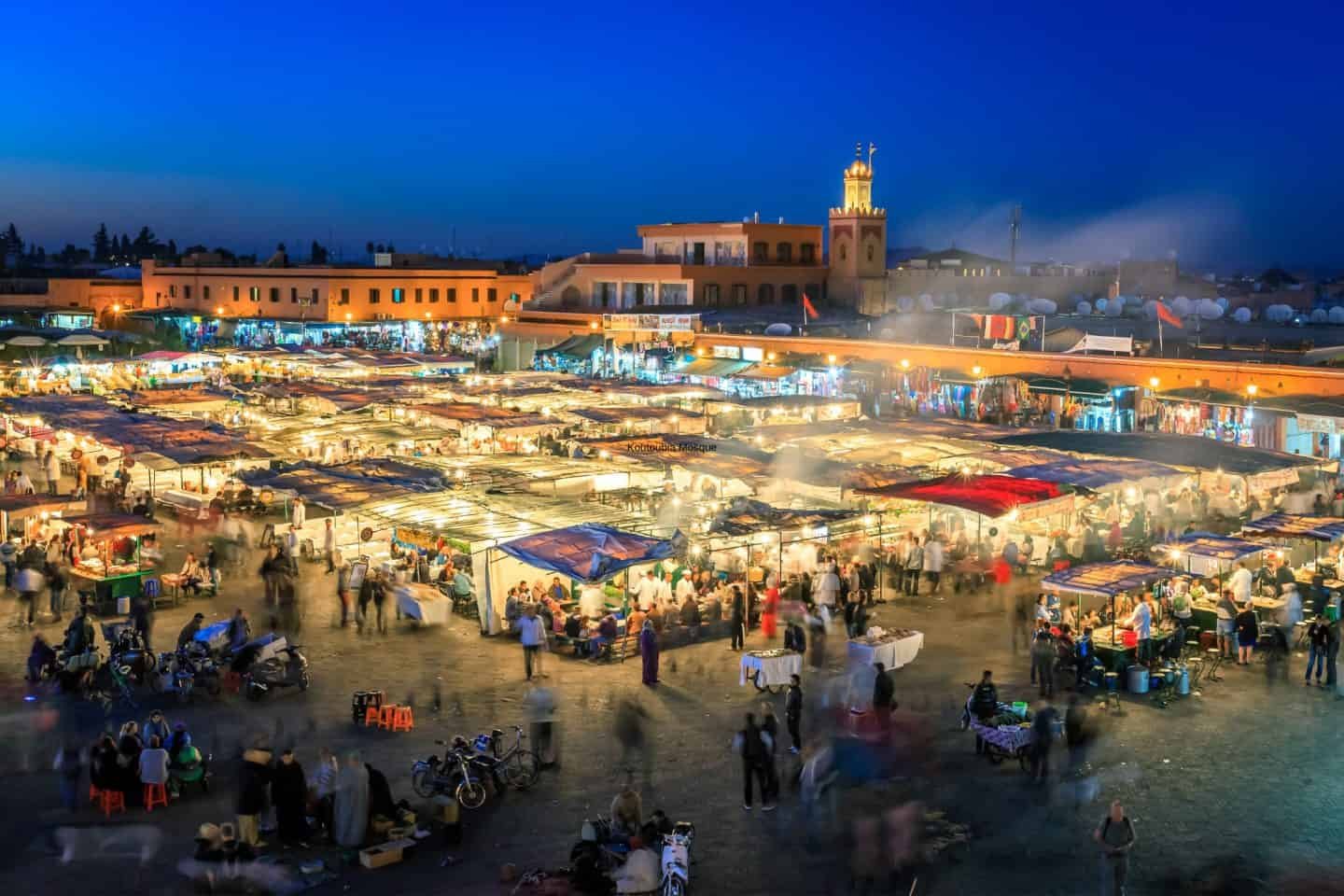
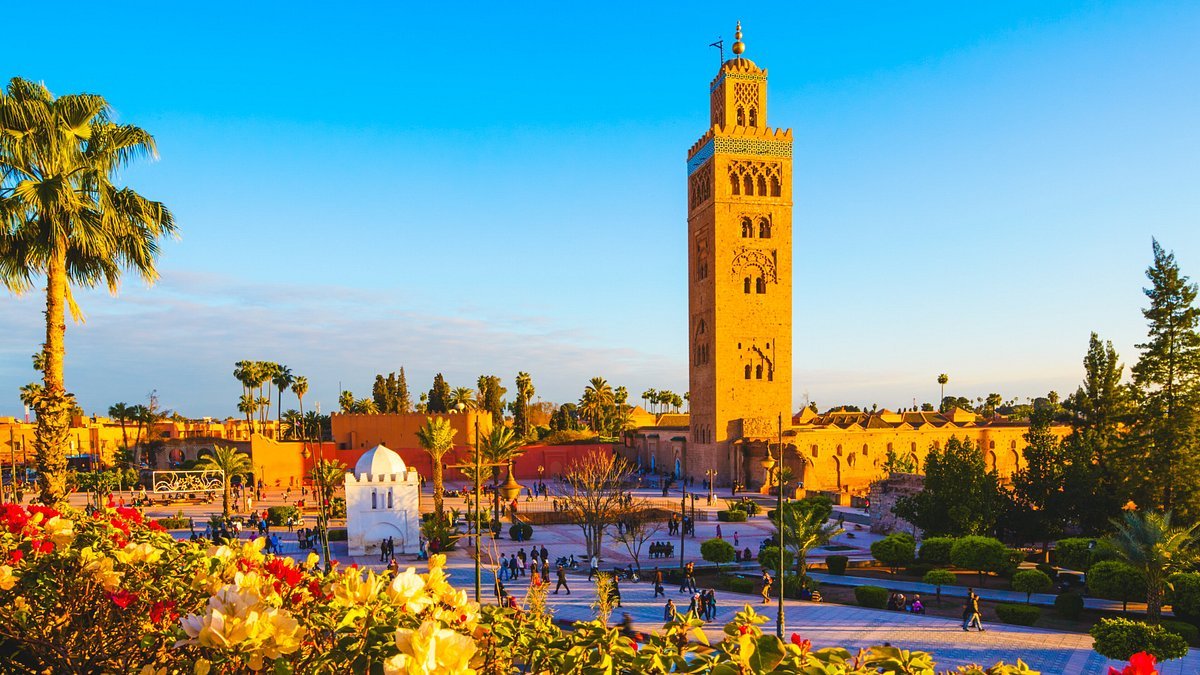
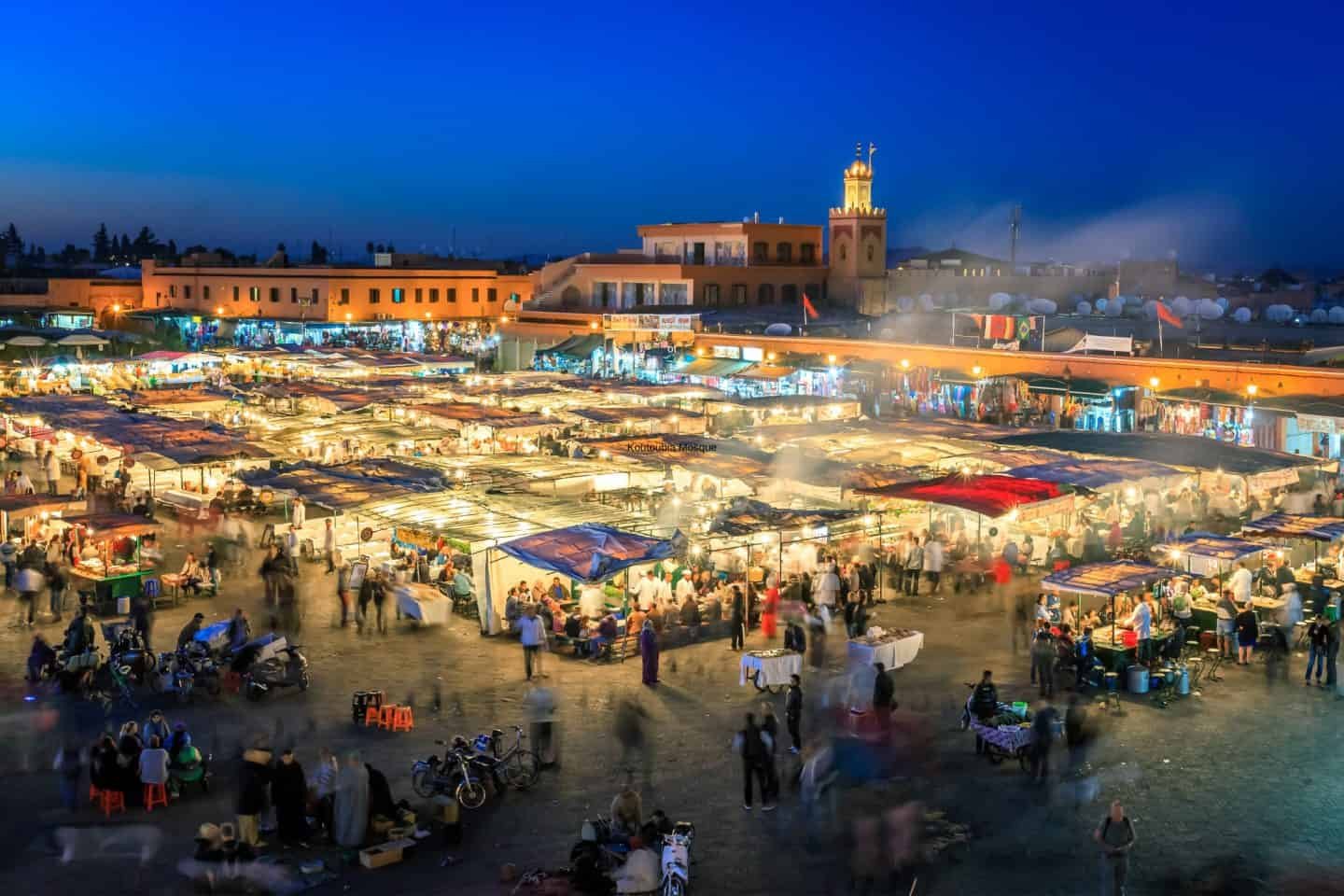
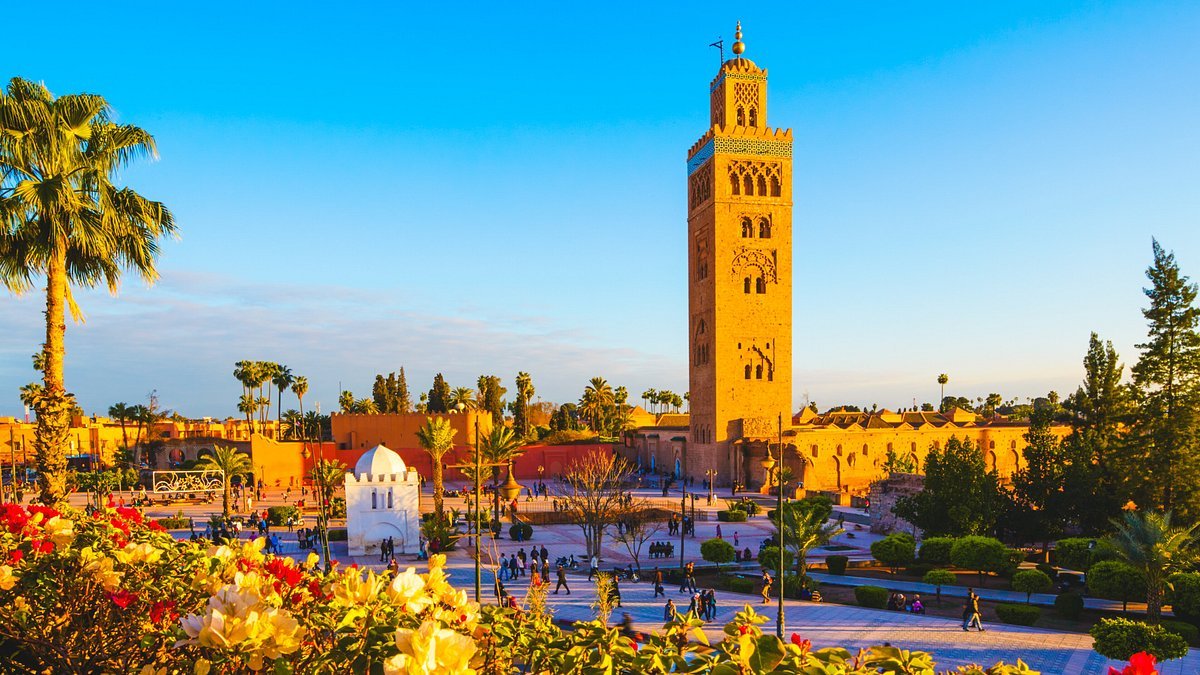
The red city is loud, colourful and a great first stop. Students enjoy the Jemaa el-Fna square, the souks and the Koutoubia minaret. A guided walk helps them understand how the medina works. See what should I not miss in Marrakech.

Ouarzazate and Ait Benhaddou
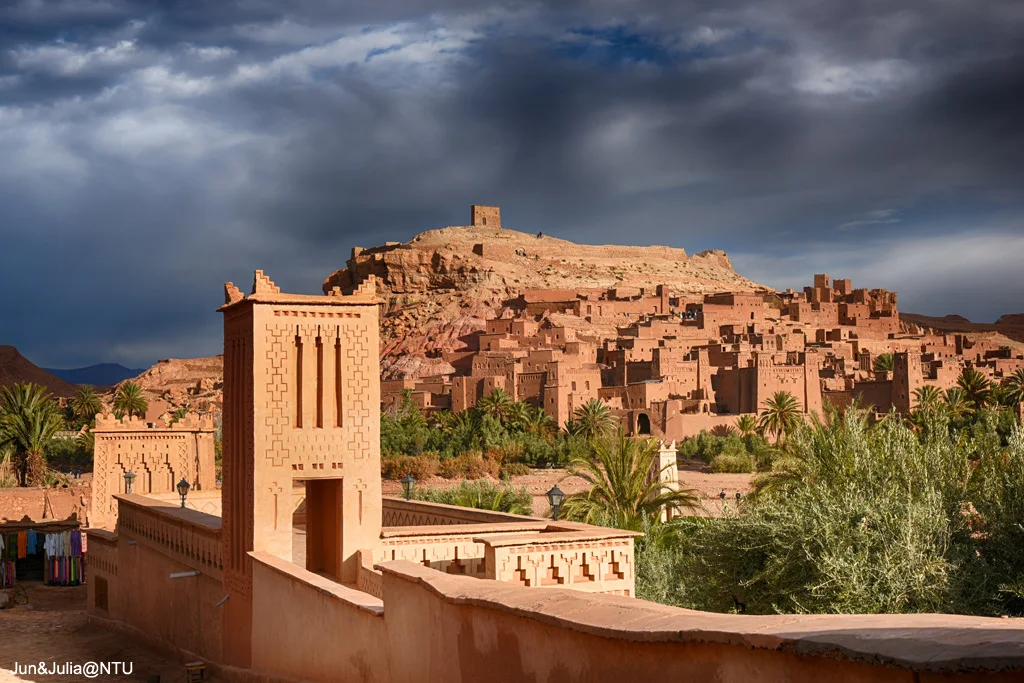
Often called the door of the desert, Ouarzazate has film studios, and nearby Ait Benhaddou has appeared in many films. For students of media and architecture, both are excellent.
Fes
Fes is the cultural capital. Students meet leather workers, weavers and potters, and visit one of the oldest universities in the world. It is a lesson in how a medieval city still works today.
The Sahara Night: Why It Matters
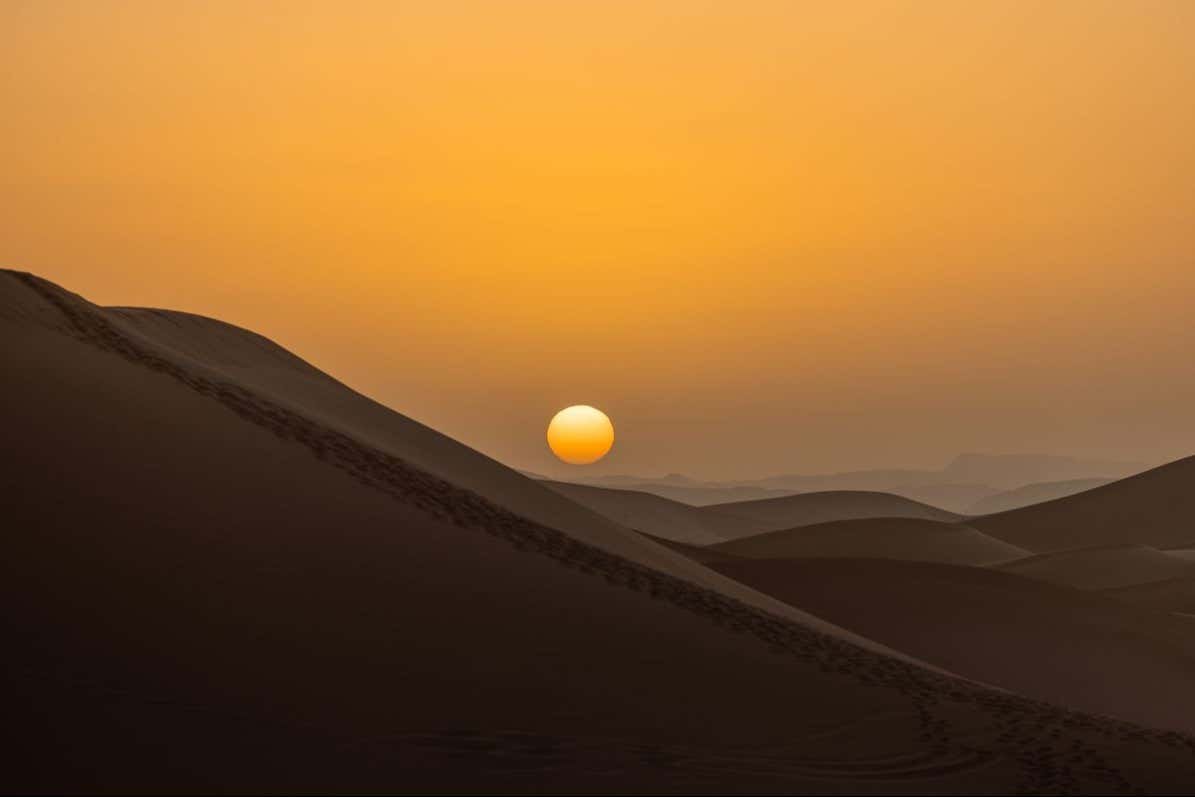
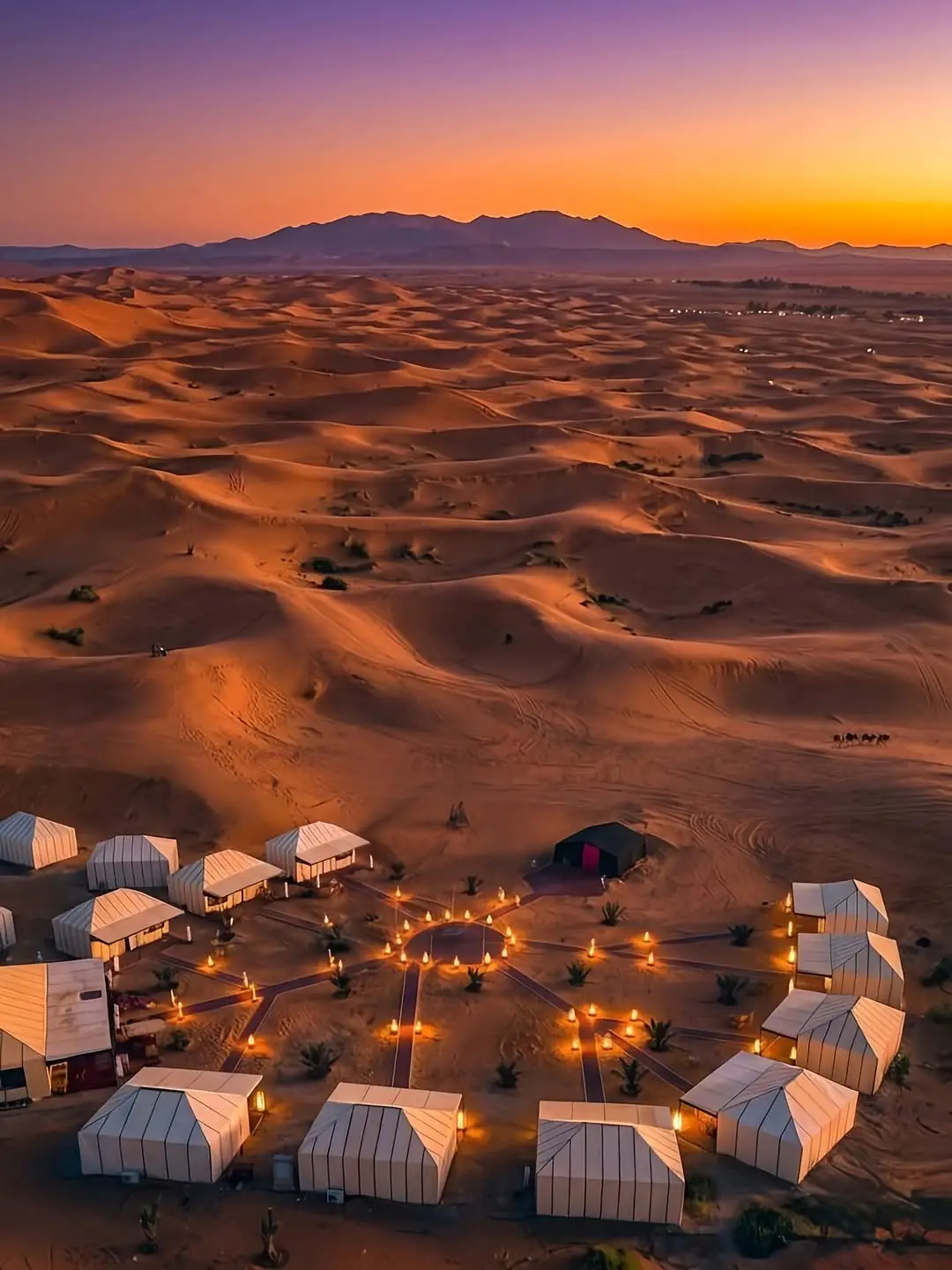
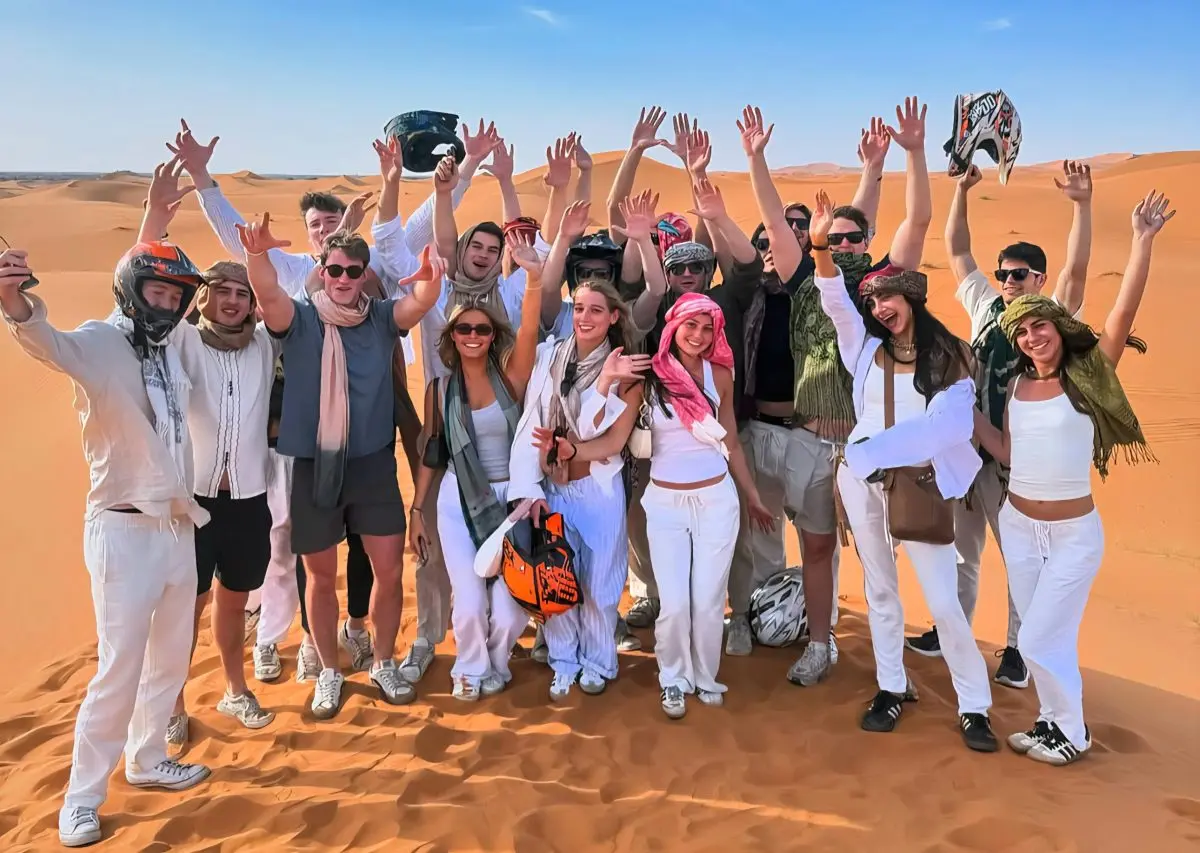
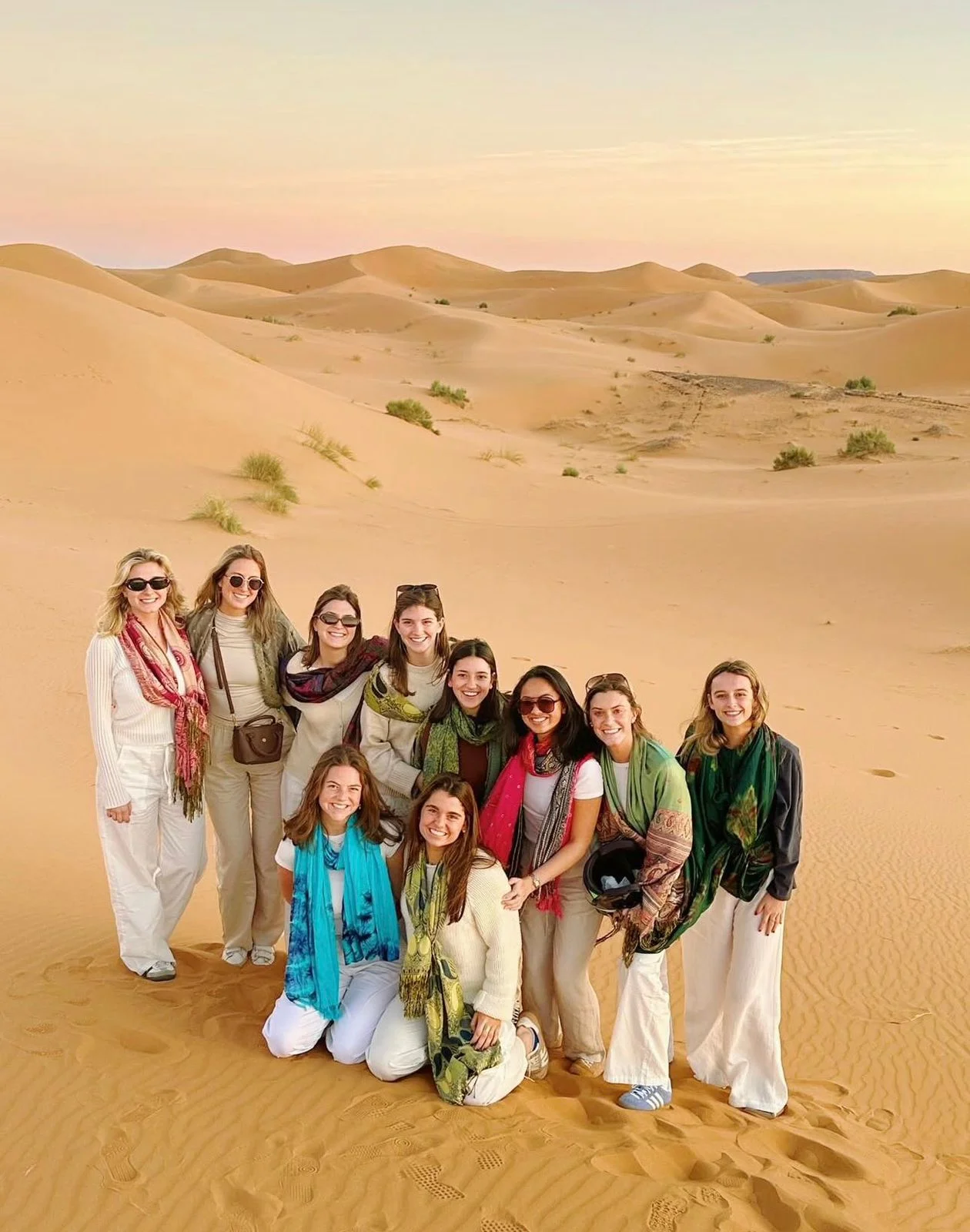
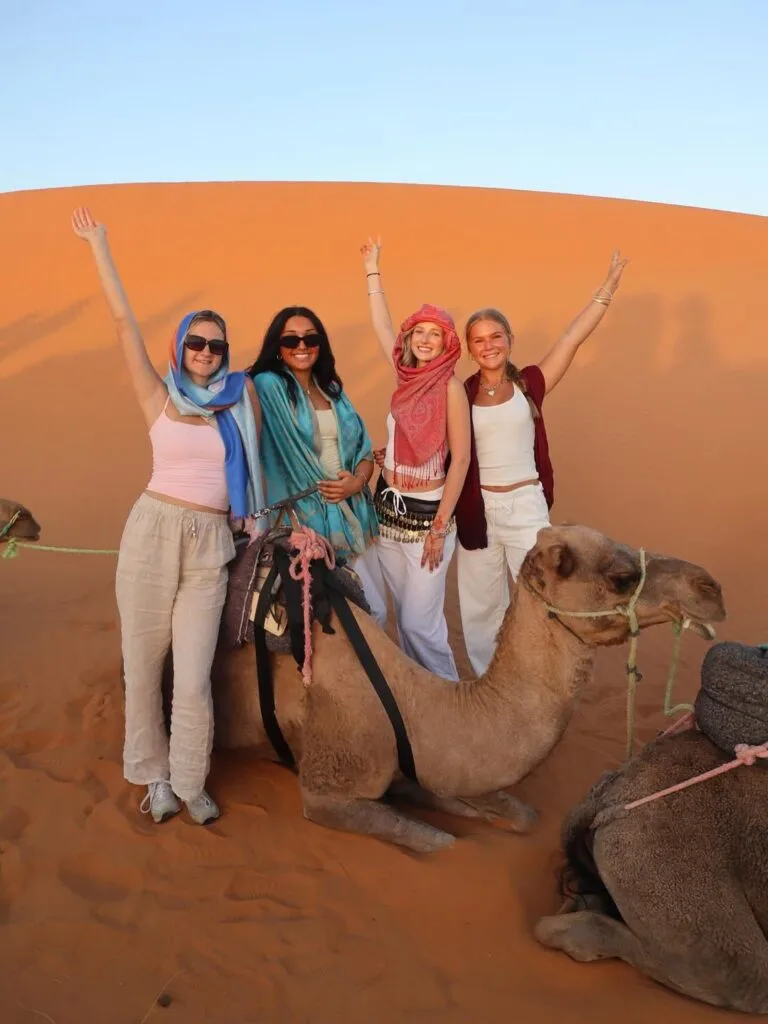
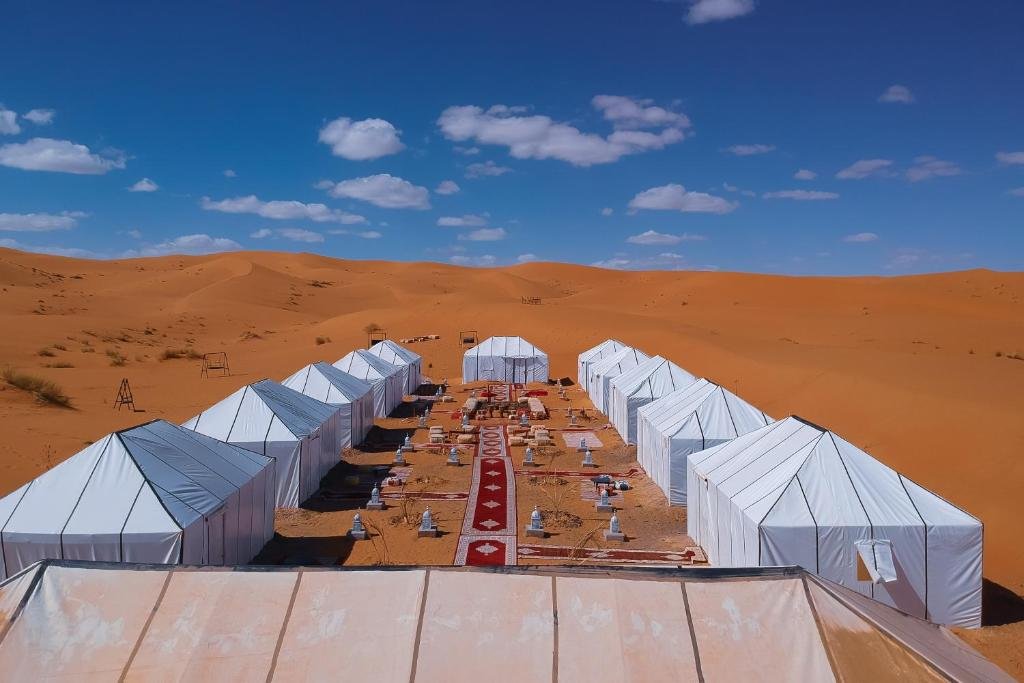
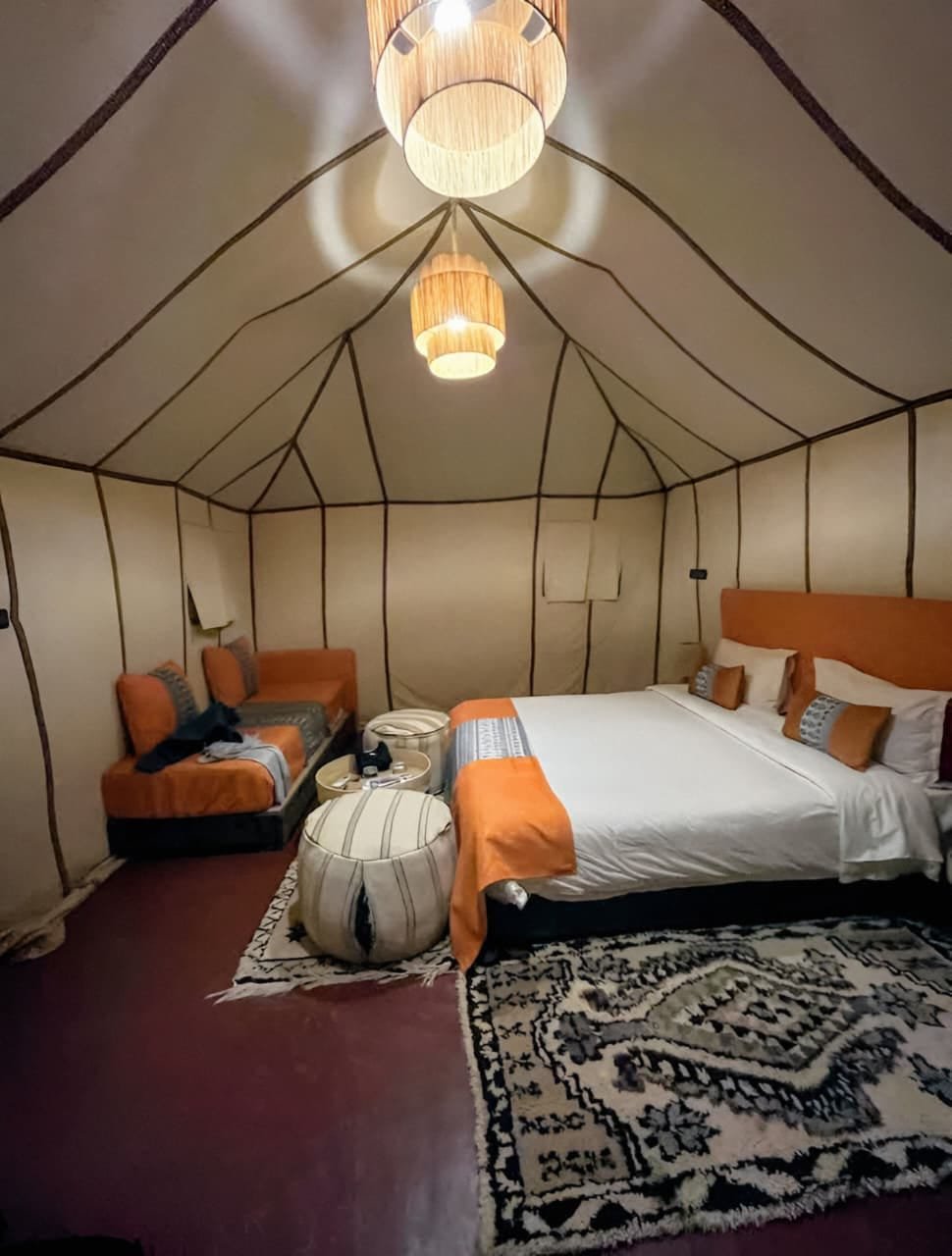
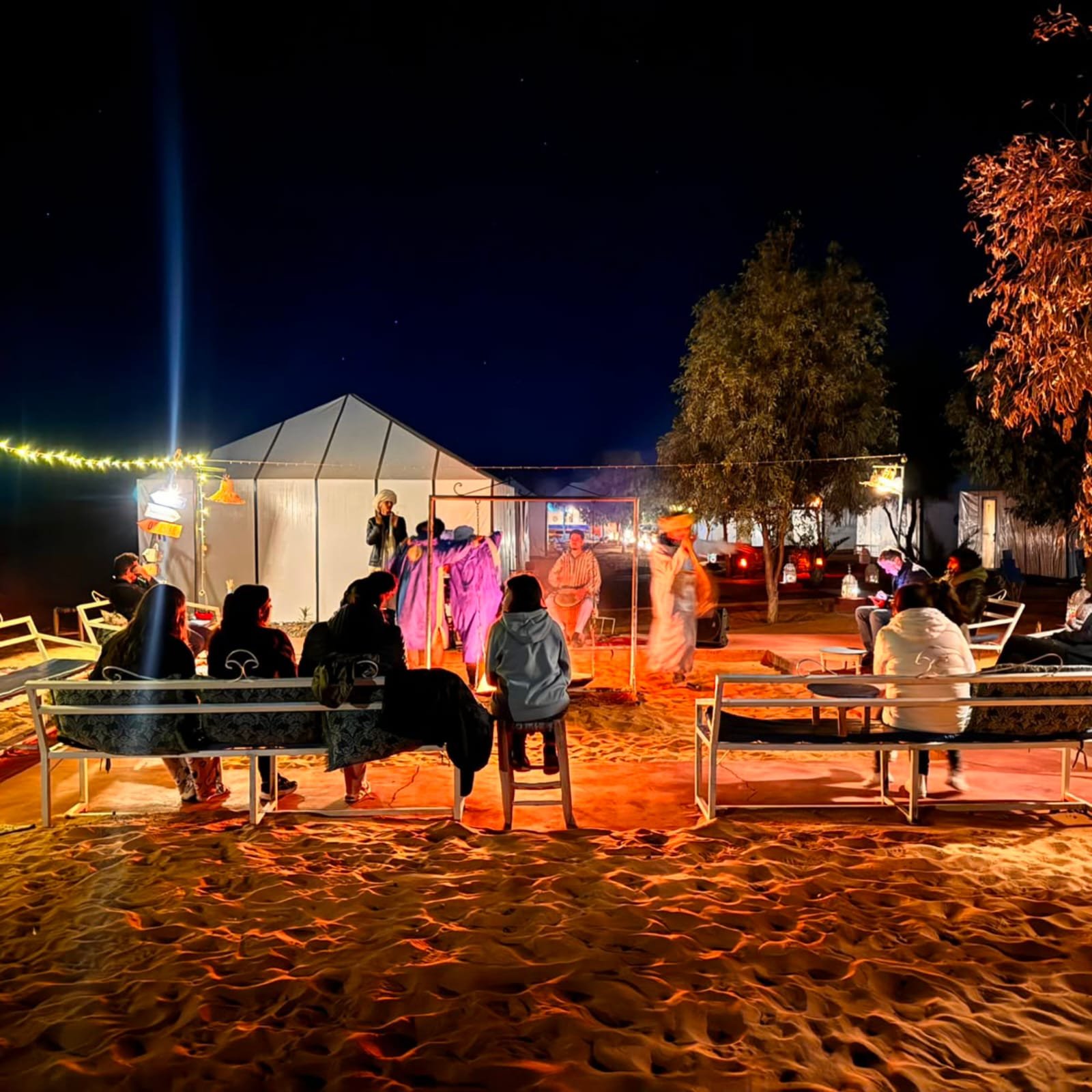
For many students the desert night is the part of student travel Morocco they remember most. They ride camels at sunset, eat dinner in a group tent, listen to drums and see more stars than they have ever seen.
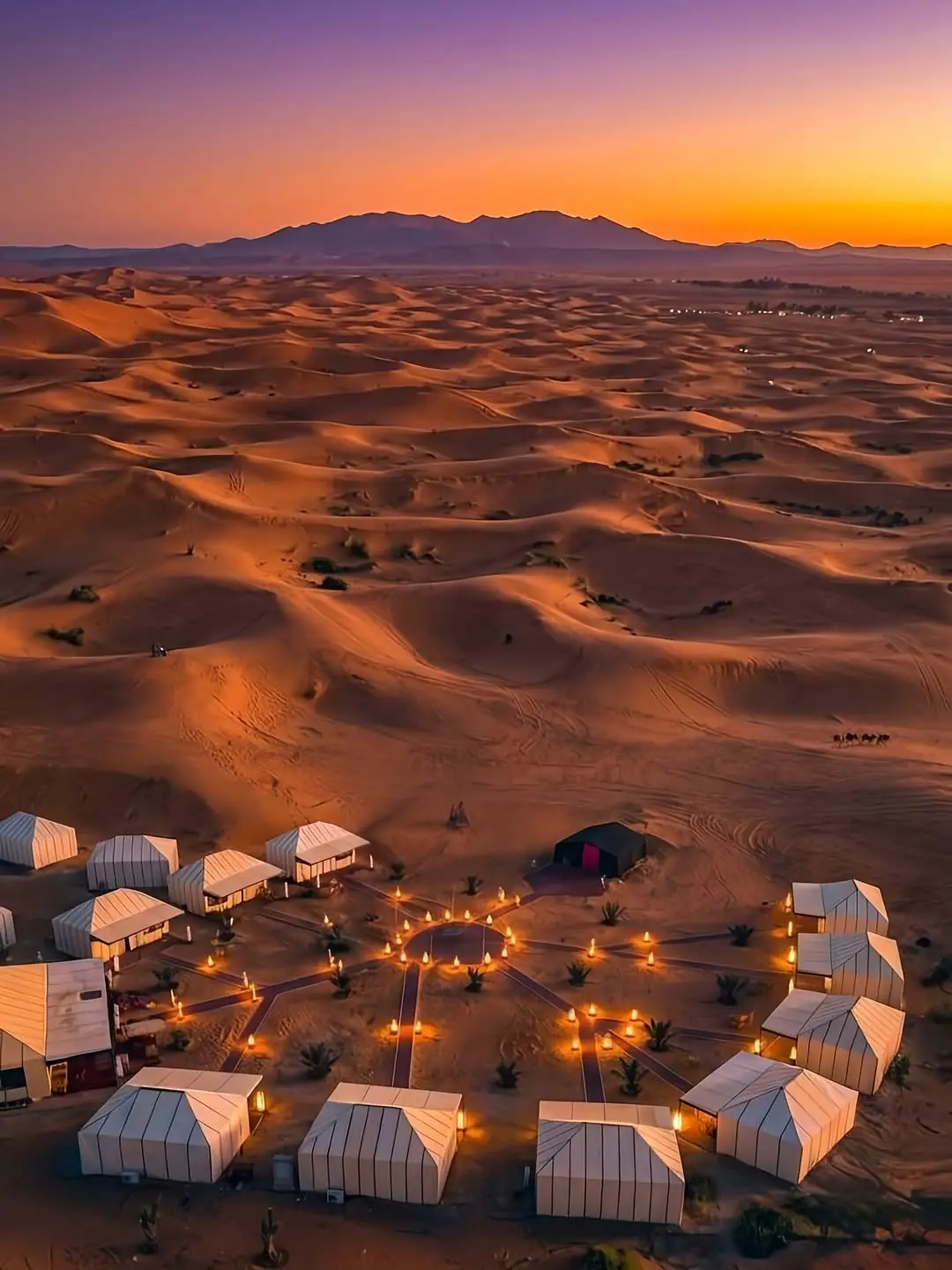
The camp is simple and safe. Guides stay with the group, and teachers sleep close to the students. For more, read the sunset camel ride guide.
Learning on the Road: Ideas for Teachers
Student travel Morocco works best when the trip has a purpose. A few simple tasks keep students engaged and give the teacher something to assess afterwards.
- Geography: sketch the route, note altitude changes at the Tizi n’Tichka pass and compare the Atlas with the desert.
- History: read about the Almoravids and Marinids before visiting Marrakech and Fes.
- Languages: collect ten Arabic, Amazigh and French phrases and use them each day.
- Art and design: photograph tilework, doors and patterns for a classroom display.
- Science: discuss desert ecology, oases and water management.
- Writing: keep a daily journal, with one paragraph each evening.
Safety and Supervision on a Student Group Trip
Safety comes first in student travel Morocco, as on any school trip. Morocco is welcoming to groups, and tourist areas are well used to visitors. Still, good planning matters.
- Adult ratio: at least one adult leader for every ten students.
- Private vehicle: a licensed driver, regular breaks and no night driving in remote areas.
- Meeting points: every stop has a clear meeting time and place, and students never walk alone in medinas.
- Dune rules: stay with the group, wear closed shoes and drink water often.
- Emergency plan: first-aid kit on board, contact list and the nearest clinic identified for each night.
- Insurance: travel and medical cover for every student is strongly advised.
Our driver-guide works with your teachers, not around them. Teachers keep full authority over discipline and curfews.
Documents, Health and Preparation
Entry rules differ by nationality, so check them early. Many nationalities can stay for up to 90 days without a visa, but this is not true for every group, and passports usually need to be valid for several months. Always confirm with the official source for your country before booking.
- Passports: collect copies and keep a digital backup.
- Parental forms: consent, medical notes and emergency contacts for each student.
- Vaccines: check your national travel health service for current advice.
- Medication: carry it in original packaging with a letter if needed.
- Allergies and diets: send the list early so the camp and hotels can prepare.
A short pre-trip meeting with parents and students makes a big difference. Explain the route, the rules, the packing list and the daily rhythm.
Where Students Sleep
Accommodation for student travel Morocco is simple, clean and set up for groups. In cities, groups usually stay in riads or hotels with shared rooms. In the south, they stay in guesthouses and in a desert camp.
| Place | Type of stay | Notes |
|---|---|---|
| Marrakech and Fes | Hotel or riad | Rooms of 2 to 4, separate floors if possible |
| Dades Valley | Guesthouse | Family run, with views of the rocks |
| Merzouga | Group desert camp | Beds, blankets, shared bathrooms |
| Ifrane | Hotel | Cooler air and forest scenery |

Food and Water
Moroccan food is a highlight of student travel Morocco. Students try tagine, couscous, soup, fresh bread, olives and mint tea. Vegetarian meals are easy to arrange, and most requests can be handled with notice.
- Drink bottled or filtered water and carry a reusable bottle.
- Wash hands often and use hand gel before meals.
- Eat hot, freshly cooked food and peel fruit yourself.
- Send allergies and diets to us before arrival.
Money, Phones and Daily Costs
The local currency is the dirham, and it cannot always be bought outside Morocco. Cash machines are common in cities, but not in small villages, so take enough cash for the south. Students need small amounts for tea, souvenirs and toilets.
Mobile coverage is good in cities and weaker in the mountains and the dunes. Local SIM cards are cheap, and many hotels have Wi-Fi. Agree a phone policy with students before departure. Power banks are useful at the camp.
Culture and Etiquette for Student Groups
Morocco is a welcoming Muslim country. A little respect goes a long way. Share these tips with students before student travel Morocco begins.
- Dress modestly in towns and villages, with shoulders and knees covered.
- Ask before taking photos of people, and never photograph military sites.
- Use the right hand to eat and to pass things.
- Learn a few phrases: salam (hello), shukran (thank you), la, shukran (no, thank you).
- Bargain politely in souks, and never feel pressured to buy.
- During Ramadan, avoid eating or drinking in public during the day.
Long Drives, Honestly
Distances in Morocco are real. Marrakech to Merzouga is about 560 km, and Marrakech to Fes through the desert is about 1,200 km. Drives of seven to nine hours happen on some days.
We plan breaks, photo stops and good lunches, and we put the longest drives at the start and the end of a trip. If your students are young, a seven day plan with shorter days is a better choice than a rushed three day trip. Tell us the ages, and we adapt.
Best Time for Student Travel Morocco
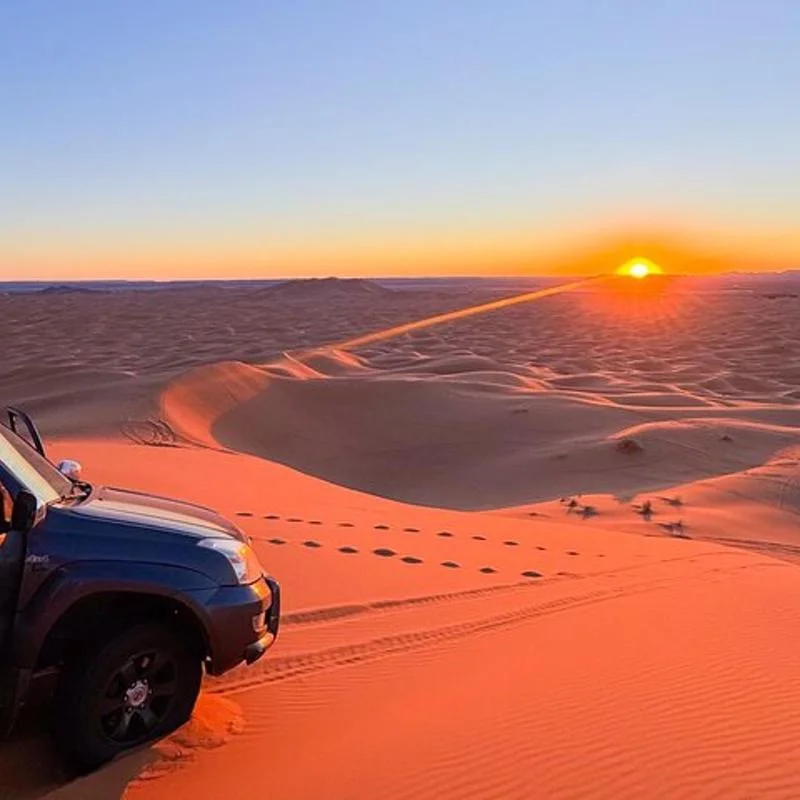
Spring from March to May and autumn from September to November are the best seasons. Days are warm, valleys are green and the dunes are pleasant. Summer is very hot in the south, often above 40 degrees, so we do not advise it. Winter is sunny but cold at night in the desert, and snow can slow the Atlas roads for a few hours. Check dates for Ramadan, because some places change their hours.
How Much Does Student Travel Morocco Cost?
The price depends on group size, length, season and accommodation. A large class shares the cost of one vehicle and one driver-guide, so the price per student drops as the group grows. A class of thirty pays far less each than a group of ten.
Send your dates, the number of students and teachers and the ages, and we reply with a clear, personal quote. We can invoice the school and offer clear payment steps. Nothing is hidden in the price of your student travel Morocco trip.
What Is Included and What Is Not
Included
- Private air-conditioned vehicle with a driver-guide.
- Airport or hotel pick-up and drop-off.
- Fuel, tolls and driver expenses.
- Nights with breakfast and dinner, as agreed.
- Camel trek and desert camp where planned.
- Bottled water on board.
Not included
- Flights and travel insurance.
- Lunches and drinks.
- Monument entrance fees.
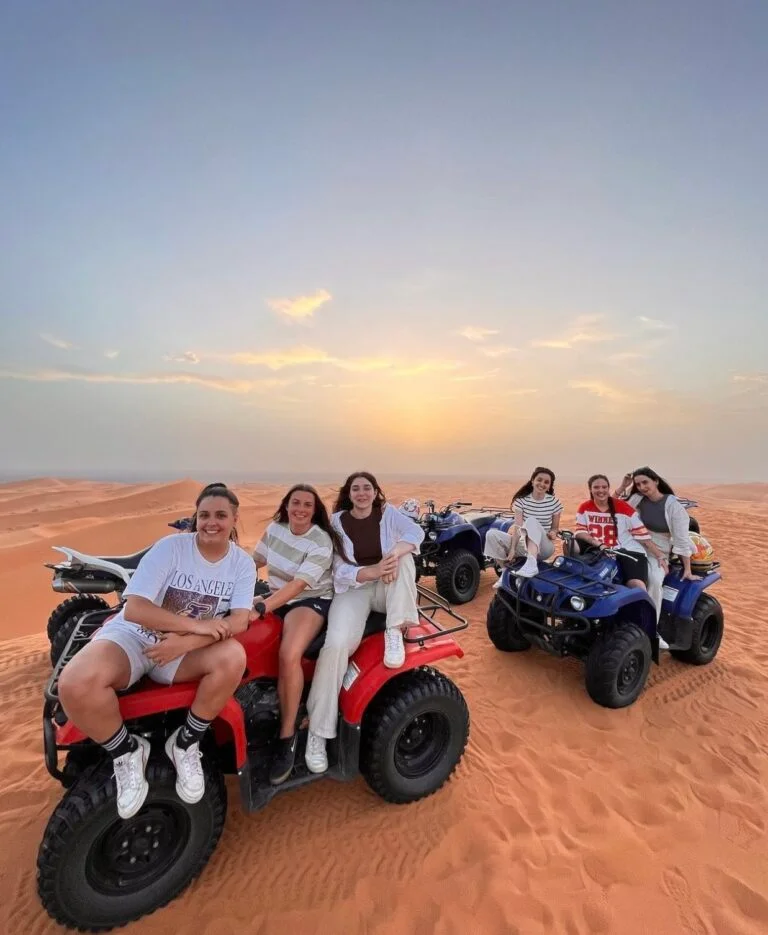
- Optional activities such as quad rides.
- Tips for the driver-guide.
What to Pack for Student Travel Morocco
Ask students to pack light. A soft bag or a backpack is easier to load than a large suitcase, and only a small bag goes to the desert camp.
- Clothes: layers, a warm jacket for the desert night, light trousers and modest tops.
- Shoes: closed trainers for dunes and gorges, and sandals for the hotel.
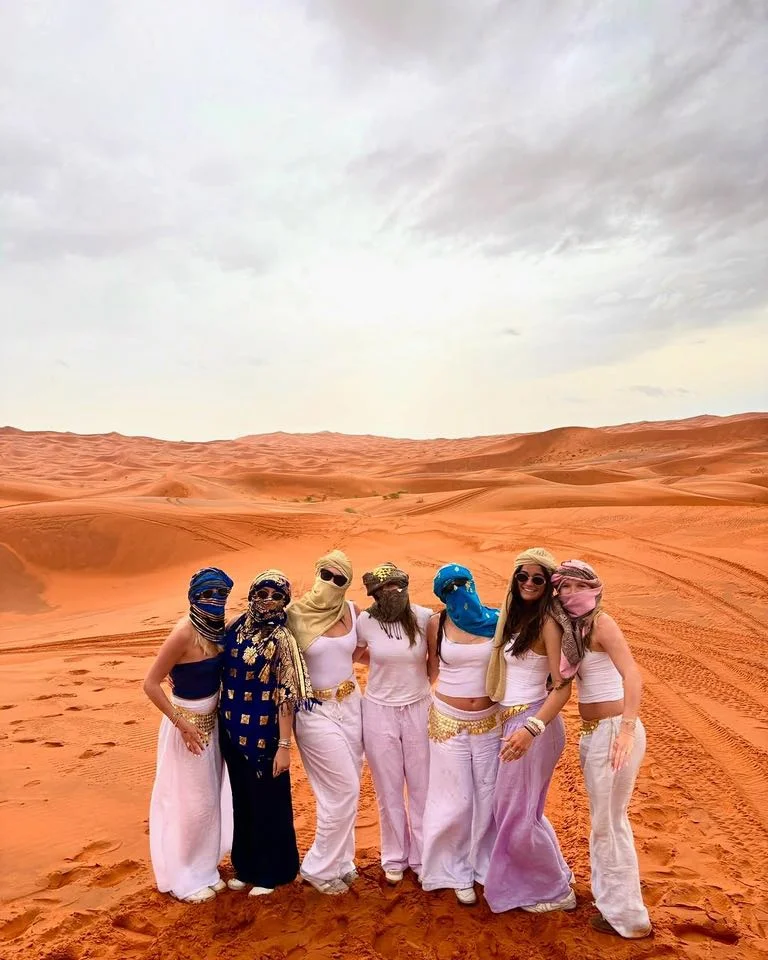
- Sun care: sunglasses, a hat, a scarf for sand and sunscreen.
- Tech: a power bank, a headlamp and a phone with a local SIM or roaming plan.
- Extras: wet wipes, a water bottle, a notebook and some cash in dirhams.
How to Book Student Travel Morocco
Booking student travel Morocco is simple, and we guide you at each step. Here is how it usually works.
| Step | What happens |
|---|---|
| 1. Message us | Send dates, group size, ages and your goals on WhatsApp. |
| 2. Get a plan | We send a draft itinerary and a clear quote. |
| 3. Adjust | Change stops, nights or activities with your teachers. |
| 4. Confirm | Pay a deposit and send the rooming and diet lists. |
| 5. Travel | Meet your driver-guide and enjoy the trip. |
Looking for other routes? Browse all our Morocco tours and the Morocco itineraries page.
Frequently Asked Questions
Is student travel Morocco safe?
Yes, for organised groups with a licensed driver, a local guide and enough adult supervisors. We advise one adult leader per ten students and travel insurance for all.
How many days do we need for student travel Morocco?
Three days is the minimum for the desert, five days is the most popular and seven days gives a calm pace with the imperial cities.
What is the best age for a Morocco student trip?
Secondary students, university groups and language schools all enjoy it. For younger students, choose shorter driving days and more stops.
Can you arrange vegetarian or allergy-friendly meals?
Yes. Send diets and allergies in advance, and we pass them to the hotels and the camp.
Do students need a visa?
It depends on nationality. Many can enter without a visa for short stays, but you must check the official rules for your passport before booking.
Can you invoice the school?
Yes. We provide a clear quote and an invoice for the school or parents’ association.
How do we book?
Send your dates, group size and ages on WhatsApp at +212 682 832 176 or through our contact page, and we reply with a plan and a quote.
Ready to Plan Your Student Trip?
Tell us your dates, the number of students and what you want them to learn. We will send a clear, personal quote for your student travel Morocco trip.