What to See and Do in Casablanca: 12 Best Sights, a 1-Day Plan and Local Food Tips
What to see and do in Casablanca is one of the first questions travellers ask when their flight lands in Morocco’s largest city. The answer is richer than most people expect: a huge mosque on the ocean, a district of Art Deco buildings, a small old medina, lively food markets and a long sea promenade.
Casablanca is not a city of ancient monuments like Fes or Marrakech, so what to see and do in Casablanca is different from what you plan elsewhere in Morocco. It is a modern port, a business centre and a living city, and its charm lies in details, such as a corner cafe, an old cinema or the smell of grilled fish at the harbour. This guide shows you the sights worth your time, how to fit them into one or two days and how to eat well.
All times and prices are approximate, and our team can arrange a private driver-guide if you prefer. For a trip from the Red City, see our day trip from Marrakech to Casablanca, and for a longer route read the 4 days from Casablanca to Marrakech.
What to See and Do in Casablanca: The Short Answer
The city is large, so the secret to what to see and do in Casablanca is to group the sights by area. The mosque and the old medina are on the coast, the Habous quarter and the Art Deco centre are in the middle and the Corniche stretches to the west. With a taxi or a driver, you can see all of them in a day.
Top Sights at a Glance
This table sums up what to see and do in Casablanca by area and by time needed.
| Sight | Area | Time needed | Best for |
|---|---|---|---|
| Hassan II Mosque | Coast | 1.5 hours | Architecture, first-time visitors |
| Old medina and the Sqala | Port | 1 hour | Local life, history |
| Habous quarter | Centre | 1.5 hours | Crafts, sweets, books |
| Art Deco centre | Downtown | 1 hour | Photographers, walkers |
| Corniche, Ain Diab | West coast | 1.5 hours | Sunset, cafes, beaches |
| Central Market | Downtown | 1 hour | Seafood lunch, food lovers |
| Rick’s Cafe | Old town | 1 hour | Film fans, an evening drink |
Hassan II Mosque: The First Stop
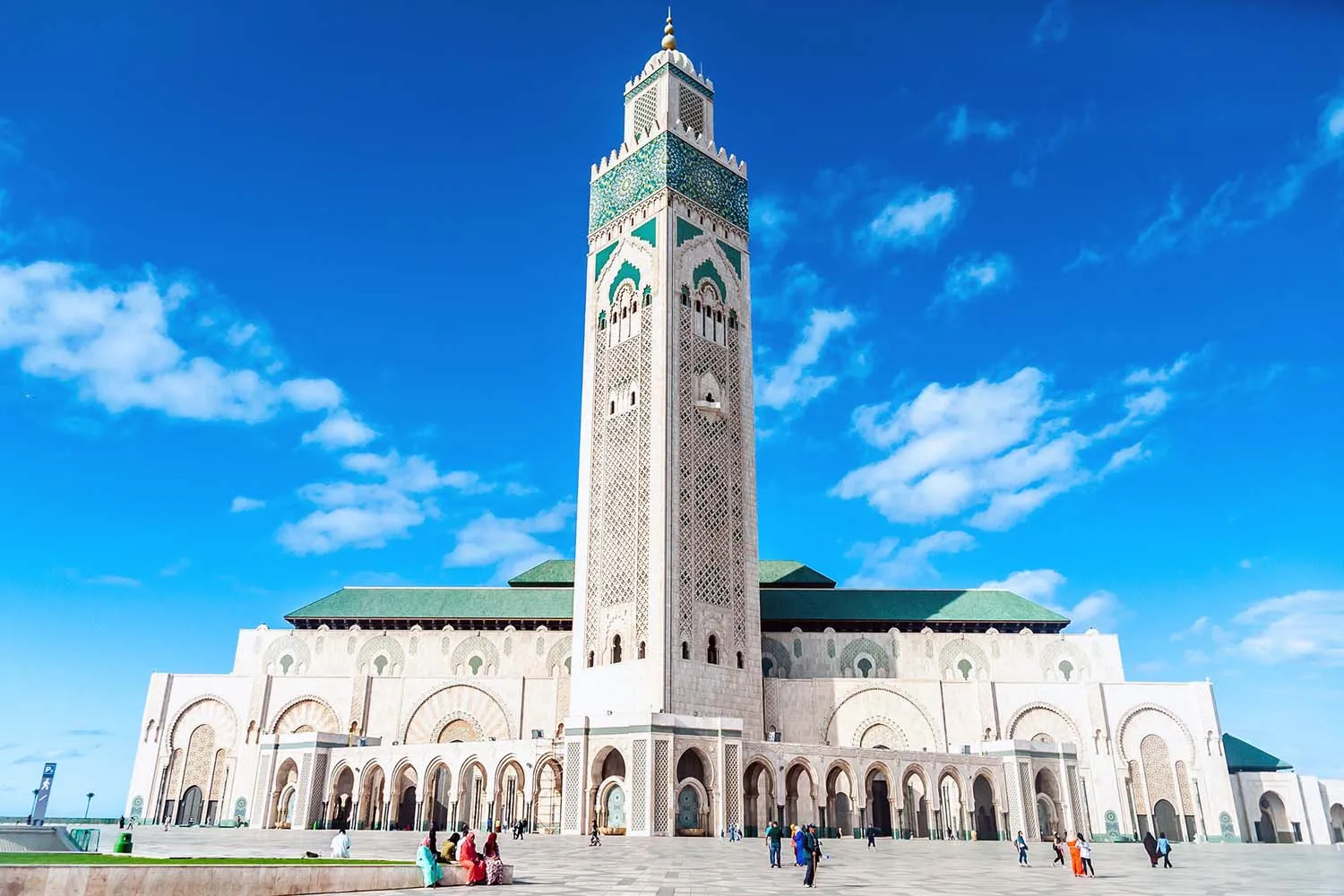
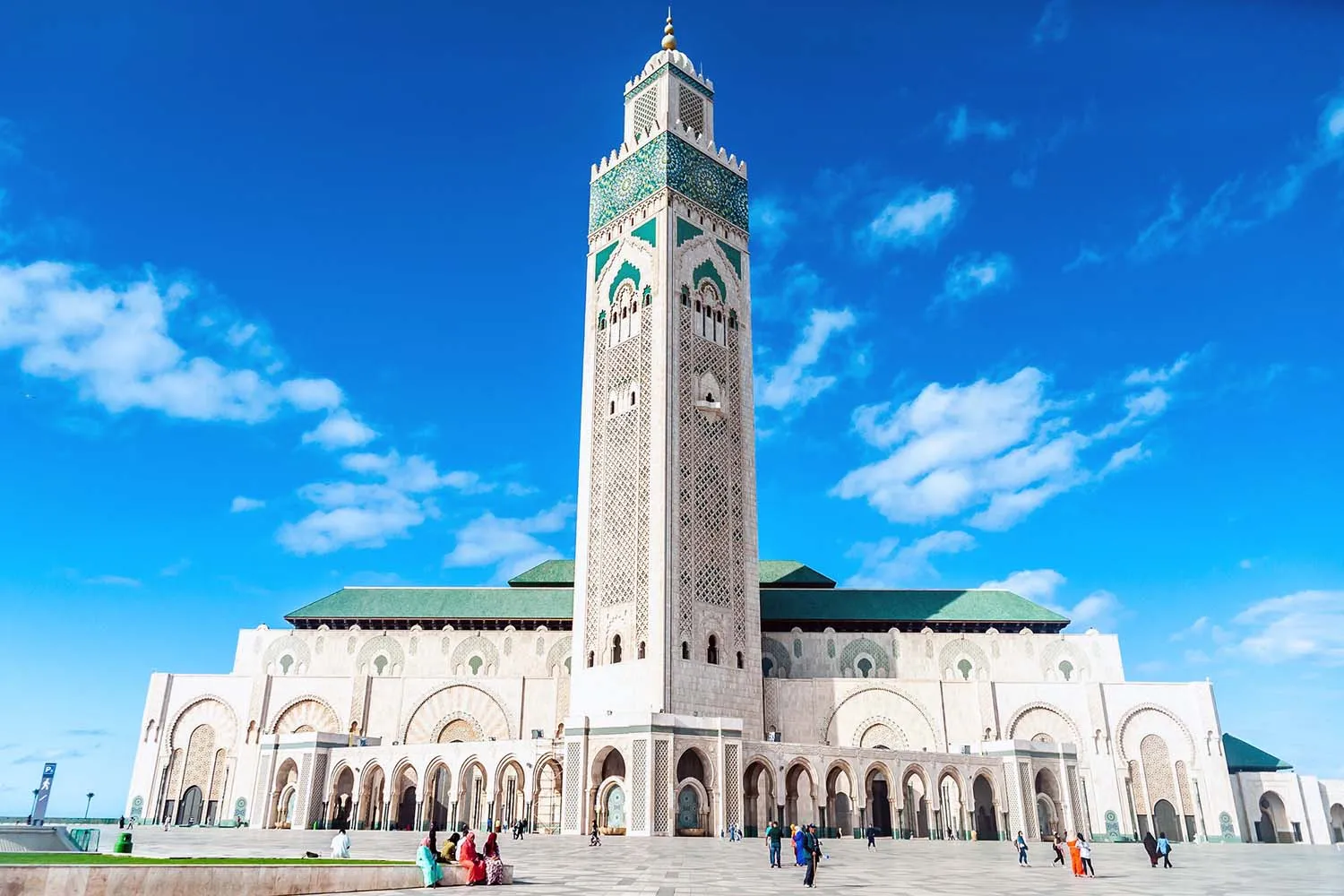
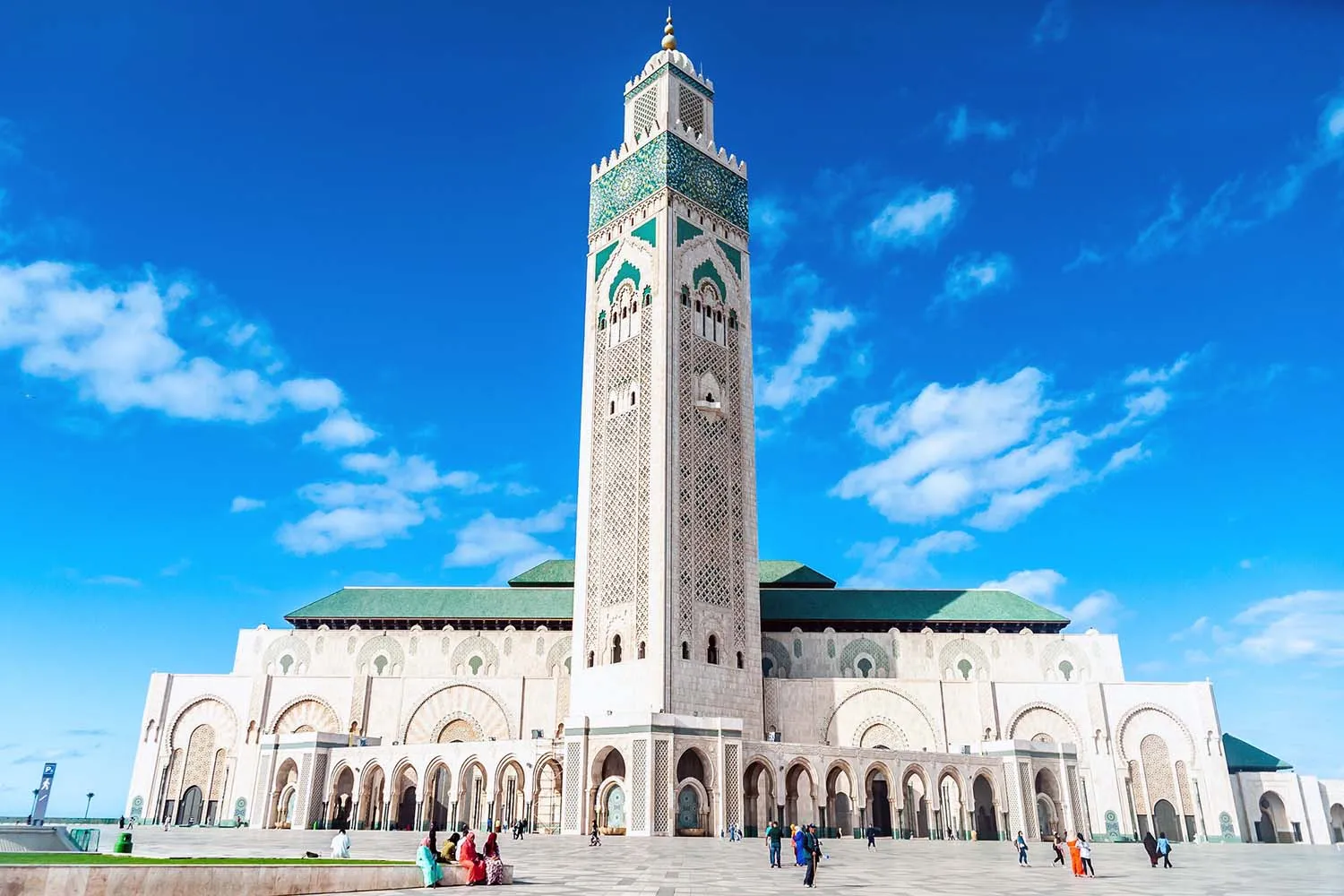
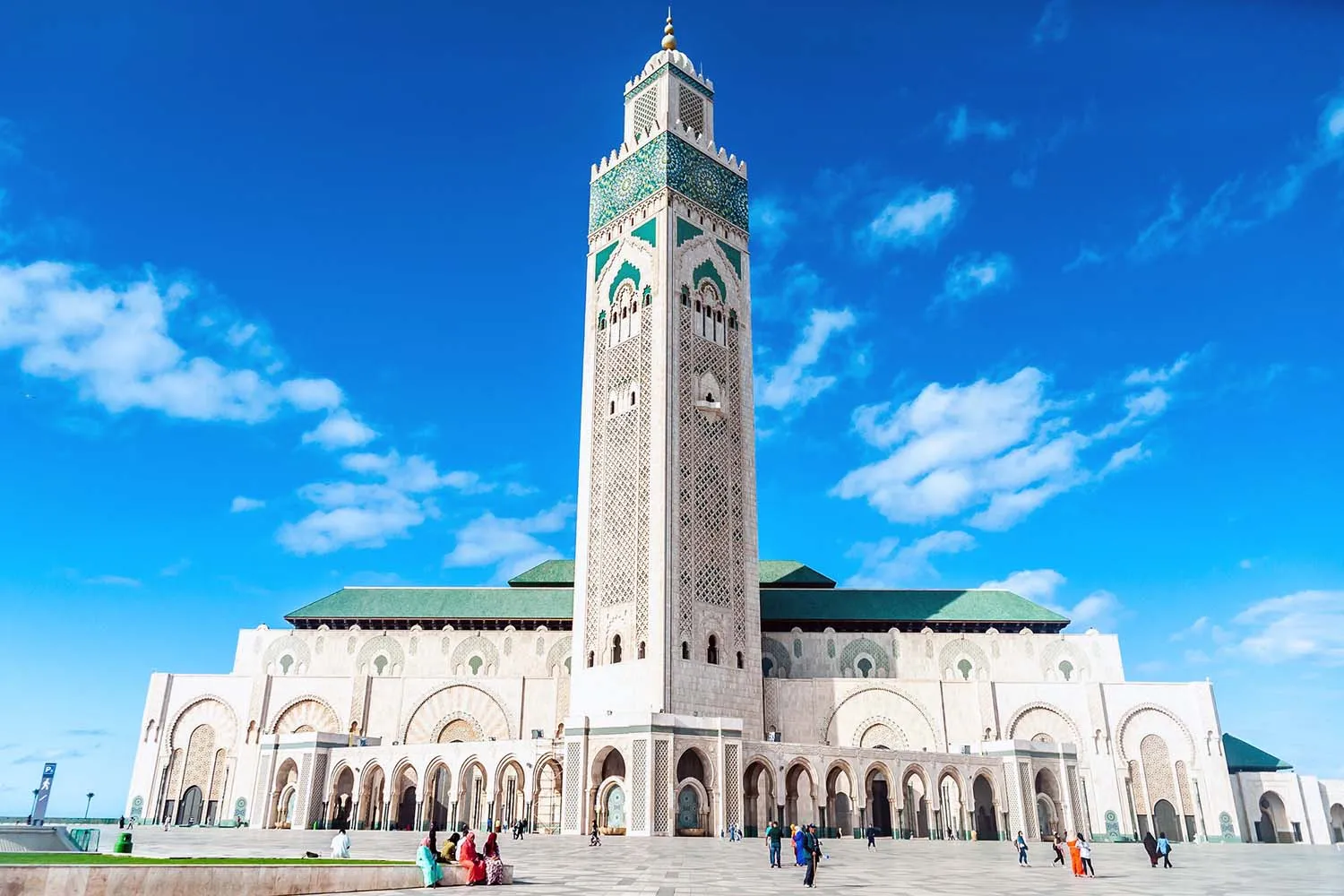
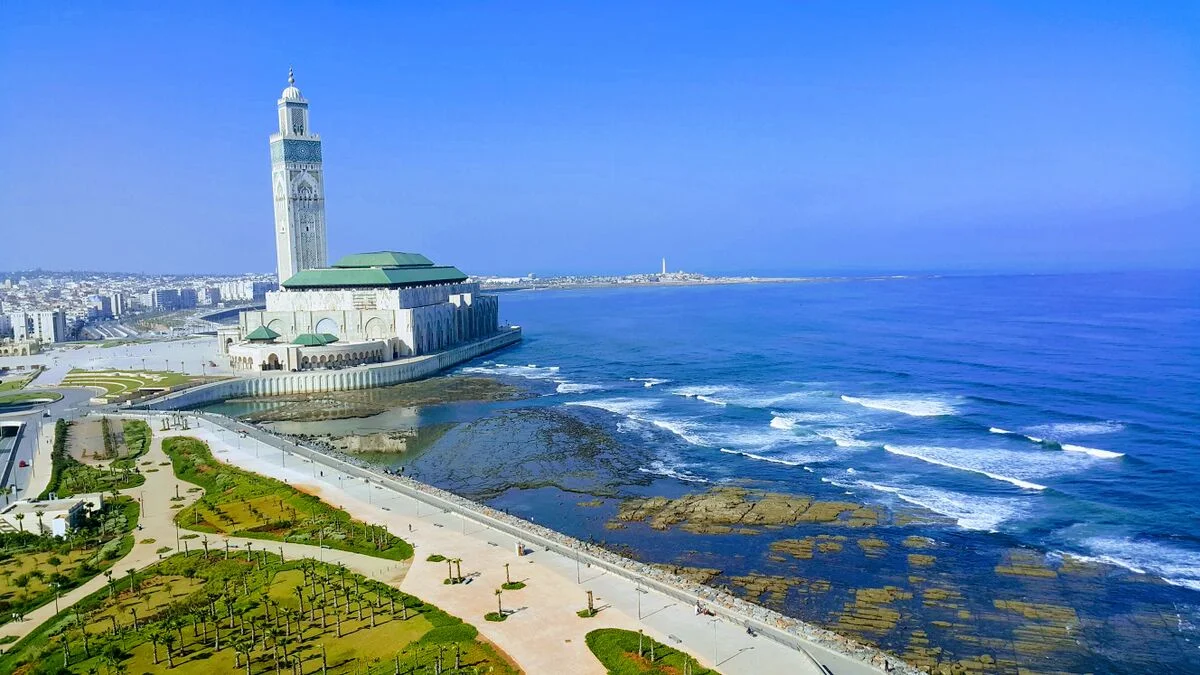
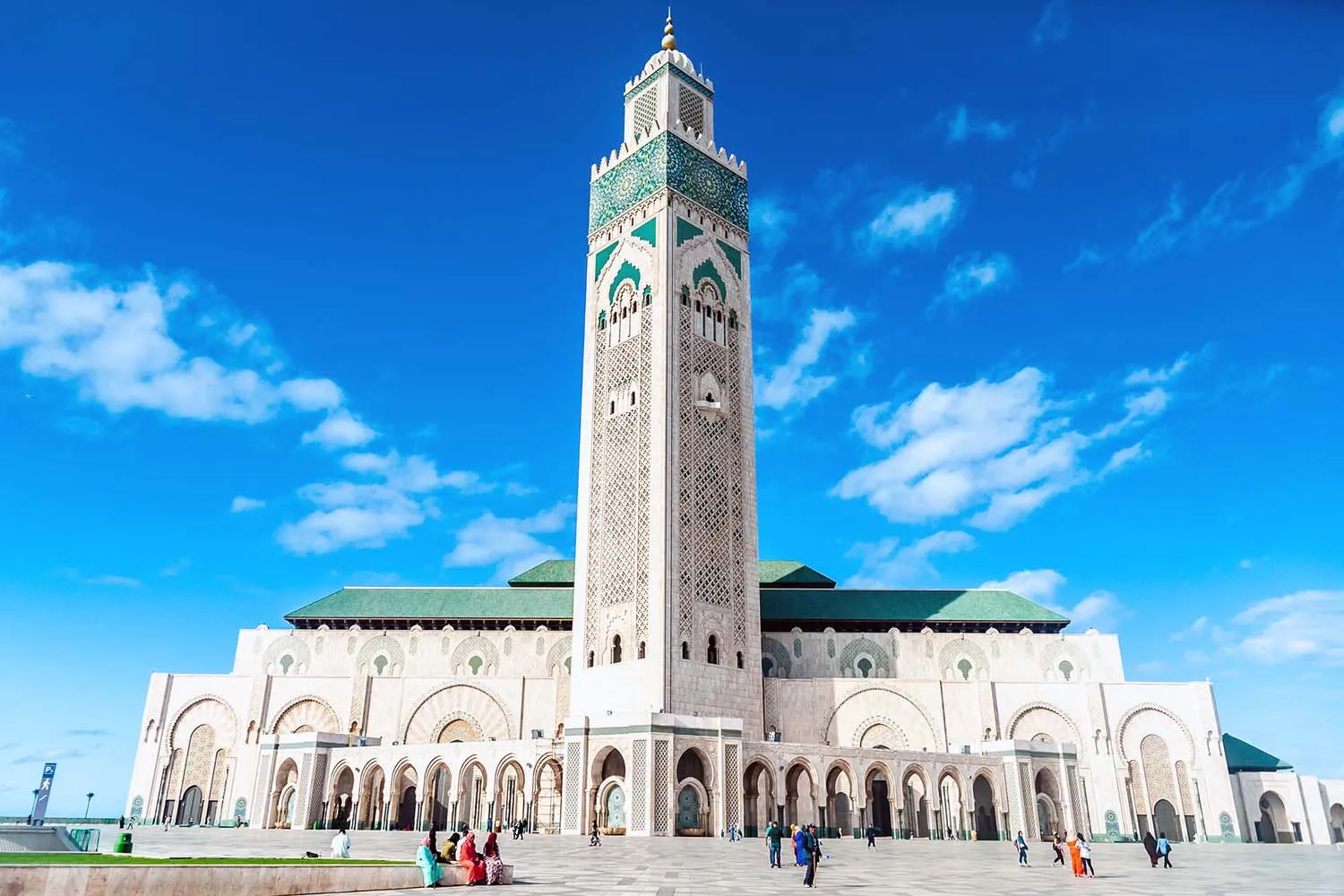
If you ask what to see and do in Casablanca, every local will first say the Hassan II Mosque. It opened in 1993, and its minaret, about 210 metres high, is among the tallest in the world. Part of the building stands over the Atlantic on a platform, and on some days the waves break just below the prayer hall.
It is one of the few mosques in Morocco that non-Muslim visitors can enter, with a guided tour in several languages. Inside you see a prayer hall for thousands of worshippers, a retractable roof, carved cedar wood, marble columns and fine zellige tile work. Below, there are traditional hammam baths in marble.
The mosque tour is the one booking worth making ahead for what to see and do in Casablanca. Book the tour in the morning, because the light inside is beautiful and the groups are smaller. Dress modestly, carry your shoes in a bag and expect to spend about an hour. In the evening, the minaret shines with a laser beam pointing towards Mecca, a sight many guests enjoy from the esplanade.
The Old Medina and the Sqala
Among what to see and do in Casablanca, the small old medina is a quiet contrast to the big boulevards. Its white walls and narrow lanes hold small shops, bakeries and workshops, and few tourists walk there. This is the place to see ordinary Casablanca life, with children playing, men drinking tea and shops selling spices and secondhand clothes.
At the edge of the medina stands the Sqala, an old sea fortress with cannons and a shady garden. Inside, a small restaurant serves traditional dishes in a green courtyard, and it is a favourite place for lunch or a mint tea. From here you can walk along the ramparts and watch the fishing boats in the port.
The Habous Quarter
The Habous quarter, also called the New Medina, was built in the 1920s and 1930s by French architects in a Moroccan style. The streets are tidy, the arcades are shady, and the whole area feels like a quiet village inside the city. It is an easy place to walk and a good answer to the question of what to see and do in Casablanca for crafts and sweets.
Many guests tell us this quarter is their favourite part of what to see and do in Casablanca. You will find pastry shops with almond sweets, bookshops, wood carvers, brass workers, olive sellers and small cafes. There is also a royal palace, a mosque and a lively market. The shopkeepers are friendly, and prices are fair, so it is a good place for gifts.
The Art Deco Centre
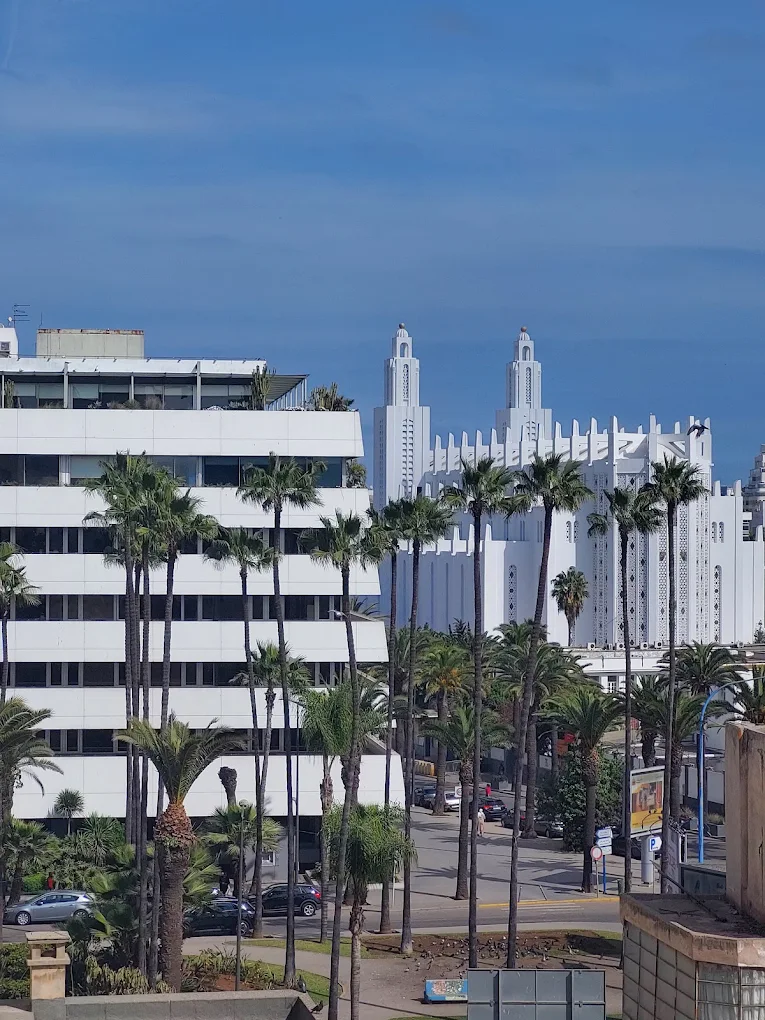
In the early 20th century, Casablanca grew quickly, and architects built apartment houses, hotels and cinemas in the Art Deco and Moorish styles. Many of these buildings still stand along Boulevard Mohammed V, around Place des Nations Unies and near the old Central Market. A slow walk, looking up, is one of the best answers to what to see and do in Casablanca for architecture lovers.
This walk is a quiet highlight of what to see and do in Casablanca, and it costs nothing. Look for curved balconies, patterned tiles, wrought iron doors and old signs. Places such as the Cinema Rialto, the courthouse called the Mahkama du Pacha and the Cathedral du Sacre-Coeur are worth a short stop. Some buildings need restoration, but this adds to the charm for many visitors.
The Corniche and Ain Diab
The Corniche is the long seafront promenade in the west of the city, around the district of Ain Diab. It has beaches, pools, cafes, restaurants and a few small clubs. In summer the area is busy with local families, and in spring and autumn it is calm and pleasant for a walk.
For many visitors, the Corniche is the best part of what to see and do in Casablanca in the evening. The best time is the late afternoon, when the light softens and the sea turns gold. You can sit with a coffee or a fresh juice and watch the surfers, then stay for dinner at a seafood restaurant. This is a good end to a day of sightseeing.
More Places Worth a Visit
If you have more time, the list of what to see and do in Casablanca grows. These smaller places are worth adding.
- Museum of Moroccan Judaism: the only museum of its kind in the Arab world, with objects and photos from Jewish life in Morocco.
- Central Market: a lively covered market for fish, fruit and spices, with small grills.
- Rick’s Cafe: a cafe inspired by the old film, with a piano, an arched room and a pleasant terrace.
- Arab League Park: a large green park with palm trees and walking paths, popular with families.
- Villa des Arts: a small gallery in an Art Deco villa with changing exhibitions.
- Morocco Mall: one of the largest shopping centres in Africa, with a view over the ocean.
A Short History Before You Go
Casablanca began as a small Amazigh port called Anfa. The Portuguese destroyed it in the 15th century and later rebuilt it as Casa Branca, the white house, which gave the city its name. In the 19th century it was a modest trading town, and it only grew into a metropolis after the French protectorate began in 1912.
The French planned wide boulevards, a new town and a modern port, and local architects added Moorish details. This mix explains why the city looks so different from the imperial capitals. Knowing the story makes what to see and do in Casablanca more meaningful, because every street tells part of it.
The city was also the site of the famous wartime conference of 1943, and the 1942 film that carries its name made it known worldwide, although the film was shot in a studio and not here. Today Casablanca is the economic capital, with over three million inhabitants, and it feels busy, young and modern.
Which Area Should You Stay In?
Your choice of area changes what to see and do in Casablanca on foot. Here are the main options.
- Centre and Art Deco district: best for walking, cafes and the train station, with good mid-range hotels.
- Maarif and Gauthier: lively streets with shops, restaurants and nightlife, popular with young locals.
- Ain Diab and the Corniche: the beach area, with resorts, pools and sea views, but a taxi ride from the old town.
- Old medina: a few small guesthouses for travellers who want an authentic and quiet base.
If you only stay one night before a tour, a hotel near the centre or the airport train station is the easiest choice. If you stay longer, the Corniche gives a holiday feel.
Food and Drink in Casablanca
Eating is a big part of what to see and do in Casablanca, and the food scene is one reason many travellers stay a second night. As a port city, it is known for fresh fish. Go to the Central Market or the fishing port, choose your fish and have it grilled on the spot, with salad, bread and lemon. Sardines, sole, prawns and calamari are all good.
A traditional lunch is part of what to see and do in Casablanca, so try a tagine, pastilla or couscous in a family restaurant, and ask for the dish of the day. For breakfast, look for a cafe serving msemen pancakes, honey, olive oil and mint tea. In the evening, the Corniche and the city centre offer sushi, Italian food and modern Moroccan menus.
Coffee culture is strong, and you will find small cafes on almost every corner. A glass of fresh orange juice costs very little, and the pastries in the Habous quarter make a good snack.
Shopping and Souvenirs
For souvenirs, the best places are the Habous quarter and the old medina. Look for leather bags and slippers, brass lamps, painted ceramics, argan oil, spices and sweets. Prices are fixed in the modern shops and the malls, and in the souks you can bargain politely.
For a modern view of what to see and do in Casablanca, visit the Morocco Mall, which has an ocean-view terrace, an aquarium and many international brands. The Maarif district also has local designers and small concept stores, which are good for gifts that are not the usual souvenirs.
Casablanca With Children
Families will find plenty to enjoy. Children like the wide esplanade of the mosque, the park and the beach, and the Morocco Mall has an aquarium and a play area. The Corniche has pools and restaurants with space to run around, and the tram is a small adventure in itself.
Keep days short, take breaks in the shade and plan lunch early. Choose the sights that match your children’s ages, since what to see and do in Casablanca is flexible and easy to shorten. For young travellers, what to see and do in Casablanca can also include a visit to the port at feeding time for the gulls, or a ride along the seafront by horse carriage in the evening.
A One-Day Plan: What to See and Do in Casablanca in 24 Hours
| Time | Plan |
|---|---|
| 9:00 | Guided tour of the Hassan II Mosque |
| 11:00 | Walk along the sea wall to the old medina and the Sqala |
| 12:30 | Lunch at the Central Market or the Sqala courtyard |
| 14:30 | Art Deco walk on Boulevard Mohammed V |
| 16:00 | Habous quarter: sweets, crafts and books |
| 18:00 | Corniche at Ain Diab, sunset and a coffee |
| 20:00 | Seafood dinner or a drink at Rick’s Cafe |
This plan fits what to see and do in Casablanca in one day without rushing. Use a taxi between the areas, and book the mosque tour ahead in the busy season.
A Second Day in Casablanca
With a second day, you can slow down and explore more of what to see and do in Casablanca. Spend the morning in the Museum of Moroccan Judaism and the Villa des Arts, enjoy lunch in the Maarif district, and relax in the afternoon on the beach or in the Arab League Park. In the evening, try a local concert, a rooftop cafe or a stroll through the lively streets of the Gauthier district.
Many guests also use the second day for a trip to Rabat, the capital, about one hour away by train. It has a great old kasbah, a royal mausoleum and an unfinished tower, and it works well as a half day.
Getting Around Casablanca
- Tram: two clean lines cross the city and are cheap and simple.
- Petit taxi: red taxis are good for short trips, so ask for the meter.
- Train: the fast line connects the airport and the main stations to Rabat, Marrakech and Tangier.
- Private driver: the easiest way to see several areas in a day, especially with luggage or a group.
Traffic can be heavy at rush hour, so plan what to see and do in Casablanca with the mosque and the Corniche outside the busiest times. For a longer route, our 8 days Morocco tour from Casablanca starts in the city and returns to it.
Day Trips from Casablanca
Casablanca is a good base for short trips, and they extend what to see and do in Casablanca beyond the city. Rabat, the capital, is about one hour north, with the Kasbah of the Udayas and the Hassan Tower. El Jadida is about one hour south, and its Portuguese cistern is part of the UNESCO site of Mazagan. Marrakech is about three hours by road, and the fast train takes about two hours and a half.
For ideas, read the Casablanca imperial cities tour and browse our Morocco day trips page.
Best Time to Visit Casablanca
The weather shapes what to see and do in Casablanca. The city has a mild Atlantic climate. Spring and autumn are the best seasons, with warm days and soft light. Summer is pleasant on the coast, with temperatures around 27 degrees, but the Corniche is busy. Winter is cooler and sometimes rainy, which is a good time for museums and cafes.
Practical Tips for Your Visit
- Book the mosque early: morning tours are quieter and cooler.
- Dress modestly: cover shoulders and knees for the mosque.
- Carry small cash: for taxis, cafes and market stalls.
- Keep your phone safe: use normal city care in crowds.
- Wear comfortable shoes: you will walk more than you expect.
- Check opening days: some museums close on Mondays or Fridays.
Whatever your plans, knowing what to see and do in Casablanca helps you use your time well, and a local driver can add useful context. If you plan to continue to the Red City, read what you should not miss in Marrakech.
Frequently Asked Questions
What to see and do in Casablanca in one day?
See the Hassan II Mosque, walk the old medina and the Sqala, have lunch at the Central Market, stroll the Art Deco centre and the Habous quarter, and end on the Corniche at sunset.
Is Casablanca worth visiting?
Yes. What to see and do in Casablanca includes the mosque, the Art Deco buildings, the food and the sea. It is a modern city, so it suits travellers who want to see everyday Morocco.
Can non-Muslims enter the Hassan II Mosque?
Yes. Guided visits run most days, except at prayer times and on Fridays morning. Check the schedule before you go.
How many days do you need in Casablanca?
One full day covers the main sights. Two days let you add museums, the beach and a short trip to Rabat.
Is Casablanca safe for tourists?
Yes, with normal city care. Keep valuables out of sight, use official taxis and avoid empty streets at night.
Can you arrange a private tour of Casablanca?
Yes. Send your date and the number of travellers on WhatsApp at +212 682 832 176 or through our contact page, and we reply with a quote made for you.
Ready to Plan Your Visit?
Now that you know what to see and do in Casablanca, tell us your dates and your hotel. We will plan a private tour with a driver-guide and send a clear quote.