Author: admin

  • Travel to Morocco 2027: Best Months, Planning Guide and Routes

    Travel to Morocco 2027: Best Months, Planning Guide and Routes

    Morocco Trip Planning · 2027 Guide · Updated 2026

    Travel to Morocco 2027: Best Months, Planning Guide and Routes

    Plan early, choose your season and enjoy a calm, well-built trip next year

    If you want to travel to Morocco 2027, the best moment to start planning is now. Good riads, desert camps and drivers fill up months ahead, especially in spring and autumn, and the calendar for next year has a few important dates, such as Ramadan, that change the feel of a trip.

    This guide explains how to travel to Morocco 2027 with a clear plan. You will find the month-by-month calendar, the expected dates of Ramadan and the Eid holidays, the best routes for 5, 7, 10 and 14 days, what to book early, how to organise the road, and a checklist you can use today. It is written for first-time visitors and for returning travellers who want a new region.

    If you want a wider introduction first, read our Morocco travel guide, then come back here to fix your dates.

    Travel to Morocco 2027: The Short Answer

    Quick answer: to travel to Morocco 2027 at the best time, choose March to May or September to November, avoid the first weeks of Ramadan if you want busy evenings in the cities, book riads and camps four to six months ahead and plan seven to ten days for a first visit. Check entry rules with your government before you pay for anything.
    Question Short answer
    Best months March to May and September to November
    Expected Ramadan Around 8 February to 9 March 2027
    Book ahead Four to six months for spring and autumn
    Ideal length 7 to 10 days
    Best base Marrakech and Fes
    Best extra One or two nights in the Sahara
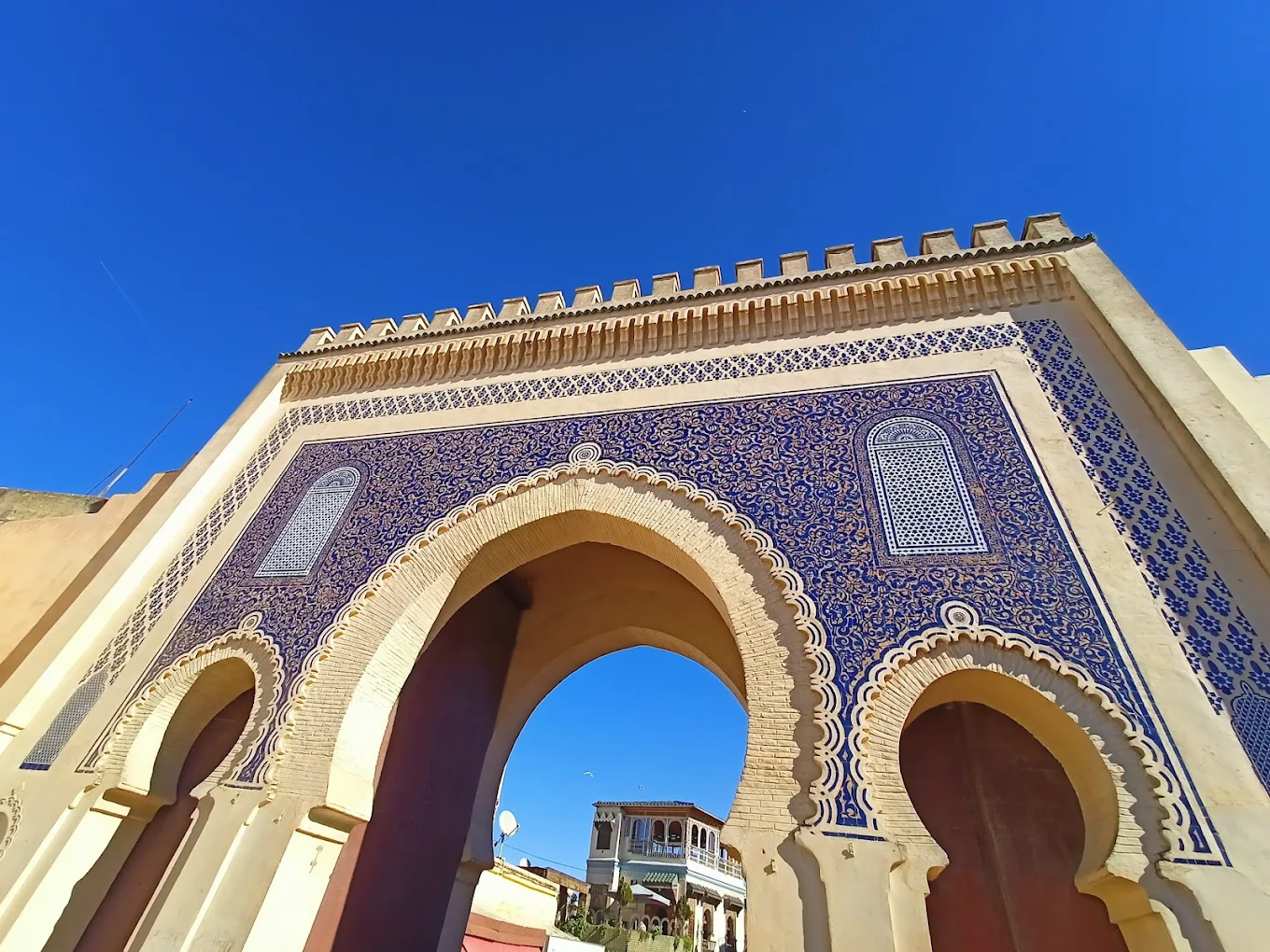
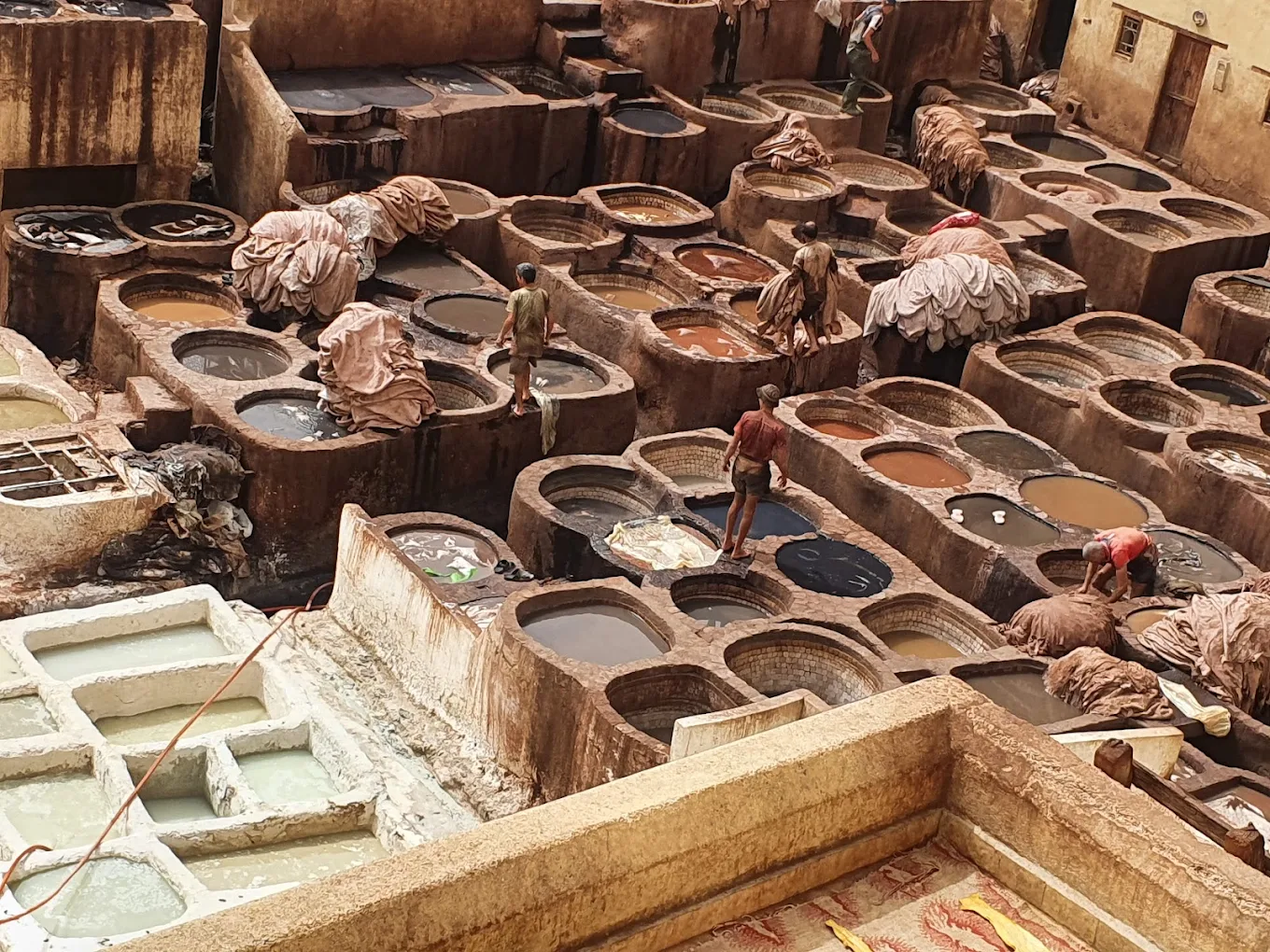
    Old medina of Fes, a highlight when you travel to Morocco 2027
    The Fes medina is a highlight of any year, and it is calm in the early morning.

    Why Plan Early to Travel to Morocco 2027

    Many visitors wait until a few weeks before the flight, and then find that the best riad or camp is full. Morocco is a small tourism market with a limited number of excellent places, and demand is strong in March, April, October and November. If you decide to travel to Morocco 2027 in spring, booking in November or December gives you the choice.

    Early planning to travel to Morocco 2027 also gives better flights, calmer decisions and time to read. You can choose the length of the trip, compare routes and ask questions without pressure. A good local team can hold your dates, adjust the route and prepare the trip so that you only need to pack.

    • Choice: the best riads and camps are still available.
    • Flexibility: you can change dates if your plans change.
    • Calm: you can read, compare and decide slowly.
    • Comfort: a driver-guide and a route made for you.

    Month-by-Month Calendar to Travel to Morocco 2027

    The table below shows what to expect in each month. It is a guide for general planning, and conditions can vary from year to year.

    Month Weather Good for
    January Cool, snow in the Atlas Quiet cities, skiing, coast
    February Cool, sunny days Almond blossom, Marrakech
    March Mild and green All regions, desert
    April Warm, long days Everything, best light
    May Warm to hot Mountains, north, coast
    June Hot inland Coast, Atlas villages
    July and August Very hot inland Essaouira, Rif, high Atlas
    September Hot, easing Coast, early desert
    October Warm and stable All regions, desert
    November Mild, cool nights Cities, desert, Atlas
    December Cool, cold desert nights City breaks, coast

    For deeper advice on one city, read our guide to the best month to go to Marrakech.

    Ramadan and Eid Dates to Expect in 2027

    Ramadan is the most important date to know when you travel to Morocco 2027. According to the expected calendars published by news sources, Ramadan 2027 is likely to start around 8 February and end around 9 March, with Eid al-Fitr expected around 9 or 10 March. Eid al-Adha is expected in mid-May. The exact days depend on the sighting of the moon, so treat these as planning dates for your plan to travel to Morocco 2027 and confirm closer to the time.

    What does this mean for a visitor? During Ramadan, many people fast from sunrise to sunset. Cities are quieter in the day, some restaurants close or serve discreetly, and the atmosphere changes after sunset, when families gather for the evening meal. Some guests love this special mood, and others prefer a normal rhythm. If you want maximum choice of restaurants and shops, avoid the first weeks of Ramadan and the days around Eid, when transport and hotels can be full with local travellers.

    Tip: if you travel during Ramadan, be discreet when eating and drinking in public in the daytime, dress modestly and plan sightseeing in the morning. Evenings are lively, and many people enjoy sharing iftar.

    Spring 2027: March to May

    Spring is the favourite season for guests who travel to Morocco 2027 for the first time, and many of them return for a second trip. The mountains are green, the days are warm and the desert nights are mild. April is often the best month, with long daylight and soft light for photographs. May starts to be hot in the south, so plan the desert early in the month or stay in the mountains and on the coast.

    If your dates overlap with the end of Ramadan in March, expect a festive atmosphere around Eid, followed by busy domestic travel. Book early for this week, and keep a flexible plan for roads and trains.

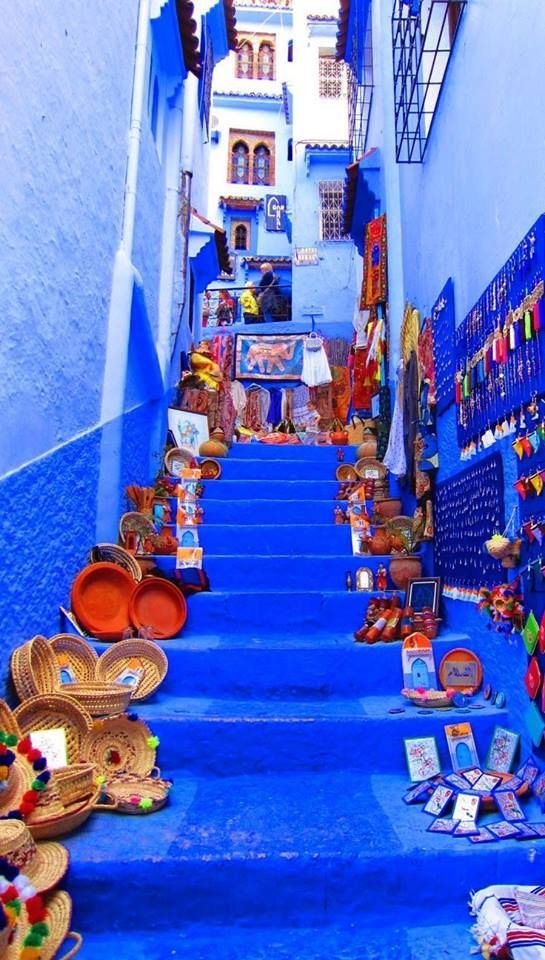
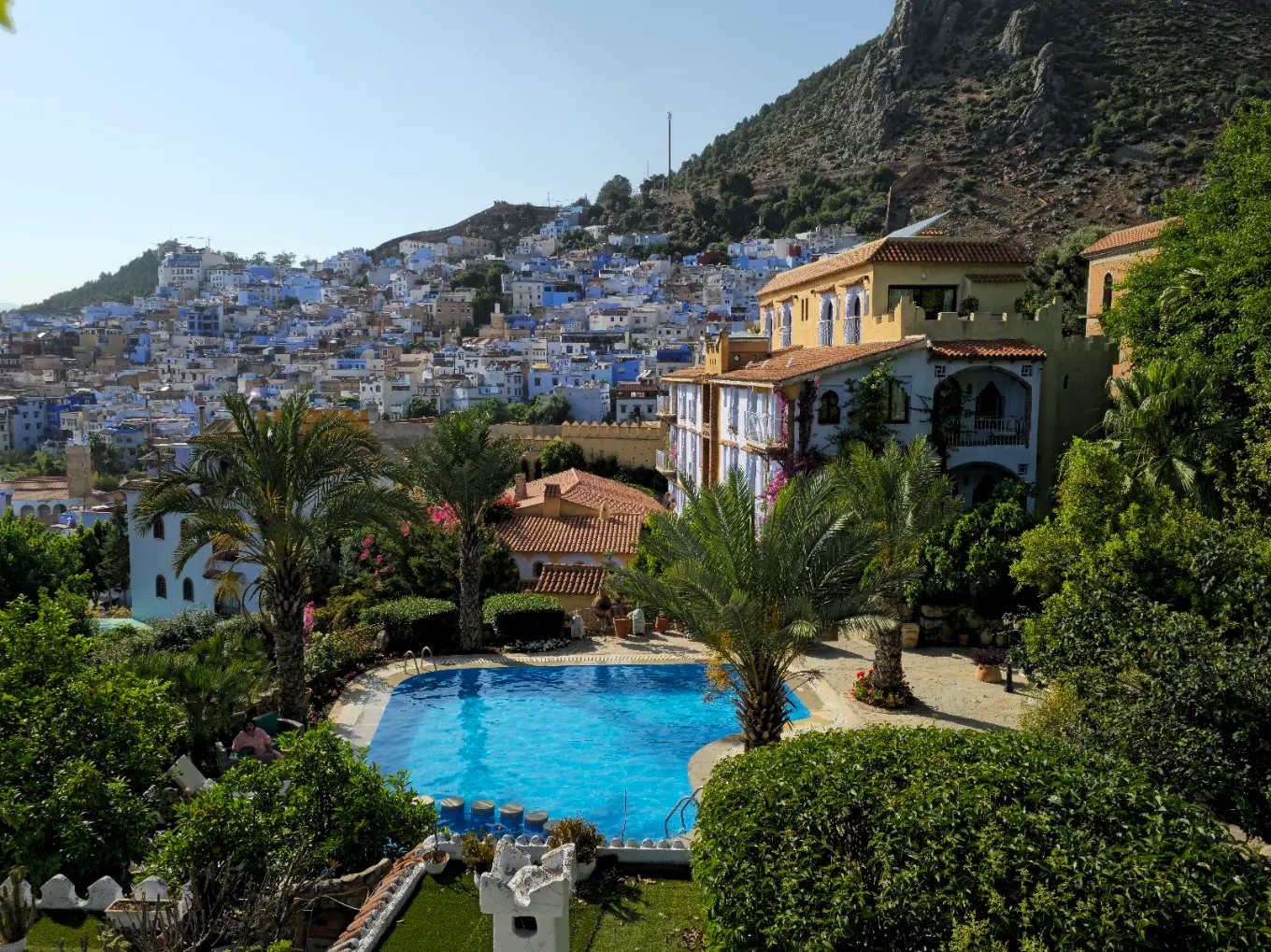
    Blue streets of Chefchaouen in spring when you travel to Morocco 2027
    Spring brings flowers and cool air to the blue city.

    Summer 2027: June to August

    Summer is hot inland, with temperatures above 40 degrees in Marrakech and the south, so plan carefully if you travel to Morocco 2027 in July or August. It is still possible to travel to Morocco 2027 in summer if you choose the right places. The Atlantic coast, Essaouira, the Rif mountains and the High Atlas villages stay pleasant, and many local families go to the sea.

    If you must visit the desert in summer, plan early mornings and late evenings, drink a lot of water and stay in a camp with air conditioning. The sunrise and the stars are still wonderful, but the midday hours are for rest.

    Autumn 2027: September to November

    Autumn is the second great season. After the heat of summer, the air becomes gentle, the days are golden and the desert is comfortable again from October. This is a very popular time to travel to Morocco 2027, so book the Sahara and the best riads early. November is excellent for cities, the Atlas and the dunes, with cool nights and clear skies.

    Markets are full of fresh dates, figs and pomegranates, and the light is perfect for photographs. If you can choose, October is a safe and beautiful month for almost any route to travel to Morocco 2027.
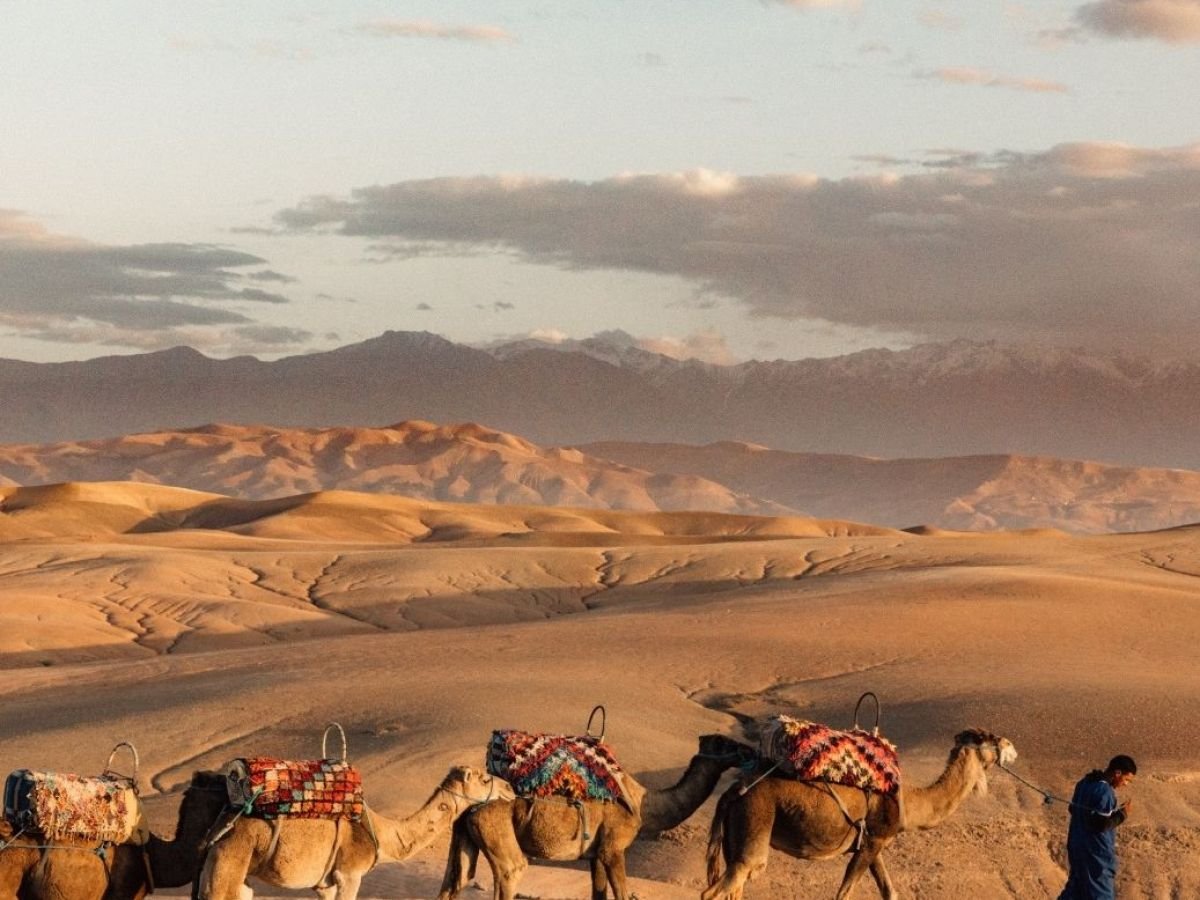
    Camels in the Agafay desert near Marrakech when you travel to Morocco 2027
    Autumn light on the stone desert of Agafay near Marrakech.

    Winter 2027: December to February

    Winter is quieter and cooler. Marrakech and the coast are pleasant by day, the High Atlas can be snowy and the desert has bright days and cold nights. If you travel to Morocco 2027 in January or February, pack warm layers and choose a camp with heavy blankets or a heater.

    Winter is also the best time for good deals on riads and for quiet visits to the main sights. Agadir and the south-west coast are mild, which makes winter a smart choice to travel to Morocco 2027 with fewer crowds, and the almond trees start to bloom in February in some valleys of the Atlas.

    Best Routes to Travel to Morocco 2027

    A route should match your time, your interests and your energy. Here are four proven plans for guests who travel to Morocco 2027 and want a clear structure.

    Length Route Style
    5 days Marrakech, Ait Benhaddou, Sahara, back Fast, highlights
    7 days Marrakech, Atlas, Merzouga, Fes Classic first trip
    10 days Casablanca, Fes, Chefchaouen, Sahara, Marrakech Balanced
    14 days North, imperial cities, desert, coast Relaxed and complete

    For full plans, see our Morocco itineraries and the 2 weeks in Morocco itinerary. If you are not sure about the length, how many days in Morocco is enough gives a simple rule to decide.

    Marrakech is the best base for the first days. Our Marrakech travel itineraries and the Marrakech tourism guide show how to organise two to four days in the red city, and the UNESCO-listed medina deserves a full day.

    The Sahara in 2027

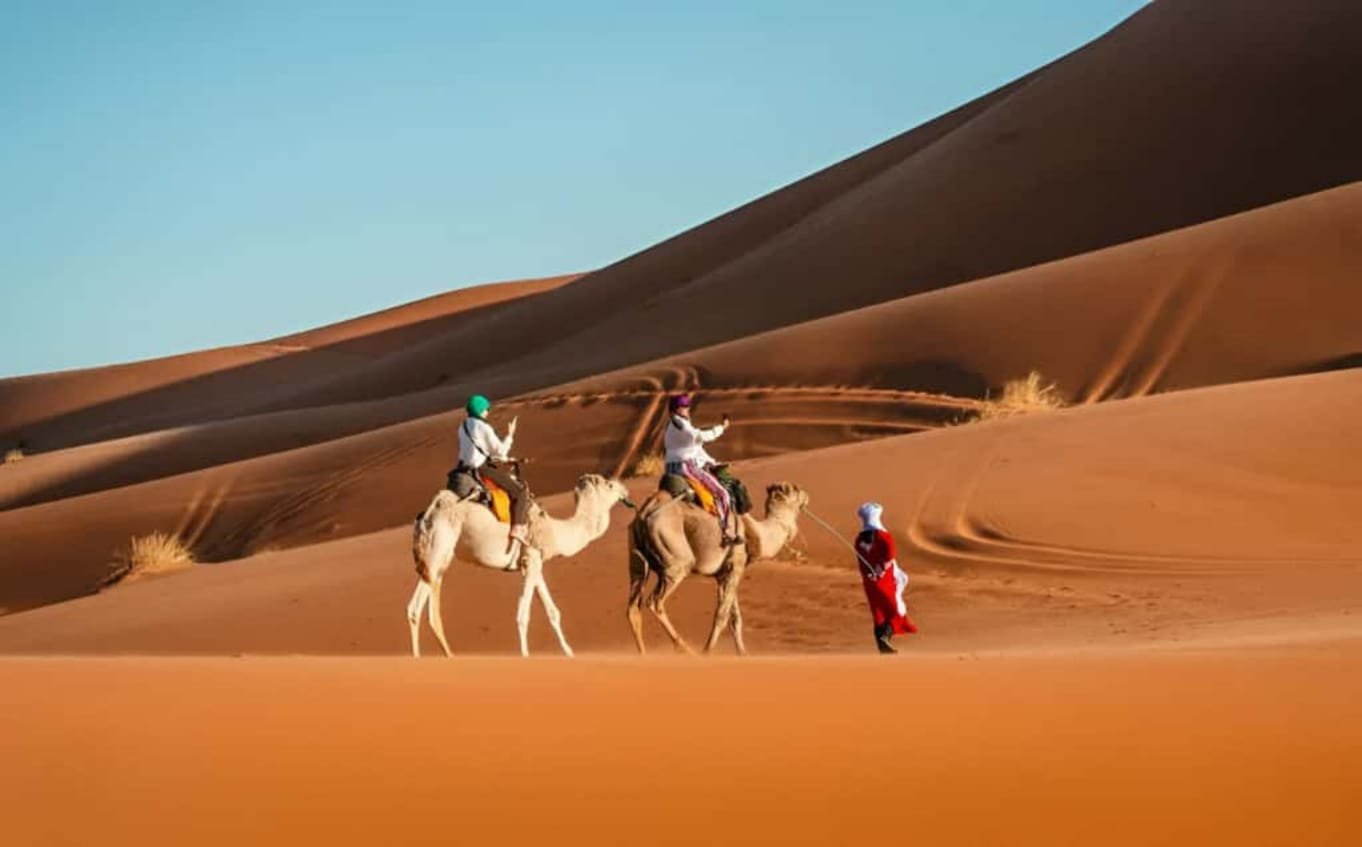
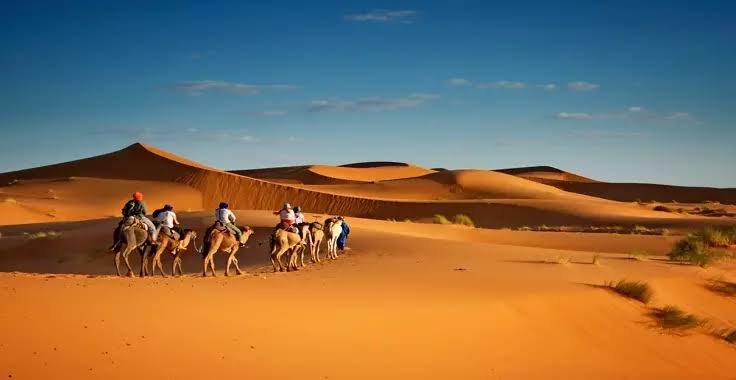
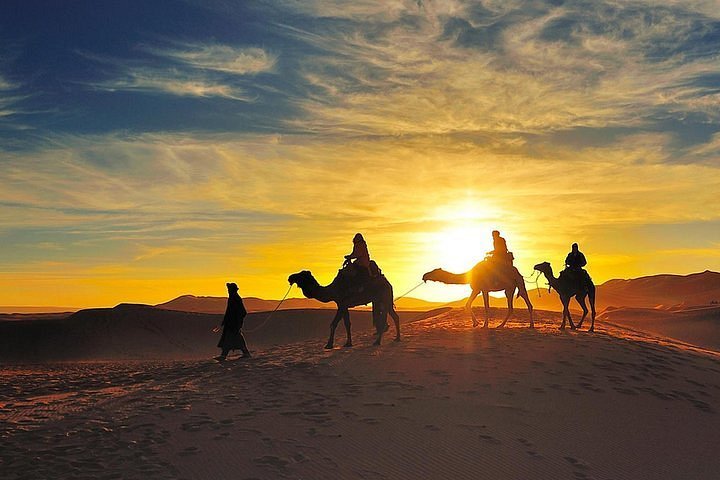
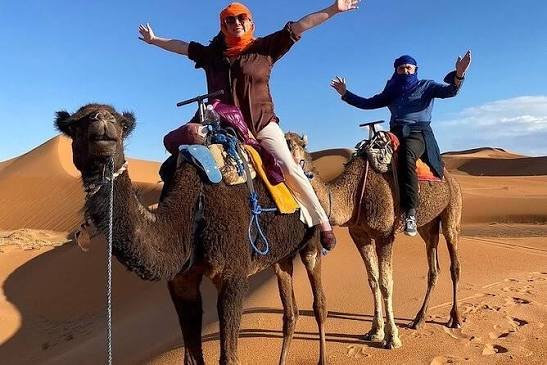
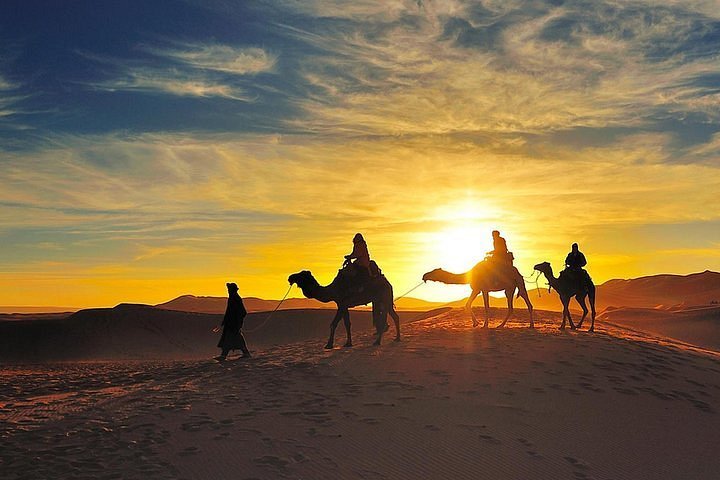
    For many people who travel to Morocco 2027, the Sahara is the main reason to come. The big dunes near Merzouga are the most famous, and the dunes of Zagora are closer to Marrakech. The best months for the desert are March, April, October and November, and the experience is similar every year: a camel ride at sunset, dinner and music in a camp, and a sunrise on the sand.

    Plan at least two days for the Sahara, because the roads are long, and give it priority when you travel to Morocco 2027 in a short trip. Read our guides to Erg Chebbi and what to do in Merzouga, and see the 3 days from Marrakech to Merzouga tour for a ready route.
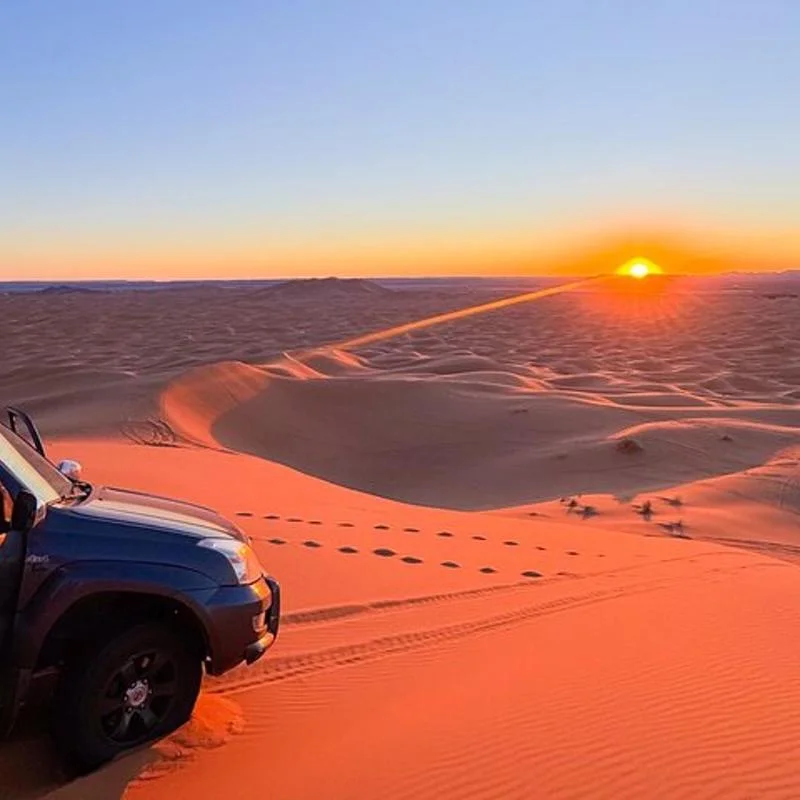
    Sunrise over the Sahara dunes when you travel to Morocco 2027
    A desert sunrise is the best reward of an early morning.

    What to Book Early

    When you travel to Morocco 2027, not everything needs an early booking, but a few things do. The desert camp is the first, because the best ones have a small number of tents. Riads in Marrakech and Fes are the second, especially small family-run places in the old medina. Flights are the third, and a private driver-guide for the dates you want is the fourth.

    • Four to six months ahead: desert camps, riads and flights for spring and autumn.
    • Two to three months ahead: driver-guide, day trips and special dinners.
    • Last weeks: cooking class, hammam and small activities.

    We hold your dates, suggest the best choices and prepare a clear plan. You can browse all Morocco tours and adjust any route.

    Entry Rules and Documents

    Entry rules for those who travel to Morocco 2027 depend on nationality, and they can change, so check the official website of your government and of the Moroccan authorities before you book. Make sure that your passport is valid for the period required, and keep digital copies of your passport, insurance and bookings. Some airlines ask for proof of onward travel.

    Travel insurance with medical cover is strongly recommended, and it should include the activities you plan, such as the desert and quad bikes. For safety information, read is Morocco safe to travel, which answers the common questions in a calm and honest way.

    Money, Phone and Connectivity

    The currency is the Moroccan dirham, and you can withdraw cash from bank machines in cities. Cards work in hotels and larger shops, but small cash is useful in markets, taxis and villages. A local SIM or an eSIM gives cheap data, and wifi is common in riads and cafés. Download offline maps for the mountains and the desert.

    Before you leave, tell your bank about your dates, and keep one spare card in a different bag. A small money belt or a zipped pocket is enough for crowded markets.

    What to Pack

    • Layers: light clothes for the day and a jacket for the mountains and desert.
    • Modest clothes: shoulders and knees covered in cities and villages.
    • Shoes: comfortable shoes for cobbled streets and closed shoes for dunes.
    • Sun care: hat, sunglasses and sunscreen.
    • Tech: a plug adapter, a power bank and offline maps.
    • Small extras: wet wipes, a scarf and a reusable bottle.
    Tip: pack light. If you travel to Morocco 2027 in spring or autumn, one medium bag and a small day pack are enough, and you can leave the rest at your riad before the desert.

    Families, Couples and Groups

    The plan changes with the group. Families should choose shorter driving days, a pool in the riad and an early Sahara night with a short camel ride. Couples often prefer a luxury tent, a private dinner and a slow day on the coast. Groups of friends can share a vehicle and save time, and solo travellers can join small tours or choose a private driver for flexibility.

    No matter who you are, the best way to travel to Morocco 2027 is to choose a pace that you enjoy. Two nights in each main base are better than one night in many places, and one free afternoon is worth more than another monument.

    Mistakes to Avoid

    The most common mistake is to wait too long to book, and then to accept a camp or a riad that is not the first choice. The second is to ignore Ramadan and Eid dates, and then be surprised by changed opening hours. The third is to plan too many places and spend each day in a car.

    • Do not plan long drives on arrival and departure days.
    • Do not forget a warm layer for the desert and the Atlas when you travel to Morocco 2027 in winter.
    • Do not accept unrequested guides in the medina who later ask for money.
    • Do not compare prices without comparing what is included.

    Time, Pace and Comfort When You Travel to Morocco 2027

    Many travellers who plan to travel to Morocco 2027 ask how fast the trip should be. The answer is simple: choose a pace that lets you enjoy each place. A day with one main visit, a long lunch and a free evening is better than a day with five stops. The roads are long, the sun is strong and the medinas are tiring, so rest is part of the plan.

    Comfort matters too. A private car with a driver-guide removes the stress of parking, tickets and directions, and a good riad gives you a quiet courtyard after a busy day. If you want to travel to Morocco 2027 with children or older parents, tell us in advance, and we will shorten the drives, add a rest day and choose rooms with easy access.

    Finally, keep one day in reserve. Weather, a late flight or a mountain road can change the schedule, and a spare day makes the whole trip calmer. Guests who travel to Morocco 2027 with this buffer almost always say that it was the best advice they received.

    Your Planning Checklist to Travel to Morocco 2027

    Use this short list to move from idea to booking. First, choose your month and check Ramadan and Eid dates. Second, decide the length, using seven to ten days as a base. Third, choose two or three regions and one night or two in the Sahara. Fourth, ask for a plan with a driver-guide, riads and a camp. Fifth, check entry rules, insurance and flights. Finally, book the key nights and keep a free afternoon in each city.

    If you follow these steps, your plan to travel to Morocco 2027 will be calm, rich and easy, and you will arrive with a clear idea of every day.

    Frequently Asked Questions

    When is the best time to travel to Morocco 2027?

    March to May and September to November are the best months, with warm days and comfortable nights in most regions.

    When is Ramadan in 2027?

    Ramadan 2027 is expected to start around 8 February and end around 9 March, but the exact dates depend on the moon sighting.

    How far ahead should I book to travel to Morocco 2027?

    Four to six months ahead is ideal for spring and autumn, especially for desert camps and riads.

    How many days do I need?

    Seven to ten days is ideal for a first visit, and five days is a good minimum.

    Is it safe to travel to Morocco 2027?

    Most visitors have a safe and happy trip. Use common sense, dress modestly and use licensed local guides.

    How do I book?

    Send your dates and the number of travellers on WhatsApp at +212 682 832 176 or through our contact page. We reply with a private plan.

    Ready to Travel to Morocco 2027?

    Tell us your dates, your interests and your pace. We will hold your dates and build a clear private plan for your trip to Morocco in 2027.
    Request a Free QuoteWhatsApp Us

  • Morocco Travel: The Complete 2026 Guide to Plan Your Trip

    Morocco Travel: The Complete 2026 Guide to Plan Your Trip

    Morocco Trip Planning · Travel Guide · Updated 2026

    Morocco Travel: The Complete 2026 Guide to Plan Your Trip

    Imperial cities, blue streets, Atlas mountains, Atlantic coast and the Sahara in one clear plan

    Morocco travel is easier, richer and more varied than most people expect. In one country you can walk through a thousand-year-old medina in the morning, cross the High Atlas by afternoon and sleep in a Sahara camp at night. The roads are good, the hosts are warm and the food is among the best in Africa and the Mediterranean world.

    This guide covers Morocco travel from start to finish: the best time to go, the main regions, how long to stay, how to move around, where to sleep, what to eat, how to behave, how to stay safe and what to pack. It is written for first-time visitors who want honest, practical advice and a plan they can trust.

    If you want to go straight to routes, our Morocco itineraries and all Morocco tours pages show ready plans, and every one can be changed to match your dates.

    Morocco Travel: The Short Answer

    Quick answer: for first-time Morocco travel, plan 7 to 10 days, go in spring or autumn, base yourself in Marrakech and Fes, add one night in the Sahara and use a private driver-guide for the long roads. Dress modestly, carry some cash, bargain with a smile and leave time for slow mint-tea afternoons.
    Question Short answer
    Best months March to May and September to November
    Ideal length 7 to 10 days for a first visit
    Must-see cities Marrakech, Fes and Chefchaouen
    Must-do experience A night in the Sahara
    Best way to travel Private car with a driver-guide
    Main currency Moroccan dirham
    Morocco travel to Chefchaouen, the blue city of the Rif mountains
    The blue streets of Chefchaouen are a favourite stop on a trip to the north.

    Why Choose Morocco Travel?

    Morocco travel gives you variety that few countries can match. The distance between a snowy Atlas peak and a hot desert dune is only a few hours, and the contrast between a calm Atlantic beach and a noisy medina market is one day apart. It is close to Europe, with short flights, and it feels like a different world.

    It is also a place where culture is alive. Craftsmen still hammer copper, weave carpets and tan leather in the old way, and families still gather at sunset for tea. For many guests, Morocco travel means more than sightseeing: it is a chance to meet people, taste real food and slow down.

    • Variety: cities, mountains, coast and desert in one trip.
    • Access: direct flights from many European cities.
    • Culture: Arab, Amazigh, Andalusian and African influences.
    • Value: private guides and comfortable riads at fair local rates.

    Best Time for Morocco Travel

    The best seasons for Morocco travel are spring and autumn. From March to May, the weather is warm, the mountains are green and the desert nights are mild. From September to November, the heat of summer fades, and the light is soft. These are also the most popular months, so book early.

    Season What to expect
    Spring Warm days, flowers, ideal for all regions
    Summer Very hot inland, pleasant on the coast
    Autumn Stable weather and golden light
    Winter Cool cities, snow in the Atlas, cold desert nights

    Summer is possible if you stay on the coast or in the mountains, and winter is lovely for city breaks and for skiing in the Atlas. For city-specific advice, read our guide to the best month to go to Marrakech. Keep in mind that Ramadan changes opening hours and the rhythm of the day, but it can also be a very special time to visit.

    The Main Regions of Morocco

    Good Morocco travel starts with a clear map in your head. The country can be divided into five areas, and most trips combine three of them. Each region has its own food, climate and character, so choose by interest and not only by distance.

    Region Highlights Feel
    Imperial cities Marrakech, Fes, Meknes, Rabat History and markets
    North Chefchaouen, Tangier, Tetouan Blue streets, sea and hills
    Atlantic coast Casablanca, Essaouira, Agadir Fresh air and fish
    Atlas mountains Imlil, Ait Benhaddou, Dades Kasbahs and trekking
    Sahara Merzouga, Zagora, Ouarzazate Dunes and silence

    Imperial Cities: Marrakech, Fes and More

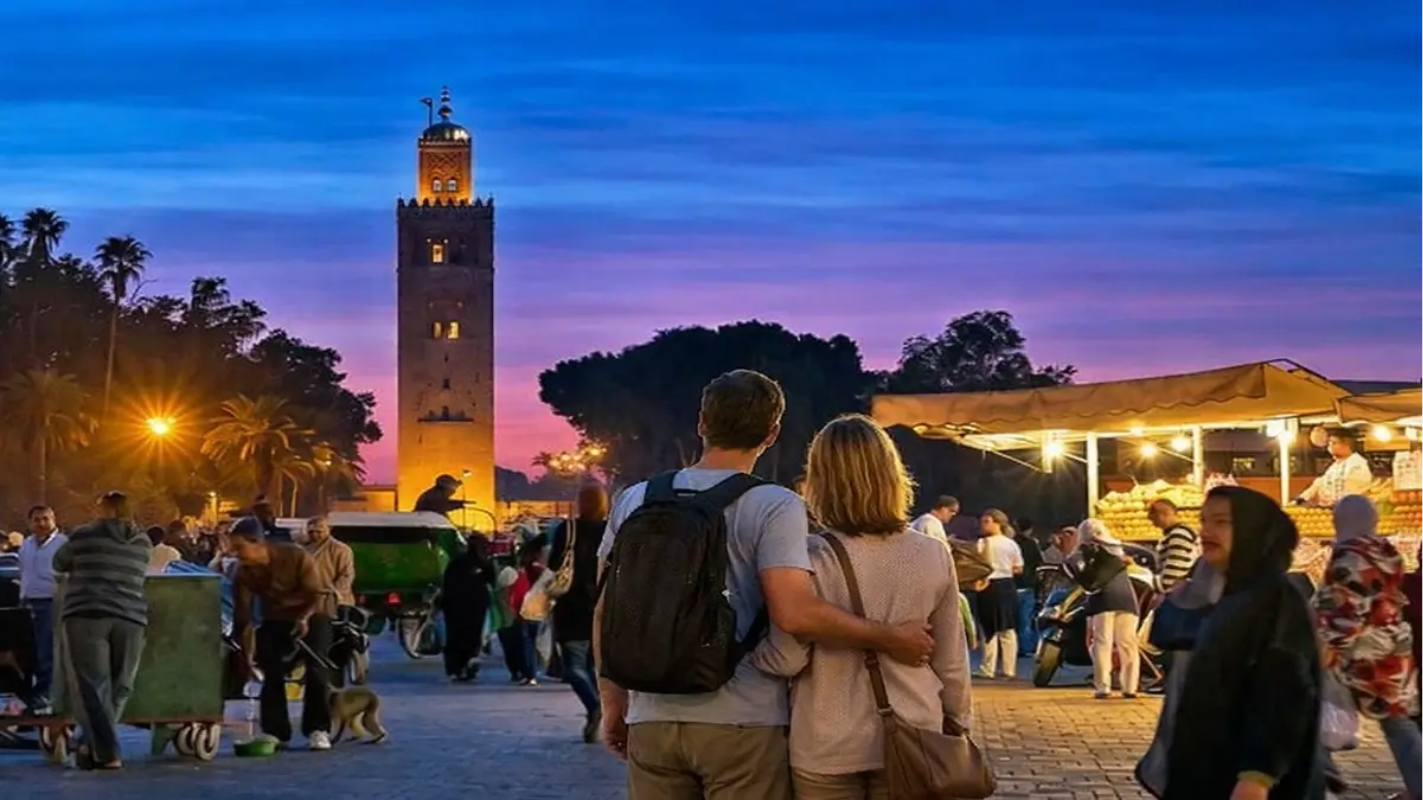
    Marrakech is the starting point of most Morocco travel plans. Its main square, Jemaa el-Fna, comes alive at sunset with storytellers, musicians and food stalls, and the souks behind it are a maze of spices, lamps and leather. Read our Marrakech tourism guide, our Marrakech travel itineraries and our shopping in Marrakech guide before you arrive.

    Fes is older, quieter and more traditional. Its medina is one of the largest car-free urban areas in the world, and a local guide is the best way to understand it. Meknes and Rabat are calmer and easy to add if you have more days.

    Old medina of Fes during Morocco travel in the imperial cities
    The rooftops of the Fes medina stretch to the horizon.

    The Blue City and the North

    Chefchaouen is the most photographed town in northern Morocco, with blue and white lanes on a mountain slope. It is small, calm and cool in summer, which makes it a perfect rest between two big cities. Our Chefchaouen blue city guide explains the best streets, the viewpoints and the day trips.

    Tangier, on the Strait of Gibraltar, has a long history as a meeting place of Europe and Africa, with a lively old town, a modern port and a famous café culture. Together with Chefchaouen and Tetouan, it makes a quiet, green northern loop that suits Morocco travel in spring or early summer.

    Tangier on the Strait of Gibraltar, part of Morocco travel in the north
    Tangier looks across the strait to Spain.

    The Atlantic Coast

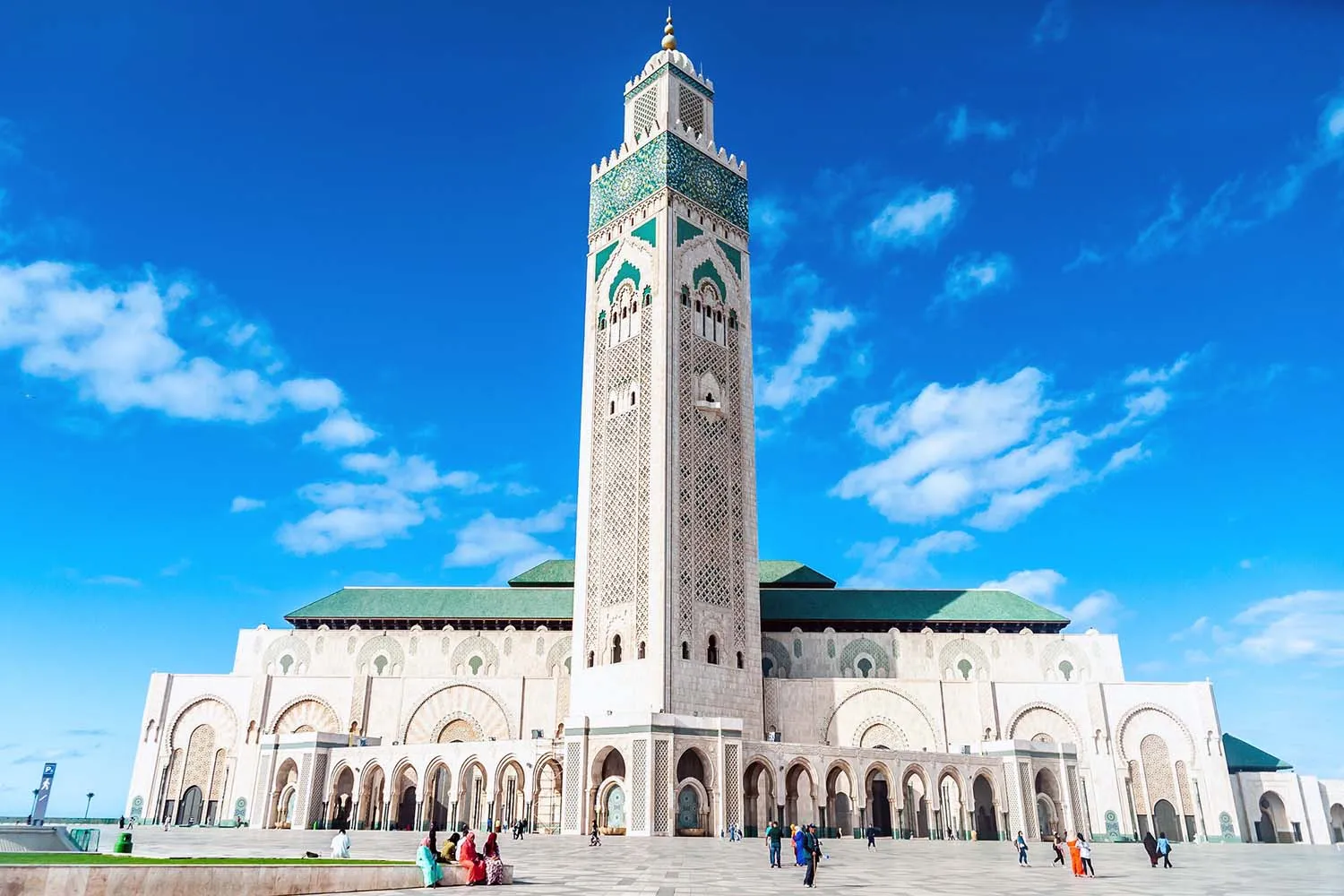
    The coast gives a different rhythm to Morocco travel. Casablanca is the modern, busy city, with the grand Hassan II Mosque as its icon, and our what to see and do in Casablanca guide shows how to enjoy it in a day. Essaouira is a smaller walled port with fresh fish, blue boats, strong sea wind and a relaxed artistic spirit. Its medina is on the UNESCO World Heritage list.

    Agadir and the beaches around it are best for sun and surf, especially in winter, when the rest of the country is cool. If you add the coast to a Morocco travel plan, give it at least two nights to rest.

    Casablanca coast, a stop for Morocco travel on the Atlantic
    Casablanca is the economic capital and a common arrival city.

    The Atlas Mountains and Kasbahs

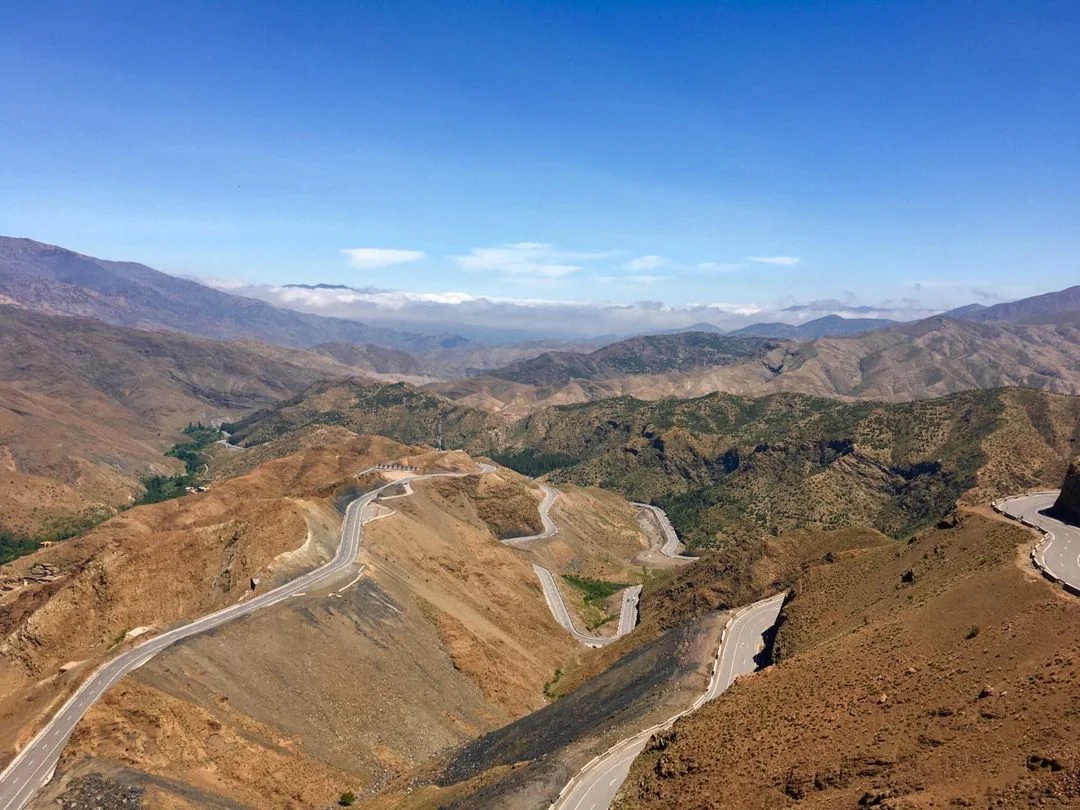
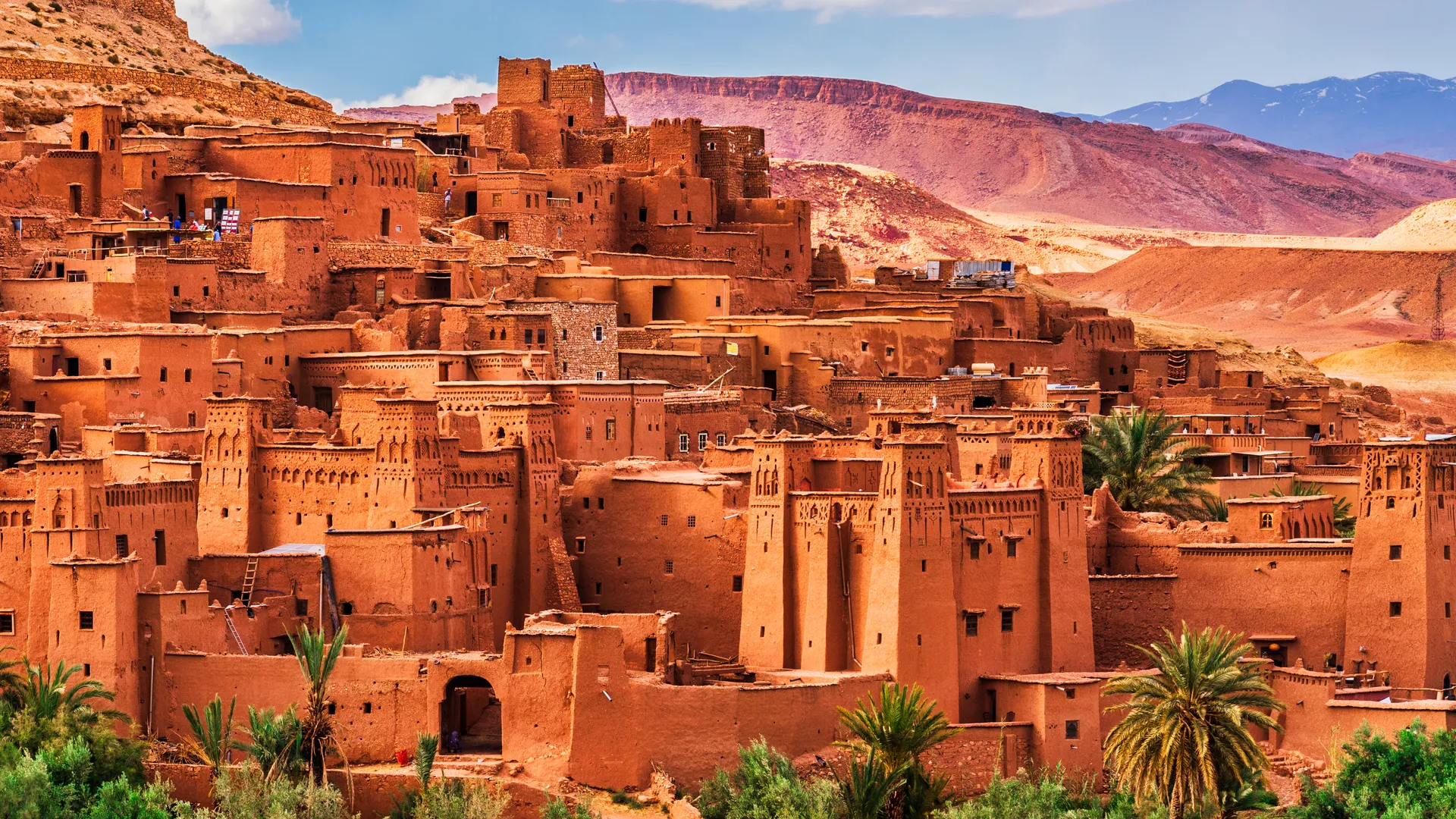
    The High Atlas rises behind Marrakech, with villages, valleys and snowy peaks, and it is the setting for some of the best Morocco travel days. Ait Benhaddou, a fortified earthen village near Ouarzazate, is one of the most beautiful sites in the country, and the road to the south passes gorges, palm groves and film studios.

    If you only have one day, choose a day trip to the Ourika valley or to Ait Benhaddou, and read our list of Morocco day trips. For hikers, the Imlil area offers easy walks and strong views.

    Dades Valley rock formations in the High Atlas, a highlight of Morocco travel
    The Dades Valley lies on the road between the Atlas and the Sahara.

    The Sahara Desert

    For many guests, the Sahara is the heart of Morocco travel. The big dunes of Erg Chebbi near Merzouga are the most famous, and the dunes near Zagora are closer to Marrakech. A classic visit includes a camel ride at sunset, dinner and music in a camp, and a sunrise on the sand.

    Plan at least two days for the desert, because the roads are long. Our 3 days from Marrakech to Merzouga tour is the most popular route, and our guide to what to do in Merzouga lists every activity.

    Sahara dunes of Merzouga, the highlight of Morocco travel
    A night in the dunes is the highlight of many trips.

    How Long to Stay

    The right length is the first question to answer. Five days is a good minimum, seven to ten days is ideal for a first trip and two weeks lets you see the north and the south without rushing. We explain each option in how many days in Morocco is enough, and you can see a full route in our 2 weeks in Morocco itinerary.

    Days Suggested plan
    3 to 4 Marrakech and one excursion
    5 to 6 Marrakech, Atlas and one night in the Sahara
    7 to 10 Imperial cities, desert and Atlas
    14 North, south, coast and desert

    Getting Around Morocco

    Transport is a big part of any trip here. Trains are good between the big cities, and a high-speed line links Tangier and Casablanca in about two hours. Buses cover most towns, and shared taxis serve short routes. For long distances in the mountains and the desert, a private car with a driver-guide is the most comfortable and the most flexible choice.

    Roads are generally good, but distances are long and mountain roads are slow. Driving yourself is possible, but many visitors prefer to relax, enjoy the view and let a local handle parking, police checks and the road. A good driver also knows the best stops for tea, lunch and photographs.

    Route Typical time by road
    Marrakech to Essaouira 2.5 to 3 hours
    Marrakech to Ait Benhaddou 4 hours
    Marrakech to Merzouga 9 to 10 hours
    Fes to Chefchaouen 3.5 to 4 hours

    Where to Sleep

    Accommodation is one of the pleasures of the journey. In the medinas, a riad, a traditional house around a courtyard, is the classic choice: quiet, beautiful and run by a local family. In the mountains, you can stay in a kasbah hotel or a village guesthouse. In the desert, a camp offers tents from simple to luxurious.

    Book the key nights early in spring and autumn, especially riads in Marrakech and Fes and camps in Merzouga. Ask about heating in winter and air conditioning in summer, and choose places with good reviews and clear information.

    Food and Drink

    Food is a highlight of Morocco travel. The famous dishes are tagine, a slow-cooked stew in a conical clay pot, and couscous, traditionally served on Friday. You will also find pastilla, a sweet and savoury pie, grilled meats, fresh salads, harira soup and sweet pastries with almonds and honey.

    Mint tea is a ritual, not only a drink. It is offered on arrival, in shops and at the end of meals, and it is polite to accept. Street food in Marrakech and Fes is a joy, but choose busy stalls with fresh food. Vegetarian and vegan travellers can eat well, especially on couscous and vegetable tagines, if they tell the host in advance. Tap water is not recommended for visitors, so drink bottled water.

    Culture and Etiquette

    Respect is the key to enjoyable Morocco travel. Morocco is a Muslim country with a warm and open culture, and visitors are welcome. Dress modestly in cities and villages, with shoulders and knees covered for both men and women, and carry a light scarf for religious or rural places. Ask before you photograph people, and avoid public displays of affection.

    In the souk, bargaining is normal and friendly. Smile, offer a lower price, and walk away politely if you do not agree. Friday is the main day of prayer, so some shops close at midday. During Ramadan, eat and drink discreetly in public in the daytime. Small tips are appreciated for guides, drivers and staff.

    Money, Language and Staying Connected

    The currency is the Moroccan dirham. Cards are accepted in hotels, larger restaurants and shops, but cash is useful in markets, taxis and villages, so withdraw from bank machines in cities. People speak Arabic, Amazigh and French, and many in the tourist areas also speak English or Spanish. A few words in Arabic, such as shukran for thank you, always bring a smile.

    Mobile data is easy to use with a local SIM or an eSIM, and wifi is common in hotels and cafés. Download offline maps for the desert and the mountains, where the signal can be weak. Check the entry rules for your nationality with the official government source before you travel, as they can change.

    Safety and Health

    Most visitors have a safe and happy time during Morocco travel. Use common sense as in any big city: keep valuables close in crowds, ignore people who offer unrequested guiding, and agree on prices before taxis and services. Women travelling alone should dress modestly and can expect some attention, but most find the country welcoming. For a calm and complete answer, read is Morocco safe to travel.

    For health, bring any personal medicine, sunscreen, insect repellent and basic stomach remedies. Drink bottled water, wash your hands and eat fresh, hot food. Travel insurance that covers medical care is strongly recommended, and you should check the vaccine advice from your own health service before you go.

    What to Pack for Morocco Travel

    • Clothes: light, loose layers, long trousers or skirts and a warm jacket for the mountains and desert.
    • Shoes: comfortable walking shoes for old cobbled streets and closed shoes for dunes.
    • Sun: a hat, sunglasses and sunscreen.
    • Scarf: useful for sun, sand and visits to religious places.
    • Tech: a plug adapter, a power bank and offline maps.
    • Extras: small cash, wet wipes, a reusable bottle and a small day bag.
    Tip: pack light and leave space for souvenirs. For most Morocco travel plans, one medium bag and a day pack are enough.

    Mistakes to Avoid

    The most common error in Morocco travel is to plan too much. Trying to see Marrakech, Fes, the desert and the coast in five days means long hours in a car and little time for the places themselves. Choose fewer places and give each one at least two nights.

    Other mistakes are to accept a “free guide” in the medina who later asks for money, to buy a carpet without comparing prices, to wear sleeveless tops in conservative areas and to forget a warm layer for the desert. Finally, do not leave the trip without a plan for arrival and departure, because airports and roads can be slow.

    How to Plan Your Morocco Travel with Us

    We are a local team in Morocco, and we design private trips with a driver-guide, carefully chosen riads and camps and a flexible schedule. Tell us your dates, the number of travellers and your interests, and we will suggest a route that fits your time and your pace.

    You can start with a ready route from our all Morocco tours page and change it to your taste. Every plan can include a Sahara night, a cooking class, a hammam, a mountain walk or a day on the coast, and we reply quickly on WhatsApp.

    Frequently Asked Questions

    What is the best time for Morocco travel?

    Spring (March to May) and autumn (September to November) are the best seasons, with warm days and comfortable nights in most regions.

    How many days do I need for Morocco travel?

    Seven to ten days is ideal for a first visit. Five days is a good minimum, and two weeks lets you see the north and the south.

    Is Morocco travel safe for tourists?

    Yes, for most visitors. Use common sense, dress modestly, agree on prices in advance and use licensed local guides.

    Do I need a guide for Morocco travel?

    It is not required, but a driver-guide makes long distances easier, and a local guide is very helpful in the Fes medina and the desert.

    What should I wear in Morocco?

    Light, loose clothes that cover shoulders and knees are best, with a warm layer for mountains and desert nights.

    How do I book Morocco travel with you?

    Send your dates and the number of travellers on WhatsApp at +212 682 832 176 or through our contact page. We reply with a private plan.

    Ready to Plan Your Morocco Travel?

    Tell us your dates, your interests and your pace. We will build a clear, private plan for your Morocco travel, with a driver-guide, riads and a night in the Sahara.

    Request a Free QuoteWhatsApp Us

  • Erg Chebbi: Complete Guide to Morocco’s Largest Sahara Dunes

    Erg Chebbi: Complete Guide to Morocco’s Largest Sahara Dunes

    Merzouga Desert Guide · Sahara Dunes · Updated 2026

    Erg Chebbi: Complete Guide to Morocco’s Largest Sahara Dunes

    Golden sand waves, camel caravans, desert camps and a sky full of stars

    Erg Chebbi is the great sea of sand at the edge of the Moroccan Sahara, and it is the most famous desert landscape in the country. Its orange dunes rise up to about 150 metres above the plain, they stretch for roughly 22 kilometres from north to south, and they change colour from pale gold to deep red as the sun moves. The village of Merzouga sits at their foot, which makes the dunes easy to reach and easy to enjoy.

    This guide explains everything you need to know about this desert: where it is, how it formed, how to get there, the best time to go, what to do on the dunes, how camps and camel treks work, and the small details that make a visit better. It is written for first-time visitors, couples, families and friends who want a real Sahara experience without a difficult expedition.

    When you are ready to plan, our what to do in Merzouga guide lists every activity, and the 2 nights in Merzouga desert guide shows how to stay longer.

    Erg Chebbi: The Short Answer

    Quick answer: Erg Chebbi is the largest and most accessible sand dune field in Morocco, near the village of Merzouga in the south-east. It is reached by a long day of driving from Fes or Marrakech, and the classic visit is a sunset camel ride, a night in a desert camp and a sunrise on the dunes.
    Fact Detail
    Location South-east Morocco, near Merzouga
    Highest dunes About 150 metres
    Length About 22 kilometres
    Nearest towns Merzouga, Hassilabied, Erfoud, Rissani
    Best months March to May and October to November
    Classic activity Camel trek and night in a camp
    Erg Chebbi dunes at sunset near Merzouga
    The high dunes of Erg Chebbi glow at sunset.

    What Is Erg Chebbi?

    An erg is a large field of wind-shaped sand dunes, and Erg Chebbi is one of the two great ergs of Morocco. It looks like the desert of a postcard: smooth crests, sharp ridges and wide valleys of fine orange sand. The colour comes from iron oxide on the grains, and it shifts from honey to rose to copper through the day.

    This sea of sand is not the whole Sahara, because the Sahara covers a huge part of North Africa. It is, however, the place where most visitors meet the desert for the first time, because the road ends at its edge and the camps are only minutes away. Many travellers say that the first view of the dunes at the end of the drive is one of the most memorable moments of their trip to Morocco.

    • Size: big enough to feel endless, small enough to explore in a few days.
    • Sand: soft, fine and warm, ideal for walking barefoot in the evening.
    • Silence: there is no traffic, and the wind is often the only sound.
    • Light: low sun makes long shadows and strong colours.

    Where Is Erg Chebbi?

    The dune field lies in the Drâa-Tafilalet region, close to the Algerian border. The nearest village is Merzouga, with Hassilabied and Khamlia along the western edge of the dunes. The larger towns of Erfoud and Rissani are about 50 and 35 minutes away by road, and they have shops, fuel, banks and markets.

    The location explains the quiet and the clean sky. There is no big city nearby, so the air is dry and clear and the stars are bright. It also explains why the trip takes time: the dunes are far from Marrakech, Fes and the coast.

    From Driving time to Merzouga
    Fes 7 to 8 hours
    Marrakech 9 to 10 hours
    Ouarzazate 6 to 7 hours
    Errachidia 2.5 hours
    Erfoud 1 hour

    How Erg Chebbi Formed

    Erg Chebbi was shaped by wind over a very long time. The sand comes from ancient rivers and rocks that broke into tiny grains, and the wind carried it until it piled against a natural barrier and grew into dunes. This is why the field has such a sharp, clean outline against the flat gravel plain around it.

    The region was once under a shallow sea, and fossils of ammonites and trilobites are found in the nearby hills. A visit to the workshops of Erfoud shows polished marble full of these ancient shells. It is a pleasant reminder that the desert you see today is only the latest chapter of a very long story.

    Dunes also move. Strong winds slowly push the crests, and the shape of the field changes a little every season. A dune you climb in March may look different in November, which is one more reason to come back.

    Getting to Erg Chebbi

    Most visitors reach Erg Chebbi on a private tour from Fes or Marrakech, and the journey is part of the adventure. From Marrakech the road crosses the High Atlas, passes the UNESCO kasbah of Ait Benhaddou, follows the Dades Valley and the Todra Gorge, then reaches Merzouga in the evening. From Fes the road goes through the Middle Atlas cedar forests, Midelt and the Ziz Valley.

    Because of the distance, most travellers split the journey with a night on the way. Our ready routes include the 2 days from Marrakech to Merzouga, the 3 days from Marrakech to Merzouga, the 2 days desert to Merzouga from Fes and the 4 days tour from Fes to Merzouga.

    Public transport reaches Erfoud and Rissani, but the last stretch to the dunes is easier with a driver. A private car also lets you stop for photographs and tea in the villages of the Draa and Ziz valleys.

    Riding a Camel on Erg Chebbi

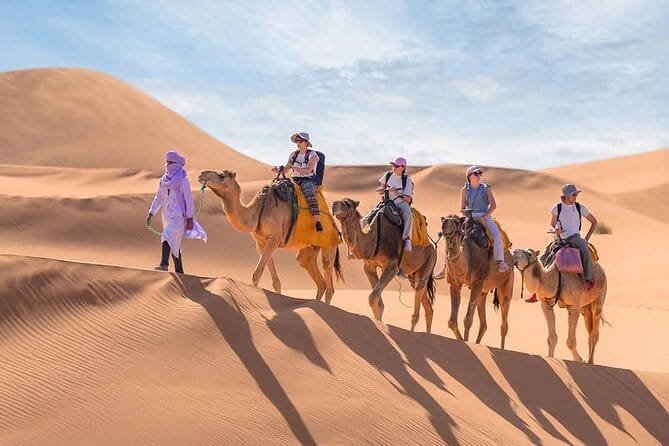
    A camel trek is the classic way to enter the dunes. You meet your guide at a small auberge on the edge of the sand, wrap a scarf around your head and climb onto a kneeling dromedary. The caravan walks for about 60 to 90 minutes into the dunes, and the camp appears in a hollow between high crests.

    The ride is calm and the camels are used to visitors. Mounting is the only awkward moment, because the animal stands up back legs first, so lean back and hold the saddle handle. After ten minutes the slow rhythm feels natural. For a full overnight plan, see our 2 days camel trekking in Merzouga guide.

    Camel ride across Erg Chebbi at sunrise
    A caravan crosses the dunes in the soft morning light.

    Sunrise and Sunset on the Dunes

    The two best moments on the dunes are the beginning and the end of the day. At sunset, the light turns orange and then red, and the shadows of the camels stretch across the sand. At sunrise, the air is cool, the dunes are quiet and the first rays make the crests glow. Many guests say that the sunrise is even better than the sunset because there are fewer people.

    To see the sunrise, climb a tall dune about 45 minutes before the sun appears. The climb takes around 20 minutes on soft sand, and the view from the top covers the whole sea of dunes, the plain and the distant mountains. Wear a warm layer, because dawn is cold even in summer.

    Sunset over Erg Chebbi, the best moment on the dunes
    The last light of the day colours the crests of the dunes.

    Camps and Nights on Erg Chebbi

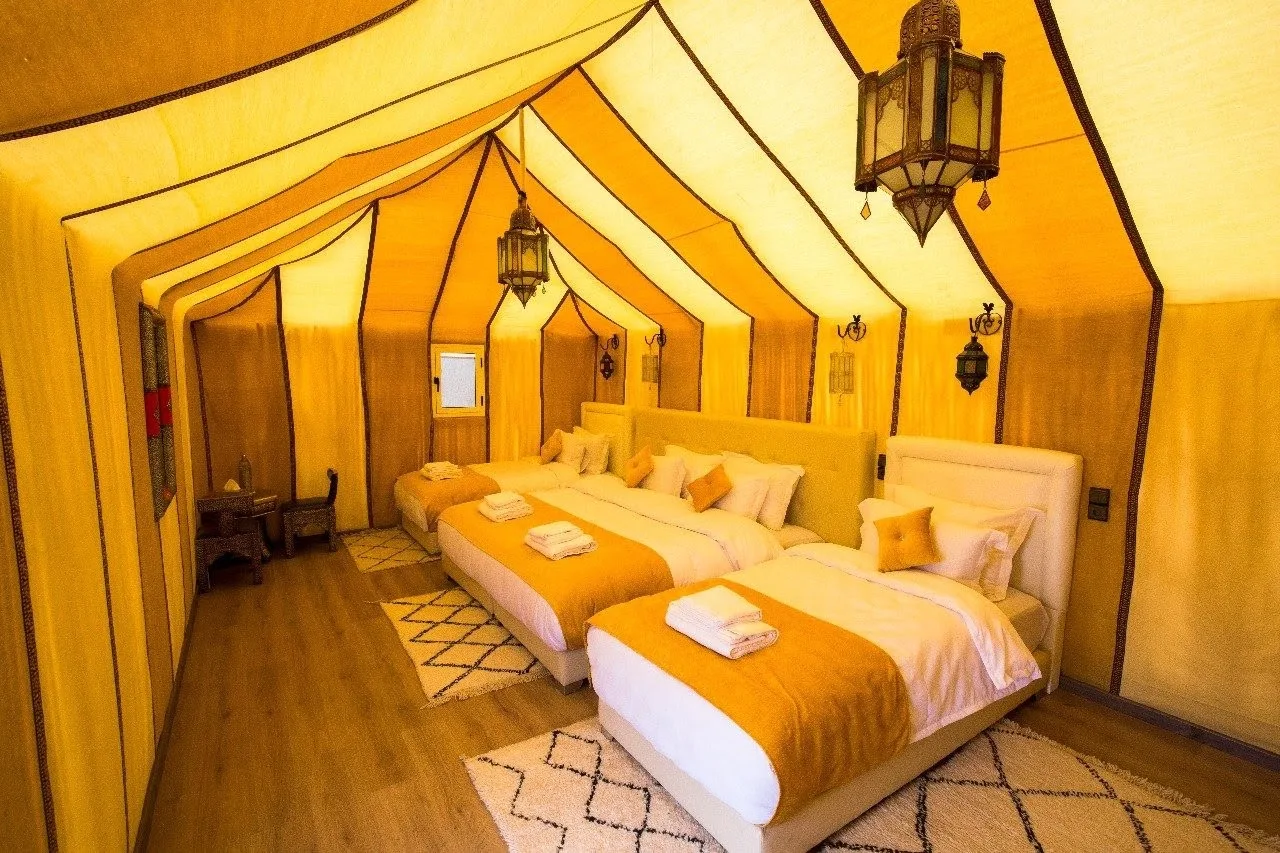
    A night in the dunes is the heart of a visit to Erg Chebbi. There are three types of camp. A traditional Berber tent has thick blankets and shared toilets. A comfortable private tent has real beds and a bathroom. A luxury tent adds a terrace, a heater in winter and sometimes air conditioning in summer. Our 1 night in Merzouga luxury camp guide compares them in detail.

    Dinner is served around 20:00 with soup, a tagine and fruit, followed by drums and songs around the fire. After the music, walk a few steps away from the tents and look up. This area has one of the clearest skies in Morocco, and the Milky Way, planets and shooting stars are easy to see.

    Traveller in a scarf on Erg Chebbi, the Sahara dunes of Merzouga
    A traditional scarf protects you from the sun and the sand.

    Activities on Erg Chebbi

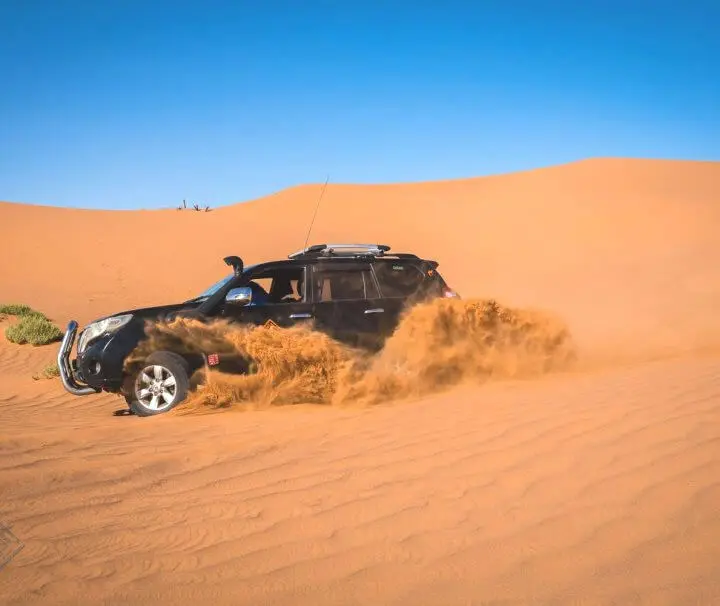
    The dunes offer much more than camels. You can try sandboarding on the highest slopes, ride a quad bike or a buggy between the dunes, take a 4×4 tour to the nomad camps, and walk alone on the quiet western ridge. Each activity gives a different view of the same sand.

    Sandboarding

    You climb a dune with a wooden board, strap in and slide down. The sand is soft and falls are harmless. It is fun for all ages, but the climb back is real exercise.

    Quad bikes and buggies

    Quad tours follow tracks along the edge of the dunes, and they are best in the morning. Engines are loud, so many guests choose one short ride and a slow camel trek on another day.

    4×4 desert tour

    A 4×4 reaches the nomad camps, the stone plain and the seasonal lake of Dayet Srji, and it suits guests who prefer comfort or cannot ride a camel.

    Sunset camel ride on Erg Chebbi near Merzouga
    A late-afternoon ride is the most popular way to see the dunes.

    Villages Around Erg Chebbi

    The area around Erg Chebbi has several villages worth a stop. Merzouga is the main base, with auberges, shops and cafés. Hassilabied has a quieter feel and several family-run camps. Khamlia, a few kilometres south, is home to Gnawa musicians who play drums and iron castanets in their houses.

    Rissani is the old market town, busiest on Sunday, Tuesday and Thursday, and a good place to taste medfouna, the local stuffed bread. Erfoud is known for date palms and polished fossil marble. A half-day tour can combine two or three of these places with a visit to the dunes.

    Erg Chebbi or Erg Chigaga?

    Morocco has two famous ergs, and visitors often ask which one to choose. Erg Chebbi is closer to the road, has more camps and is easier to reach, so it suits most first-time visitors. Erg Chigaga, near M’Hamid in the far south, is larger and wilder, but it needs a longer 4×4 journey and is more remote.

    Point Erg Chebbi Erg Chigaga
    Access Paved road to the edge Several hours of 4×4 on tracks
    Dune height Up to 150 metres Up to 300 metres
    Camps Many, all comfort levels Fewer, more remote
    Best for First visit, short trips Long trips, solitude

    If you have only two or three days, the closer erg is the better choice. For a shorter option near Marrakech, see the 2 days tour from Marrakech to Zagora.

    Best Time to Visit Erg Chebbi

    The best months are March, April, October and November, when days are warm and nights are mild. From December to February the days are pleasant, but nights can be close to freezing, so a camp with heavy blankets or a heater is important. May and September are hot but possible. From June to August, temperatures can pass 40 degrees, and activities move to early morning and late evening.

    Whatever the month, a visit to the dunes is memorable. Winter gives crisp air and deep colours, spring has a soft light and sometimes a green plain after rain, and autumn has stable weather and long evenings.

    Weather, Wind and Safety

    Wind is the main thing to watch on the dunes. Spring sandstorms are rare but possible, and your guide will change the plan to keep you safe. Bring a scarf for your nose and mouth, and sunglasses for the sand. In summer, drink water all day and avoid walking on the dunes at midday.

    The area is calm and used to visitors. Use licensed local guides, follow their advice and stay close to the camp at night. For a broader answer to safety questions, read is Morocco safe to travel.

    What to Pack for Erg Chebbi

    • Clothes: light layers for the day and a warm jacket for the night.
    • Head and face: a scarf, a hat and sunglasses.
    • Shoes: closed shoes for the dunes and sandals for the tent.
    • Small bag: only the essentials, because large bags stay at the auberge.
    • Tech: a phone with a dust cover, a power bank and a headlamp.
    • Care: sunscreen, lip balm and wet wipes.
    Tip: leave your big suitcase at the auberge or in the car. For one night in the dunes, a small bag is enough.

    Photography Tips for Erg Chebbi

    The best light is within an hour of sunrise and sunset, when the sun is low and the dunes show soft curves. Walk early to leave clean footprints in front of the lens, and look for lines of ridges that lead the eye. A person or a camel gives scale to the photograph.

    Protect equipment from sand with a cloth and a zip bag, and change lenses inside the tent. For night photographs, use a small tripod and a long exposure of about 20 seconds. The dark sky above the dunes gives clear stars even with a phone camera in night mode.

    Plans by Length

    Stay Plan
    1 night Arrive by 16:00, sunset camel trek, dinner, camp, sunrise, breakfast and return
    2 nights Add sandboarding, a 4×4 tour with Khamlia and a nomad tea, and a second night with stargazing
    3 nights Add Rissani, the fossils of Erfoud, Dayet Srji lake and a free afternoon

    One night is the minimum, but two nights let you relax and see more. If your time is limited, browse all Morocco tours or our Morocco itineraries for routes that include the dunes.

    Mistakes to Avoid

    The biggest mistake is arriving after dark. You lose the sunset ride, which is the best part of a visit to the dunes. Plan to arrive by 16:00 in winter and 17:00 in summer. Other common errors are wearing sandals on the camel, bringing a large suitcase, forgetting a warm layer in winter and choosing a camp only because it is cheap.

    Do not try to see all of Morocco in one week and give the desert only an evening. The dunes reward slow travel, and a second night is often the best decision a guest makes.

    Responsible Travel on the Dunes

    The desert is a fragile place and a home for local families. Take all litter with you, avoid driving off the main tracks, and never buy loose fossils from protected areas. Treat camels kindly, and choose operators who never overload or beat the animals.

    Choose camps that use solar power, manage water carefully and employ local staff. When you book with a local team, your money supports families who live near the dunes all year, not only in the tourist season.

    Frequently Asked Questions

    Where is Erg Chebbi?

    Erg Chebbi is in south-east Morocco, near the village of Merzouga and close to the Algerian border.

    How high are the dunes of Erg Chebbi?

    The tallest dunes reach about 150 metres above the plain, and the whole field is around 22 kilometres long.

    How many days do I need for Erg Chebbi?

    One night is the minimum. Two nights give time for sandboarding, a 4×4 tour and a second evening under the stars.

    Is Erg Chebbi safe for tourists?

    Yes. The area is calm and used to visitors. Use licensed local guides and follow their advice about wind and heat.

    What is the best time to visit Erg Chebbi?

    March to May and October to November are the most comfortable months. Winter nights are cold and summer days are very hot.

    How do I book a trip to Erg Chebbi?

    Send your dates and the number of travellers on WhatsApp at +212 682 832 176 or through our contact page. We reply with a quote made for you.

    Ready to Visit Erg Chebbi?

    Tell us your dates, the number of travellers and the kind of camp you like. We will send a clear, personal plan for your visit to the dunes.

    Request a Free QuoteWhatsApp Us

  • How Many Days in Morocco Is Enough? Best Trip Length for Every Traveller

    How Many Days in Morocco Is Enough? Best Trip Length for Every Traveller

    Morocco Trip Planning · Itineraries · Updated 2026

    How Many Days in Morocco Is Enough? Best Trip Length for Every Traveller

    From a quick three days to a slow three weeks: choose the length that fits your time

    How many days in Morocco is enough is the question we hear most from first-time visitors. The honest answer is that seven to ten days is enough for a first trip, five days is a good minimum, and two weeks lets you see the country without rushing. The right length depends on what you want to see, how fast you like to travel and where you start.

    This guide explains how many days in Morocco is enough for each type of trip. You will find day-by-day outlines for 3, 5, 7, 10, 14 and 21 days, real driving times, the best season, a comparison by interest and the mistakes that make people say, “I needed more time”. It is written to help you decide quickly and plan calmly.

    If you already know your style, jump to our 2 weeks in Morocco itinerary or to 7, 14 or 21 days in Morocco for full routes.

    How Many Days in Morocco Is Enough? The Short Answer

    Quick answer: for most first-time visitors, how many days in Morocco is enough is 7 to 10 days. That is long enough for Marrakech, the Sahara and one more region without spending every day in a car. Five days works if you choose only two areas, and 14 days is ideal if you want to see the north and south.
    Days What you can see Pace
    3 days Marrakech plus one desert or coast trip Fast
    5 days Marrakech, High Atlas and Sahara Moderate
    7 days Imperial cities, the desert and the Atlas Balanced
    10 days Most highlights, including the coast Comfortable
    14 days North and south, blue city, desert, coast Relaxed
    21 days The whole country with slow days Slow
    How many days in Morocco is enough to see the old medina of Fes
    The old medina of Fes alone deserves at least two full days.

    Why There Is No Single Answer

    People ask how many days in Morocco is enough as if the country were one place, but it is bigger than most visitors expect. Morocco is about the size of France and Spain’s northern half together, with high mountains, long coasts, big cities and a huge desert. Roads are good, but the best places are far from each other, so the number of days changes what is realistic.

    Three things decide the answer: the distance between places, the time you want to spend in each one and your own energy. A traveller who loves to wander in a medina needs more days than one who prefers photographs from a viewpoint. Knowing how many days in Morocco is enough for you starts with these three points.

    • Distance: a day of driving is a day you do not see anything else.
    • Depth: two nights in a city feel very different from one.
    • Energy: long trips need rest days, especially with children.

    Distances and Driving Times

    Before you decide how many days in Morocco is enough, look at the real driving times. These are comfortable estimates with a private driver and short stops.

    Route Driving time
    Casablanca to Marrakech 3 hours
    Marrakech to Essaouira 2.5 to 3 hours
    Marrakech to Ait Benhaddou 4 hours
    Marrakech to Merzouga 9 to 10 hours
    Merzouga to Fes 7 to 8 hours
    Fes to Chefchaouen 3.5 to 4 hours
    Fes to Casablanca 3.5 to 4 hours

    These numbers explain why a trip of three days cannot include everything. If you want the Sahara, you need at least two days just to reach it and return. That single fact shapes how many days in Morocco is enough for most itineraries.

    Marrakech old city, a starting point for how many days in Morocco is enough
    Marrakech is the usual starting point for a trip to the south.

    3 Days in Morocco: A Quick Taste

    Three days is the shortest trip that feels worthwhile. It suits a city break or a stopover, and it answers how many days in Morocco is enough when time is very limited: enough for a taste, not for the whole country.

    The best plan is to base yourself in Marrakech for three nights and add one excursion. Spend day one in the medina and Jemaa el-Fna, day two on a day trip, and day three in gardens, souks and a hammam. Good choices for the excursion are the Agafay desert day trip and the Ait Benhaddou and Ouarzazate day trip.

    Do not try to reach Merzouga in three days. The road is too long, and you would spend most of the time in the car. For a short break, three days is enough, but it is not how many days in Morocco is enough to know the country.

    5 Days in Morocco: The Minimum for a Real Trip

    Five days is the point where how many days in Morocco is enough starts to give a good answer. You can combine Marrakech with the High Atlas and a first night in the desert, for example Marrakech, Ait Benhaddou, the Dades Valley and the dunes, then a return by a different road.

    A typical plan is two nights in Marrakech, one night near Ait Benhaddou, one night in a desert camp and a last day back to Marrakech or on to Fes. It is tiring, but it gives the highlights. Our 3 days from Marrakech to Merzouga tour is the core of this plan, and you can add days before and after.

    Blue stairs of Chefchaouen, a stop when planning how many days in Morocco is enough
    The blue streets of Chefchaouen need a longer trip in the north.

    7 Days in Morocco: The Classic First Trip

    For many travellers, seven days is the best answer to how many days in Morocco is enough. A week gives time for a city, the mountains and the desert without constant packing. It is also easy to fit into a normal holiday.

    Day Plan
    1 Arrive in Marrakech, medina and main square
    2 Marrakech sights, gardens and souks
    3 High Atlas, Ait Benhaddou and Dades Valley
    4 Todra Gorge and the road to Merzouga, sunset camel ride
    5 Sunrise, drive to Fes through the Middle Atlas
    6 Fes medina with a local guide
    7 Transfer to the airport or to Casablanca

    This week is full, so it fits travellers who like to move. If you prefer a slower week, drop Fes, stay longer in the desert and return to Marrakech by the Draa Valley. Both choices are valid, which is why how many days in Morocco is enough also depends on your style.

    10 Days in Morocco: Comfortable and Complete

    Ten days is where the trip becomes relaxed. You can add Essaouira on the Atlantic coast, a second night in the desert or a visit to Chefchaouen in the north. For many guests, ten days is the perfect answer to how many days in Morocco is enough, because it has variety without exhaustion.

    A good ten-day route is Casablanca, Rabat, Chefchaouen, Fes, the Middle Atlas, Merzouga, the Dades Valley, Ait Benhaddou and Marrakech. You see imperial cities, blue streets, cedar forests, dunes and kasbahs, and you finish in the red city. Read about the blue city in our Chefchaouen blue city guide.

    Camel trek in the Sahara, part of how many days in Morocco is enough
    A night in the Sahara is the highlight of most ten-day trips.

    14 Days in Morocco: See the Whole Country Without Rushing

    Two weeks is the answer for travellers who ask how many days in Morocco is enough to see both the north and the south. You can spend three nights in Marrakech, two in the mountains and desert, two in Fes, one in Chefchaouen, one on the coast and still have free time.

    Two weeks also allows for rest days, a cooking class, a hammam, a walk in the Atlas and a second night in the desert. These are the moments that people remember most. For a full route with maps and hotels, see our 2 weeks in Morocco itinerary, and browse more routes in Morocco itineraries.

    3 Weeks and More: The Slow Way

    Three weeks is not necessary, but it is a gift. With 21 days you can add the Rif mountains, the far south, Zagora, the Atlantic coast and long stays in two or three bases. If you are asking how many days in Morocco is enough for a deep trip, three weeks is the upper end.

    Slow travel also means fewer one-night stops. You unpack, walk, read and talk with local people, and the country feels less like a list of sights. If you have the time, this is the best way to know Morocco. Still, most guests find that 10 to 14 days is how many days in Morocco is enough to feel satisfied.

    How Many Days in Morocco Is Enough by Interest

    Your interests change the answer as much as the calendar. Here is a simple guide to how many days in Morocco is enough for each type of traveller.

    Interest Days needed Main places
    Cities and markets 4 to 5 Marrakech and Fes
    Sahara desert 3 to 4 Merzouga or Zagora
    History and culture 7 to 10 Imperial cities and kasbahs
    Coast and relaxing 3 to 4 Essaouira and Agadir
    Blue city and north 3 Chefchaouen and Tangier
    Hiking in the Atlas 3 to 5 Imlil and the Ourika valley

    The Sahara needs special care. A single night is possible, but two nights give time to enjoy the camp. Read our guides to what to do in Merzouga and to the 2 nights in Merzouga desert if the dunes are your priority.

    Best Season and How It Changes the Answer

    The season changes how many days in Morocco is enough, because heat and cold affect what you can do. Spring (March to May) and autumn (September to November) are the best periods for all regions. In summer, the south is very hot, so you need earlier mornings, longer breaks and more days to stay comfortable. In winter, the High Atlas can have snow, and desert nights are cold.

    The coast is pleasant all year, and Marrakech is lovely from October to April. For month-by-month advice, read our guide to the best month to go to Marrakech.

    Pace and Tiredness

    Many guests plan too much and arrive home tired. A simple rule helps: do not drive more than five hours in a day more than twice in a row, and give each main base at least two nights. Following this rule makes how many days in Morocco is enough a more honest question, because you plan the real time you need, not the maximum you can squeeze in. A calm answer to how many days in Morocco is enough is always a little longer than your first idea.

    Build in free afternoons. A tea on a rooftop, a long lunch or a swim in the pool are not wasted time. They are what makes a trip to Morocco feel human.

    By Traveller Type

    The answer to how many days in Morocco is enough changes with the group. Couples often choose 7 to 10 days with a luxury night in the desert. Families usually need 10 days or more, with shorter drives and a rest day by the pool. Solo travellers can do a fast 5 days or a slow 14 days, and they often meet people in riads and camps.

    Older travellers should plan fewer moves, and a private car with a driver-guide makes every distance easier. If safety is on your mind, read is Morocco safe to travel for a calm, honest answer.

    Mistakes to Avoid

    The most common mistake is to ask how many days in Morocco is enough and then fit three regions into five days. The second is to leave no buffer for flights, because roads and airports can be slow. The third is to book a one-night stay in a place that deserves two, such as Fes or the dunes.

    • Do not plan long drives on your arrival or departure day.
    • Do not skip the guide in the Fes medina, where it is easy to get lost.
    • Do not forget a warm layer for the desert and the mountains.
    • Do not compare your trip with someone else’s, because tastes differ.
    Tip: choose the length first, then the places. If you have only seven days, remove one city rather than shorten every stop. That is the easiest way to decide how many days in Morocco is enough for your trip.

    How to Plan and Book

    Start with your arrival and departure cities, because many travellers fly into Marrakech and out of Casablanca or Fes. A one-way route saves a day of backtracking, and it is easy to arrange with a private driver. Cities such as Fes are also a UNESCO World Heritage site, so give them time.

    When you know how many days in Morocco is enough for you, send us your dates and interests. We will design a private route with a driver-guide, hotels or riads and a camp. Browse all Morocco tours for ideas, or start with our Marrakech travel itineraries and Morocco day trips.

    A Simple Rule to Decide How Many Days in Morocco Is Enough

    If you still hesitate, use this simple rule. Count one day for arrival and one day for departure, then add two nights for each main place you want to see. A trip with Marrakech, the desert and Fes needs six nights of stay plus the two travel days, so eight days is the honest answer to how many days in Morocco is enough for that plan.

    Next, add one buffer day for rest or weather. Wind, snow on a mountain pass or a late flight can change the schedule, and one free day removes the stress. With this method, how many days in Morocco is enough becomes a short sum, not a guess.

    Finally, check your list again and remove one place if the plan feels crowded. Most travellers who do this say that the trip was calmer and that they remembered each place better, which is the real goal of any journey.

    Frequently Asked Questions

    How many days in Morocco is enough for a first visit?

    Seven to ten days is enough for most first visits. It covers Marrakech, the desert and one more region at a comfortable pace.

    Is 5 days in Morocco enough?

    Yes, if you choose two areas, such as Marrakech and the Sahara. It is a fast trip, but it gives the highlights.

    Is 3 days in Morocco enough?

    Three days is enough for Marrakech and one day trip. It is not enough for the Sahara or the north.

    How many days do I need for the Sahara?

    Plan three or four days from Marrakech or Fes, including the road. A second night in the camp makes the trip calmer.

    Is two weeks too long in Morocco?

    No. Two weeks is the best length for the north and the south, and it allows rest days.

    How do I plan my days?

    Send your dates and the number of travellers on WhatsApp at +212 682 832 176 or through our contact page. We reply with a private plan.

    Not Sure How Many Days in Morocco Is Enough?

    Tell us your dates, your interests and your pace. We will suggest how many days in Morocco is enough for you and build a clear private route.

    Request a Free QuoteWhatsApp Us

  • Shopping in Marrakech: Best Souks, What to Buy, Bargaining Tips and Local Shopping Guide

    Shopping in Marrakech: Best Souks, What to Buy, Bargaining Tips and Local Shopping Guide

    Marrakech Shopping Guide · Souks · Crafts · Updated 2026

    Shopping in Marrakech: Best Souks, What to Buy, Bargaining Tips and Local Shopping Guide

    Lamps, leather, carpets, spices and the art of a friendly bargain

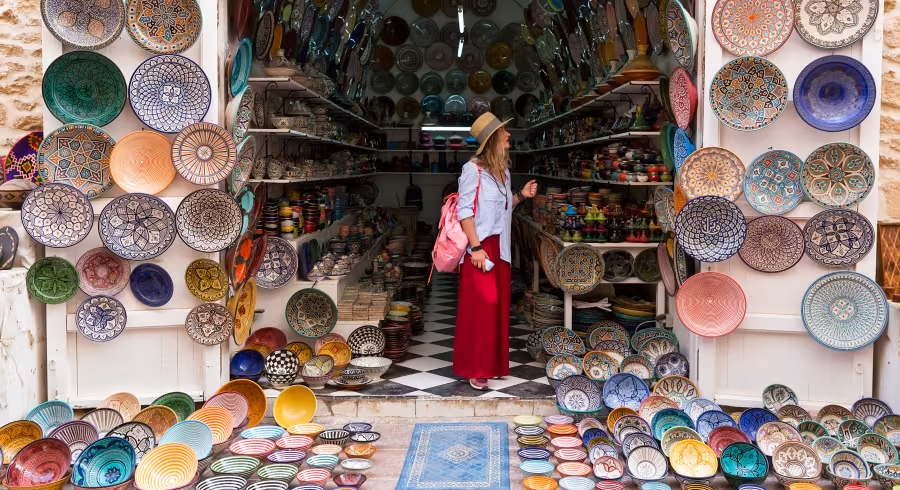
    Shopping in Marrakech is one of the great travel experiences in Morocco. The old medina holds hundreds of small workshops and stalls, each selling the craft that its street has made for centuries: leather, brass, wool, pottery, spices, silver and carpets. It is colourful, noisy, friendly and, for a first-time visitor, a little overwhelming, so a little preparation makes shopping in Marrakech much more enjoyable.

    This guide explains shopping in Marrakech step by step. You will learn which souks to visit, what to buy, how to bargain without stress, how to avoid common scams, where to find fixed prices and how to bring your purchases home. We add a half-day shopping route, so you can follow it on your first morning in the old city.

    Shopping is only one part of a visit, so combine this guide with our Marrakech travel itineraries and the full Marrakech tourism guide.

    Shopping in Marrakech: The Short Answer

    Quick answer: go to the souks in the morning, take a trusted guide on your first visit, compare prices in two or three shops, bargain with a smile and pay in cash. Buy leather, lamps, ceramics, rugs, spices and argan oil. Use cooperatives or fixed-price shops if you dislike bargaining.
    Item Where to look Good to know
    Leather bags and slippers Souk Cherratine and Souk Smata Smell, stitching and thickness show quality
    Brass lamps Souk Haddadine Check the weight and the cut work
    Spices Rahba Kedima, the Spice Square Ask for ras el hanout blends
    Carpets and rugs Criee Berbere and Souk Zrabia Handmade wool lasts for decades
    Ceramics Souks near Bab Debbagh and the medina Look for even glaze and no cracks
    Argan oil and cosmetics Women’s cooperatives Pure oil is pale and lightly nutty
    Shopping in Marrakech: souvenirs and crafts on sale in the old medina
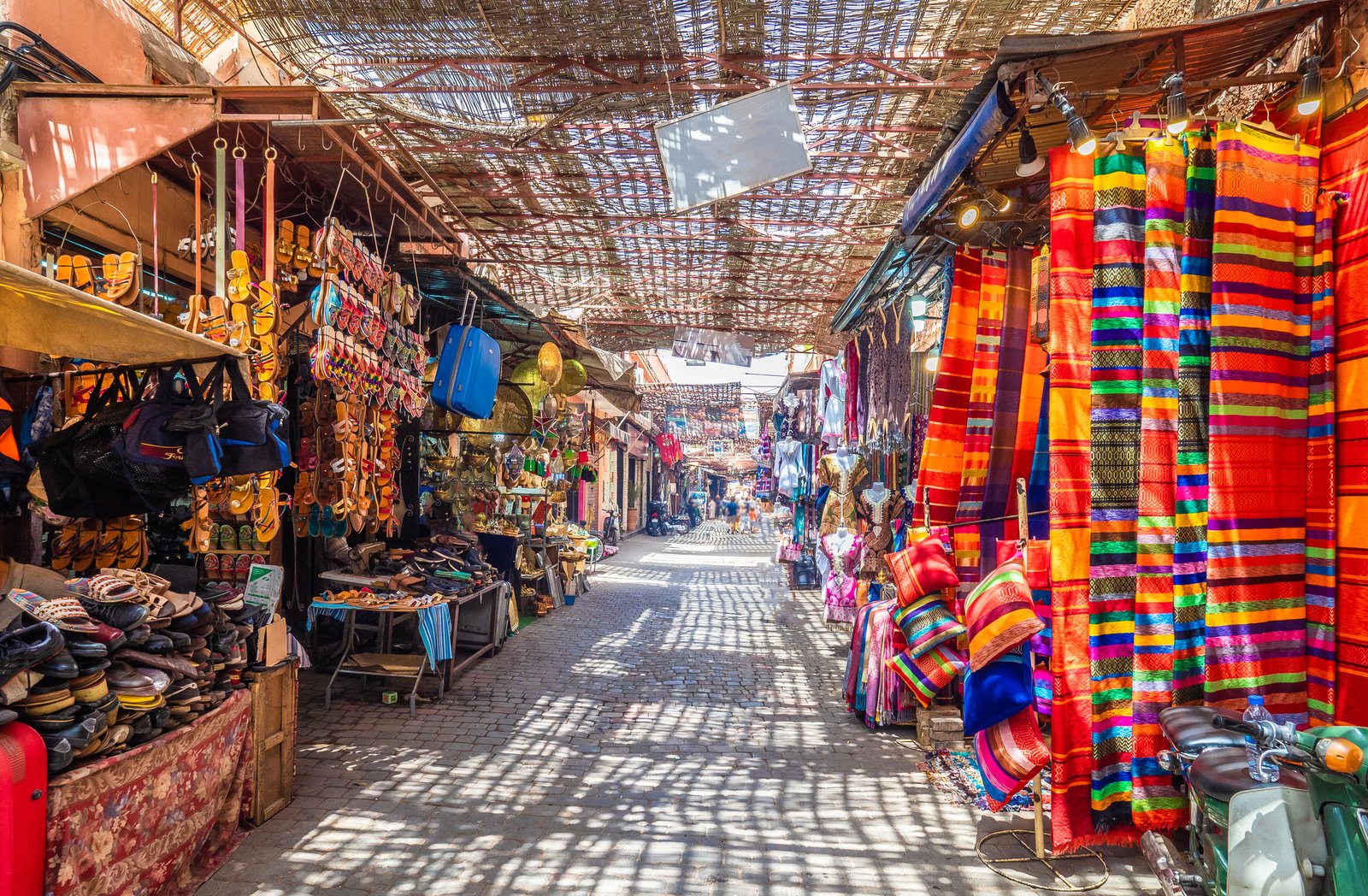
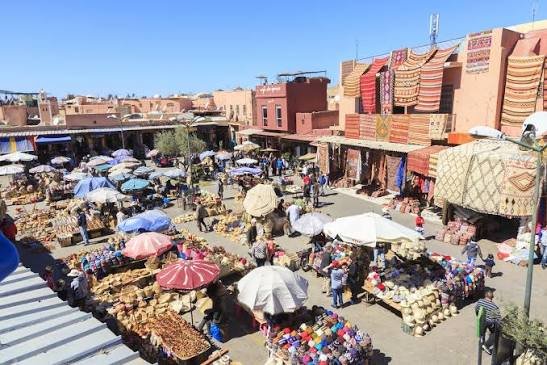
    Souvenirs and crafts fill the stalls around Jemaa el-Fna and the old medina.

    Why Shopping in Marrakech Is Special

    Marrakech has been a trading city for nearly a thousand years, and its souks are still working markets, not only tourist attractions. Many of the objects you see are made a few lanes away from where they are sold. You can watch a metalworker hammer a lantern, a cobbler stitch a slipper or a dyer hang wool to dry in the sun.

    That is why shopping in Marrakech feels different from a mall. You meet the maker, hear the story behind the object and take home something that connects you to the place. The medina is also a UNESCO World Heritage Site, so every walk through the lanes is part of the visit.

    The Best Souks for Shopping in Marrakech

    The souks lie north of Jemaa el-Fna and are organised by craft. They are a maze, so use a map and a guide for the first time, and follow the main lanes.

    Souk Semmarine

    This is the main artery, a covered street of textiles, bags, scarves, lamps and souvenirs. It is a good place to see the range of products and to learn typical prices before you buy.

    Souk Haddadine

    The blacksmiths’ souk is loud and fascinating. Craftsmen hammer wrought iron, brass and copper into lanterns, trays, candle holders and mirror frames.

    Rahba Kedima and the Spice Square

    The old spice and herb square sells spices, dried herbs, natural cosmetics, black soap, argan oil and traditional remedies. It is lively and photogenic, and a good place to buy ras el hanout, cumin, saffron and dried rose petals.

    Souk Cherratine and Souk Smata

    Leather is the star here. You find slippers called babouches, handbags, belts, poufs and jackets, and the colours are bright. Check the stitching and the smell, and avoid very cheap pieces that may use thin or treated leather.

    Shopping in Marrakech: a lane in the old medina near the souks
    The lanes of the medina are narrow, shaded and full of small shops.

    The Dyers’ Souk and the Carpet Souks

    Colourful wool and silk hang in the dyers’ souk, a favourite for photographers. The carpet area, near the old slave market square, sells Berber rugs, kilims and flat weaves from the Atlas tribes, and sellers will unroll many pieces for you to see. Ask about the weave, the dyes and the region where each rug was made.

    What to Buy When Shopping in Marrakech

    The best shopping in Marrakech means choosing items that you will use at home, that are easy to carry and that are made by hand. These are the favourites among our guests.

    • Babouche slippers: soft leather, comfortable and light.
    • Leather bags and poufs: sturdy, colourful and easy to pack flat.
    • Brass and iron lanterns: they cast beautiful patterned light.
    • Berber rugs: wool rugs from the Atlas, from small mats to large carpets.
    • Ceramics and tagines: hand-painted plates, bowls and cooking pots.
    • Spices and tea: ras el hanout, saffron, cumin, mint and a tea glass set.
    • Argan oil: for cooking and skin care, best from women’s cooperatives.
    • Textiles and clothing: kaftans, scarves, cushion covers and woven blankets.
    • Silver and Berber jewellery: check the stamp and the weight.
    • Tadelakt items: soaps and bowls made with polished lime plaster.

    A good plan is to choose three or four categories before you go, so you do not buy everything on the first lane. Think about how you will use each piece, where it will go in your home and how it will fit in your luggage.

    How to Bargain: A Simple Guide

    Bargaining is part of shopping in Marrakech, and it is a polite, friendly exchange, not a fight. Sellers expect it, and prices are often much higher than the final price. Here is a simple method that works.

    1. Look first: browse several shops to learn the range of prices.
    2. Choose what you like: do not show too much excitement.
    3. Ask the price: the seller will name a high price.
    4. Offer much lower: a good start is about one third to one half of the first price.
    5. Move up slowly: meet somewhere in the middle, and keep a smile.
    6. Be ready to leave: walking away politely often brings the best price.
    7. Keep your word: if you agree on a price, you are expected to buy.
    Tip: never start bargaining for something you do not really want. Sellers work hard to find a price, and it is polite to be sincere.

    If you do not enjoy bargaining, go to a fixed-price shop or a cooperative. You may pay a little more, but you will relax and you will still get quality products.

    Fixed-Price Places and Cooperatives

    For stress-free shopping in Marrakech, visit the government-run artisan centre near the Koutoubia, where goods carry marked prices. Women’s cooperatives sell argan oil, cosmetics and woven items with clear labels, and many pay fair wages to the makers. Several concept stores and design shops in the medina and in the Gueliz district also have fixed prices and carefully made products.

    These places are ideal for gifts, for first-time visitors and for anyone who wants to learn the typical price level before entering the souks.

    Modern Shopping in Gueliz and Sidi Ghanem

    Shopping in Marrakech is not only about the old souks. In the Gueliz district you find international and Moroccan brands, boutiques, bookshops, galleries and shopping centres. The area around Mohammed V Avenue is a pleasant place to walk, with cafés for a rest.

    The Sidi Ghanem industrial area has become known for design. Workshops, studios and showrooms sell furniture, ceramics, lighting and home decoration, often in modern styles. Many of them ship large purchases abroad. This is a good option if you are shopping in Marrakech for your home and want something more contemporary than the souk classics.

    Shopping in Marrakech: the city centre and its modern districts
    Modern Gueliz sits beside the old medina, so both styles are easy to combine.

    Scams, Fakes and Pushy Sellers

    Most sellers are honest, but some tricks are common in shopping in Marrakech, as in any busy market. A friendly stranger says that a street is closed and leads you to a shop where he earns a commission. A shop offers a gift or free tea and expects a purchase. Someone puts henna on your hand and demands payment. Another sells a copy of a famous brand or an item that is not what it claims to be.

    • Say no firmly: a smile and la shukran, no thank you, are enough.
    • Avoid unknown guides: only use badged or booked guides.
    • Check goods: examine the item and the packaging before you pay.
    • Watch for fake argan oil: it should be pale and have a light smell, not strong or too cheap.
    • Beware of fake saffron: pure saffron has thin red threads and a distinct scent.
    • Be careful with antiques: most so-called old items are new.

    If a seller becomes too pushy, walk on. For more safety advice, read our guide: is Morocco safe to travel.

    A Half-Day Route for Shopping in Marrakech

    This simple route for shopping in Marrakech gives a taste of the best souks without tiring you. Start early, when shops open and the lanes are calm, and finish with lunch on a terrace.

    Time Stop
    09:00 Jemaa el-Fna and the start of Souk Semmarine
    09:45 Souk Haddadine for lamps and ironwork
    10:30 Souk Cherratine and Souk Smata for leather
    11:30 Rahba Kedima, spices and cosmetics
    12:15 Carpet and weaving area
    13:00 Lunch on a rooftop and review your purchases

    Keep the most important purchases for the end of the morning, after you have seen the range of prices. This helps you decide with a clear mind and avoids buying the first beautiful object you see.

    Best Gifts and Souvenirs from Shopping in Marrakech

    If you shop for people at home, choose small, light and useful gifts. A glass of Moroccan tea, a small bag of ras el hanout, a pair of babouches, a hand-painted ceramic bowl or a bottle of argan oil all pack well and are easy to give. Leather card holders, brass tea trays and woven baskets also make good presents.

    For a special gift, think about a small rug, a silver pendant or a tadelakt soap set. Ask the seller to explain how each piece is made, because the story adds value, and note it down for the person who receives it. Shopping in Marrakech for gifts is easiest in the second half of your trip, when you know your favourite shops and can compare prices.

    Why a Guide Helps with Shopping in Marrakech

    A trusted local guide changes the experience. He knows which shops are fair, which workshops make real crafts and which lanes are quiet. He also helps you avoid pressure, translates when needed and reminds you of the price range before you start. Guides sometimes take you to shops where they know the owners, so it is good to say clearly what you want to see and to feel free to say no.

    For a family or a group, a private driver-guide can carry your purchases to the car, so you can continue the visit with free hands. Ask your guide to include a break for tea, because a pause helps you decide calmly. Shopping in Marrakech is a pleasure when you are relaxed, informed and not in a hurry.

    Paying: Cash, Cards and Money Tips

    Small souk shops usually prefer cash in dirhams, and many do not take cards. Larger shops, concept stores and cooperatives often accept cards, but check the total and the currency before you pay. Withdraw cash from ATMs in banks or in busy streets, keep small notes for tips and carry your money in a front pocket or a zipped bag.

    When shopping in Marrakech, ask for a receipt for expensive items, especially rugs, jewellery and furniture. Non-residents may be able to claim a tax refund on some purchases at the airport, but the rules and the minimum amounts change, so ask the shop and check before you travel.

    Shipping and Packing Your Purchases

    After shopping in Marrakech, small items go easily in a suitcase. Wrap lamps and ceramics in clothes, put leather bags flat and carry fragile pieces in your hand luggage if possible. For rugs, furniture and large pieces, ask the shop to ship them. Good shops arrange packing, insurance and tracking, and they can give you a written invoice.

    Before you buy spices or food, check what you may carry into your home country, as some countries restrict certain plant and animal products. Keep receipts and avoid buying items that are made from protected species, such as certain shells, fossils or animal parts.

    Best Time for Shopping in Marrakech

    The morning is best, from about 9:00, when the lanes are cool and calm, and sellers are fresh. Late afternoon is also pleasant, but the souks become crowded. Friday is quieter in some shops because of prayers, and some stalls close earlier during Ramadan. Spring and autumn are the most comfortable seasons for long walks. Our guide to the best month to go to Marrakech explains the seasons in detail.

    Shopping Responsibly in Marrakech

    Shopping in Marrakech supports thousands of families, and a few choices make it better for everyone. Buy directly from makers when you can, pay a fair price and avoid pressing a seller below the cost of materials and labour. Choose cooperatives that pay women fairly, and avoid mass-produced imitations that copy local designs.

    Reduce plastic by carrying a cloth bag, and say no to extra packaging. Ask before photographing a stall or a craftsperson, and tip a small amount if they pose for you.

    Common Mistakes to Avoid

    • Buying the first thing you like: compare in at least two or three shops.
    • Accepting a guide from the street: use a trusted guide or your hotel.
    • Paying the first price: it is almost never the final price.
    • Shopping in the midday heat: you will tire and rush decisions.
    • Carrying too much cash: keep only what you need for the day.
    • Ignoring luggage space: plan how you will carry heavy items.

    With a calm plan, shopping in Marrakech becomes a highlight, not a stress. Many guests combine it with a visit to the palaces and gardens, as in our guide on what should I not miss in Marrakech.

    Frequently Asked Questions

    Where is the best place for shopping in Marrakech?

    The souks north of Jemaa el-Fna are the best for crafts, and Gueliz and Sidi Ghanem are good for modern design and fixed prices.

    How much should I bargain?

    Start at about one third to one half of the first price and meet in the middle. Stay friendly and be ready to walk away.

    What are the best things to buy in Marrakech?

    Leather slippers and bags, brass lamps, Berber rugs, ceramics, spices, argan oil and textiles are the most popular.

    Can I use credit cards in the souks?

    Many small shops want cash, while bigger shops and cooperatives often accept cards. Carry some dirhams.

    Do I need a guide for shopping in Marrakech?

    A guide is useful for the first morning. He knows fair shops and helps you avoid pressure and fake guides.

    How can I plan shopping in Marrakech with your team?

    Send your dates on WhatsApp at +212 682 832 176 or through our contact page, and we will arrange a guide and a private driver.

    Ready for Shopping in Marrakech with a Local Guide?

    Tell us your dates and what you want to buy. We will plan a relaxed shopping morning with a trusted guide, so you can enjoy shopping in Marrakech without stress.

    Request a Free QuoteWhatsApp Us

  • Marrakech Tourism: Best Things to Do, Top Attractions, Culture and Practical Travel Guide

    Marrakech Tourism: Best Things to Do, Top Attractions, Culture and Practical Travel Guide

    Marrakech Travel Guide · Attractions · Culture · Updated 2026

    Marrakech Tourism: Best Things to Do, Top Attractions, Culture and Practical Travel Guide

    Why the Red City is Morocco’s most visited destination and how to enjoy it well

    Marrakech tourism is one of the main reasons visitors come to Morocco. The Red City mixes a UNESCO-listed medina, royal palaces, lush gardens, lively souks and a food scene that goes from street stalls to fine riad dining. It is also an easy base for the desert, the mountains and the Atlantic coast, which is why Marrakech tourism works for both short and long trips.

    This guide explains Marrakech tourism from a local point of view. You will find the top attractions, the culture and customs, the best seasons, the events, where to stay, how to get around, how to travel responsibly and the practical details that make a trip smooth. It is written for first-time visitors and for returning travellers who want to go deeper.

    If you already know the basics and want a day-by-day plan, jump to our Marrakech travel itineraries. For a shorter list of highlights, read what should I not miss in Marrakech.

    Marrakech Tourism: The Short Answer

    Quick answer: Marrakech tourism centres on the old medina, Jemaa el-Fna square, the palaces, the Majorelle Garden and the souks. Visit in spring or autumn, stay in a riad, hire a guide for the first morning, and add a day trip to the Atlas or the Agafay desert. Three days is a good first visit.
    Topic What to know
    Best known for Medina, souks, palaces, gardens, food
    Best seasons March to May and September to November
    Ideal stay 3 to 5 days
    Where to stay A riad in or near the medina
    Language Arabic, Berber, French; some English
    Currency Moroccan dirham
    Marrakech tourism: a view of the Red City and its old walls
    The warm red walls give Marrakech its nickname, the Red City.

    Why Marrakech Tourism Keeps Growing

    Morocco welcomes many millions of visitors each year, and Marrakech is among its most visited cities. The reasons are easy to see. The city has a clear identity, a short flight time from Europe, a warm climate and a rich mix of heritage and modern comfort. That mix is the secret of Marrakech tourism: few places let you walk through a medieval market in the morning and relax by a design hotel pool in the afternoon.

    Marrakech tourism also suits many types of traveller. Couples find romantic riads and sunset terraces. Families enjoy the gardens, the camels and the food stalls. Friends join cooking classes and spa days. Culture lovers explore the museums, the mosques from the outside and the craft workshops. Active visitors use the city as a base for trekking in the Atlas and quad rides in the palm grove.

    A Short History of the Red City

    Marrakech was founded around 1070 by the Almoravid dynasty, and it quickly became a capital of a large empire that stretched across North Africa and Spain. Later dynasties, including the Almohads and the Saadians, added mosques, gardens, palaces and walls, and left the monuments that visitors admire today.

    The medina, with its walls, gates and lanes, is listed by UNESCO as a World Heritage Site. Understanding a little of this history makes Marrakech tourism much richer, because you see why a minaret, a palace or a gate looks the way it does.

    Marrakech tourism: the Koutoubia mosque minaret and palm trees
    The Koutoubia minaret, about 77 metres tall, is the symbol of the city.

    Top Attractions in Marrakech Tourism

    Every visit to Marrakech includes a handful of famous places, and they form the core of Marrakech tourism. They are popular for good reasons, so plan them early in the day and give each enough time.

    Attraction Why go Time needed
    Jemaa el-Fna The great square, with food stalls and performers 1 to 2 hours
    Koutoubia Mosque The 12th-century minaret and gardens 30 minutes
    Bahia Palace Painted ceilings and courtyards 1 hour
    El Badi Palace Ruins with storks and views 1 hour
    Saadian Tombs Carved royal tombs 45 minutes
    Ben Youssef Madrasa Decorated Quranic school 45 minutes
    Majorelle Garden Blue villa, cacti and bamboo 1.5 hours
    Menara Gardens Pool, olive trees and Atlas views 1 hour

    Jemaa el-Fna is the beating heart of Marrakech tourism. By day it is a calm space with orange juice carts and snake charmers. At sunset, the food stalls open, smoke rises, and storytellers, musicians and acrobats gather. Visit it twice, once in daylight and once at night, and keep your bag in front of you.

    The Medina and the Souks

    The old city is a maze of lanes, courtyards and workshops, and getting a little lost is part of the pleasure. The souks are divided by craft: leather, metal, wool, spices, lamps, carpets, ceramics and slippers. Each area has its own sounds and smells, from hammering copper to fresh mint.

    Marrakech tourism: shopping in the souks of the old medina
    The souks reward slow walking, curiosity and a friendly bargain.

    Bargaining is normal. Decide what you like, offer a lower price and negotiate with a smile. Visit with a trusted guide the first time, because the lanes confuse most people and fake guides are common. A good guide also takes you to artisan workshops where you can see the work and understand the price.

    Gardens, Museums and Quiet Spaces

    The busy medina is balanced by calm places. The Majorelle Garden was created by the painter Jacques Majorelle, who used a strong cobalt blue that is now famous worldwide, and was later restored by Yves Saint Laurent and his partner. Nearby you can visit the Yves Saint Laurent Museum and the Berber Museum. The Menara Gardens and the Agdal Gardens offer shade and wide views.

    Other quiet stops include Le Jardin Secret, a restored riad garden in the medina, the Maison de la Photographie, and the Museum of Marrakech in an old palace. Mixing quiet stops with busy ones is the secret of good Marrakech tourism, because it keeps the day comfortable.

    Culture and Customs

    Marrakech is a Muslim city with a strong Berber and Arab heritage, and people are generally warm, curious and polite. The call to prayer is heard five times a day, and it adds to the atmosphere. Good Marrakech tourism starts with a smile. Learn a few words, such as salam for hello, shukran for thank you and la shukran for no thank you, and you will receive many smiles.

    • Dress: loose clothes that cover shoulders and knees are respectful and more comfortable.
    • Photos: ask permission before photographing people, especially women and children.
    • Mosques: most are closed to non-Muslims, except a few such as those with special visitor access.
    • Ramadan: avoid eating and drinking in public in the day, although tourist cafés stay open.
    • Tea: accepting mint tea is a sign of respect.

    Respect for these habits is an important part of responsible Marrakech tourism, and it makes meetings with local people easier. For safety advice, read our honest guide: is Morocco safe to travel.

    Food and Drink

    Food is a major draw for Marrakech tourism. Try tagines of lamb, chicken or vegetables, couscous on Fridays, pastilla, grilled kefta and harira soup. The stalls of Jemaa el-Fna serve grilled meat, snails, sheep’s head and fresh salads for those who dare. In cafés, order mint tea, fresh orange juice and Moroccan pastries.

    For a deeper look, take a cooking class. You visit a market, choose ingredients and cook a full meal in a riad kitchen. Hygiene is generally good in busy places. Choose restaurants and stalls with a crowd, eat hot food and drink bottled water.

    Festivals and Events

    Marrakech tourism is not only about monuments, because the city hosts cultural events throughout the year. They change from year to year, so check dates before you book. Film, music, art and sport are all represented.

    • Film: an international film festival has long been held in the city in late autumn.
    • Art: contemporary art fairs and exhibitions appear in galleries, especially in winter.
    • Sport: a marathon and golf events attract visitors in the cooler months.
    • Religious festivals: Eid and the month of Ramadan change the rhythm of the city.

    Marrakech Tourism for Families, Couples and Solo Travellers

    Families like Marrakech tourism because there is always something to see. Children enjoy the horse carriages, the orange juice carts, the Menara pool and the camels in the Agafay desert. Plan short mornings, a long lunch and a pool break in the afternoon, and carry water and snacks.

    Couples find Marrakech tourism romantic and relaxed, with rooftop dinners, hammams for two, candlelit courtyards and desert sunsets. Solo travellers meet others in riads, cooking classes and small group tours, and the city has many cafés where it is easy to sit alone and watch life pass.

    Hammams, Spas and Wellbeing

    Few experiences are as Moroccan as a hammam. In this traditional steam bath you are washed with black soap, scrubbed with a glove and often finished with a massage. Public hammams are authentic and simple, while riad and hotel spas offer privacy, scents and calm.

    Wellbeing is a growing part of Marrakech tourism. Many riads offer yoga, massages and argan oil treatments, and some spas use rose water, orange blossom and clay from the Atlas. Add one hammam to any stay of three days or more, since it restores tired legs after the souks.

    Shopping and Crafts

    Marrakech tourism is closely linked to craft shopping. The medina has been a trading city for nearly a thousand years, and the souks still sell leather bags, slippers, brass lamps, woven baskets, rugs, ceramics, spices and argan oil. Buy what you love, compare prices and be ready to bargain with a smile.

    For quality work and calm browsing, visit artisan cooperatives and design shops in Gueliz and the medina. Ask where an item was made, and avoid buying products made from endangered species or protected fossils. A purchase from a local craftsperson supports a family and keeps traditions alive.

    Where to Stay in Marrakech

    The choice of accommodation shapes your Marrakech tourism experience. Riads are traditional houses around a courtyard, with a small pool and a rooftop terrace. They are quiet, personal and ideal for couples and small groups. The best are inside the medina, within walking distance of the main sights.

    For more comfort and space, consider hotels in Gueliz and Hivernage, where you find larger pools, restaurants and easy parking. Families with young children often prefer these districts. Resorts and villas in the Palmeraie offer a quiet, green setting, with a short drive to the centre. Read recent reviews and ask about the nearest taxi drop-off.

    Getting to Marrakech and Moving Around

    Marrakech Menara Airport has direct flights from many European cities, and trains connect Marrakech to Casablanca and other cities. The journey from Casablanca takes about three hours by train. Roads from Agadir, Essaouira and Ouarzazate are good and are often used by private drivers, which makes Marrakech tourism easy to combine with other regions.

    Inside the city, walk in the medina and use petit taxis for longer distances. Agree on a fare or make sure the meter is on. Private drivers are the easiest option for families and for day trips, and they give you air conditioning and local knowledge.

    Best Time for Marrakech Tourism

    Spring, from March to May, and autumn, from September to November, are the best seasons, with warm days and mild evenings. Summer is hot, often above 38 degrees, so plan indoor visits at midday. Winter has sunny days but cold nights, and the Atlas can be covered in snow. Our guide to the best month to go to Marrakech compares the seasons in detail.

    Day Trips from Marrakech

    Part of the appeal of Marrakech tourism is how easy it is to leave the city for a day. The Agafay desert offers stony desert views and a sunset dinner, the Ourika Valley gives you mountain air and Berber villages, and the Ouzoud waterfalls are a highlight for nature lovers.

    Marrakech tourism: the Ouzoud waterfalls on a day trip from the city
    Ouzoud Waterfalls, a popular day trip from Marrakech.

    For a longer excursion, take the day trip to Ait Benhaddou and Ouarzazate or a multi-day desert tour such as the 3 days from Marrakech to Merzouga. More ideas are listed in our Morocco day trips page.

    Responsible and Sustainable Tourism

    Marrakech tourism supports thousands of families, from guides and drivers to artisans and market sellers. You can make your trip better for the city by choosing local businesses, paying fair prices for crafts, respecting customs and avoiding harmful activities. Do not ride animals that look thin or mistreated, and avoid photographing performers without a small tip.

    Water is precious in a dry region, so use it carefully, bring a refillable bottle and avoid single-use plastic where you can. Choose riads and operators who employ local staff, treat animals kindly and care about waste. Good Marrakech tourism leaves a place better than you found it.

    Practical Tips for Visitors

    • Documents: check your visa and passport rules with your government before you travel.
    • Money: carry small dirham notes for tips, taxis and snacks.
    • Phone: buy a local SIM or eSIM and download offline maps.
    • Tipping: small tips are normal in cafés, for guides and for drivers.
    • Heat: rest at midday and drink water often.
    • Safety: keep a zipped bag in front, ignore pushy offers and use a trusted guide.

    To turn these ideas into a plan, see our Morocco itineraries page or all Morocco tours.

    Frequently Asked Questions

    What is Marrakech tourism best known for?

    It is best known for the old medina, Jemaa el-Fna square, the palaces, the Majorelle Garden, the souks and the food.

    How many days do I need for Marrakech tourism?

    Three days is a good first visit. Two days is enough for the highlights, and five days lets you add day trips and rest.

    When is the best time to visit Marrakech?

    March to May and September to November have the best weather. Summer is hot and winter nights are cold.

    Is Marrakech good for families?

    Yes. Children enjoy the gardens, the square, the camels and the food, and many riads have pools.

    Do I need a guide in Marrakech?

    A guide is useful for the first morning in the medina, and a private driver-guide makes day trips easier.

    How can I plan my Marrakech tourism trip with you?

    Send your dates and group size on WhatsApp at +212 682 832 176 or through our contact page, and we will prepare a private plan.

    Ready to Plan Your Marrakech Tourism Trip?

    Tell us your dates, group and interests. We will design a private, flexible plan with a trusted guide and driver, so you can enjoy Marrakech tourism without stress.

    Request a Free QuoteWhatsApp Us

  • Marrakech Travel Itineraries: Best 1, 2, 3, 4 and 5 Day Plans with Day Trips and Local Tips

    Marrakech Travel Itineraries: Best 1, 2, 3, 4 and 5 Day Plans with Day Trips and Local Tips

    Marrakech Travel Guide · Day by Day Plans · Updated 2026

    Marrakech Travel Itineraries: Best 1, 2, 3, 4 and 5 Day Plans with Day Trips and Local Tips

    Souks, palaces, gardens, hammams and the Atlas Mountains, planned day by day

    Marrakech travel itineraries work best when they match the time you really have. A single day is enough for the big highlights, three days give you a relaxed taste of the Red City, and five days let you add the desert, the mountains and the coast without rushing.

    This guide gives you clear Marrakech travel itineraries for one, two, three, four and five days. Each plan shows what to see, in which order, how long to spend and where to eat or rest. We also add easy day trips, tips for the heat and the crowds, and the small local habits that make a visit smoother.

    Use the plan that fits your trip, or mix them, because good Marrakech travel itineraries are always flexible. Every route is flexible, and a private guide can change it on the day to suit your energy and the weather. For the main sights in more detail, read our guide on what should I not miss in Marrakech.

    Marrakech Travel Itineraries: The Short Answer

    Quick answer: for the first visit, three days is the best balance. Spend day one in the medina, day two on palaces and gardens, and day three on a day trip to the Atlas or the desert. With one day, focus on the old city. With five days, add the coast and a night in the Agafay desert.
    Length Focus Best for
    1 day Medina highlights Stopovers and cruise visits
    2 days Medina plus gardens and palaces Short city breaks
    3 days City plus one day trip First-time visitors
    4 days City, mountains and desert edge Couples and families
    5 days City, Atlas, desert and coast Relaxed, complete trips
    Marrakech travel itineraries: the old city and the Red City walls
    The old city of Marrakech, with its red walls and minarets.

    How to Choose Between Marrakech Travel Itineraries

    Start with the days you have, not the sights you want. Marrakech is a big, hot, busy city, and most people enjoy it more with a slow plan than with a packed one. Two or three real highlights a day are enough, with a long rest at midday.

    Think about your style as well when you compare Marrakech travel itineraries. Do you like walking and photography, or museums and gardens? Do you travel with children or older relatives? Are you interested in shopping, food or spa time? The best Marrakech travel itineraries are the ones that leave space for tea, a quiet courtyard and the surprise of a lane that you did not plan to walk down.

    • Early risers: start the medina walks at 8:30, before the heat and the crowds.
    • Families: add a garden or pool break every afternoon.
    • Couples: include a sunset terrace, a hammam and one dinner in a courtyard.
    • Photographers: plan the souks for the morning and the squares for golden hour.

    1 Day in Marrakech: The Essential Highlights

    With only one day, one of the best Marrakech travel itineraries is a simple loop of the old city. Start early at the Koutoubia Mosque, whose 77-metre minaret guides you across the city. Walk through the gardens beside it, then continue to the Saadian Tombs, a quiet royal cemetery with carved cedar and marble.

    Next, visit the Bahia Palace, a late 19th-century palace with painted ceilings and shaded courtyards, and the ruins of El Badi Palace, where storks nest on the walls. Eat a long lunch in a rooftop restaurant, then walk into the souks in the afternoon. Finish at Jemaa el-Fna as the food stalls light up, the musicians start and the square fills with life.

    Time Stop
    08:30 Koutoubia Mosque and gardens
    09:30 Saadian Tombs
    11:00 Bahia Palace
    13:00 Lunch with a view
    15:00 Souks and artisan lanes
    18:00 Jemaa el-Fna at sunset

    2 Days in Marrakech: Medina, Palaces and Gardens

    Two days let you slow the pace, and short Marrakech travel itineraries like this one work well for city breaks. Use day one for the plan above, but cut one stop and add a long hammam or a tea break. On day two, leave the old city for the calmer, greener side of Marrakech.

    Begin at the Majorelle Garden, a blue and yellow garden of cacti and bamboo created by the painter Jacques Majorelle and later restored by Yves Saint Laurent. Booking ahead is wise, because it is popular. Then visit the Berber Museum or the Yves Saint Laurent Museum nearby, and walk in the modern Gueliz district for lunch.

    Marrakech travel itineraries: a calm corner of the Red City
    Quiet corners are easy to find once you leave the main squares.

    In the afternoon, go back to the medina for the Ben Youssef Madrasa, a beautiful Quranic school with carved stucco and zellige tiles. End the day on a rooftop terrace for sunset, then have dinner in a courtyard restaurant.

    3 Days in Marrakech: The Classic Plan

    Three days is the most popular length among Marrakech travel itineraries, because it adds a day trip without losing the city. Follow the two-day plan for days one and two. On day three, choose one of the mountain or desert options.

    The easiest choice is the day trip from Marrakech to the Agafay desert, which gives you a stony desert landscape, a camel ride and a sunset dinner, only 45 minutes from the city. Another good option is the day trip from Marrakech to Ourika Valley, a green river valley with Berber villages and waterfalls in the High Atlas.

    Marrakech travel itineraries: the High Atlas road on a day trip
    The High Atlas begins less than an hour from the city.

    4 Days in Marrakech: City, Mountains and the Desert Edge

    With four days, Marrakech travel itineraries can add a second excursion or an overnight stay. A common plan is two days in the city, one day trip to the Atlas, and a night in the Agafay desert with a sunset camel ride and dinner under the stars.

    If you prefer a longer move, the day trip to Ait Benhaddou and Ouarzazate crosses the High Atlas via the Tizi n’Tichka pass to the UNESCO kasbah of Ait Benhaddou. It is a long day, but it gives a strong taste of the south. Another option is to use the four days for a small circuit, such as the 4 days tour from Marrakech to Merzouga.

    Marrakech travel itineraries: Ait Benhaddou kasbah in the High Atlas
    Ait Benhaddou is the most famous kasbah village in southern Morocco.

    5 Days in Marrakech: A Complete and Relaxed Trip

    Five days is the point where Marrakech travel itineraries become truly relaxed. You can spend two full days in the city, one day in the mountains or at the waterfalls, one day on the Atlantic coast and one day for rest, shopping or a cooking class.

    • Day 1: Koutoubia, Saadian Tombs, Bahia Palace and Jemaa el-Fna.
    • Day 2: Majorelle Garden, a museum, Ben Youssef Madrasa and the souks.
    • Day 3: Ouzoud Waterfalls or the Ourika Valley.
    • Day 4: the coast of Essaouira, or the Agafay desert.
    • Day 5: a cooking class, a hammam and a free afternoon.

    The Ouzoud waterfalls day trip from Marrakech is a good choice for families and nature lovers, with 110-metre falls, monkeys and a short boat ride. For more ideas, see our full list of Morocco day trips.

    Best Day Trips in Marrakech Travel Itineraries

    Day trip Drive time Best for
    Agafay desert About 45 minutes Sunsets and camels
    Ourika Valley About 1 hour Mountain air and villages
    Ouzoud Waterfalls About 2.5 hours Nature and families
    Essaouira About 2.5 to 3 hours Coast and fresh fish
    Ait Benhaddou About 3.5 to 4 hours History and film sets

    All of these work well in Marrakech travel itineraries of three days or more, and all are easier with a private driver-guide. Choose one day trip for a three-day stay and two for a five-day stay, and keep at least one day free for the city itself.

    Where to Stay

    For a first visit, stay inside or near the medina, in a traditional riad, so that the old city is on your doorstep. A riad is a house built around a courtyard, usually with a small pool, a rooftop terrace and a handful of rooms. It is quiet, personal and very Moroccan.

    If you prefer modern comfort, the Gueliz and Hivernage districts have larger hotels with big pools and easy parking. Families with young children often like these areas. Check that your accommodation is close to a drop-off point for taxis, because many medina lanes are too narrow for cars.

    Food and Drink

    Food is one of the highlights of Marrakech travel itineraries. Try a lamb or chicken tagine, a seven-vegetable couscous on Fridays, pastilla with pigeon or chicken, grilled meats from the stalls of Jemaa el-Fna and fresh orange juice from the carts. Mint tea is served everywhere, and it is polite to accept. Good Marrakech travel itineraries always include a long, slow meal.

    Join a cooking class to learn how to make a tagine and Moroccan salads, and enjoy the meal at the end. Street food is popular and generally good in busy places, but pick stalls with a crowd and hot food. Drink bottled water.

    Getting Around Marrakech

    Most of the medina is walkable, but the distances between districts are long, so use taxis or a private driver between areas. Petit taxis are small and cheap, but make sure the meter is on or agree on a fare before you start. Calèches, the horse carriages, are a pleasant short ride, but agree on the route and price first.

    The best way to avoid stress is a private driver-guide for the day trips and a guide for the medina on the first morning. A good guide explains the history, avoids the fake guides and shows you the artisan workshops that tourists rarely find. If you worry about safety and scams, read our honest guide: is Morocco safe to travel.

    Best Time for Marrakech Travel Itineraries

    The best months are March to May and September to November, when the days are warm and the nights are mild. Summer is very hot, with temperatures often above 38 degrees, so plan indoor visits at midday. Winter days are sunny and pleasant, but nights are cold, and the High Atlas can have snow. Our guide to the best month to go to Marrakech explains each season in detail.

    Hammams, Spas and Rest

    A hammam is a traditional steam bath, and it is one of the best ways to rest between busy days. You sit in a warm room, are scrubbed with black soap and a glove, and finish with a relaxing massage. Choose a traditional public hammam for a local experience, or a riad or spa hammam for more privacy and comfort.

    Add one hammam to any plan of three days or more. It resets tired legs, and it is an experience that many travellers remember as much as the sights.

    What to Pack

    • Clothes: light, loose layers that cover shoulders and knees, and a warm layer for evenings.
    • Shoes: comfortable closed shoes, because the lanes are uneven.
    • Sun care: a hat, sunglasses and high-factor sunscreen.
    • Bag: a zipped cross-body bag for the souks.
    • Extras: a refillable water bottle, wet wipes and small notes for tips.

    Mistakes to Avoid

    The biggest mistake in Marrakech travel itineraries is trying to do too much. Visiting six sights a day in the heat leaves you tired and annoyed. Choose fewer stops and enjoy them. Another common mistake is following strangers who offer to show you the way, because they usually lead to a shop.

    Also avoid shopping in the first hour without comparing prices, drinking tap water and skipping the morning, when the city is at its calmest and coolest. Finally, do not forget that Friday is a quieter day in some places, and that many museums close on certain days, so check opening hours before you go.

    Marrakech Travel Itineraries for Families

    Marrakech is a good family city when the plan is gentle. Marrakech travel itineraries for families should start late, include a long lunch and keep the afternoon for the pool. Children enjoy the snake charmers and the orange juice carts of Jemaa el-Fna, the horse carriage rides, the Menara Gardens with its large pool and olive trees, and the camels of the Agafay desert.

    Keep walks short, hold hands in the souks and carry water and snacks. Many riads have small pools, which makes the hot hours easy. A private driver is worth it for families, because it gives you a quiet, air-conditioned base, car seats on request and no waiting for taxis.

    Marrakech Travel Itineraries for Couples

    For couples, the best Marrakech travel itineraries combine romance and rhythm. Start with a slow breakfast on a riad terrace, walk the old city in the morning, rest in the afternoon and meet again for sunset. Plan a hammam for two, a dinner in a candlelit courtyard and a night in the Agafay desert with a private tent and a sky full of stars.

    A sunrise balloon flight over the palm groves and the Atlas Mountains is another classic choice for a special trip, if the weather allows. Book early, because places are limited.

    Evenings in Marrakech

    The city changes after sunset. Jemaa el-Fna fills with food stalls, storytellers, musicians and crowds, and it is the best free show in Morocco. Eat at a stall with a busy counter, try the grilled meat and the harira soup, and finish with mint tea or fresh juice. Keep your bag in front of you and your phone in a zipped pocket.

    For a quieter evening, choose a rooftop terrace with views of the Koutoubia, or a dinner in a riad with live Andalusian music. Evenings are also good for a walk in the lit-up Gueliz district. Include at least one calm evening in your Marrakech travel itineraries, because the pace of the days is intense.

    Shopping and Souvenirs

    The souks of Marrakech are a main reason many people come. Look for leather bags and slippers, brass lamps, woven baskets, carpets, ceramics, spices, argan oil and silver jewellery. Each craft has its own area, and a guide can take you to workshops where you see the work and avoid the highest tourist prices.

    Bargaining is expected. Decide what you like, offer a lower price and be ready to leave politely if you do not agree. A smile works better than a hard face. When you plan Marrakech travel itineraries, give shopping a half day and not a few minutes, so you can compare and relax.

    Rainy Day and Heat Plans

    Marrakech has few rainy days, but winter showers happen, and summer heat can be heavy. On those days, choose indoor stops: the Yves Saint Laurent Museum, the Berber Museum, the Maison de la Photographie, a cooking class, a hammam or a long lunch in a riad. A flexible plan is one of the strengths of well-made Marrakech travel itineraries, because you can swap the days without losing anything important.

    Frequently Asked Questions

    How many days do I need for Marrakech travel itineraries?

    Three days is the best length for a first visit. It gives you the main sights and one day trip. Two days works for a short break and five days for a relaxed trip.

    What is the best 3 day Marrakech itinerary?

    Spend day one in the medina, day two on palaces and gardens, and day three on a day trip to the Agafay desert or Ourika Valley.

    Is one day enough in Marrakech?

    One day is enough for the main highlights: Koutoubia, a palace, the souks and Jemaa el-Fna. You will want to return for more.

    Should I book a guide for the medina?

    Yes, for the first morning. A guide shows you the best lanes, avoids fake guides and explains the history.

    Can I add the desert to my Marrakech plan?

    Yes. The Agafay desert is close for a day trip or a night, and Merzouga is possible on a 3 or 4 day tour.

    How do I book Marrakech travel itineraries with you?

    Send your dates and group size on WhatsApp at +212 682 832 176 or through our contact page. We design a private plan with a driver-guide.

    Ready to Plan Your Marrakech Travel Itineraries?

    Tell us your dates, group and interests. We will build a private, flexible plan for your Marrakech travel itineraries, with a trusted local guide and driver.

    Request a Free QuoteWhatsApp Us

  • Is Morocco Safe to Travel? Honest 2026 Safety Guide for Tourists, Solo Women and Families

    Is Morocco Safe to Travel? Honest 2026 Safety Guide for Tourists, Solo Women and Families

    Morocco Travel Safety · Honest Guide · Updated 2026

    Is Morocco Safe to Travel? Honest 2026 Safety Guide for Tourists, Solo Women and Families

    What is really safe, what to watch and how to enjoy Morocco without worry

    Is Morocco safe to travel? For the large majority of visitors, yes. Millions of tourists visit every year, and the question is Morocco safe to travel is one that most of them asked before they came, and most go home with warm memories of friendly people, great food and beautiful places. Like any popular destination, Morocco has risks, and a smart traveller knows them and plans for them.

    This guide answers the question honestly. We explain petty crime, scams, terrorism, protests, roads, health, local laws and the real experience of women, families and solo travellers. We work as a local travel team in Morocco, so the advice comes from daily experience and not from a brochure.

    No guide can promise that nothing will ever go wrong, and if you wonder “is Morocco safe to travel” right now, the honest answer depends on your route, the season and your own habits. Always read the latest advice from your own government before you travel, for example the UK Foreign Office safety page for Morocco and the US State Department advisory for Morocco.

    Is Morocco Safe to Travel? The Short Answer

    Quick answer: So is Morocco safe to travel? Yes: Morocco is a popular, welcoming and generally safe country for tourists. The most common problems are petty theft, pushy sellers and fake guides, plus road accidents. Serious violence against visitors is rare. With basic care, a licensed guide and good planning, most trips are trouble free.
    Is Morocco safe to travel? A calm street scene in a Moroccan city
    Moroccan streets are busy, colourful and, in most places, relaxed.
    Topic Level of concern What helps
    Petty theft Moderate in crowds Zip bags, no flashy items
    Scams and fake guides Common in medinas Use badged or booked guides
    Violent crime Low for tourists Avoid empty streets at night
    Terrorism Low but not zero Stay aware, follow advice
    Road accidents Higher than at home Private driver, no night drives
    Health Low with care Bottled water, insurance

    The Overall Picture

    Is Morocco safe to travel? It is a stable country with a long history of welcoming visitors. Tourism is a major industry, and the government invests in security around tourist areas, including a tourist police service in the main cities. In the busiest places, such as the Marrakech medina and the Fes souks, you will often see police patrols.

    When people ask is Morocco safe to travel, they usually worry about three things: crime, terrorism and how they will be treated as a foreigner, a woman or a family. The honest answer is that daily life is calm, and the main annoyances are persistent sellers and traffic. Most guests tell us afterwards that the country felt safer than they expected, and for most of them the answer to is Morocco safe to travel was a clear yes.

    Is Morocco safe to travel for tourists? Travellers walking through a medina
    Most visitors find Moroccans curious, polite and happy to help.

    Crime and Theft

    When is Morocco safe to travel is the question, petty crime is the most common problem. Pickpockets and bag snatchers work in crowded places such as Jemaa el-Fna in Marrakech, the Fes souks and busy train stations, and sometimes on beaches. Thieves look for phones in back pockets, open handbags and cameras hanging loosely.

    • Carry less: take only the cash and one card you need for the day.
    • Use a front bag: a zipped cross-body bag is much safer than a backpack.
    • Keep valuables out of sight: do not wear expensive jewellery or leave a phone on a café table.
    • Lock your room: use the hotel safe for passports and spare cash.
    • Avoid empty streets: after dark, stay on lit roads or take a taxi.

    Violent crime against tourists is rare, but it can happen, especially at night in poorly lit areas. Following the same common sense that you use at home is usually enough. If someone does steal from you, report it to the police and ask for a written report for your insurance.

    Scams and Fake Guides

    On the question of is Morocco safe to travel, scams are the part that bother visitors most, and they are mostly harmless but annoying. A friendly stranger offers to show you the way and then asks for money. A person tells you that a street is closed and leads you to a shop. A seller offers a free gift and then demands payment.

    The simple rule is to be polite but firm. Say no thank you with a smile and keep walking. Official guides carry a badge, and your hotel or tour company can book one for you. Agree on the price of a taxi or a service before you start, and ask for a meter in a petit taxi.

    Tip: in the medina, a map on your phone and a confident walk avoid most problems. People who look lost attract the most offers.

    Bargaining is part of shopping in the souks. Start low, stay friendly and be ready to walk away. Compare prices in two or three shops, and do not feel pressure to buy because someone made you tea. Seeing the markets with a local host, as in our what should I not miss in Marrakech guide, takes the stress out of it.

    Terrorism and Security

    Foreign governments warn that terrorist attacks are possible in many countries, including Morocco, and they advise visitors to stay aware in crowded places, transport hubs and tourist sites. Morocco has a strong security service that has prevented many plots, and attacks on visitors have been rare. The most serious incident that most people remember was in Marrakech in 2011.

    Practical steps are simple. Follow the news before and during your trip, register with your embassy if it offers this, and obey instructions from police and local staff. When you ask yourself is Morocco safe to travel, remember that the risk is low, but it is not zero, and your own government’s advice is the best source for the latest situation.

    Is Morocco safe to travel for solo visitors? A traveller in Morocco
    Staying aware and travelling with a trusted team makes a big difference.

    Protests and Crowds

    Demonstrations take place in Morocco from time to time, often about local issues, and some can start with little warning in large cities. Most are peaceful, but unauthorised protests can lead to clashes with police. Protests rarely change the answer to is Morocco safe to travel, but they are worth avoiding. Keep away from crowds and marches, follow local news and leave the area calmly if one starts.

    Large public events, football matches and religious festivals also create crowds. They are usually safe and joyful, but pickpockets enjoy them, so keep your bag in front of you.

    Is Morocco Safe to Travel for Solo Women?

    Is Morocco safe to travel alone as a woman? Many women do it and enjoy it, but they should prepare for attention. Catcalling and persistent comments are the most common problems, especially in big cities and the medinas. Serious incidents are uncommon, but they can occur.

    • Dress modestly: loose clothes that cover shoulders and knees reduce attention.
    • Ignore comments: do not engage, and keep walking with purpose.
    • Sit smartly: in cafés, choose places where other women sit.
    • Book trusted stays: read recent reviews from other solo women.
    • Use private transport at night: a booked driver is better than a street taxi.

    Joining a small private tour is a very good option for a solo woman. You have a guide who understands the culture, a safe vehicle and a plan, and you still meet local people. Many of our guests choose this for the first days and then explore alone.

    Is Morocco Safe to Travel with Children?

    Is Morocco safe to travel with kids? Yes, and Moroccans love children. Families are welcomed in cafés and restaurants, and kids often get smiles and small gifts. The main concerns are traffic, heat, stomach problems and crowded souks where small children can get lost.

    Hold hands in the medina, carry a card with your hotel name and phone number, and plan rest breaks in the heat. Choose private transport with seat belts and ask for child seats in advance. For an easy first trip, many families start with a Morocco day trip and then add longer tours.

    Roads and Taxis

    In any discussion of is Morocco safe to travel, road accidents are the most serious everyday risk for travellers. Main highways are good, but mountain roads can be narrow and winding, and driving at night can be dangerous because of pedestrians, animals and unlit vehicles.

    For most visitors, we recommend not hiring a car for the first trip and travelling with a professional driver-guide instead. If you take taxis, use the red petit taxis in cities, ask for the meter or agree on the fare first, and use grand taxis only on set routes. Trains between big cities are comfortable and safe.

    Is Morocco safe to travel by road? A private tour vehicle in Morocco
    A private driver-guide removes most of the road stress.

    Health, Food and Water

    Is Morocco safe to travel for your health? Hygiene standards are good in hotels, riads and busy restaurants, and street food is popular with locals. The classic traveller’s upset stomach is the most likely health problem. Drink bottled or filtered water, avoid ice in cheap places, wash your hands and eat where the food is hot and the place is busy.

    Check your routine vaccinations before travel and talk to a doctor or a travel clinic about extra advice. Carry basic medicine, sunscreen and insect repellent. Pharmacies are common in cities, and many staff speak French and some English. Good travel insurance that includes medical care and evacuation is strongly recommended.

    Desert and Mountain Safety

    Is Morocco safe to travel into the Sahara and the Atlas Mountains? Yes, with a professional team, and they are best enjoyed with a local guide. In the desert, the main risks are heat, dehydration and getting lost, so never walk far from the camp alone. In the mountains, weather can change fast, and winter roads over the High Atlas can have snow and ice.

    Flash floods can happen in valleys and dry riverbeds after heavy rain, so follow your guide’s advice. If you want a calm first desert experience, read our guides to 2 nights in Merzouga desert and 2 days camel trekking in Merzouga.

    Local Laws and Customs

    Morocco is a Muslim country, and respect for local customs keeps you safe and welcome. Respect for the rules is part of the answer to is Morocco safe to travel. Dress modestly in towns and villages, ask before photographing people, and do not photograph police, military sites or government buildings. During Ramadan, avoid eating or drinking in public during the day, although tourist restaurants stay open.

    • Drugs: cannabis is illegal, even if offered in the Rif region, and penalties can be severe.
    • Alcohol: available in licensed hotels, bars and some shops, but not in public places.
    • Relationships: unmarried couples can face questions, and same-sex relations are illegal, so discretion is advised.
    • Drones: they need a permit, and flying one without it can lead to confiscation.

    City by City: How Safe Is Each Place?

    Place Overall feel Main thing to watch
    Marrakech Busy and touristy Pickpockets and pushy sellers
    Fes Maze-like, traditional Fake guides in the medina
    Casablanca Modern, big city Traffic and night-time streets
    Chefchaouen Calm and relaxed Offers of cannabis
    Essaouira Relaxed coastal town Wind and cold nights
    Merzouga Quiet desert village Heat and hydration

    Is Morocco safe to travel in every city in the same way? Not quite, so for more detail on specific places, see our guides to what to see and do in Casablanca, the Chefchaouen blue city and the best month to go to Marrakech.

    Emergency Numbers and Getting Help

    Part of knowing is Morocco safe to travel is knowing who to call. Keep these numbers in your phone and check them again before you travel, because services can change. In Morocco, the police number is 19 in towns, the Royal Gendarmerie number is 177 in rural areas, and 15 is used for ambulance and fire services. Your hotel or guide can also call for help and translate.

    Save your embassy’s number, keep a photo of your passport on your phone and note your insurance policy number. If you travel with us, our team is available on WhatsApp at +212 682 832 176 during the trip.

    Is Morocco Safe to Travel in Summer, Winter and Ramadan?

    The season changes comfort more than safety. In summer, the main danger is heat, especially in Marrakech and the desert, where temperatures can pass 40 degrees. Plan outdoor visits for the morning and the evening, drink often and rest at midday. In winter, the High Atlas can have snow, and mountain roads can close, so check conditions before a long drive.

    During Ramadan, life slows down in the day, and many local restaurants close until sunset. Tourist places stay open, and the evenings are lively and warm. It is a beautiful time to visit if you respect the customs, and the answer to is Morocco safe to travel during Ramadan is yes, with a little extra patience and discretion.

    Money, Cards and Phones

    Morocco is mainly a cash country for small purchases, so carry some dirhams in small notes. Another small part of is Morocco safe to travel is money: use ATMs inside or next to banks, cover the keypad and avoid machines in empty streets. Cards are accepted in hotels, restaurants and larger shops, but check the bill, and keep your card in sight when you pay.

    Buy a local SIM or an eSIM at the airport or in a city, and keep your phone charged. Download offline maps, save your hotel address in Arabic and French and share your plan with someone at home. In a crowd, hold your phone with both hands, because snatch thefts often target people who walk while looking at the screen.

    Why a Local Guide Makes Morocco Safer

    A trusted private driver-guide solves most of the problems in this article. He knows which areas to avoid, which shops are fair, how to deal with sellers and where the road is dangerous. He also removes the stress of navigation, parking and language, so you can enjoy the trip. If you wonder is Morocco safe to travel for a first visit, a private tour is the most practical way to lower the risk.

    To feel sure that is Morocco safe to travel for your own group, choose an operator with clear contact details, honest reviews and a real person who answers your messages. Ask about the vehicle, the insurance and the camp or riad before you pay. Our team answers on WhatsApp at +212 682 832 176, and we are happy to explain every step of your route.

    Safety Checklist for Your Trip

    • Read your government’s latest advice before you go, because is Morocco safe to travel can change with the news.
    • Buy travel insurance with medical cover.
    • Keep copies of your passport and tickets.
    • Use a zipped front bag and carry little cash.
    • Book licensed guides and trusted drivers.
    • Drink bottled water and eat at busy places.
    • Dress modestly and respect local customs.
    • Avoid empty streets and long drives at night.
    • Agree on prices before you accept a service.
    • Keep your hotel address and phone number with you.

    To see how these tips fit into a real plan, look at our Morocco itineraries and our guide on 7, 14 or 21 days in Morocco. A private tour is the easiest way to travel with confidence, and it is the best practical answer to is Morocco safe to travel for first-time visitors.

    Frequently Asked Questions

    Is Morocco safe to travel for tourists in 2026?

    Yes for most visitors. Take normal precautions against petty theft and scams, follow your government’s latest advice and use trusted guides and drivers.

    Is Morocco safe to travel alone?

    Many people do it. Expect attention in busy areas, keep to well-lit places at night and consider a private guide for the first days.

    Is Morocco safe to travel for women?

    Yes with preparation. Dress modestly, ignore comments, choose well-reviewed stays and use private transport at night.

    Is Morocco safe to travel for food and water?

    Drink bottled or filtered water in Morocco. Ice and salads are fine in good restaurants and hotels.

    Is Morocco safe to travel to the desert?

    Yes with a professional team. Drink plenty of water, follow your guide and do not wander alone from the camp.

    Do I need travel insurance?

    Yes. Choose a policy that includes medical care, theft and cancellation cover.

    How can I travel safely in Morocco with your team?

    Send your dates and group size on WhatsApp at +212 682 832 176 or through our contact page. We plan a private route with a vetted driver-guide.

    Is Morocco Safe to Travel? Plan It with Confidence

    Tell us your dates, group and interests. We will plan a private, well-organised trip with a trusted local driver-guide, so you can relax and enjoy it.

    Request a Free QuoteWhatsApp Us

  • 2 Days Camel Trekking in Merzouga: Best Overnight Sahara Trek, Route, Camp and Tips

    2 Days Camel Trekking in Merzouga: Best Overnight Sahara Trek, Route, Camp and Tips

    Merzouga Desert Guide · Erg Chebbi · Updated 2026

    2 Days Camel Trekking in Merzouga: Best Overnight Sahara Trek, Route, Camp and Tips

    A slow caravan over the golden dunes, a night under the stars and a sunrise ride home

    2 days camel trekking in Merzouga is the classic way to meet the Sahara. You ride a dromedary across the Erg Chebbi dunes at sunset, sleep in a camp among the sand, wake for the sunrise and return by camel on the second morning. It is simple, slow and unforgettable.

    This guide explains how 2 days camel trekking in Merzouga works, from the first mint tea to the last goodbye. You will find the route, the timings, what the camel ride feels like, the camp, the food, the best season, what to pack and the honest details that other websites skip.

    It is written for first-time visitors, couples, families and friends who want real desert time without a difficult expedition. If you prefer a longer stay, read our 2 nights in Merzouga desert guide, or our shorter sunset camel ride.

    2 Days Camel Trekking in Merzouga: The Short Answer

    Quick answer: you reach Merzouga in the afternoon of day one, ride a camel for about 90 minutes to a desert camp, enjoy dinner and music, sleep in a tent, climb a dune for the sunrise and ride back after breakfast on day two. Total time in the dunes: about 18 hours, which is the heart of 2 days camel trekking in Merzouga.
    Time Activity Where
    Day 1, 16:30 Welcome tea and camel briefing Edge of the dunes
    Day 1, 17:00 Camel trek at sunset Erg Chebbi
    Day 1, 19:30 Dinner and Berber drums Camp
    Day 2, 06:00 Sunrise on a high dune Dunes
    Day 2, 07:30 Breakfast Camp
    Day 2, 08:30 Camel ride back Dunes to village
    2 days camel trekking in Merzouga: a caravan at sunset
    A camel caravan walks across the dunes at sunset.

    Why Choose 2 Days Camel Trekking in Merzouga?

    A trip of 2 days camel trekking in Merzouga begins where the road ends: the village sits at the edge of Erg Chebbi, the largest sand sea in Morocco, with dunes up to 150 metres high. It is far from the cities, so the air is clean, the silence is deep and the sky is full of stars. A camel trek is the traditional way to enter this landscape, and it is far calmer than a quad or a 4×4.

    The trek is also easy to fit into a bigger journey. Most guests do 2 days camel trekking in Merzouga as the high point of a longer tour from Fes or Marrakech, and they leave with the feeling that they have seen the real Morocco.

    • Authentic: camels have crossed this desert for centuries.
    • Gentle: no experience or special fitness is needed.
    • Quiet: no engine noise, only sand and footsteps.
    • Photogenic: long shadows and golden light at sunset and sunrise.

    Day 1: The Sunset Camel Trek

    Day one of 2 days camel trekking in Merzouga starts in the late afternoon. You arrive at a small kasbah or auberge on the edge of the dunes, where a Berber host welcomes you with mint tea, dates and almonds. You leave your large bags in a safe room and take only a small bag with a warm layer, a scarf, water and a camera.

    The camel handlers wrap your scarf in the traditional style, a small ritual that protects you from sun and sand and makes good photographs. Then you mount your camel, which kneels to let you climb on, and the caravan begins to move.

    Camel trek during 2 days camel trekking in Merzouga
    The caravan leaves the village and enters the Erg Chebbi dunes.

    The ride lasts between one hour and one hour and a half. The camels walk in a line, led by a guide on foot, and you sit high above the sand with a wide view. As the sun drops, the dunes turn from yellow to orange to deep red, and the wind falls. Nobody speaks much, because the view is enough.

    Meet Your Camel

    The animals used for 2 days camel trekking in Merzouga are dromedaries, with a single hump. They are calm, strong and used to tourists. A good camel can carry a rider for hours on soft sand, drink a large amount of water at once and walk through heat that would exhaust a horse.

    Mounting and dismounting is the most awkward moment. The camel stands up back legs first, so lean back, hold the saddle handle and enjoy the sudden height. Wear long, loose trousers, as short shorts rub on the saddle. After a few minutes you feel the slow rolling rhythm of the walk, and it becomes comfortable.

    Tip: choose a camel at the start and give it a name. Guests who do this enjoy the ride much more, and the guides love it.

    The Night in the Camp

    The camp stands in a hollow between dunes, hidden from the road. When you arrive, you see rows of tents, a dining tent and a fire pit. A host shows you to your tent, and you rest, wash and watch the last light fade.

    During 2 days camel trekking in Merzouga, you can choose between three levels of camp. A traditional Berber tent has thick blankets and a shared toilet block. A comfortable private tent has real beds and its own bathroom. A luxury tent adds a double bed, a terrace and sometimes air conditioning or a heater. For one night, many guests pick the middle option.

    Desert camp on the 2 days camel trekking in Merzouga
    The camp sits among the dunes, far from the road and the lights.

    Dinner is served around 20:00, and then the drums begin. The guides sing in Berber, and guests are invited to join the circle. Later, the fire burns low, and you walk a few steps away to look at the Milky Way. In the Sahara the sky is so clear that shooting stars are common.

    Day 2: Sunrise and the Ride Back

    On the morning of 2 days camel trekking in Merzouga, your guide wakes you about 45 minutes before sunrise. Wrap up warmly, because dawn is cold. You climb a tall dune on foot, which takes about 20 minutes in soft sand, and sit to watch the sun appear on the horizon. The sand changes from grey to pink to gold in a few minutes.

    After the sunrise, you return to the camp for breakfast with bread, eggs, jam, olives and hot tea. Then the camels are ready again. The ride back finishes 2 days camel trekking in Merzouga and takes about the same time as the evening ride, but the light is gentler, and you see the dunes with new eyes. At the village, you collect your bags, say goodbye to the camel handlers and continue your journey.

    Camel riders on day two of 2 days camel trekking in Merzouga
    The morning ride back, with soft light and long shadows.

    The Route on the Dunes

    For 2 days camel trekking in Merzouga, most camps lie between 45 and 90 minutes from the village of Merzouga or Hassilabied, on the western side of Erg Chebbi. The path follows the lower dunes first, then climbs gently toward the larger ridges. The guide knows the sand like a map and avoids steep slopes.

    Some travellers prefer a longer route, with two hours or more in the saddle, to reach a deeper camp far from other groups. This option suits confident guests and adds to the sense of isolation. Ask your guide to plan the length of the ride before you book, so that 2 days camel trekking in Merzouga matches your wishes.

    Option Ride time Best for
    Short trek 45 to 60 minutes Families and first-timers
    Standard trek 90 minutes Most travellers
    Deep desert trek 2 hours or more Couples and photographers

    Food and Drink

    The camp cook prepares a three-course dinner: a warm soup, a tagine of chicken, beef or vegetables, and fresh fruit or a sweet. Breakfast is bread, eggs, honey, cheese, olives and tea or coffee. Bottled water is available all the time, and soft drinks can be bought at the camp.

    Vegetarians and vegans are welcome, and you only need to tell us before you travel. The food is simple and generous, and it is part of the charm of 2 days camel trekking in Merzouga.

    Extra Activities Before or After the Trek

    With a free morning or afternoon, you can add more to your visit. Sandboarding on the high dunes is fun for all ages. A quad or buggy trip gives a different view of the sand sea. In the nearby village of Khamlia, Gnawa musicians perform spiritual songs, and a nomad family can invite you to tea in their tent.

    In the old market town of Rissani, the souk is lively on Sundays, Tuesdays and Thursdays. If you want a full programme, read our 1 night in Merzouga luxury camp guide, which explains camp comfort in detail. Extra activities cost more, and they are always optional.

    Best Time for 2 Days Camel Trekking in Merzouga

    The best months are March, April, October and November, when days are warm and nights are mild. December to February are pleasant by day, but nights can be close to freezing, so the camp provides heavy blankets. May and September are hot but possible. June to August are very hot, and the trek is scheduled early and late to avoid the midday sun.

    Check the wind forecast too, because it affects 2 days camel trekking in Merzouga more than the temperature. Sandstorms are rare but possible in spring, and your guide will adjust the plan to keep you safe and comfortable.

    What to Pack

    • Clothes: light layers for the day and a warm jacket for the night.
    • Face and head: a scarf or turban, a hat and sunglasses.
    • Shoes: closed shoes for the dunes and sandals for the tent.
    • Small bag: only the essentials, as the camel carries a light load.
    • Tech: a phone with a dust cover, a power bank and a headlamp.
    • Care: sunscreen, lip balm, wet wipes and tissues.
    Tip: leave your big suitcase in the car or at the auberge. For 2 days camel trekking in Merzouga, you need very little.

    Fitness and Comfort

    Camel riding needs no training, but it uses muscles that you rarely use, especially in the inner thighs and lower back. Most people feel fine after a 90-minute ride. If you have back problems, tell your guide, and choose the shorter route. Children from about six years old can ride with an adult, and younger ones sit in front of a parent.

    The climb to the sunrise dune is harder than the ride. The sand slips under your feet, so go slowly and rest when needed. You can also skip it and watch the sunrise from camp.

    Getting to Merzouga

    Merzouga is about eight hours from Fes and nine to ten hours from Marrakech, and most travellers break the journey with a night on the way. A private driver-guide makes the road comfortable and lets you stop at viewpoints, kasbahs and gorges. On the High Atlas route, you pass the UNESCO kasbah of Ait Benhaddou.

    For a ready route, see our 2 days desert to Merzouga from Fes and the 2 days from Marrakech to Merzouga.

    Combine 2 Days Camel Trekking in Merzouga with a Bigger Trip

    Many guests add the trek to a longer circuit. A popular plan starts in Marrakech, crosses the High Atlas, spends the night in the Dades Valley, rides camels in Merzouga and returns through the Draa Valley. See the 3 days from Marrakech to Merzouga for this route.

    If you start in Fes, the 4 days tour from Fes to Merzouga is a comfortable loop. To compare more ideas, browse all Morocco tours and our Morocco itineraries.

    Mistakes to Avoid

    The biggest mistake is arriving too late. If you reach Merzouga after dark, you lose the sunset ride, which is the best part of 2 days camel trekking in Merzouga. Plan to arrive by 16:00 in winter and 17:00 in summer.

    Other common mistakes are wearing sandals on the camel, taking too much luggage, forgetting a warm layer in winter and choosing a camp only because it is cheap. Read about the tent and the bathroom before you book. Finally, do not rush the sunrise, because the best light comes just after the sun appears.

    Who Is 2 Days Camel Trekking in Merzouga For?

    This trip suits almost everyone. Couples enjoy the romance of a candlelit dinner and a sky full of stars. Families like the camels, the drums and the freedom of the dunes. Solo travellers meet other guests around the fire, and friends share a tent and a laugh. Even travellers who are not adventurous find that 2 days camel trekking in Merzouga is easy and safe.

    It is less suited to people who cannot sit on a camel for an hour or who need a hotel-level bathroom. In that case, choose a luxury tent or ask us about a 4×4 transfer to the camp, which replaces the camel ride with a short drive.

    Berber Hosts and Desert Culture

    The people of Merzouga are mostly Amazigh, or Berber, and many families have lived near the dunes for generations. Your guides grew up on this sand, and they are happy to explain how they read the wind, find water and make tea. Ask questions, listen to the stories and respect their customs.

    Tea is the centre of hospitality. The host pours it from a height to make foam, and it is polite to accept at least three glasses. During 2 days camel trekking in Merzouga, you will drink tea on arrival, at the camp and again at breakfast. Dress modestly in the villages, and ask before you photograph people.

    Photography Tips for the Dunes

    The best light is within an hour of sunrise and sunset, when the sun is low and the dunes show soft curves and long shadows. Ride with your phone or camera in a small pouch around your neck, so that you do not need to open a bag on the camel.

    Protect your equipment from sand with a cloth and a zip bag. For night photography, bring a small tripod and use a long exposure of about 20 seconds with the widest lens you have. Many guests say that the pictures from 2 days camel trekking in Merzouga are the best of their whole Moroccan holiday.

    Responsible Travel in the Sahara

    The desert is fragile, and every visitor helps to protect it. Take all your litter with you, including cigarette ends and tissues. Do not leave the path to chase wildlife, and do not buy fossils or objects from protected areas. Treat the camels kindly: a good handler never beats or overloads the animals, and you should choose operators who follow this rule.

    Choose camps that use solar power, manage their water carefully and employ local staff. When you book 2 days camel trekking in Merzouga with a local team, your money supports families who live in the region all year, not only in the tourist season.

    Frequently Asked Questions

    How long is the camel ride on 2 days camel trekking in Merzouga?

    The standard ride is 90 minutes each way. Shorter and longer routes are possible, so tell us what you prefer.

    Is camel trekking safe for children?

    Yes, with a guide. Children from about six can ride alone with a handler, and younger children ride with a parent.

    Is it cold at night in the desert?

    Yes, nights are cool all year and cold in winter. The camp provides thick blankets, and you should bring a warm jacket.

    Is there a toilet at the camp?

    Yes. Basic tents share a toilet block, and private and luxury tents have their own bathroom.

    Can I do the trek from Marrakech or Fes?

    Yes, but the road takes eight to ten hours each way, so most guests add a night on the way or choose a longer tour.

    How do I book 2 days camel trekking in Merzouga?

    Send your dates and the number of travellers on WhatsApp at +212 682 832 176 or through our contact page. We reply with a quote made for you.

    Ready for 2 Days Camel Trekking in Merzouga?

    Tell us your dates, the number of travellers and the kind of camp you like. We will send a clear, personal plan for your 2 days camel trekking in Merzouga.

    Request a Free QuoteWhatsApp Us

  • 2 Nights in Merzouga Desert and What to Do: Best Camp Itinerary, Activities and Tips

    2 Nights in Merzouga Desert and What to Do: Best Camp Itinerary, Activities and Tips

    Merzouga Desert Guide · Erg Chebbi · Updated 2026

    2 Nights in Merzouga Desert and What to Do: Best Camp Itinerary, Activities and Tips

    Camel treks, sunrise on the dunes, Gnawa music and the quiet of the Sahara

    2 nights in Merzouga desert is the ideal length for a Sahara stay. One night is a quick taste, but two nights give you time to ride a camel at sunset, see the sunrise from a high dune, visit a nomad family, hear live Gnawa music and still have a calm day with nothing to rush.

    This guide explains how to spend 2 nights in Merzouga desert, hour by hour, with the best activities, the camp life, the food and the practical tips. It is written for first-time visitors who want the Sahara without stress, and for families and couples who want comfort as well as adventure.

    All times and distances are approximate, and your guide adapts the plan to the season and the weather. If you are still deciding on the length of your stay, read our 1 night in Merzouga luxury camp guide and our 4 days tour from Marrakech to Merzouga.

    2 Nights in Merzouga Desert: The Short Answer

    Quick answer: arrive on day one for a sunset camel trek, sleep in the camp, watch the sunrise, enjoy a full second day with Gnawa music, a nomad visit and dune activities, spend the second night under the stars and leave after sunrise on day three. It is the best way to see Merzouga without hurry.
    Time Activity Where
    Day 1, 16:00 Arrival, tea and camel trek Erg Chebbi dunes
    Day 1, 19:00 Sunset, dinner and music Camp
    Day 2, 06:00 Sunrise from the high dune Dunes
    Day 2, 10:00 Nomad visit and Gnawa music Khamlia village
    Day 2, 14:00 Rest, optional quad or sandboarding Camp
    Day 2, 19:00 Dinner and stargazing Camp
    Day 3, 06:00 Last sunrise, breakfast and departure Camp
    2 nights in Merzouga desert: a luxury camp at sunset
    A desert camp at sunset on the edge of the dunes.

    Why Choose 2 Nights in Merzouga Desert?

    Many visitors arrive in Merzouga after a long drive and stay only one night. They enjoy the camel ride, but they leave early the next morning with the feeling that they have only just arrived. A stay of 2 nights in Merzouga desert changes that, because the second day is yours.

    You have time to look at the dunes in all kinds of light, to talk with your Berber hosts and to relax. You also avoid another long day in the car, since you do not have to move the next morning. For most travellers, this is the best use of a few days in the south.

    • Time to relax: a full day without driving after the long road south.
    • More activities: sunrise, nomads, music, sandboarding and quads.
    • Two sunsets: the light changes every evening on the dunes.
    • Better value: the long drive is shared across more days.

    The Plan Day by Day

    A good plan for 2 nights in Merzouga desert balances effort and rest. Day one is for arriving and settling in, day two is the full experience, and day three is a gentle goodbye. Your guide adjusts each part to your energy and the weather.

    Sunrise during 2 nights in Merzouga desert
    Sunrise over the Erg Chebbi dunes.

    If you travel with children or older relatives, tell us when you book. We then choose a camp with easy access and plan shorter walks.

    Arrival and Your First Camel Trek

    Most guests reach the edge of the dunes in the late afternoon. A Berber host welcomes you with mint tea and dates, and you leave your main bags in the car or the hotel. You take only a small bag with warm clothes, water and a camera into the camp.

    The camel trek starts about an hour before sunset. The camels walk in a line, led by a guide, and the ride across the dunes lasts about one hour to one hour and a half. It is calm and slow, and it is the most memorable part of the first evening.

    Camel trek on the first of 2 nights in Merzouga desert
    The camel caravan crosses the dunes at sunset.

    At the camp you see your tent, wash and rest before dinner. Many camps offer private tents with beds, rugs and a bathroom, and some have electricity. In the evening the guides light a fire, serve a warm meal and play drums under the first stars.

    Sunrise on the Dunes

    On the first morning of your 2 nights in Merzouga desert, your guide wakes you early, about 45 minutes before sunrise. You climb a high dune on foot, which takes about 20 minutes in soft sand, and sit to watch the sun rise over the Algerian border. The sand changes from grey to pink to gold, and the silence is complete.

    It is the best moment for photographs, and the air is still cool. This is the moment guests remember most from their 2 nights in Merzouga desert. After the sunrise, you walk back for breakfast with bread, eggs, jam, olives and hot tea. If you prefer to stay in bed, ask your guide, because the second morning offers another chance.

    Your Full Day in the Desert

    The second day is the heart of the plan. After a slow breakfast, we suggest a mix of local culture and desert activity, with a long rest at midday when the sun is high. The exact plan depends on the weather and on your wishes.

    • Morning: visit Khamlia and a nomad family.
    • Midday: lunch and rest in the shade.
    • Afternoon: quad, sandboarding or a short walk.
    • Evening: second sunset, dinner and music.

    This rhythm is the main reason many guests say that 2 nights in Merzouga desert is better than one. You never feel rushed, and you have time to enjoy the place.

    Gnawa Music and the Nomads

    Close to Merzouga lies the village of Khamlia, home to descendants of enslaved people from sub-Saharan Africa. Their Gnawa music, played with iron castanets, drums and string instruments, is spiritual and rhythmic, and the musicians welcome visitors for a live performance and a glass of tea.

    You can also meet a nomad family, who still live in tents and move with their goats and camels. They show how they make bread, weave wool and find water, and they share tea. It is a small and honest encounter, and tips are welcome. Your guide acts as a translator.

    Rissani, the Lake and the Fossils

    Rissani is the old market town about 30 minutes from Merzouga. Its large souk is lively on Sundays, Tuesdays and Thursdays, with donkeys, spices, dates and local crafts. Close by stand the ruins of the old fortified town, or ksar, and the tomb of the founder of the ruling dynasty.

    After rain, the seasonal lake of Dayet Srji fills with water, and flamingos, ducks and other birds arrive. The area is also known for fossils, and workshops in the nearby town of Erfoud cut and polish the stone into tables, bowls and ornaments. On the way, you can see the beautiful kasbah road, and for the history of the High Atlas look at the UNESCO kasbah of Ait Benhaddou.

    Sandboarding, Quads and 4×4

    If you want more action, the dunes offer several activities. Sandboarding is easy to learn, and you slide down the dune on a board, like on snow. Quad bikes and buggies cross the sand with a guide, and a 4×4 trip takes you to the high dunes and the hidden corners.

    These activities cost extra, and they are optional. Choose them in the cool part of the day, wear sunglasses and a scarf, and follow your guide. Many guests combine one such activity with a calm walk, so the day has both energy and rest.

    Life in the Camp

    A good camp is simple and clean. There are three main types: a basic Berber tent with shared bathrooms, a comfortable private tent with an ensuite bathroom and a luxury tent with air conditioning and a double bed. For 2 nights in Merzouga desert, we recommend a private tent, because you spend more time in it.

    The evenings are social. Guests meet around the fire, listen to drums and share stories, and the staff are friendly and attentive. Silence comes early, and by 22:00 most people are in bed. Nights can be cold, even after a hot day, so the camp provides thick blankets for your 2 nights in Merzouga desert.

    Food and Drink

    Dinner is usually a three-course meal: soup, a tagine of chicken, beef or vegetables, and fruit or a sweet. Breakfast is bread, eggs, honey, olives, cheese and tea or coffee. Lunch is a salad, a tagine or a Berber pizza called madfouna, baked in the sand, if you ask for it.

    Bottled water is available, and soft drinks are sold in the camp. Food is simple but generous, and it is part of the charm of 2 nights in Merzouga desert. Alcohol is limited, so ask in advance. Tell us about allergies and diets before you travel, and the cook will adapt the menu.

    Stars and Photography

    With little light pollution, the Sahara sky is among the clearest in the world. On a moonless night, the Milky Way is easy to see with the eye, and shooting stars are common. Walk a short way from the camp, lie on the sand and let your eyes adjust for ten minutes.

    For photographers, the best light is at sunrise and sunset, when the dunes show long soft shadows. Bring a tripod for night photos, spare batteries, and a cloth to protect your lens from fine sand. Your 2 nights in Merzouga desert give you two chances at each light.

    The First Night in Detail

    The first evening of your 2 nights in Merzouga desert is about atmosphere. When the camels reach the camp, the sun is low and the dunes glow orange. You have time to choose your tent, wash your face and sit on a rug with a glass of mint tea before the fire is lit.

    Dinner is served around 20:00, and after it the guides bring out the drums. Everyone is welcome to join in, and the music often lasts an hour. Then the camp goes quiet, and you can walk a few steps away to look at the sky. Most guests say this first night is the one they remember most, because the silence is so unusual after the noise of the cities.

    The Second Night in Detail

    The second night of your 2 nights in Merzouga desert feels different. You already know the camp, the staff and the paths, so you relax. After a day of activities, dinner tastes better and the stars seem brighter. This is the night to stay awake a little longer, tell stories by the fire and take your best night photographs.

    Some camps add a small extra for the second night, such as a bonfire with a traditional bread baked in the embers. Ask your host in advance. With 2 nights in Merzouga desert you can also choose to sleep in a different tent type for the second night, to compare a simple Berber tent with a luxury one.

    2 Nights in Merzouga Desert for Families and Couples

    Families like this plan because children have time to play in the sand, and parents are not rushed. Kids enjoy sandboarding, the camels and the drums, and they sleep well after a day outside. Choose a camp with a family tent, and bring snacks, a hat and wet wipes.

    Couples often choose a luxury tent with a private terrace. A quiet dinner, a sunrise walk and a night under the stars make 2 nights in Merzouga desert a good option for a honeymoon or an anniversary. Tell us about the occasion when you book, and we will ask the camp to prepare a small surprise.

    An Honest Note on Comfort and Weather

    The Sahara is beautiful but it is not a hotel. Sand gets into everything, the wind can rise in the afternoon, and summer heat is intense. In winter, nights can fall close to freezing. These facts do not spoil the stay, but they are better known in advance, so you can pack well and choose the right season for your 2 nights in Merzouga desert.

    The camp is usually far from the road, and mobile signal is weak. Enjoy the break from your phone. If you need to stay in touch, tell your family the plan before you leave, and keep a power bank for emergencies.

    Combine 2 Nights in Merzouga Desert with a Longer Trip

    Many travellers add the desert to a larger journey. A common plan starts in Marrakech, crosses the High Atlas, visits Ait Benhaddou and the Dades Valley, spends 2 nights in Merzouga desert and returns through the Draa Valley. Another option starts in Fes and ends in Marrakech, so you never drive the same road twice.

    If you have more time, look at our 4 days tour from Fes to Merzouga or the Morocco itineraries page. For a two-week plan, see the 2 weeks in Morocco itinerary, where the desert is the high point of the journey.

    Getting There

    Merzouga is far from the big cities, so the road matters. From Fes, the drive takes about eight hours through the cedar forests of the Middle Atlas and the Ziz Valley. From Marrakech, it takes about nine to ten hours over the High Atlas, through Ait Benhaddou and the Dades Valley. Most visitors break the trip with a night on the way, then enjoy 2 nights in Merzouga desert before the long drive back.

    For a ready-made route, see our 2 days desert to Merzouga from Fes and the 3 days from Marrakech to Merzouga. For all options, browse all Morocco tours. A private driver-guide makes the long road comfortable.

    Best Time to Spend 2 Nights in Merzouga Desert

    October, November, March and April are the best months, with warm days and mild nights. Summer is very hot, and the sand is burning at midday, so activities move to early morning and late evening. Winter days are pleasant, but nights are cold, so camps provide heaters and extra blankets. For help with the dates, read the best month to go to Marrakech, because the same seasons apply.

    What to Pack

    • Clothes: light layers for the day and a warm jacket for the night.
    • Head and face: a scarf, a hat and sunglasses against sun and sand.
    • Shoes: closed shoes for the dunes and sandals for the camp.
    • Tech: a power bank, a headlamp and a camera cover.
    • Extras: sunscreen, lip balm, wet wipes and a small bag for the camel.
    Tip: leave your large suitcase in the car and take a small bag to the camp. It makes the camel ride much easier.

    Practical Tips for 2 Nights in Merzouga Desert

    • Book early: the best camps fill quickly in spring and autumn.
    • Ask about the tent: a private tent with a bathroom is worth the small extra cost.
    • Drink water: the dry air hides how much you lose.
    • Respect the desert: take your litter with you.
    • Carry cash: for tips, snacks and small purchases.
    • Plan the return: allow a buffer before any flight.

    For a short evening in the sand, you can also read about a sunset camel ride.

    Common Mistakes to Avoid

    The most common mistake is trying to see too much. Guests who add a long drive on the second day lose the main benefit of 2 nights in Merzouga desert, which is time to slow down. Keep the second day light, and let the desert set the pace.

    Another mistake is packing too much. A big suitcase does not fit on a camel, and you only need a small bag for the camp. Others forget warm clothes in winter, or skip sunscreen in spring. Finally, do not book the cheapest camp without reading about it, because the tent, the bed and the bathroom decide how well you sleep.

    Why Go with a Private Driver-Guide

    A private driver-guide makes your 2 nights in Merzouga desert easier. He knows the best camps, the road conditions and the right time to leave each stop. You travel at your own pace, you stop for photos when you like, and you avoid the crowds of the large buses.

    He also acts as a bridge to the local people. In Khamlia and at the nomad tent, he translates and explains the customs, so the visit is respectful and warm. If you want to compare other styles of trip, read what should I not miss in Marrakech and the day trip from Marrakech to the Agafay desert, a shorter taste of the desert.

    Is It Worth It? Final Thoughts

    Yes. For most travellers, 2 nights in Merzouga desert is the perfect balance between adventure and rest. You see the sunset and the sunrise twice, you meet local people, you hear live music and you still have time to sit and look at the dunes. The long road south is rewarded by one of the most peaceful places in Morocco, and 2 nights in Merzouga desert is the best way to enjoy it.

    Plan your dates early, choose a camp that suits your style and travel with a guide you trust, so that your 2 nights in Merzouga desert run smoothly. If you are unsure about the best route or the right camp, send us a message and we will help you design 2 nights in Merzouga desert that fits your time and your budget.

    Frequently Asked Questions

    Is 2 nights in Merzouga desert better than 1 night?

    Yes, for most travellers. It gives a full free day for activities, music and rest, and it avoids a second long drive.

    What to do in Merzouga on the second day?

    Visit Khamlia for Gnawa music, meet a nomad family, go to Rissani, try sandboarding or a quad, and enjoy a second sunset.

    Is the camp comfortable?

    Yes. Choose a private tent with a bed and a bathroom. Nights are cool, so the camp provides blankets.

    Can children join the camel trek?

    Yes, from about six years old with a guide. Younger children can ride with a parent or walk with the group.

    How far is Merzouga from Fes and Marrakech?

    About eight hours from Fes and nine to ten hours from Marrakech. Most guests add a night on the way.

    How do we book 2 nights in Merzouga desert?

    Send your dates and the number of travellers on WhatsApp at +212 682 832 176 or through our contact page. We reply with a quote made for you.

    Ready to Plan Your 2 Nights in Merzouga Desert?

    Tell us your dates, the number of travellers and the kind of camp you like. We will send a clear, personal quote for your 2 nights in Merzouga desert.

    Request a Free QuoteWhatsApp Us