Where Is Morocco? Ultimate Guide to Location, Borders and 10 Best Facts
Where is Morocco? It is a country in the far north-west of Africa, with coastlines on both the Atlantic Ocean and the Mediterranean Sea. Only about 14 km of water, the Strait of Gibraltar, separates its northern tip from Spain and Europe. To the east lies Algeria, and to the south lies the Sahara desert.
This guide answers where is Morocco in clear, practical terms. You will find its position, borders, size, regions, climate and travel times from Europe and North America. Figures are approximate, so check current details before you book.
If you are planning a visit, our Morocco travel guide shows the best routes, and the how many days in Morocco is enough article helps you choose a trip length.
Where Is Morocco? The Short Answer
| Fact | Detail |
|---|---|
| Continent | Africa, north-west corner |
| Seas | Atlantic Ocean and Mediterranean Sea |
| Neighbours | Algeria, Spain by sea, Western Sahara and Mauritania to the south |
| Capital | Rabat |
| Largest city | Casablanca |
| Highest peak | Jebel Toubkal, 4,167 m |
| Time zone | UTC+1 for most of the year |
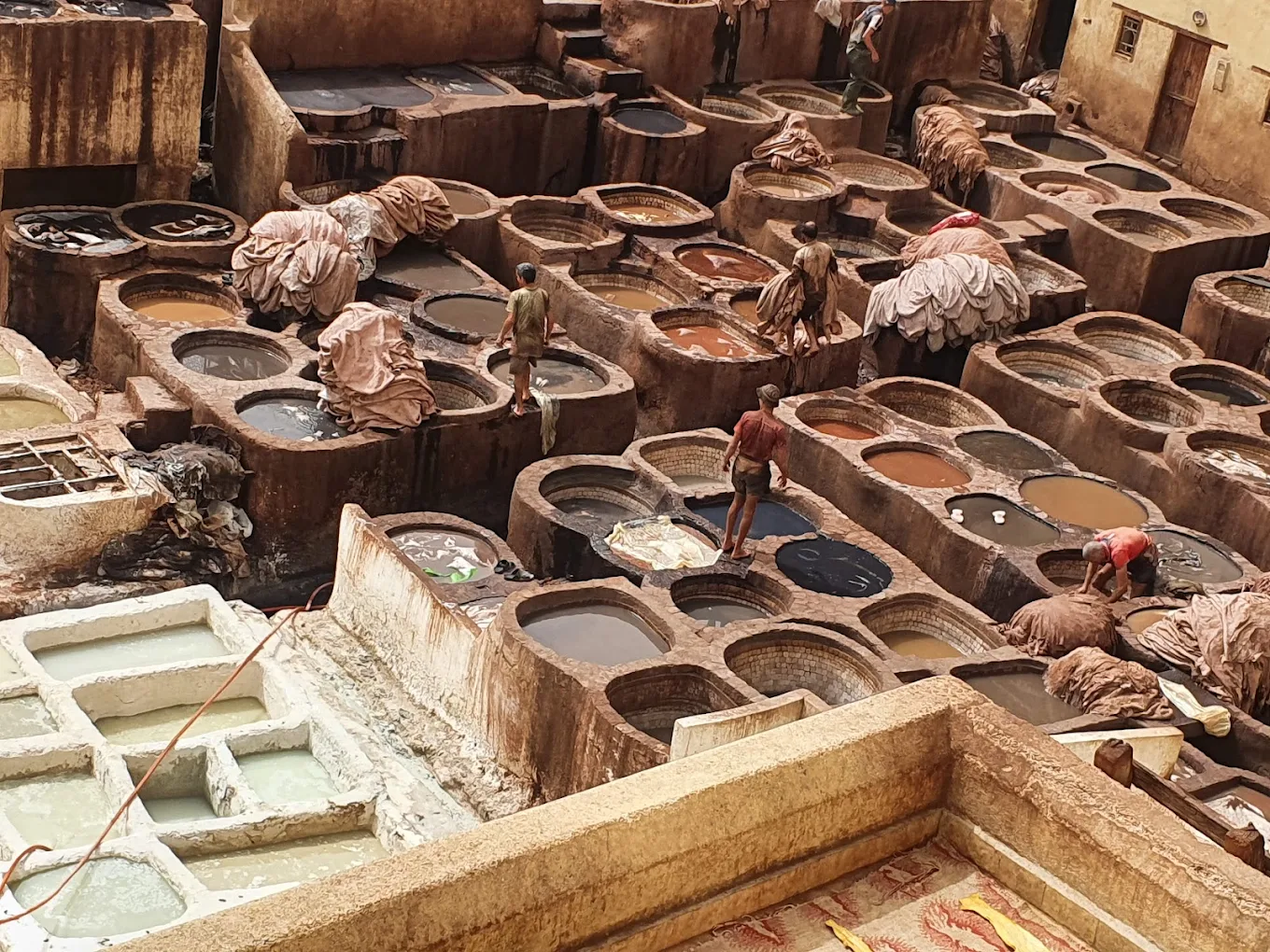
Where Is Morocco on the Map?
On a world map, look at the top-left corner of Africa. Morocco is the country that sticks out towards Europe, with a long Atlantic coast to the west and a shorter Mediterranean coast to the north. Its position makes it both an African and a Mediterranean country, and it is often called the “gateway between two continents”.
The country lies roughly between latitudes 27 and 36 degrees north, which places it in the same band as southern Spain, Portugal, Tunisia and the southern United States. The coastline runs for about 3,500 km, and the interior is a patchwork of mountains, plateaus, valleys and desert.
When travellers first ask where is Morocco, they are often surprised by its size. It is larger than Spain and similar in area to California and Nevada combined, and the main cities are far apart. A road trip from Tangier in the north to Merzouga in the south takes more than a day of driving.
Borders and Neighbours
Understanding the borders explains a lot about the country’s culture and travel routes. To the east lies Algeria, and the land border is closed to travellers. To the south lies the territory of Western Sahara, which Morocco administers in large part and whose status is disputed internationally, and beyond it lies Mauritania.
To the north, Morocco shares a sea border with Spain, plus two small Spanish enclaves, Ceuta and Melilla, on the Mediterranean coast. There are no land crossings into Algeria for tourists, so most visitors arrive by air or by ferry from Spain. Where is Morocco in relation to its neighbours? It is the most western and most accessible country of the Maghreb for European visitors.
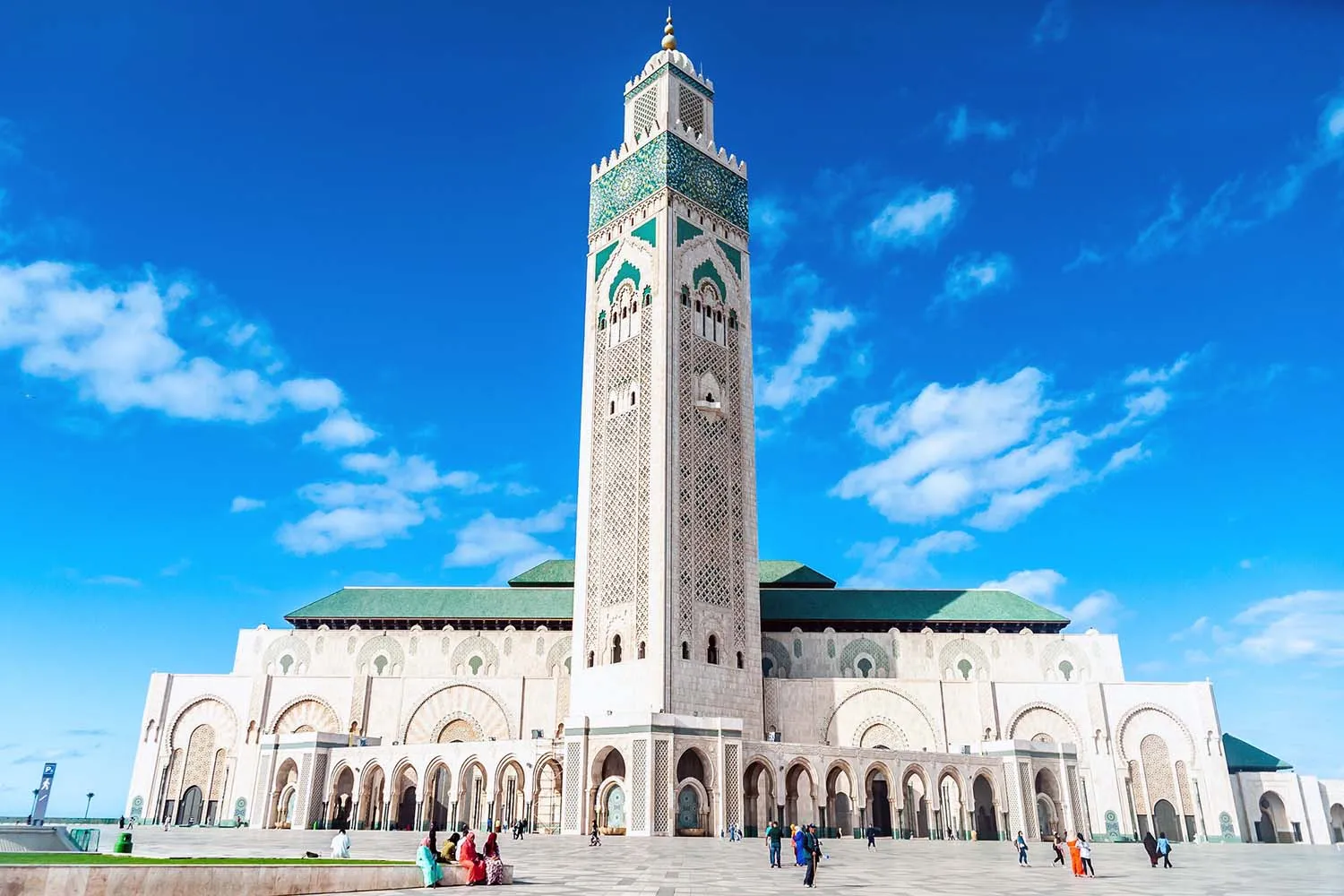
How Close Is Morocco to Europe?
Very close. At the narrowest point of the Strait of Gibraltar, Europe and Africa are separated by about 14 km of water. On a clear day, you can see the mountains of Spain from the hills near Tangier, and the ferry from Tarifa to Tangier takes about one hour.
This closeness is the reason where is Morocco matters for travellers. A weekend break from Spain or southern Europe is easy, and longer trips from northern Europe take only a few hours by air. The shared history with Spain and Portugal also explains the Andalusian influence you see in Moroccan architecture, music and food.
Mountains, Coast and Desert
The geography of the country is unusually varied. In the north, the Rif mountains rise above the Mediterranean and shelter blue-painted towns such as Chefchaouen. In the centre, the Middle Atlas holds cedar forests and lakes, and the High Atlas forms a long wall of snow-capped peaks that includes Jebel Toubkal.
South of the Atlas the land turns to palm valleys, kasbahs and then the Sahara, with the great dunes of Erg Chebbi near Merzouga. To the west, long Atlantic beaches stretch from Tangier to Agadir, with surf towns and fishing ports such as Essaouira. This diversity is why where is Morocco is a more interesting question than it seems.
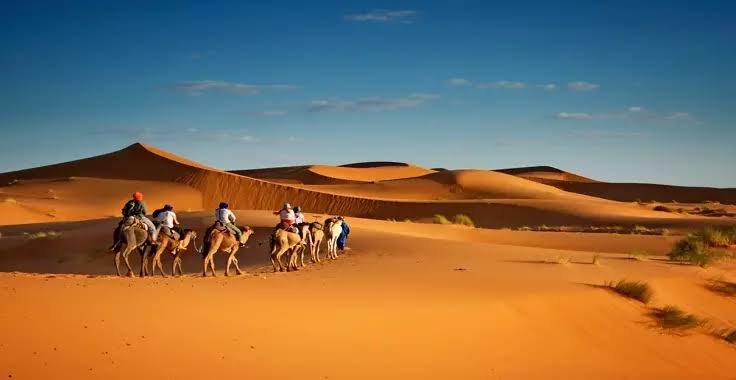
The Main Travel Regions
For travellers, it helps to split the country into five regions. Each has its own mood, climate and highlights, and many trips combine two or three of them.
| Region | Highlights | Best for |
|---|---|---|
| North | Tangier, Chefchaouen, Tetouan | Blue towns, coast, culture |
| Imperial cities | Fes, Meknes, Rabat, Marrakech | History, medinas, food |
| Atlantic coast | Casablanca, Essaouira, Agadir | Beaches, surf, seafood |
| Atlas mountains | Imlil, Ourika, Toubkal | Hiking, villages, views |
| South and desert | Ouarzazate, Merzouga, Zagora | Dunes, kasbahs, camel treks |
Key Cities and Where They Are
Knowing the main cities makes the map easier to read. Tangier is on the northern tip, facing Spain. Rabat, the capital, and Casablanca, the business hub, lie on the Atlantic coast. Fes and Meknes sit inland in the north-centre, and Marrakech lies further south at the foot of the Atlas. See where is Marrakech for details on the Red City.
Chefchaouen, the famous blue town, is in the Rif mountains. Essaouira is a white-and-blue port on the Atlantic, and Merzouga is a desert village near the Algerian border. Each city has its own guide on our site, including what to see and do in Tangier and what to do in Merzouga.
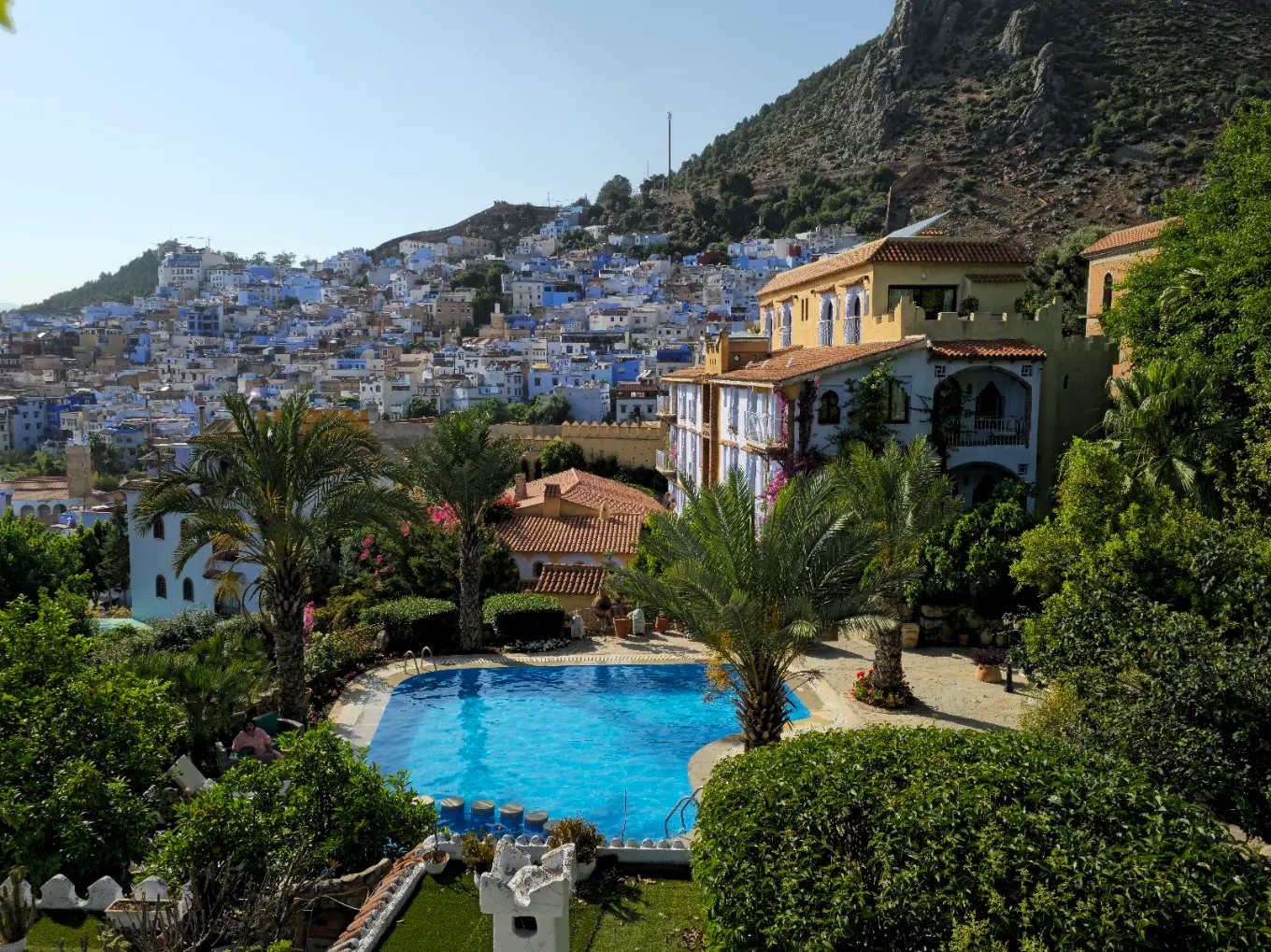
Climate Across the Country
Because of its position, Morocco has several climates. The Mediterranean north is mild and rainy in winter. The Atlantic coast is cooler and breezy in summer, the interior plains are hot in summer, and the mountains are cold and snowy in winter. The south is dry and extremely hot by day in summer, with cold nights in winter.
When people ask where is Morocco in terms of weather, the best answer is that it depends on where you go. Pack layers, sun protection and a warm jacket for evenings, especially in the desert and mountains. Our best month to go to Marrakech guide gives month-by-month advice for the south-west.
Flight Times to Morocco
Morocco is easy to reach. Direct flights connect the main airports, such as Casablanca, Marrakech, Fes, Tangier and Agadir, with many European cities. The numbers below are typical flight times and can vary by route and season.
| From | Approximate flight time |
|---|---|
| Madrid | About 2 hours |
| London | About 3.5 hours |
| Paris | About 3.5 hours |
| Berlin | About 4.5 hours |
| New York | About 7 hours |
This short flight time helps answer where is Morocco for visitors who feel unsure about distance. For many Europeans, it is closer than a trip to another part of their own continent, and it offers a very different culture.
Why the Location Matters for Travellers
The position of the country shapes everything you experience. Trade routes between Africa, Europe and the Middle East passed through its cities, and that is why its food, language, music and architecture mix Amazigh, Arab, Andalusian and French influences. You can taste this mix in a single meal of tagine, couscous and mint tea.
The location also gives you an unusual range of landscapes within short distances. You can ski in the Atlas in winter and swim in the Atlantic the same week, or ride a camel in the Sahara and walk through a medina two days later. When you understand where is Morocco, you can combine these worlds in one itinerary.
The same position also means that distances are real. A trip from Tangier to the desert takes more than a day on the road, so choose a route that matches your time. Our Morocco itineraries page shows how to link the regions.
When Is the Best Time to Visit?
Spring (March to May) and autumn (September to November) are the most comfortable seasons for most of the country. Summer is best on the coast and in the mountains, and winter is ideal for the desert and the south, although nights are cold. Ramadan changes daily rhythm, so plan with care.
For specific events, read Aid al-Fitr in Morocco 2027 and travel to Morocco 2027. If you are asking where is Morocco best in each season, the north and coast suit summer, the imperial cities suit spring and autumn, and the desert suits winter.
Sample Routes by Location
A simple way to use the map is to choose a loop. The “imperial loop” links Casablanca, Rabat, Fes and Marrakech. The “southern loop” climbs from Marrakech over the High Atlas to Ait Benhaddou, Ouarzazate and the Sahara. The “northern loop” combines Tangier, Chefchaouen and Fes.
- 7 days: Marrakech, Atlas, desert and return.
- 10 days: Casablanca, Fes, desert, Marrakech.
- 14 days: full circle with coast and north.
For ready-made options, browse our 2 weeks in Morocco itinerary and 7, 14 or 21 days in Morocco. Our team can adapt any route, and you can see every option on the all Morocco tours page.
For an overview of the Sahara, see our Erg Chebbi guide, and read is Morocco safe to travel for current safety information. The UNESCO list of Moroccan World Heritage Sites is also a helpful planning tool.
Practical Tips Based on the Map
- Choose a base: do not try to see the whole country in a few days.
- Use trains in the north: fast and comfortable between Tangier, Rabat and Casablanca.
- Hire a driver in the south: mountain roads and long distances are easier with a local.
- Pack layers: climate changes quickly with altitude and distance from the coast.
- Book early: flights and desert camps fill in spring and autumn.
Keep in mind that where is Morocco on the map is only the start. The next question is how long you have, what you love and how fast you like to travel. Share these answers with us, and we will design a route that fits.
Common Mistakes
A frequent mistake is to think the country is small. Distances are large, and a long list of cities in a week leads to exhaustion. Another mistake is to assume the whole country is desert, when in fact much of it is green, mountainous and coastal.
A third mistake is to ignore the seasons. Travellers who forget where is Morocco in relation to the Sahara sometimes arrive in summer without a plan for the heat, or in winter without warm clothes for the desert night. Plan by region, and the country becomes simple.
People, Languages and Culture
Where is Morocco culturally? It sits at a meeting point of Amazigh (Berber), Arab, African, Andalusian and French traditions. The population is about 37 million, and most people speak Moroccan Arabic (Darija) and Amazigh languages. French is widely used in business and signs, and English is common in tourism.
Islam is the main religion, and daily life follows its rhythm, from the call to prayer to the month of Ramadan. Hospitality is a point of pride, so guests are often offered mint tea. Knowing where is Morocco on the map helps you understand why so many cultures blend in the same streets.
Heritage Sites and Where to Find Them
The country has several UNESCO World Heritage Sites, each in a different region. The medina of Fes is in the north-centre, the medina of Marrakech in the south-west, the ksar of Ait Benhaddou beyond the High Atlas, and the old port of Essaouira on the Atlantic. Tetouan, Meknes, Volubilis and Rabat complete the list.
These sites are spread across the map, which is why where is Morocco is such a useful question for planners. A route that links Fes, Marrakech and Ait Benhaddou crosses mountains, valleys and plains, and it makes a rich introduction to the country’s history.
Getting Around the Country
Once you know where is Morocco and where your cities lie, choose the right transport. High-speed and regular trains connect Tangier, Rabat, Casablanca and Marrakech. Buses cover most towns, and shared or private taxis handle shorter trips.
For the south and the desert, a private driver-guide is the most comfortable choice. Roads over the Atlas are winding, and many highlights lie off the main routes. Our team can arrange transfers, accommodation and guided stops so you can enjoy the landscape instead of the logistics.
Food and Drink by Region
Where is Morocco’s best food? Everywhere, but each region has its own taste. The north offers fresh fish and Andalusian touches, Fes is famous for refined pastilla, and Marrakech for tagines and grilled meats in the main square. The coast serves sardines and seafood, while the south cooks bread in the sand and simple stews for desert travellers.
Mint tea, couscous on Fridays and sweet pastries are shared across the country. Read our guide to what is a traditional dish in Marrakech for a deeper look at one city’s table.
Money, Visas and Practical Rules
The currency is the Moroccan dirham, and cards work in cities while cash is useful in villages. Many nationalities can enter without a visa for short stays, but rules change, so check with your embassy or an official source before you travel. Make sure your passport is valid for at least six months.
Keep copies of your documents, buy travel insurance and learn a few Arabic or French phrases. When you plan with these basics in mind, answering where is Morocco becomes the first step of a smooth journey rather than a puzzle.
Quick Recap: Where Is Morocco and What to Do Next
Let us recap. Where is Morocco? In the north-west corner of Africa, facing Europe across a narrow strait, with two seas, great mountains and the Sahara desert. It is close to Spain, far larger than most visitors expect and rich in cities, coasts and landscapes.
Where is Morocco best explored first? Most travellers start in Marrakech or Casablanca, then add Fes, the Atlas and the desert. Where is Morocco easiest to reach? From Spain, France, the United Kingdom and many other countries, flights are short and frequent.
Where is Morocco safest and most comfortable for first-timers? Large cities, tourist towns and guided routes are well organised, and a trusted driver-guide adds comfort. Where is Morocco most memorable? Usually in the places between the cities: mountain passes, valleys, villages and the silence of the dunes.
So the next step is simple. Decide how many days you have, pick two or three regions and let us handle the details. Wherever you begin, knowing where is Morocco and how its regions connect will make every day of your trip clearer and more enjoyable.
Frequently Asked Questions
Where is Morocco located?
In the far north-west of Africa, between the Atlantic Ocean and the Mediterranean Sea, with Algeria to the east and the Sahara to the south.
Is Morocco in Africa or the Middle East?
It is in Africa, in the region called the Maghreb or North Africa.
How far is Morocco from Spain?
About 14 km across the Strait of Gibraltar at the narrowest point.
How big is Morocco?
It is larger than Spain, with a coastline of about 3,500 km and a very varied landscape.
What is the capital of Morocco?
Rabat is the capital, while Casablanca is the largest city and Marrakech is the best known for tourism.
Can you help me plan a trip based on where is Morocco?
Yes. Send your dates on WhatsApp at +212 682 832 176 or through the contact page and we will design a private route.
Plan Your Trip Across Morocco With Us
Now that you know where is Morocco, let us arrange transfers, riads, desert camps and a private driver-guide for your route.
Leave a Reply