Category: Uncategorized

  • Marrakech Tourism: Best Things to Do, Top Attractions, Culture and Practical Travel Guide

    Marrakech Tourism: Best Things to Do, Top Attractions, Culture and Practical Travel Guide

    Marrakech Travel Guide · Attractions · Culture · Updated 2026

    Marrakech Tourism: Best Things to Do, Top Attractions, Culture and Practical Travel Guide

    Why the Red City is Morocco’s most visited destination and how to enjoy it well

    Marrakech tourism is one of the main reasons visitors come to Morocco. The Red City mixes a UNESCO-listed medina, royal palaces, lush gardens, lively souks and a food scene that goes from street stalls to fine riad dining. It is also an easy base for the desert, the mountains and the Atlantic coast, which is why Marrakech tourism works for both short and long trips.

    This guide explains Marrakech tourism from a local point of view. You will find the top attractions, the culture and customs, the best seasons, the events, where to stay, how to get around, how to travel responsibly and the practical details that make a trip smooth. It is written for first-time visitors and for returning travellers who want to go deeper.

    If you already know the basics and want a day-by-day plan, jump to our Marrakech travel itineraries. For a shorter list of highlights, read what should I not miss in Marrakech.

    Marrakech Tourism: The Short Answer

    Quick answer: Marrakech tourism centres on the old medina, Jemaa el-Fna square, the palaces, the Majorelle Garden and the souks. Visit in spring or autumn, stay in a riad, hire a guide for the first morning, and add a day trip to the Atlas or the Agafay desert. Three days is a good first visit.
    Topic What to know
    Best known for Medina, souks, palaces, gardens, food
    Best seasons March to May and September to November
    Ideal stay 3 to 5 days
    Where to stay A riad in or near the medina
    Language Arabic, Berber, French; some English
    Currency Moroccan dirham
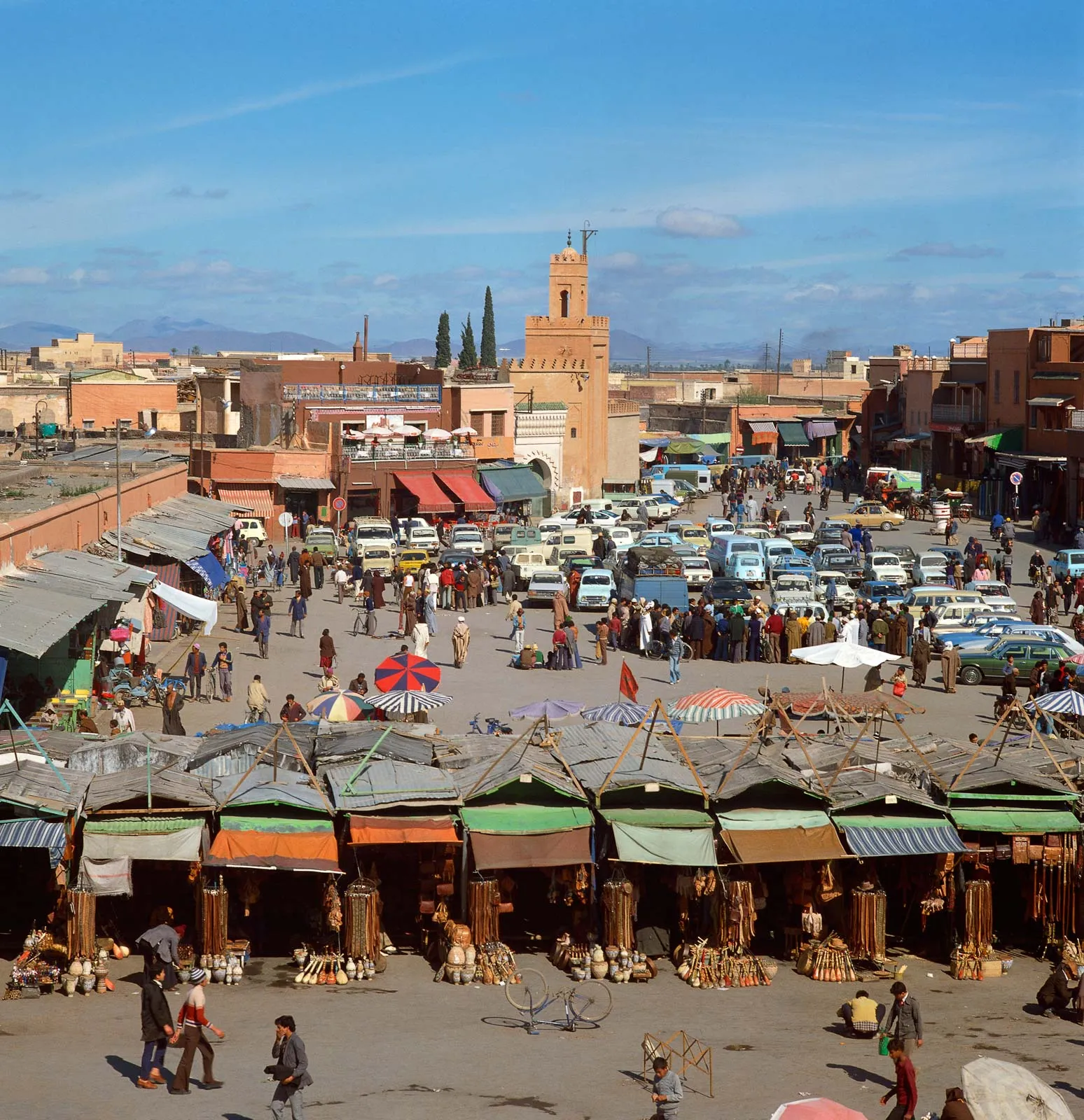
    Marrakech tourism: a view of the Red City and its old walls
    The warm red walls give Marrakech its nickname, the Red City.

    Why Marrakech Tourism Keeps Growing

    Morocco welcomes many millions of visitors each year, and Marrakech is among its most visited cities. The reasons are easy to see. The city has a clear identity, a short flight time from Europe, a warm climate and a rich mix of heritage and modern comfort. That mix is the secret of Marrakech tourism: few places let you walk through a medieval market in the morning and relax by a design hotel pool in the afternoon.

    Marrakech tourism also suits many types of traveller. Couples find romantic riads and sunset terraces. Families enjoy the gardens, the camels and the food stalls. Friends join cooking classes and spa days. Culture lovers explore the museums, the mosques from the outside and the craft workshops. Active visitors use the city as a base for trekking in the Atlas and quad rides in the palm grove.

    A Short History of the Red City

    Marrakech was founded around 1070 by the Almoravid dynasty, and it quickly became a capital of a large empire that stretched across North Africa and Spain. Later dynasties, including the Almohads and the Saadians, added mosques, gardens, palaces and walls, and left the monuments that visitors admire today.

    The medina, with its walls, gates and lanes, is listed by UNESCO as a World Heritage Site. Understanding a little of this history makes Marrakech tourism much richer, because you see why a minaret, a palace or a gate looks the way it does.
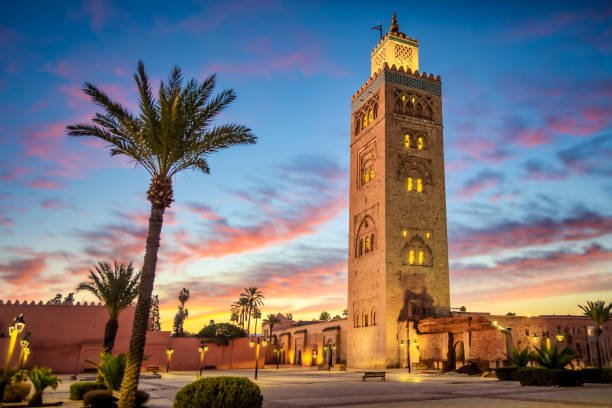
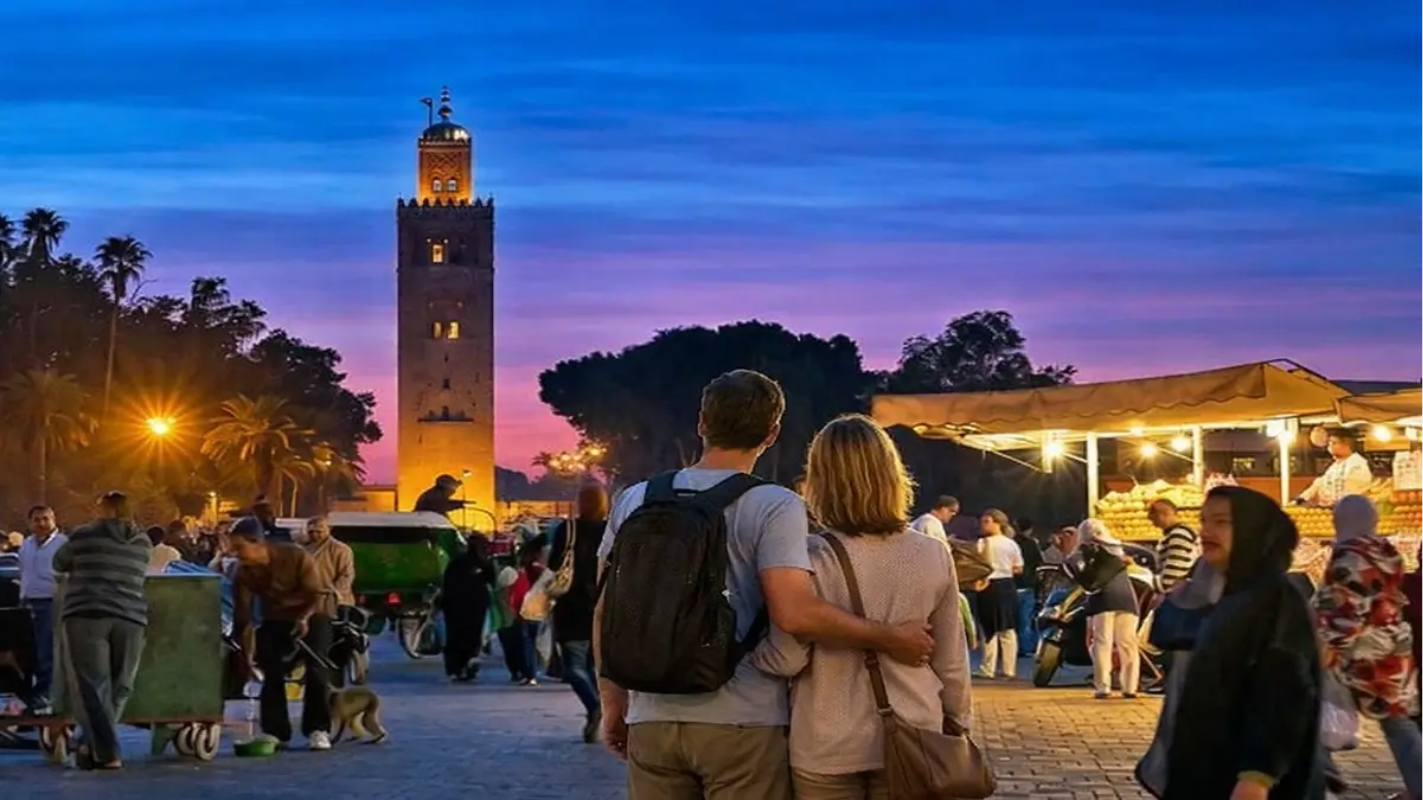
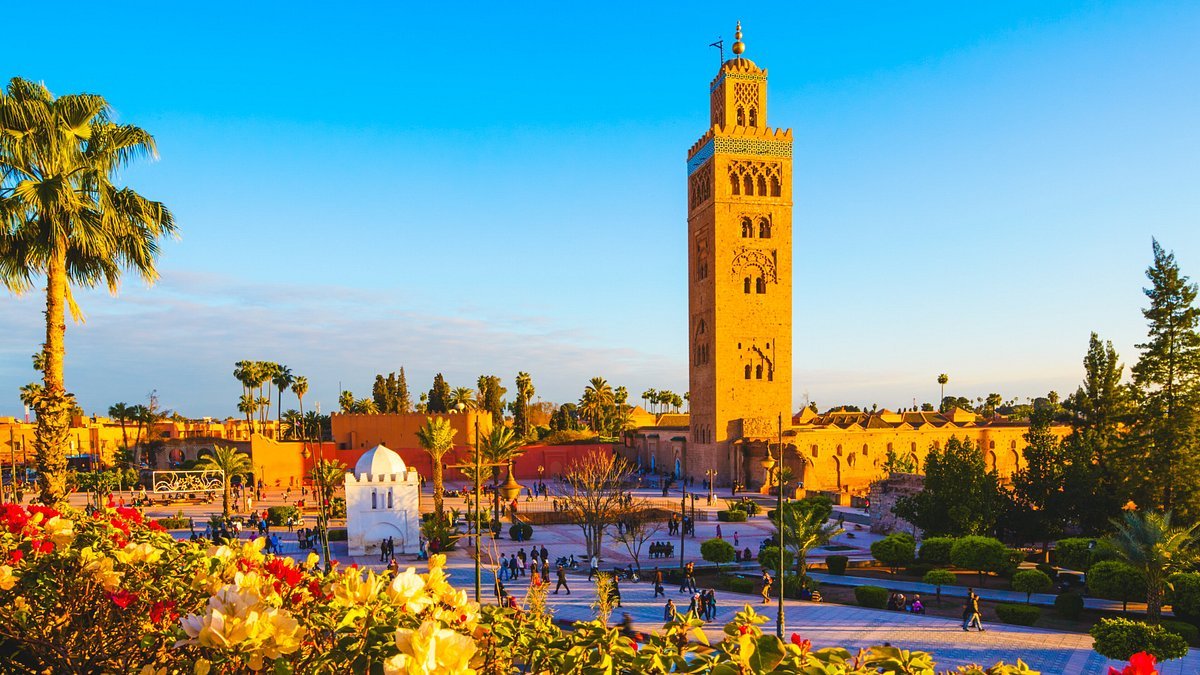
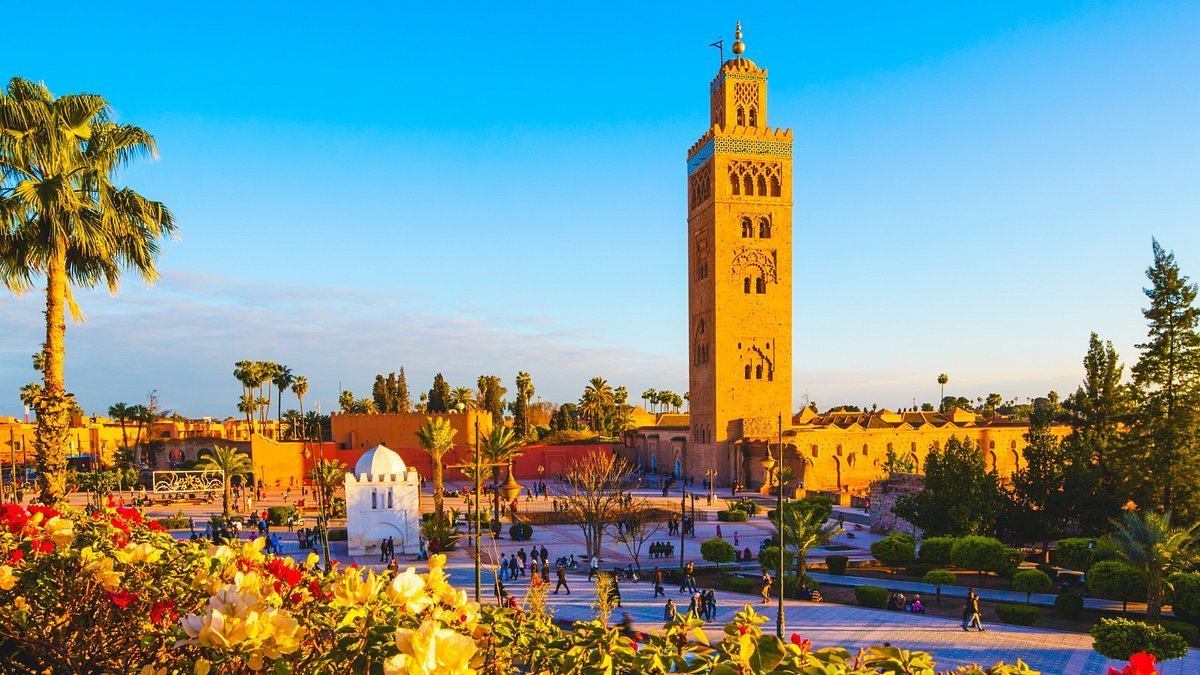
    Marrakech tourism: the Koutoubia mosque minaret and palm trees
    The Koutoubia minaret, about 77 metres tall, is the symbol of the city.

    Top Attractions in Marrakech Tourism

    Every visit to Marrakech includes a handful of famous places, and they form the core of Marrakech tourism. They are popular for good reasons, so plan them early in the day and give each enough time.

    Attraction Why go Time needed
    Jemaa el-Fna The great square, with food stalls and performers 1 to 2 hours
    Koutoubia Mosque The 12th-century minaret and gardens 30 minutes
    Bahia Palace Painted ceilings and courtyards 1 hour
    El Badi Palace Ruins with storks and views 1 hour
    Saadian Tombs Carved royal tombs 45 minutes
    Ben Youssef Madrasa Decorated Quranic school 45 minutes
    Majorelle Garden Blue villa, cacti and bamboo 1.5 hours
    Menara Gardens Pool, olive trees and Atlas views 1 hour

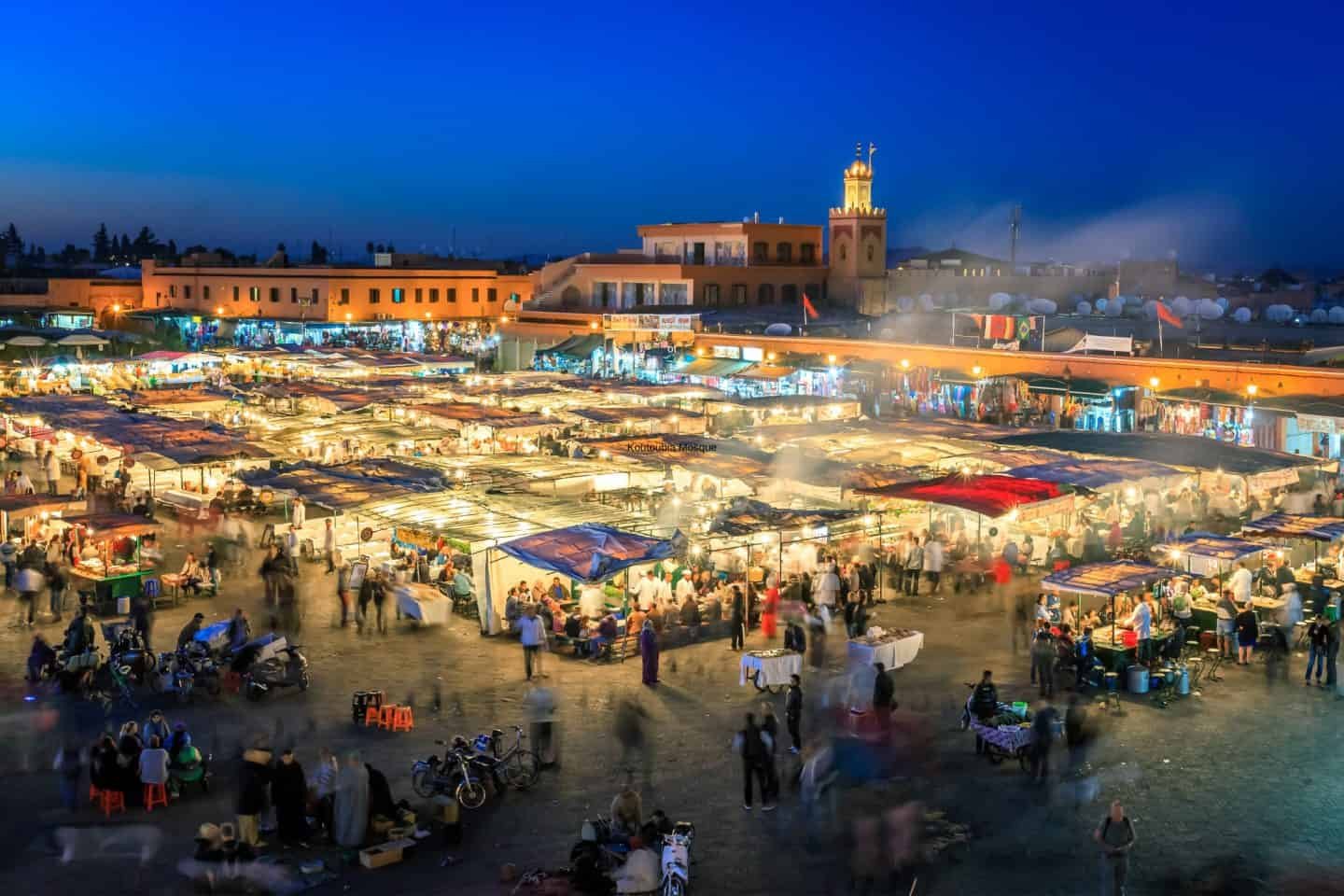
    Jemaa el-Fna is the beating heart of Marrakech tourism. By day it is a calm space with orange juice carts and snake charmers. At sunset, the food stalls open, smoke rises, and storytellers, musicians and acrobats gather. Visit it twice, once in daylight and once at night, and keep your bag in front of you.

    The Medina and the Souks

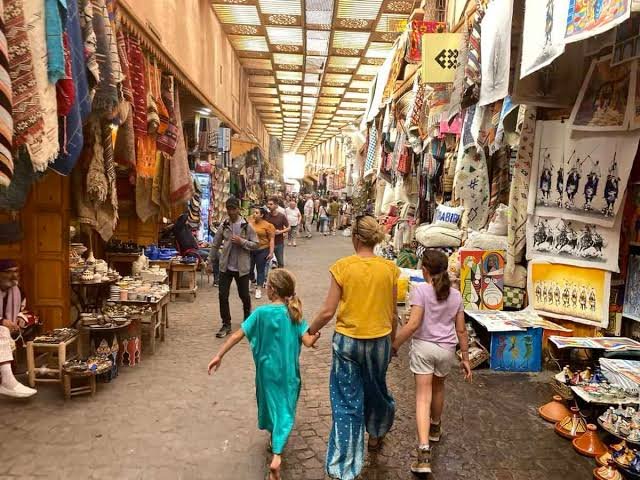
    The old city is a maze of lanes, courtyards and workshops, and getting a little lost is part of the pleasure. The souks are divided by craft: leather, metal, wool, spices, lamps, carpets, ceramics and slippers. Each area has its own sounds and smells, from hammering copper to fresh mint.
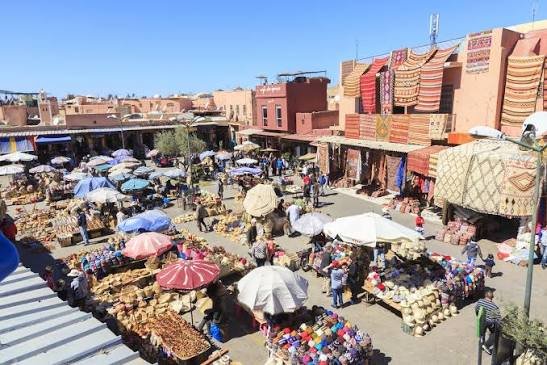
    Marrakech tourism: shopping in the souks of the old medina
    The souks reward slow walking, curiosity and a friendly bargain.

    Bargaining is normal. Decide what you like, offer a lower price and negotiate with a smile. Visit with a trusted guide the first time, because the lanes confuse most people and fake guides are common. A good guide also takes you to artisan workshops where you can see the work and understand the price.

    Gardens, Museums and Quiet Spaces

    The busy medina is balanced by calm places. The Majorelle Garden was created by the painter Jacques Majorelle, who used a strong cobalt blue that is now famous worldwide, and was later restored by Yves Saint Laurent and his partner. Nearby you can visit the Yves Saint Laurent Museum and the Berber Museum. The Menara Gardens and the Agdal Gardens offer shade and wide views.

    Other quiet stops include Le Jardin Secret, a restored riad garden in the medina, the Maison de la Photographie, and the Museum of Marrakech in an old palace. Mixing quiet stops with busy ones is the secret of good Marrakech tourism, because it keeps the day comfortable.

    Culture and Customs

    Marrakech is a Muslim city with a strong Berber and Arab heritage, and people are generally warm, curious and polite. The call to prayer is heard five times a day, and it adds to the atmosphere. Good Marrakech tourism starts with a smile. Learn a few words, such as salam for hello, shukran for thank you and la shukran for no thank you, and you will receive many smiles.

    • Dress: loose clothes that cover shoulders and knees are respectful and more comfortable.
    • Photos: ask permission before photographing people, especially women and children.
    • Mosques: most are closed to non-Muslims, except a few such as those with special visitor access.
    • Ramadan: avoid eating and drinking in public in the day, although tourist cafés stay open.
    • Tea: accepting mint tea is a sign of respect.

    Respect for these habits is an important part of responsible Marrakech tourism, and it makes meetings with local people easier. For safety advice, read our honest guide: is Morocco safe to travel.

    Food and Drink

    Food is a major draw for Marrakech tourism. Try tagines of lamb, chicken or vegetables, couscous on Fridays, pastilla, grilled kefta and harira soup. The stalls of Jemaa el-Fna serve grilled meat, snails, sheep’s head and fresh salads for those who dare. In cafés, order mint tea, fresh orange juice and Moroccan pastries.

    For a deeper look, take a cooking class. You visit a market, choose ingredients and cook a full meal in a riad kitchen. Hygiene is generally good in busy places. Choose restaurants and stalls with a crowd, eat hot food and drink bottled water.

    Festivals and Events

    Marrakech tourism is not only about monuments, because the city hosts cultural events throughout the year. They change from year to year, so check dates before you book. Film, music, art and sport are all represented.

    • Film: an international film festival has long been held in the city in late autumn.
    • Art: contemporary art fairs and exhibitions appear in galleries, especially in winter.
    • Sport: a marathon and golf events attract visitors in the cooler months.
    • Religious festivals: Eid and the month of Ramadan change the rhythm of the city.

    Marrakech Tourism for Families, Couples and Solo Travellers

    Families like Marrakech tourism because there is always something to see. Children enjoy the horse carriages, the orange juice carts, the Menara pool and the camels in the Agafay desert. Plan short mornings, a long lunch and a pool break in the afternoon, and carry water and snacks.

    Couples find Marrakech tourism romantic and relaxed, with rooftop dinners, hammams for two, candlelit courtyards and desert sunsets. Solo travellers meet others in riads, cooking classes and small group tours, and the city has many cafés where it is easy to sit alone and watch life pass.

    Hammams, Spas and Wellbeing

    Few experiences are as Moroccan as a hammam. In this traditional steam bath you are washed with black soap, scrubbed with a glove and often finished with a massage. Public hammams are authentic and simple, while riad and hotel spas offer privacy, scents and calm.

    Wellbeing is a growing part of Marrakech tourism. Many riads offer yoga, massages and argan oil treatments, and some spas use rose water, orange blossom and clay from the Atlas. Add one hammam to any stay of three days or more, since it restores tired legs after the souks.

    Shopping and Crafts

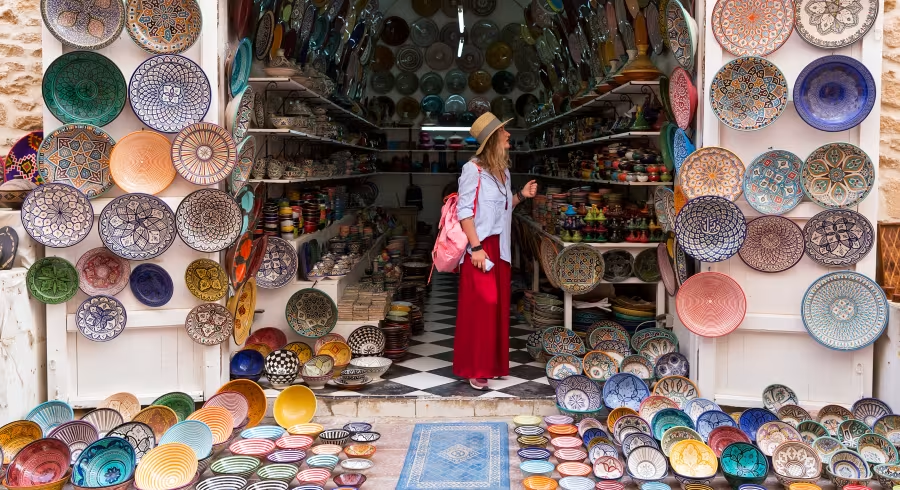
    Marrakech tourism is closely linked to craft shopping. The medina has been a trading city for nearly a thousand years, and the souks still sell leather bags, slippers, brass lamps, woven baskets, rugs, ceramics, spices and argan oil. Buy what you love, compare prices and be ready to bargain with a smile.

    For quality work and calm browsing, visit artisan cooperatives and design shops in Gueliz and the medina. Ask where an item was made, and avoid buying products made from endangered species or protected fossils. A purchase from a local craftsperson supports a family and keeps traditions alive.

    Where to Stay in Marrakech

    The choice of accommodation shapes your Marrakech tourism experience. Riads are traditional houses around a courtyard, with a small pool and a rooftop terrace. They are quiet, personal and ideal for couples and small groups. The best are inside the medina, within walking distance of the main sights.

    For more comfort and space, consider hotels in Gueliz and Hivernage, where you find larger pools, restaurants and easy parking. Families with young children often prefer these districts. Resorts and villas in the Palmeraie offer a quiet, green setting, with a short drive to the centre. Read recent reviews and ask about the nearest taxi drop-off.

    Getting to Marrakech and Moving Around

    Marrakech Menara Airport has direct flights from many European cities, and trains connect Marrakech to Casablanca and other cities. The journey from Casablanca takes about three hours by train. Roads from Agadir, Essaouira and Ouarzazate are good and are often used by private drivers, which makes Marrakech tourism easy to combine with other regions.

    Inside the city, walk in the medina and use petit taxis for longer distances. Agree on a fare or make sure the meter is on. Private drivers are the easiest option for families and for day trips, and they give you air conditioning and local knowledge.

    Best Time for Marrakech Tourism

    Spring, from March to May, and autumn, from September to November, are the best seasons, with warm days and mild evenings. Summer is hot, often above 38 degrees, so plan indoor visits at midday. Winter has sunny days but cold nights, and the Atlas can be covered in snow. Our guide to the best month to go to Marrakech compares the seasons in detail.

    Day Trips from Marrakech

    Part of the appeal of Marrakech tourism is how easy it is to leave the city for a day. The Agafay desert offers stony desert views and a sunset dinner, the Ourika Valley gives you mountain air and Berber villages, and the Ouzoud waterfalls are a highlight for nature lovers.
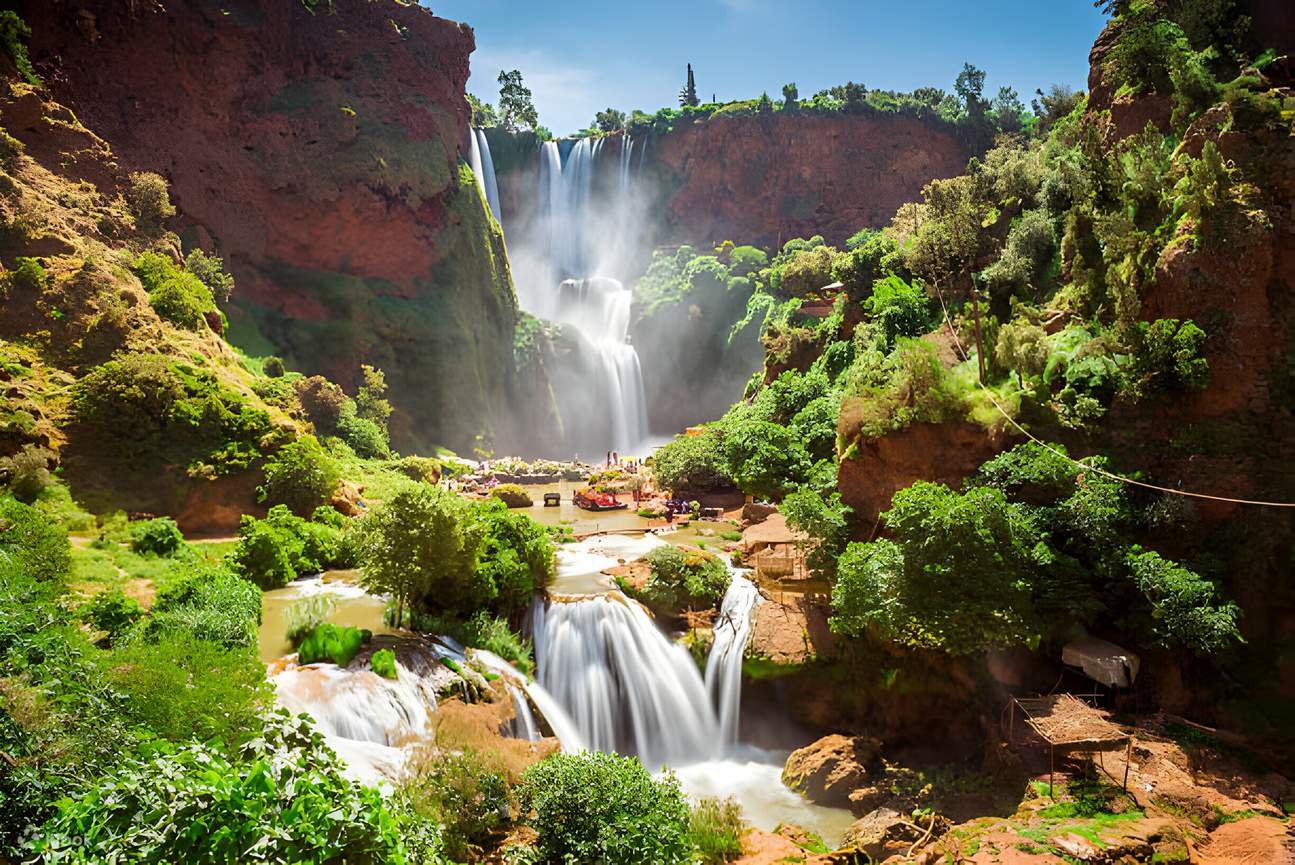
    Marrakech tourism: the Ouzoud waterfalls on a day trip from the city
    Ouzoud Waterfalls, a popular day trip from Marrakech.

    For a longer excursion, take the day trip to Ait Benhaddou and Ouarzazate or a multi-day desert tour such as the 3 days from Marrakech to Merzouga. More ideas are listed in our Morocco day trips page.

    Responsible and Sustainable Tourism

    Marrakech tourism supports thousands of families, from guides and drivers to artisans and market sellers. You can make your trip better for the city by choosing local businesses, paying fair prices for crafts, respecting customs and avoiding harmful activities. Do not ride animals that look thin or mistreated, and avoid photographing performers without a small tip.

    Water is precious in a dry region, so use it carefully, bring a refillable bottle and avoid single-use plastic where you can. Choose riads and operators who employ local staff, treat animals kindly and care about waste. Good Marrakech tourism leaves a place better than you found it.

    Practical Tips for Visitors

    • Documents: check your visa and passport rules with your government before you travel.
    • Money: carry small dirham notes for tips, taxis and snacks.
    • Phone: buy a local SIM or eSIM and download offline maps.
    • Tipping: small tips are normal in cafés, for guides and for drivers.
    • Heat: rest at midday and drink water often.
    • Safety: keep a zipped bag in front, ignore pushy offers and use a trusted guide.

    To turn these ideas into a plan, see our Morocco itineraries page or all Morocco tours.

    Frequently Asked Questions

    What is Marrakech tourism best known for?

    It is best known for the old medina, Jemaa el-Fna square, the palaces, the Majorelle Garden, the souks and the food.

    How many days do I need for Marrakech tourism?

    Three days is a good first visit. Two days is enough for the highlights, and five days lets you add day trips and rest.

    When is the best time to visit Marrakech?

    March to May and September to November have the best weather. Summer is hot and winter nights are cold.

    Is Marrakech good for families?

    Yes. Children enjoy the gardens, the square, the camels and the food, and many riads have pools.

    Do I need a guide in Marrakech?

    A guide is useful for the first morning in the medina, and a private driver-guide makes day trips easier.

    How can I plan my Marrakech tourism trip with you?

    Send your dates and group size on WhatsApp at +212 682 832 176 or through our contact page, and we will prepare a private plan.

    Ready to Plan Your Marrakech Tourism Trip?

    Tell us your dates, group and interests. We will design a private, flexible plan with a trusted guide and driver, so you can enjoy Marrakech tourism without stress.
    Request a Free QuoteWhatsApp Us

  • Marrakech Travel Itineraries: Best 1, 2, 3, 4 and 5 Day Plans with Day Trips and Local Tips

    Marrakech Travel Itineraries: Best 1, 2, 3, 4 and 5 Day Plans with Day Trips and Local Tips

    Marrakech Travel Guide · Day by Day Plans · Updated 2026

    Marrakech Travel Itineraries: Best 1, 2, 3, 4 and 5 Day Plans with Day Trips and Local Tips

    Souks, palaces, gardens, hammams and the Atlas Mountains, planned day by day

    Marrakech travel itineraries work best when they match the time you really have. A single day is enough for the big highlights, three days give you a relaxed taste of the Red City, and five days let you add the desert, the mountains and the coast without rushing.

    This guide gives you clear Marrakech travel itineraries for one, two, three, four and five days. Each plan shows what to see, in which order, how long to spend and where to eat or rest. We also add easy day trips, tips for the heat and the crowds, and the small local habits that make a visit smoother.

    Use the plan that fits your trip, or mix them, because good Marrakech travel itineraries are always flexible. Every route is flexible, and a private guide can change it on the day to suit your energy and the weather. For the main sights in more detail, read our guide on what should I not miss in Marrakech.

    Marrakech Travel Itineraries: The Short Answer

    Quick answer: for the first visit, three days is the best balance. Spend day one in the medina, day two on palaces and gardens, and day three on a day trip to the Atlas or the desert. With one day, focus on the old city. With five days, add the coast and a night in the Agafay desert.
    Length Focus Best for
    1 day Medina highlights Stopovers and cruise visits
    2 days Medina plus gardens and palaces Short city breaks
    3 days City plus one day trip First-time visitors
    4 days City, mountains and desert edge Couples and families
    5 days City, Atlas, desert and coast Relaxed, complete trips
    Marrakech travel itineraries: the old city and the Red City walls
    The old city of Marrakech, with its red walls and minarets.

    How to Choose Between Marrakech Travel Itineraries

    Start with the days you have, not the sights you want. Marrakech is a big, hot, busy city, and most people enjoy it more with a slow plan than with a packed one. Two or three real highlights a day are enough, with a long rest at midday.

    Think about your style as well when you compare Marrakech travel itineraries. Do you like walking and photography, or museums and gardens? Do you travel with children or older relatives? Are you interested in shopping, food or spa time? The best Marrakech travel itineraries are the ones that leave space for tea, a quiet courtyard and the surprise of a lane that you did not plan to walk down.

    • Early risers: start the medina walks at 8:30, before the heat and the crowds.
    • Families: add a garden or pool break every afternoon.
    • Couples: include a sunset terrace, a hammam and one dinner in a courtyard.
    • Photographers: plan the souks for the morning and the squares for golden hour.

    1 Day in Marrakech: The Essential Highlights

    With only one day, one of the best Marrakech travel itineraries is a simple loop of the old city. Start early at the Koutoubia Mosque, whose 77-metre minaret guides you across the city. Walk through the gardens beside it, then continue to the Saadian Tombs, a quiet royal cemetery with carved cedar and marble.

    Next, visit the Bahia Palace, a late 19th-century palace with painted ceilings and shaded courtyards, and the ruins of El Badi Palace, where storks nest on the walls. Eat a long lunch in a rooftop restaurant, then walk into the souks in the afternoon. Finish at Jemaa el-Fna as the food stalls light up, the musicians start and the square fills with life.

    Time Stop
    08:30 Koutoubia Mosque and gardens
    09:30 Saadian Tombs
    11:00 Bahia Palace
    13:00 Lunch with a view
    15:00 Souks and artisan lanes
    18:00 Jemaa el-Fna at sunset

    2 Days in Marrakech: Medina, Palaces and Gardens

    Two days let you slow the pace, and short Marrakech travel itineraries like this one work well for city breaks. Use day one for the plan above, but cut one stop and add a long hammam or a tea break. On day two, leave the old city for the calmer, greener side of Marrakech.

    Begin at the Majorelle Garden, a blue and yellow garden of cacti and bamboo created by the painter Jacques Majorelle and later restored by Yves Saint Laurent. Booking ahead is wise, because it is popular. Then visit the Berber Museum or the Yves Saint Laurent Museum nearby, and walk in the modern Gueliz district for lunch.

    Marrakech travel itineraries: a calm corner of the Red City
    Quiet corners are easy to find once you leave the main squares.

    In the afternoon, go back to the medina for the Ben Youssef Madrasa, a beautiful Quranic school with carved stucco and zellige tiles. End the day on a rooftop terrace for sunset, then have dinner in a courtyard restaurant.

    3 Days in Marrakech: The Classic Plan

    Three days is the most popular length among Marrakech travel itineraries, because it adds a day trip without losing the city. Follow the two-day plan for days one and two. On day three, choose one of the mountain or desert options.

    The easiest choice is the day trip from Marrakech to the Agafay desert, which gives you a stony desert landscape, a camel ride and a sunset dinner, only 45 minutes from the city. Another good option is the day trip from Marrakech to Ourika Valley, a green river valley with Berber villages and waterfalls in the High Atlas.

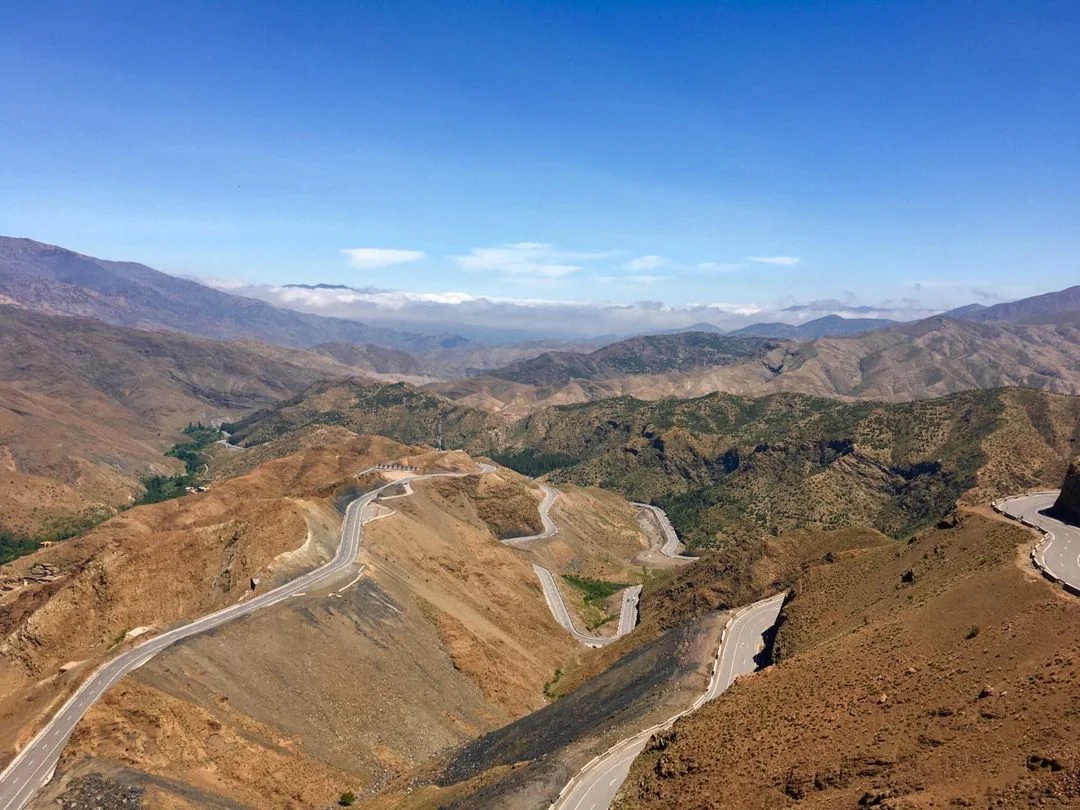
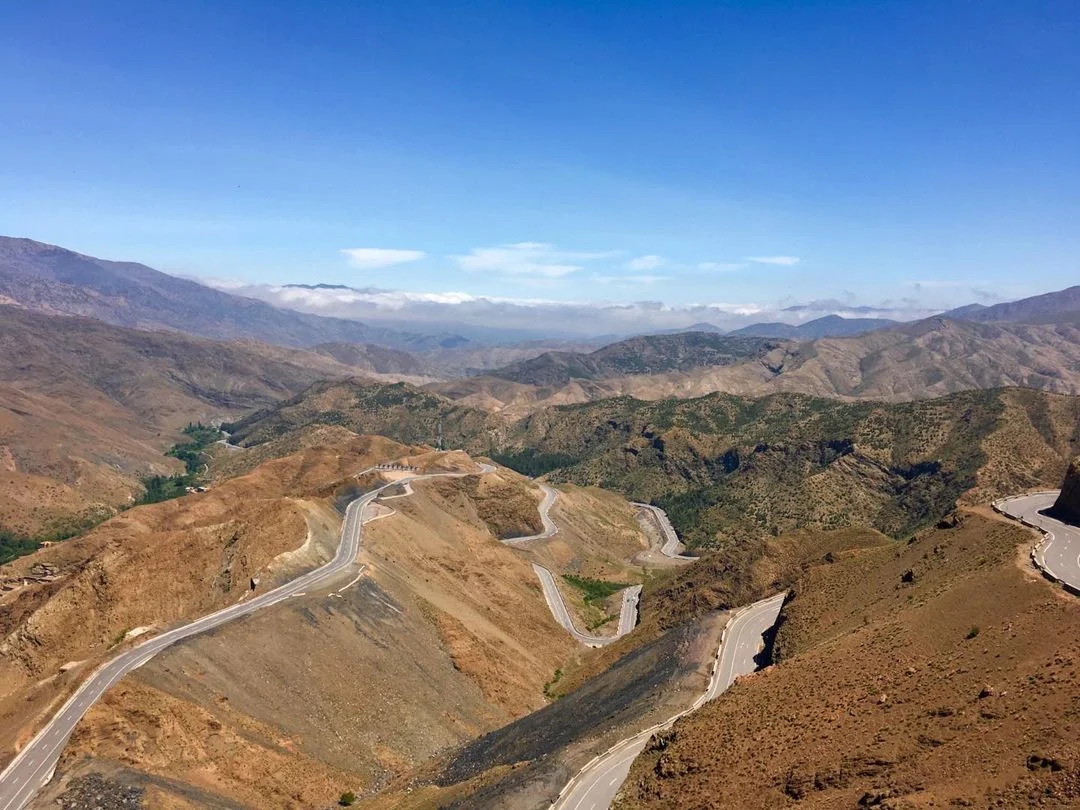
    Marrakech travel itineraries: the High Atlas road on a day trip
    The High Atlas begins less than an hour from the city.

    4 Days in Marrakech: City, Mountains and the Desert Edge

    With four days, Marrakech travel itineraries can add a second excursion or an overnight stay. A common plan is two days in the city, one day trip to the Atlas, and a night in the Agafay desert with a sunset camel ride and dinner under the stars.

    If you prefer a longer move, the day trip to Ait Benhaddou and Ouarzazate crosses the High Atlas via the Tizi n’Tichka pass to the UNESCO kasbah of Ait Benhaddou. It is a long day, but it gives a strong taste of the south. Another option is to use the four days for a small circuit, such as the 4 days tour from Marrakech to Merzouga.

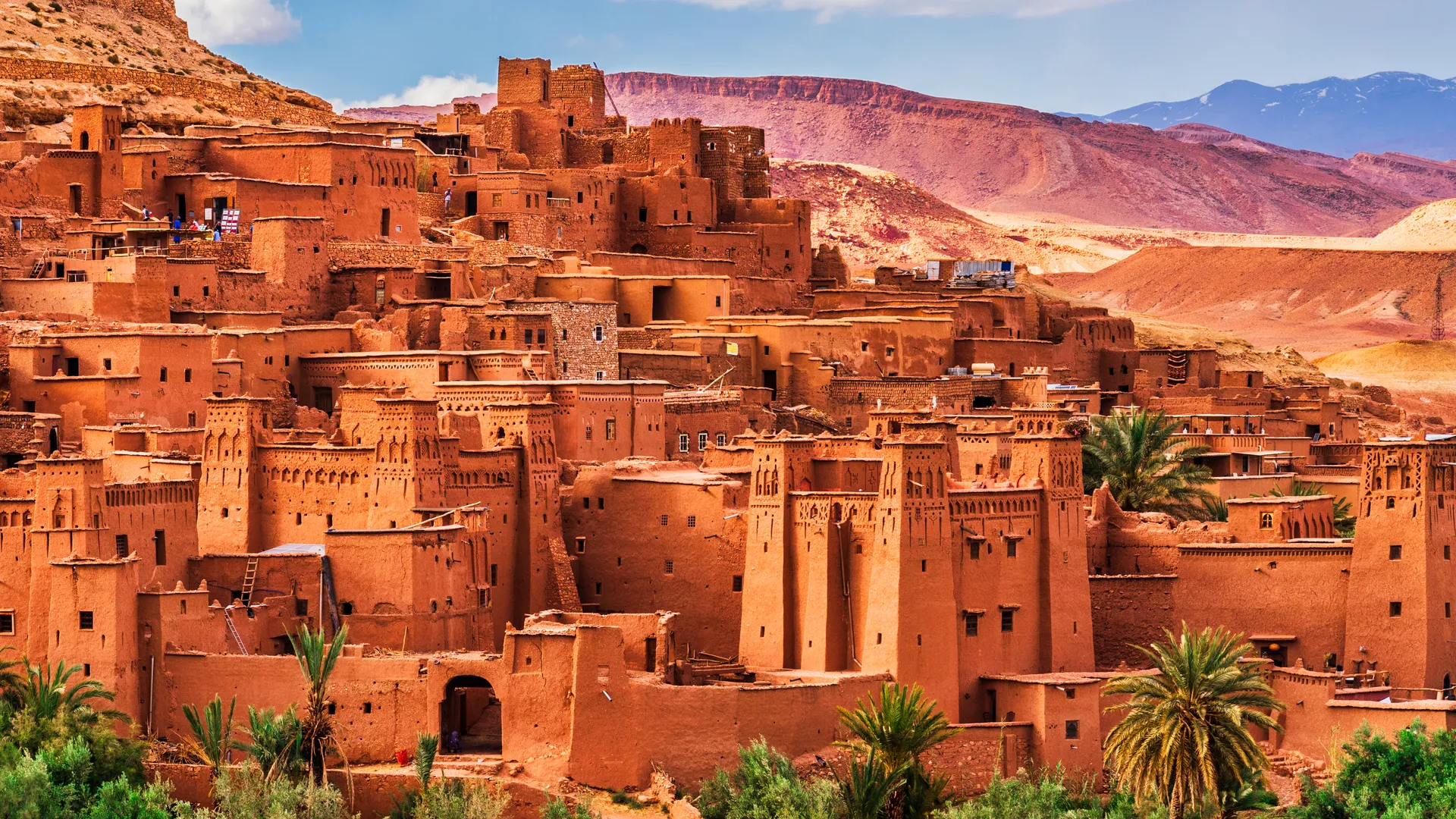
    Marrakech travel itineraries: Ait Benhaddou kasbah in the High Atlas
    Ait Benhaddou is the most famous kasbah village in southern Morocco.

    5 Days in Marrakech: A Complete and Relaxed Trip

    Five days is the point where Marrakech travel itineraries become truly relaxed. You can spend two full days in the city, one day in the mountains or at the waterfalls, one day on the Atlantic coast and one day for rest, shopping or a cooking class.

    • Day 1: Koutoubia, Saadian Tombs, Bahia Palace and Jemaa el-Fna.
    • Day 2: Majorelle Garden, a museum, Ben Youssef Madrasa and the souks.
    • Day 3: Ouzoud Waterfalls or the Ourika Valley.
    • Day 4: the coast of Essaouira, or the Agafay desert.
    • Day 5: a cooking class, a hammam and a free afternoon.

    The Ouzoud waterfalls day trip from Marrakech is a good choice for families and nature lovers, with 110-metre falls, monkeys and a short boat ride. For more ideas, see our full list of Morocco day trips.

    Best Day Trips in Marrakech Travel Itineraries

    Day trip Drive time Best for
    Agafay desert About 45 minutes Sunsets and camels
    Ourika Valley About 1 hour Mountain air and villages
    Ouzoud Waterfalls About 2.5 hours Nature and families
    Essaouira About 2.5 to 3 hours Coast and fresh fish
    Ait Benhaddou About 3.5 to 4 hours History and film sets

    All of these work well in Marrakech travel itineraries of three days or more, and all are easier with a private driver-guide. Choose one day trip for a three-day stay and two for a five-day stay, and keep at least one day free for the city itself.

    Where to Stay

    For a first visit, stay inside or near the medina, in a traditional riad, so that the old city is on your doorstep. A riad is a house built around a courtyard, usually with a small pool, a rooftop terrace and a handful of rooms. It is quiet, personal and very Moroccan.

    If you prefer modern comfort, the Gueliz and Hivernage districts have larger hotels with big pools and easy parking. Families with young children often like these areas. Check that your accommodation is close to a drop-off point for taxis, because many medina lanes are too narrow for cars.

    Food and Drink

    Food is one of the highlights of Marrakech travel itineraries. Try a lamb or chicken tagine, a seven-vegetable couscous on Fridays, pastilla with pigeon or chicken, grilled meats from the stalls of Jemaa el-Fna and fresh orange juice from the carts. Mint tea is served everywhere, and it is polite to accept. Good Marrakech travel itineraries always include a long, slow meal.

    Join a cooking class to learn how to make a tagine and Moroccan salads, and enjoy the meal at the end. Street food is popular and generally good in busy places, but pick stalls with a crowd and hot food. Drink bottled water.

    Getting Around Marrakech

    Most of the medina is walkable, but the distances between districts are long, so use taxis or a private driver between areas. Petit taxis are small and cheap, but make sure the meter is on or agree on a fare before you start. Calèches, the horse carriages, are a pleasant short ride, but agree on the route and price first.

    The best way to avoid stress is a private driver-guide for the day trips and a guide for the medina on the first morning. A good guide explains the history, avoids the fake guides and shows you the artisan workshops that tourists rarely find. If you worry about safety and scams, read our honest guide: is Morocco safe to travel.

    Best Time for Marrakech Travel Itineraries

    The best months are March to May and September to November, when the days are warm and the nights are mild. Summer is very hot, with temperatures often above 38 degrees, so plan indoor visits at midday. Winter days are sunny and pleasant, but nights are cold, and the High Atlas can have snow. Our guide to the best month to go to Marrakech explains each season in detail.

    Hammams, Spas and Rest

    A hammam is a traditional steam bath, and it is one of the best ways to rest between busy days. You sit in a warm room, are scrubbed with black soap and a glove, and finish with a relaxing massage. Choose a traditional public hammam for a local experience, or a riad or spa hammam for more privacy and comfort.

    Add one hammam to any plan of three days or more. It resets tired legs, and it is an experience that many travellers remember as much as the sights.

    What to Pack

    • Clothes: light, loose layers that cover shoulders and knees, and a warm layer for evenings.
    • Shoes: comfortable closed shoes, because the lanes are uneven.
    • Sun care: a hat, sunglasses and high-factor sunscreen.
    • Bag: a zipped cross-body bag for the souks.
    • Extras: a refillable water bottle, wet wipes and small notes for tips.

    Mistakes to Avoid

    The biggest mistake in Marrakech travel itineraries is trying to do too much. Visiting six sights a day in the heat leaves you tired and annoyed. Choose fewer stops and enjoy them. Another common mistake is following strangers who offer to show you the way, because they usually lead to a shop.

    Also avoid shopping in the first hour without comparing prices, drinking tap water and skipping the morning, when the city is at its calmest and coolest. Finally, do not forget that Friday is a quieter day in some places, and that many museums close on certain days, so check opening hours before you go.

    Marrakech Travel Itineraries for Families

    Marrakech is a good family city when the plan is gentle. Marrakech travel itineraries for families should start late, include a long lunch and keep the afternoon for the pool. Children enjoy the snake charmers and the orange juice carts of Jemaa el-Fna, the horse carriage rides, the Menara Gardens with its large pool and olive trees, and the camels of the Agafay desert.

    Keep walks short, hold hands in the souks and carry water and snacks. Many riads have small pools, which makes the hot hours easy. A private driver is worth it for families, because it gives you a quiet, air-conditioned base, car seats on request and no waiting for taxis.

    Marrakech Travel Itineraries for Couples

    For couples, the best Marrakech travel itineraries combine romance and rhythm. Start with a slow breakfast on a riad terrace, walk the old city in the morning, rest in the afternoon and meet again for sunset. Plan a hammam for two, a dinner in a candlelit courtyard and a night in the Agafay desert with a private tent and a sky full of stars.

    A sunrise balloon flight over the palm groves and the Atlas Mountains is another classic choice for a special trip, if the weather allows. Book early, because places are limited.

    Evenings in Marrakech

    The city changes after sunset. Jemaa el-Fna fills with food stalls, storytellers, musicians and crowds, and it is the best free show in Morocco. Eat at a stall with a busy counter, try the grilled meat and the harira soup, and finish with mint tea or fresh juice. Keep your bag in front of you and your phone in a zipped pocket.

    For a quieter evening, choose a rooftop terrace with views of the Koutoubia, or a dinner in a riad with live Andalusian music. Evenings are also good for a walk in the lit-up Gueliz district. Include at least one calm evening in your Marrakech travel itineraries, because the pace of the days is intense.

    Shopping and Souvenirs

    The souks of Marrakech are a main reason many people come. Look for leather bags and slippers, brass lamps, woven baskets, carpets, ceramics, spices, argan oil and silver jewellery. Each craft has its own area, and a guide can take you to workshops where you see the work and avoid the highest tourist prices.

    Bargaining is expected. Decide what you like, offer a lower price and be ready to leave politely if you do not agree. A smile works better than a hard face. When you plan Marrakech travel itineraries, give shopping a half day and not a few minutes, so you can compare and relax.

    Rainy Day and Heat Plans

    Marrakech has few rainy days, but winter showers happen, and summer heat can be heavy. On those days, choose indoor stops: the Yves Saint Laurent Museum, the Berber Museum, the Maison de la Photographie, a cooking class, a hammam or a long lunch in a riad. A flexible plan is one of the strengths of well-made Marrakech travel itineraries, because you can swap the days without losing anything important.

    Frequently Asked Questions

    How many days do I need for Marrakech travel itineraries?

    Three days is the best length for a first visit. It gives you the main sights and one day trip. Two days works for a short break and five days for a relaxed trip.

    What is the best 3 day Marrakech itinerary?

    Spend day one in the medina, day two on palaces and gardens, and day three on a day trip to the Agafay desert or Ourika Valley.

    Is one day enough in Marrakech?

    One day is enough for the main highlights: Koutoubia, a palace, the souks and Jemaa el-Fna. You will want to return for more.

    Should I book a guide for the medina?

    Yes, for the first morning. A guide shows you the best lanes, avoids fake guides and explains the history.

    Can I add the desert to my Marrakech plan?

    Yes. The Agafay desert is close for a day trip or a night, and Merzouga is possible on a 3 or 4 day tour.

    How do I book Marrakech travel itineraries with you?

    Send your dates and group size on WhatsApp at +212 682 832 176 or through our contact page. We design a private plan with a driver-guide.

    Ready to Plan Your Marrakech Travel Itineraries?

    Tell us your dates, group and interests. We will build a private, flexible plan for your Marrakech travel itineraries, with a trusted local guide and driver.

    Request a Free QuoteWhatsApp Us

  • Is Morocco Safe to Travel? Honest 2026 Safety Guide for Tourists, Solo Women and Families

    Is Morocco Safe to Travel? Honest 2026 Safety Guide for Tourists, Solo Women and Families

    Morocco Travel Safety · Honest Guide · Updated 2026

    Is Morocco Safe to Travel? Honest 2026 Safety Guide for Tourists, Solo Women and Families

    What is really safe, what to watch and how to enjoy Morocco without worry

    Is Morocco safe to travel? For the large majority of visitors, yes. Millions of tourists visit every year, and the question is Morocco safe to travel is one that most of them asked before they came, and most go home with warm memories of friendly people, great food and beautiful places. Like any popular destination, Morocco has risks, and a smart traveller knows them and plans for them.

    This guide answers the question honestly. We explain petty crime, scams, terrorism, protests, roads, health, local laws and the real experience of women, families and solo travellers. We work as a local travel team in Morocco, so the advice comes from daily experience and not from a brochure.

    No guide can promise that nothing will ever go wrong, and if you wonder “is Morocco safe to travel” right now, the honest answer depends on your route, the season and your own habits. Always read the latest advice from your own government before you travel, for example the UK Foreign Office safety page for Morocco and the US State Department advisory for Morocco.

    Is Morocco Safe to Travel? The Short Answer

    Quick answer: So is Morocco safe to travel? Yes: Morocco is a popular, welcoming and generally safe country for tourists. The most common problems are petty theft, pushy sellers and fake guides, plus road accidents. Serious violence against visitors is rare. With basic care, a licensed guide and good planning, most trips are trouble free.
    Is Morocco safe to travel? A calm street scene in a Moroccan city
    Moroccan streets are busy, colourful and, in most places, relaxed.
    Topic Level of concern What helps
    Petty theft Moderate in crowds Zip bags, no flashy items
    Scams and fake guides Common in medinas Use badged or booked guides
    Violent crime Low for tourists Avoid empty streets at night
    Terrorism Low but not zero Stay aware, follow advice
    Road accidents Higher than at home Private driver, no night drives
    Health Low with care Bottled water, insurance

    The Overall Picture

    Is Morocco safe to travel? It is a stable country with a long history of welcoming visitors. Tourism is a major industry, and the government invests in security around tourist areas, including a tourist police service in the main cities. In the busiest places, such as the Marrakech medina and the Fes souks, you will often see police patrols.

    When people ask is Morocco safe to travel, they usually worry about three things: crime, terrorism and how they will be treated as a foreigner, a woman or a family. The honest answer is that daily life is calm, and the main annoyances are persistent sellers and traffic. Most guests tell us afterwards that the country felt safer than they expected, and for most of them the answer to is Morocco safe to travel was a clear yes.

    Is Morocco safe to travel for tourists? Travellers walking through a medina
    Most visitors find Moroccans curious, polite and happy to help.

    Crime and Theft

    When is Morocco safe to travel is the question, petty crime is the most common problem. Pickpockets and bag snatchers work in crowded places such as Jemaa el-Fna in Marrakech, the Fes souks and busy train stations, and sometimes on beaches. Thieves look for phones in back pockets, open handbags and cameras hanging loosely.

    • Carry less: take only the cash and one card you need for the day.
    • Use a front bag: a zipped cross-body bag is much safer than a backpack.
    • Keep valuables out of sight: do not wear expensive jewellery or leave a phone on a café table.
    • Lock your room: use the hotel safe for passports and spare cash.
    • Avoid empty streets: after dark, stay on lit roads or take a taxi.

    Violent crime against tourists is rare, but it can happen, especially at night in poorly lit areas. Following the same common sense that you use at home is usually enough. If someone does steal from you, report it to the police and ask for a written report for your insurance.

    Scams and Fake Guides

    On the question of is Morocco safe to travel, scams are the part that bother visitors most, and they are mostly harmless but annoying. A friendly stranger offers to show you the way and then asks for money. A person tells you that a street is closed and leads you to a shop. A seller offers a free gift and then demands payment.

    The simple rule is to be polite but firm. Say no thank you with a smile and keep walking. Official guides carry a badge, and your hotel or tour company can book one for you. Agree on the price of a taxi or a service before you start, and ask for a meter in a petit taxi.

    Tip: in the medina, a map on your phone and a confident walk avoid most problems. People who look lost attract the most offers.

    Bargaining is part of shopping in the souks. Start low, stay friendly and be ready to walk away. Compare prices in two or three shops, and do not feel pressure to buy because someone made you tea. Seeing the markets with a local host, as in our what should I not miss in Marrakech guide, takes the stress out of it.

    Terrorism and Security

    Foreign governments warn that terrorist attacks are possible in many countries, including Morocco, and they advise visitors to stay aware in crowded places, transport hubs and tourist sites. Morocco has a strong security service that has prevented many plots, and attacks on visitors have been rare. The most serious incident that most people remember was in Marrakech in 2011.

    Practical steps are simple. Follow the news before and during your trip, register with your embassy if it offers this, and obey instructions from police and local staff. When you ask yourself is Morocco safe to travel, remember that the risk is low, but it is not zero, and your own government’s advice is the best source for the latest situation.

    Is Morocco safe to travel for solo visitors? A traveller in Morocco
    Staying aware and travelling with a trusted team makes a big difference.

    Protests and Crowds

    Demonstrations take place in Morocco from time to time, often about local issues, and some can start with little warning in large cities. Most are peaceful, but unauthorised protests can lead to clashes with police. Protests rarely change the answer to is Morocco safe to travel, but they are worth avoiding. Keep away from crowds and marches, follow local news and leave the area calmly if one starts.

    Large public events, football matches and religious festivals also create crowds. They are usually safe and joyful, but pickpockets enjoy them, so keep your bag in front of you.

    Is Morocco Safe to Travel for Solo Women?

    Is Morocco safe to travel alone as a woman? Many women do it and enjoy it, but they should prepare for attention. Catcalling and persistent comments are the most common problems, especially in big cities and the medinas. Serious incidents are uncommon, but they can occur.

    • Dress modestly: loose clothes that cover shoulders and knees reduce attention.
    • Ignore comments: do not engage, and keep walking with purpose.
    • Sit smartly: in cafés, choose places where other women sit.
    • Book trusted stays: read recent reviews from other solo women.
    • Use private transport at night: a booked driver is better than a street taxi.

    Joining a small private tour is a very good option for a solo woman. You have a guide who understands the culture, a safe vehicle and a plan, and you still meet local people. Many of our guests choose this for the first days and then explore alone.

    Is Morocco Safe to Travel with Children?

    Is Morocco safe to travel with kids? Yes, and Moroccans love children. Families are welcomed in cafés and restaurants, and kids often get smiles and small gifts. The main concerns are traffic, heat, stomach problems and crowded souks where small children can get lost.

    Hold hands in the medina, carry a card with your hotel name and phone number, and plan rest breaks in the heat. Choose private transport with seat belts and ask for child seats in advance. For an easy first trip, many families start with a Morocco day trip and then add longer tours.

    Roads and Taxis

    In any discussion of is Morocco safe to travel, road accidents are the most serious everyday risk for travellers. Main highways are good, but mountain roads can be narrow and winding, and driving at night can be dangerous because of pedestrians, animals and unlit vehicles.

    For most visitors, we recommend not hiring a car for the first trip and travelling with a professional driver-guide instead. If you take taxis, use the red petit taxis in cities, ask for the meter or agree on the fare first, and use grand taxis only on set routes. Trains between big cities are comfortable and safe.

    Is Morocco safe to travel by road? A private tour vehicle in Morocco
    A private driver-guide removes most of the road stress.
    Health, Food and Water

    Is Morocco safe to travel for your health? Hygiene standards are good in hotels, riads and busy restaurants, and street food is popular with locals. The classic traveller’s upset stomach is the most likely health problem. Drink bottled or filtered water, avoid ice in cheap places, wash your hands and eat where the food is hot and the place is busy.

    Check your routine vaccinations before travel and talk to a doctor or a travel clinic about extra advice. Carry basic medicine, sunscreen and insect repellent. Pharmacies are common in cities, and many staff speak French and some English. Good travel insurance that includes medical care and evacuation is strongly recommended.

    Desert and Mountain Safety

    Is Morocco safe to travel into the Sahara and the Atlas Mountains? Yes, with a professional team, and they are best enjoyed with a local guide. In the desert, the main risks are heat, dehydration and getting lost, so never walk far from the camp alone. In the mountains, weather can change fast, and winter roads over the High Atlas can have snow and ice.

    Flash floods can happen in valleys and dry riverbeds after heavy rain, so follow your guide’s advice. If you want a calm first desert experience, read our guides to 2 nights in Merzouga desert and 2 days camel trekking in Merzouga.

    Local Laws and Customs

    Morocco is a Muslim country, and respect for local customs keeps you safe and welcome. Respect for the rules is part of the answer to is Morocco safe to travel. Dress modestly in towns and villages, ask before photographing people, and do not photograph police, military sites or government buildings. During Ramadan, avoid eating or drinking in public during the day, although tourist restaurants stay open.

    • Drugs: cannabis is illegal, even if offered in the Rif region, and penalties can be severe.
    • Alcohol: available in licensed hotels, bars and some shops, but not in public places.
    • Relationships: unmarried couples can face questions, and same-sex relations are illegal, so discretion is advised.
    • Drones: they need a permit, and flying one without it can lead to confiscation.

    City by City: How Safe Is Each Place?

    Place Overall feel Main thing to watch
    Marrakech Busy and touristy Pickpockets and pushy sellers
    Fes Maze-like, traditional Fake guides in the medina
    Casablanca Modern, big city Traffic and night-time streets
    Chefchaouen Calm and relaxed Offers of cannabis
    Essaouira Relaxed coastal town Wind and cold nights
    Merzouga Quiet desert village Heat and hydration

    Is Morocco safe to travel in every city in the same way? Not quite, so for more detail on specific places, see our guides to what to see and do in Casablanca, the Chefchaouen blue city and the best month to go to Marrakech.

    Emergency Numbers and Getting Help

    Part of knowing is Morocco safe to travel is knowing who to call. Keep these numbers in your phone and check them again before you travel, because services can change. In Morocco, the police number is 19 in towns, the Royal Gendarmerie number is 177 in rural areas, and 15 is used for ambulance and fire services. Your hotel or guide can also call for help and translate.

    Save your embassy’s number, keep a photo of your passport on your phone and note your insurance policy number. If you travel with us, our team is available on WhatsApp at +212 682 832 176 during the trip.

    Is Morocco Safe to Travel in Summer, Winter and Ramadan?

    The season changes comfort more than safety. In summer, the main danger is heat, especially in Marrakech and the desert, where temperatures can pass 40 degrees. Plan outdoor visits for the morning and the evening, drink often and rest at midday. In winter, the High Atlas can have snow, and mountain roads can close, so check conditions before a long drive.

    During Ramadan, life slows down in the day, and many local restaurants close until sunset. Tourist places stay open, and the evenings are lively and warm. It is a beautiful time to visit if you respect the customs, and the answer to is Morocco safe to travel during Ramadan is yes, with a little extra patience and discretion.

    Money, Cards and Phones

    Morocco is mainly a cash country for small purchases, so carry some dirhams in small notes. Another small part of is Morocco safe to travel is money: use ATMs inside or next to banks, cover the keypad and avoid machines in empty streets. Cards are accepted in hotels, restaurants and larger shops, but check the bill, and keep your card in sight when you pay.

    Buy a local SIM or an eSIM at the airport or in a city, and keep your phone charged. Download offline maps, save your hotel address in Arabic and French and share your plan with someone at home. In a crowd, hold your phone with both hands, because snatch thefts often target people who walk while looking at the screen.

    Why a Local Guide Makes Morocco Safer

    A trusted private driver-guide solves most of the problems in this article. He knows which areas to avoid, which shops are fair, how to deal with sellers and where the road is dangerous. He also removes the stress of navigation, parking and language, so you can enjoy the trip. If you wonder is Morocco safe to travel for a first visit, a private tour is the most practical way to lower the risk.

    To feel sure that is Morocco safe to travel for your own group, choose an operator with clear contact details, honest reviews and a real person who answers your messages. Ask about the vehicle, the insurance and the camp or riad before you pay. Our team answers on WhatsApp at +212 682 832 176, and we are happy to explain every step of your route.

    Safety Checklist for Your Trip

    • Read your government’s latest advice before you go, because is Morocco safe to travel can change with the news.
    • Buy travel insurance with medical cover.
    • Keep copies of your passport and tickets.
    • Use a zipped front bag and carry little cash.
    • Book licensed guides and trusted drivers.
    • Drink bottled water and eat at busy places.
    • Dress modestly and respect local customs.
    • Avoid empty streets and long drives at night.
    • Agree on prices before you accept a service.
    • Keep your hotel address and phone number with you.

    To see how these tips fit into a real plan, look at our Morocco itineraries and our guide on 7, 14 or 21 days in Morocco. A private tour is the easiest way to travel with confidence, and it is the best practical answer to is Morocco safe to travel for first-time visitors.

    Frequently Asked Questions

    Is Morocco safe to travel for tourists in 2026?

    Yes for most visitors. Take normal precautions against petty theft and scams, follow your government’s latest advice and use trusted guides and drivers.

    Is Morocco safe to travel alone?

    Many people do it. Expect attention in busy areas, keep to well-lit places at night and consider a private guide for the first days.

    Is Morocco safe to travel for women?

    Yes with preparation. Dress modestly, ignore comments, choose well-reviewed stays and use private transport at night.

    Is Morocco safe to travel for food and water?

    Drink bottled or filtered water in Morocco. Ice and salads are fine in good restaurants and hotels.

    Is Morocco safe to travel to the desert?

    Yes with a professional team. Drink plenty of water, follow your guide and do not wander alone from the camp.

    Do I need travel insurance?

    Yes. Choose a policy that includes medical care, theft and cancellation cover.

    How can I travel safely in Morocco with your team?

    Send your dates and group size on WhatsApp at +212 682 832 176 or through our contact page. We plan a private route with a vetted driver-guide.

    Is Morocco Safe to Travel? Plan It with Confidence

    Tell us your dates, group and interests. We will plan a private, well-organised trip with a trusted local driver-guide, so you can relax and enjoy it.

    Request a Free QuoteWhatsApp Us

  • 2 Days Camel Trekking in Merzouga: Best Overnight Sahara Trek, Route, Camp and Tips

    2 Days Camel Trekking in Merzouga: Best Overnight Sahara Trek, Route, Camp and Tips

    Merzouga Desert Guide · Erg Chebbi · Updated 2026

    2 Days Camel Trekking in Merzouga: Best Overnight Sahara Trek, Route, Camp and Tips

    A slow caravan over the golden dunes, a night under the stars and a sunrise ride home

    2 days camel trekking in Merzouga is the classic way to meet the Sahara. You ride a dromedary across the Erg Chebbi dunes at sunset, sleep in a camp among the sand, wake for the sunrise and return by camel on the second morning. It is simple, slow and unforgettable.

    This guide explains how 2 days camel trekking in Merzouga works, from the first mint tea to the last goodbye. You will find the route, the timings, what the camel ride feels like, the camp, the food, the best season, what to pack and the honest details that other websites skip.

    It is written for first-time visitors, couples, families and friends who want real desert time without a difficult expedition. If you prefer a longer stay, read our 2 nights in Merzouga desert guide, or our shorter sunset camel ride.

    2 Days Camel Trekking in Merzouga: The Short Answer

    Quick answer: you reach Merzouga in the afternoon of day one, ride a camel for about 90 minutes to a desert camp, enjoy dinner and music, sleep in a tent, climb a dune for the sunrise and ride back after breakfast on day two. Total time in the dunes: about 18 hours, which is the heart of 2 days camel trekking in Merzouga.
    Time Activity Where
    Day 1, 16:30 Welcome tea and camel briefing Edge of the dunes
    Day 1, 17:00 Camel trek at sunset Erg Chebbi
    Day 1, 19:30 Dinner and Berber drums Camp
    Day 2, 06:00 Sunrise on a high dune Dunes
    Day 2, 07:30 Breakfast Camp
    Day 2, 08:30 Camel ride back Dunes to village
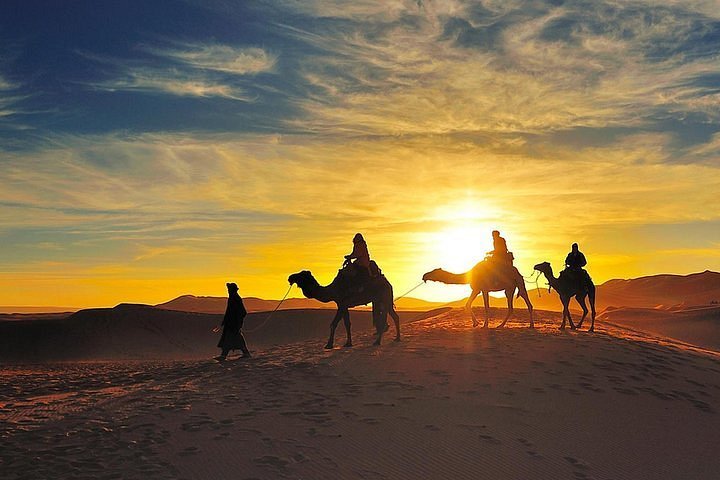
    2 days camel trekking in Merzouga: a caravan at sunset
    A camel caravan walks across the dunes at sunset.

    Why Choose 2 Days Camel Trekking in Merzouga?

    A trip of 2 days camel trekking in Merzouga begins where the road ends: the village sits at the edge of Erg Chebbi, the largest sand sea in Morocco, with dunes up to 150 metres high. It is far from the cities, so the air is clean, the silence is deep and the sky is full of stars. A camel trek is the traditional way to enter this landscape, and it is far calmer than a quad or a 4×4.

    The trek is also easy to fit into a bigger journey. Most guests do 2 days camel trekking in Merzouga as the high point of a longer tour from Fes or Marrakech, and they leave with the feeling that they have seen the real Morocco.

    • Authentic: camels have crossed this desert for centuries.
    • Gentle: no experience or special fitness is needed.
    • Quiet: no engine noise, only sand and footsteps.
    • Photogenic: long shadows and golden light at sunset and sunrise.

    Day 1: The Sunset Camel Trek

    Day one of 2 days camel trekking in Merzouga starts in the late afternoon. You arrive at a small kasbah or auberge on the edge of the dunes, where a Berber host welcomes you with mint tea, dates and almonds. You leave your large bags in a safe room and take only a small bag with a warm layer, a scarf, water and a camera.

    The camel handlers wrap your scarf in the traditional style, a small ritual that protects you from sun and sand and makes good photographs. Then you mount your camel, which kneels to let you climb on, and the caravan begins to move.

    Camel trek during 2 days camel trekking in Merzouga
    The caravan leaves the village and enters the Erg Chebbi dunes.

    The ride lasts between one hour and one hour and a half. The camels walk in a line, led by a guide on foot, and you sit high above the sand with a wide view. As the sun drops, the dunes turn from yellow to orange to deep red, and the wind falls. Nobody speaks much, because the view is enough.

    Meet Your Camel

    The animals used for 2 days camel trekking in Merzouga are dromedaries, with a single hump. They are calm, strong and used to tourists. A good camel can carry a rider for hours on soft sand, drink a large amount of water at once and walk through heat that would exhaust a horse.

    Mounting and dismounting is the most awkward moment. The camel stands up back legs first, so lean back, hold the saddle handle and enjoy the sudden height. Wear long, loose trousers, as short shorts rub on the saddle. After a few minutes you feel the slow rolling rhythm of the walk, and it becomes comfortable.

    Tip: choose a camel at the start and give it a name. Guests who do this enjoy the ride much more, and the guides love it.

    The Night in the Camp

    The camp stands in a hollow between dunes, hidden from the road. When you arrive, you see rows of tents, a dining tent and a fire pit. A host shows you to your tent, and you rest, wash and watch the last light fade.

    During 2 days camel trekking in Merzouga, you can choose between three levels of camp. A traditional Berber tent has thick blankets and a shared toilet block. A comfortable private tent has real beds and its own bathroom. A luxury tent adds a double bed, a terrace and sometimes air conditioning or a heater. For one night, many guests pick the middle option.

    Desert camp on the 2 days camel trekking in Merzouga
    The camp sits among the dunes, far from the road and the lights.

    Dinner is served around 20:00, and then the drums begin. The guides sing in Berber, and guests are invited to join the circle. Later, the fire burns low, and you walk a few steps away to look at the Milky Way. In the Sahara the sky is so clear that shooting stars are common.

    Day 2: Sunrise and the Ride Back

    On the morning of 2 days camel trekking in Merzouga, your guide wakes you about 45 minutes before sunrise. Wrap up warmly, because dawn is cold. You climb a tall dune on foot, which takes about 20 minutes in soft sand, and sit to watch the sun appear on the horizon. The sand changes from grey to pink to gold in a few minutes.

    After the sunrise, you return to the camp for breakfast with bread, eggs, jam, olives and hot tea. Then the camels are ready again. The ride back finishes 2 days camel trekking in Merzouga and takes about the same time as the evening ride, but the light is gentler, and you see the dunes with new eyes. At the village, you collect your bags, say goodbye to the camel handlers and continue your journey.

    Camel riders on day two of 2 days camel trekking in Merzouga
    The morning ride back, with soft light and long shadows.

    The Route on the Dunes

    For 2 days camel trekking in Merzouga, most camps lie between 45 and 90 minutes from the village of Merzouga or Hassilabied, on the western side of Erg Chebbi. The path follows the lower dunes first, then climbs gently toward the larger ridges. The guide knows the sand like a map and avoids steep slopes.

    Some travellers prefer a longer route, with two hours or more in the saddle, to reach a deeper camp far from other groups. This option suits confident guests and adds to the sense of isolation. Ask your guide to plan the length of the ride before you book, so that 2 days camel trekking in Merzouga matches your wishes.

    Option Ride time Best for
    Short trek 45 to 60 minutes Families and first-timers
    Standard trek 90 minutes Most travellers
    Deep desert trek 2 hours or more Couples and photographers

    Food and Drink

    The camp cook prepares a three-course dinner: a warm soup, a tagine of chicken, beef or vegetables, and fresh fruit or a sweet. Breakfast is bread, eggs, honey, cheese, olives and tea or coffee. Bottled water is available all the time, and soft drinks can be bought at the camp.

    Vegetarians and vegans are welcome, and you only need to tell us before you travel. The food is simple and generous, and it is part of the charm of 2 days camel trekking in Merzouga.

    Extra Activities Before or After the Trek

    With a free morning or afternoon, you can add more to your visit. Sandboarding on the high dunes is fun for all ages. A quad or buggy trip gives a different view of the sand sea. In the nearby village of Khamlia, Gnawa musicians perform spiritual songs, and a nomad family can invite you to tea in their tent.

    In the old market town of Rissani, the souk is lively on Sundays, Tuesdays and Thursdays. If you want a full programme, read our 1 night in Merzouga luxury camp guide, which explains camp comfort in detail. Extra activities cost more, and they are always optional.

    Best Time for 2 Days Camel Trekking in Merzouga

    The best months are March, April, October and November, when days are warm and nights are mild. December to February are pleasant by day, but nights can be close to freezing, so the camp provides heavy blankets. May and September are hot but possible. June to August are very hot, and the trek is scheduled early and late to avoid the midday sun.

    Check the wind forecast too, because it affects 2 days camel trekking in Merzouga more than the temperature. Sandstorms are rare but possible in spring, and your guide will adjust the plan to keep you safe and comfortable.

    What to Pack

    • Clothes: light layers for the day and a warm jacket for the night.
    • Face and head: a scarf or turban, a hat and sunglasses.
    • Shoes: closed shoes for the dunes and sandals for the tent.
    • Small bag: only the essentials, as the camel carries a light load.
    • Tech: a phone with a dust cover, a power bank and a headlamp.
    • Care: sunscreen, lip balm, wet wipes and tissues.
    Tip: leave your big suitcase in the car or at the auberge. For 2 days camel trekking in Merzouga, you need very little.

    Fitness and Comfort

    Camel riding needs no training, but it uses muscles that you rarely use, especially in the inner thighs and lower back. Most people feel fine after a 90-minute ride. If you have back problems, tell your guide, and choose the shorter route. Children from about six years old can ride with an adult, and younger ones sit in front of a parent.

    The climb to the sunrise dune is harder than the ride. The sand slips under your feet, so go slowly and rest when needed. You can also skip it and watch the sunrise from camp.

    Getting to Merzouga

    Merzouga is about eight hours from Fes and nine to ten hours from Marrakech, and most travellers break the journey with a night on the way. A private driver-guide makes the road comfortable and lets you stop at viewpoints, kasbahs and gorges. On the High Atlas route, you pass the UNESCO kasbah of Ait Benhaddou.

    For a ready route, see our 2 days desert to Merzouga from Fes and the 2 days from Marrakech to Merzouga.

    Combine 2 Days Camel Trekking in Merzouga with a Bigger Trip

    Many guests add the trek to a longer circuit. A popular plan starts in Marrakech, crosses the High Atlas, spends the night in the Dades Valley, rides camels in Merzouga and returns through the Draa Valley. See the 3 days from Marrakech to Merzouga for this route.

    If you start in Fes, the 4 days tour from Fes to Merzouga is a comfortable loop. To compare more ideas, browse all Morocco tours and our Morocco itineraries.

    Mistakes to Avoid

    The biggest mistake is arriving too late. If you reach Merzouga after dark, you lose the sunset ride, which is the best part of 2 days camel trekking in Merzouga. Plan to arrive by 16:00 in winter and 17:00 in summer.

    Other common mistakes are wearing sandals on the camel, taking too much luggage, forgetting a warm layer in winter and choosing a camp only because it is cheap. Read about the tent and the bathroom before you book. Finally, do not rush the sunrise, because the best light comes just after the sun appears.

    Who Is 2 Days Camel Trekking in Merzouga For?

    This trip suits almost everyone. Couples enjoy the romance of a candlelit dinner and a sky full of stars. Families like the camels, the drums and the freedom of the dunes. Solo travellers meet other guests around the fire, and friends share a tent and a laugh. Even travellers who are not adventurous find that 2 days camel trekking in Merzouga is easy and safe.

    It is less suited to people who cannot sit on a camel for an hour or who need a hotel-level bathroom. In that case, choose a luxury tent or ask us about a 4×4 transfer to the camp, which replaces the camel ride with a short drive.

    Berber Hosts and Desert Culture

    The people of Merzouga are mostly Amazigh, or Berber, and many families have lived near the dunes for generations. Your guides grew up on this sand, and they are happy to explain how they read the wind, find water and make tea. Ask questions, listen to the stories and respect their customs.

    Tea is the centre of hospitality. The host pours it from a height to make foam, and it is polite to accept at least three glasses. During 2 days camel trekking in Merzouga, you will drink tea on arrival, at the camp and again at breakfast. Dress modestly in the villages, and ask before you photograph people.

    Photography Tips for the Dunes

    The best light is within an hour of sunrise and sunset, when the sun is low and the dunes show soft curves and long shadows. Ride with your phone or camera in a small pouch around your neck, so that you do not need to open a bag on the camel.

    Protect your equipment from sand with a cloth and a zip bag. For night photography, bring a small tripod and use a long exposure of about 20 seconds with the widest lens you have. Many guests say that the pictures from 2 days camel trekking in Merzouga are the best of their whole Moroccan holiday.

    Responsible Travel in the Sahara

    The desert is fragile, and every visitor helps to protect it. Take all your litter with you, including cigarette ends and tissues. Do not leave the path to chase wildlife, and do not buy fossils or objects from protected areas. Treat the camels kindly: a good handler never beats or overloads the animals, and you should choose operators who follow this rule.

    Choose camps that use solar power, manage their water carefully and employ local staff. When you book 2 days camel trekking in Merzouga with a local team, your money supports families who live in the region all year, not only in the tourist season.

    Frequently Asked Questions

    How long is the camel ride on 2 days camel trekking in Merzouga?

    The standard ride is 90 minutes each way. Shorter and longer routes are possible, so tell us what you prefer.

    Is camel trekking safe for children?

    Yes, with a guide. Children from about six can ride alone with a handler, and younger children ride with a parent.

    Is it cold at night in the desert?

    Yes, nights are cool all year and cold in winter. The camp provides thick blankets, and you should bring a warm jacket.

    Is there a toilet at the camp?

    Yes. Basic tents share a toilet block, and private and luxury tents have their own bathroom.

    Can I do the trek from Marrakech or Fes?

    Yes, but the road takes eight to ten hours each way, so most guests add a night on the way or choose a longer tour.

    How do I book 2 days camel trekking in Merzouga?

    Send your dates and the number of travellers on WhatsApp at +212 682 832 176 or through our contact page. We reply with a quote made for you.

    Ready for 2 Days Camel Trekking in Merzouga?

    Tell us your dates, the number of travellers and the kind of camp you like. We will send a clear, personal plan for your 2 days camel trekking in Merzouga.

    Request a Free QuoteWhatsApp Us

  • 2 Nights in Merzouga Desert and What to Do: Best Camp Itinerary, Activities and Tips

    2 Nights in Merzouga Desert and What to Do: Best Camp Itinerary, Activities and Tips

    Merzouga Desert Guide · Erg Chebbi · Updated 2026

    2 Nights in Merzouga Desert and What to Do: Best Camp Itinerary, Activities and Tips

    Camel treks, sunrise on the dunes, Gnawa music and the quiet of the Sahara

    2 nights in Merzouga desert is the ideal length for a Sahara stay. One night is a quick taste, but two nights give you time to ride a camel at sunset, see the sunrise from a high dune, visit a nomad family, hear live Gnawa music and still have a calm day with nothing to rush.

    This guide explains how to spend 2 nights in Merzouga desert, hour by hour, with the best activities, the camp life, the food and the practical tips. It is written for first-time visitors who want the Sahara without stress, and for families and couples who want comfort as well as adventure.

    All times and distances are approximate, and your guide adapts the plan to the season and the weather. If you are still deciding on the length of your stay, read our 1 night in Merzouga luxury camp guide and our 4 days tour from Marrakech to Merzouga.

    2 Nights in Merzouga Desert: The Short Answer

    Quick answer: arrive on day one for a sunset camel trek, sleep in the camp, watch the sunrise, enjoy a full second day with Gnawa music, a nomad visit and dune activities, spend the second night under the stars and leave after sunrise on day three. It is the best way to see Merzouga without hurry.
    Time Activity Where
    Day 1, 16:00 Arrival, tea and camel trek Erg Chebbi dunes
    Day 1, 19:00 Sunset, dinner and music Camp
    Day 2, 06:00 Sunrise from the high dune Dunes
    Day 2, 10:00 Nomad visit and Gnawa music Khamlia village
    Day 2, 14:00 Rest, optional quad or sandboarding Camp
    Day 2, 19:00 Dinner and stargazing Camp
    Day 3, 06:00 Last sunrise, breakfast and departure Camp
    2 nights in Merzouga desert: a luxury camp at sunset
    A desert camp at sunset on the edge of the dunes.

    Why Choose 2 Nights in Merzouga Desert?

    Many visitors arrive in Merzouga after a long drive and stay only one night. They enjoy the camel ride, but they leave early the next morning with the feeling that they have only just arrived. A stay of 2 nights in Merzouga desert changes that, because the second day is yours.

    You have time to look at the dunes in all kinds of light, to talk with your Berber hosts and to relax. You also avoid another long day in the car, since you do not have to move the next morning. For most travellers, this is the best use of a few days in the south.

    • Time to relax: a full day without driving after the long road south.
    • More activities: sunrise, nomads, music, sandboarding and quads.
    • Two sunsets: the light changes every evening on the dunes.
    • Better value: the long drive is shared across more days.

    The Plan Day by Day

    A good plan for 2 nights in Merzouga desert balances effort and rest. Day one is for arriving and settling in, day two is the full experience, and day three is a gentle goodbye. Your guide adjusts each part to your energy and the weather.

    Sunrise during 2 nights in Merzouga desert
    Sunrise over the Erg Chebbi dunes.

    If you travel with children or older relatives, tell us when you book. We then choose a camp with easy access and plan shorter walks.

    Arrival and Your First Camel Trek

    Most guests reach the edge of the dunes in the late afternoon. A Berber host welcomes you with mint tea and dates, and you leave your main bags in the car or the hotel. You take only a small bag with warm clothes, water and a camera into the camp.

    The camel trek starts about an hour before sunset. The camels walk in a line, led by a guide, and the ride across the dunes lasts about one hour to one hour and a half. It is calm and slow, and it is the most memorable part of the first evening.

    Camel trek on the first of 2 nights in Merzouga desert
    The camel caravan crosses the dunes at sunset.

    At the camp you see your tent, wash and rest before dinner. Many camps offer private tents with beds, rugs and a bathroom, and some have electricity. In the evening the guides light a fire, serve a warm meal and play drums under the first stars.

    Sunrise on the Dunes

    On the first morning of your 2 nights in Merzouga desert, your guide wakes you early, about 45 minutes before sunrise. You climb a high dune on foot, which takes about 20 minutes in soft sand, and sit to watch the sun rise over the Algerian border. The sand changes from grey to pink to gold, and the silence is complete.

    It is the best moment for photographs, and the air is still cool. This is the moment guests remember most from their 2 nights in Merzouga desert. After the sunrise, you walk back for breakfast with bread, eggs, jam, olives and hot tea. If you prefer to stay in bed, ask your guide, because the second morning offers another chance.

    Your Full Day in the Desert

    The second day is the heart of the plan. After a slow breakfast, we suggest a mix of local culture and desert activity, with a long rest at midday when the sun is high. The exact plan depends on the weather and on your wishes.

    • Morning: visit Khamlia and a nomad family.
    • Midday: lunch and rest in the shade.
    • Afternoon: quad, sandboarding or a short walk.
    • Evening: second sunset, dinner and music.

    This rhythm is the main reason many guests say that 2 nights in Merzouga desert is better than one. You never feel rushed, and you have time to enjoy the place.

    Gnawa Music and the Nomads

    Close to Merzouga lies the village of Khamlia, home to descendants of enslaved people from sub-Saharan Africa. Their Gnawa music, played with iron castanets, drums and string instruments, is spiritual and rhythmic, and the musicians welcome visitors for a live performance and a glass of tea.

    You can also meet a nomad family, who still live in tents and move with their goats and camels. They show how they make bread, weave wool and find water, and they share tea. It is a small and honest encounter, and tips are welcome. Your guide acts as a translator.

    Rissani, the Lake and the Fossils

    Rissani is the old market town about 30 minutes from Merzouga. Its large souk is lively on Sundays, Tuesdays and Thursdays, with donkeys, spices, dates and local crafts. Close by stand the ruins of the old fortified town, or ksar, and the tomb of the founder of the ruling dynasty.

    After rain, the seasonal lake of Dayet Srji fills with water, and flamingos, ducks and other birds arrive. The area is also known for fossils, and workshops in the nearby town of Erfoud cut and polish the stone into tables, bowls and ornaments. On the way, you can see the beautiful kasbah road, and for the history of the High Atlas look at the UNESCO kasbah of Ait Benhaddou.

    Sandboarding, Quads and 4×4

    If you want more action, the dunes offer several activities. Sandboarding is easy to learn, and you slide down the dune on a board, like on snow. Quad bikes and buggies cross the sand with a guide, and a 4×4 trip takes you to the high dunes and the hidden corners.

    These activities cost extra, and they are optional. Choose them in the cool part of the day, wear sunglasses and a scarf, and follow your guide. Many guests combine one such activity with a calm walk, so the day has both energy and rest.

    Life in the Camp

    A good camp is simple and clean. There are three main types: a basic Berber tent with shared bathrooms, a comfortable private tent with an ensuite bathroom and a luxury tent with air conditioning and a double bed. For 2 nights in Merzouga desert, we recommend a private tent, because you spend more time in it.

    The evenings are social. Guests meet around the fire, listen to drums and share stories, and the staff are friendly and attentive. Silence comes early, and by 22:00 most people are in bed. Nights can be cold, even after a hot day, so the camp provides thick blankets for your 2 nights in Merzouga desert.

    Food and Drink

    Dinner is usually a three-course meal: soup, a tagine of chicken, beef or vegetables, and fruit or a sweet. Breakfast is bread, eggs, honey, olives, cheese and tea or coffee. Lunch is a salad, a tagine or a Berber pizza called madfouna, baked in the sand, if you ask for it.

    Bottled water is available, and soft drinks are sold in the camp. Food is simple but generous, and it is part of the charm of 2 nights in Merzouga desert. Alcohol is limited, so ask in advance. Tell us about allergies and diets before you travel, and the cook will adapt the menu.

    Stars and Photography

    With little light pollution, the Sahara sky is among the clearest in the world. On a moonless night, the Milky Way is easy to see with the eye, and shooting stars are common. Walk a short way from the camp, lie on the sand and let your eyes adjust for ten minutes.

    For photographers, the best light is at sunrise and sunset, when the dunes show long soft shadows. Bring a tripod for night photos, spare batteries, and a cloth to protect your lens from fine sand. Your 2 nights in Merzouga desert give you two chances at each light.

    The First Night in Detail

    The first evening of your 2 nights in Merzouga desert is about atmosphere. When the camels reach the camp, the sun is low and the dunes glow orange. You have time to choose your tent, wash your face and sit on a rug with a glass of mint tea before the fire is lit.

    Dinner is served around 20:00, and after it the guides bring out the drums. Everyone is welcome to join in, and the music often lasts an hour. Then the camp goes quiet, and you can walk a few steps away to look at the sky. Most guests say this first night is the one they remember most, because the silence is so unusual after the noise of the cities.

    The Second Night in Detail

    The second night of your 2 nights in Merzouga desert feels different. You already know the camp, the staff and the paths, so you relax. After a day of activities, dinner tastes better and the stars seem brighter. This is the night to stay awake a little longer, tell stories by the fire and take your best night photographs.

    Some camps add a small extra for the second night, such as a bonfire with a traditional bread baked in the embers. Ask your host in advance. With 2 nights in Merzouga desert you can also choose to sleep in a different tent type for the second night, to compare a simple Berber tent with a luxury one.

    2 Nights in Merzouga Desert for Families and Couples

    Families like this plan because children have time to play in the sand, and parents are not rushed. Kids enjoy sandboarding, the camels and the drums, and they sleep well after a day outside. Choose a camp with a family tent, and bring snacks, a hat and wet wipes.

    Couples often choose a luxury tent with a private terrace. A quiet dinner, a sunrise walk and a night under the stars make 2 nights in Merzouga desert a good option for a honeymoon or an anniversary. Tell us about the occasion when you book, and we will ask the camp to prepare a small surprise.

    An Honest Note on Comfort and Weather

    The Sahara is beautiful but it is not a hotel. Sand gets into everything, the wind can rise in the afternoon, and summer heat is intense. In winter, nights can fall close to freezing. These facts do not spoil the stay, but they are better known in advance, so you can pack well and choose the right season for your 2 nights in Merzouga desert.

    The camp is usually far from the road, and mobile signal is weak. Enjoy the break from your phone. If you need to stay in touch, tell your family the plan before you leave, and keep a power bank for emergencies.

    Combine 2 Nights in Merzouga Desert with a Longer Trip

    Many travellers add the desert to a larger journey. A common plan starts in Marrakech, crosses the High Atlas, visits Ait Benhaddou and the Dades Valley, spends 2 nights in Merzouga desert and returns through the Draa Valley. Another option starts in Fes and ends in Marrakech, so you never drive the same road twice.

    If you have more time, look at our 4 days tour from Fes to Merzouga or the Morocco itineraries page. For a two-week plan, see the 2 weeks in Morocco itinerary, where the desert is the high point of the journey.

    Getting There

    Merzouga is far from the big cities, so the road matters. From Fes, the drive takes about eight hours through the cedar forests of the Middle Atlas and the Ziz Valley. From Marrakech, it takes about nine to ten hours over the High Atlas, through Ait Benhaddou and the Dades Valley. Most visitors break the trip with a night on the way, then enjoy 2 nights in Merzouga desert before the long drive back.

    For a ready-made route, see our 2 days desert to Merzouga from Fes and the 3 days from Marrakech to Merzouga. For all options, browse all Morocco tours. A private driver-guide makes the long road comfortable.

    Best Time to Spend 2 Nights in Merzouga Desert

    October, November, March and April are the best months, with warm days and mild nights. Summer is very hot, and the sand is burning at midday, so activities move to early morning and late evening. Winter days are pleasant, but nights are cold, so camps provide heaters and extra blankets. For help with the dates, read the best month to go to Marrakech, because the same seasons apply.

    What to Pack

    • Clothes: light layers for the day and a warm jacket for the night.
    • Head and face: a scarf, a hat and sunglasses against sun and sand.
    • Shoes: closed shoes for the dunes and sandals for the camp.
    • Tech: a power bank, a headlamp and a camera cover.
    • Extras: sunscreen, lip balm, wet wipes and a small bag for the camel.
    Tip: leave your large suitcase in the car and take a small bag to the camp. It makes the camel ride much easier.

    Practical Tips for 2 Nights in Merzouga Desert

    • Book early: the best camps fill quickly in spring and autumn.
    • Ask about the tent: a private tent with a bathroom is worth the small extra cost.
    • Drink water: the dry air hides how much you lose.
    • Respect the desert: take your litter with you.
    • Carry cash: for tips, snacks and small purchases.
    • Plan the return: allow a buffer before any flight.

    For a short evening in the sand, you can also read about a sunset camel ride.

    Common Mistakes to Avoid

    The most common mistake is trying to see too much. Guests who add a long drive on the second day lose the main benefit of 2 nights in Merzouga desert, which is time to slow down. Keep the second day light, and let the desert set the pace.

    Another mistake is packing too much. A big suitcase does not fit on a camel, and you only need a small bag for the camp. Others forget warm clothes in winter, or skip sunscreen in spring. Finally, do not book the cheapest camp without reading about it, because the tent, the bed and the bathroom decide how well you sleep.

    Why Go with a Private Driver-Guide

    A private driver-guide makes your 2 nights in Merzouga desert easier. He knows the best camps, the road conditions and the right time to leave each stop. You travel at your own pace, you stop for photos when you like, and you avoid the crowds of the large buses.

    He also acts as a bridge to the local people. In Khamlia and at the nomad tent, he translates and explains the customs, so the visit is respectful and warm. If you want to compare other styles of trip, read what should I not miss in Marrakech and the day trip from Marrakech to the Agafay desert, a shorter taste of the desert.

    Is It Worth It? Final Thoughts

    Yes. For most travellers, 2 nights in Merzouga desert is the perfect balance between adventure and rest. You see the sunset and the sunrise twice, you meet local people, you hear live music and you still have time to sit and look at the dunes. The long road south is rewarded by one of the most peaceful places in Morocco, and 2 nights in Merzouga desert is the best way to enjoy it.

    Plan your dates early, choose a camp that suits your style and travel with a guide you trust, so that your 2 nights in Merzouga desert run smoothly. If you are unsure about the best route or the right camp, send us a message and we will help you design 2 nights in Merzouga desert that fits your time and your budget.

    Frequently Asked Questions

    Is 2 nights in Merzouga desert better than 1 night?

    Yes, for most travellers. It gives a full free day for activities, music and rest, and it avoids a second long drive.

    What to do in Merzouga on the second day?

    Visit Khamlia for Gnawa music, meet a nomad family, go to Rissani, try sandboarding or a quad, and enjoy a second sunset.

    Is the camp comfortable?

    Yes. Choose a private tent with a bed and a bathroom. Nights are cool, so the camp provides blankets.

    Can children join the camel trek?

    Yes, from about six years old with a guide. Younger children can ride with a parent or walk with the group.

    How far is Merzouga from Fes and Marrakech?

    About eight hours from Fes and nine to ten hours from Marrakech. Most guests add a night on the way.

    How do we book 2 nights in Merzouga desert?

    Send your dates and the number of travellers on WhatsApp at +212 682 832 176 or through our contact page. We reply with a quote made for you.

    Ready to Plan Your 2 Nights in Merzouga Desert?

    Tell us your dates, the number of travellers and the kind of camp you like. We will send a clear, personal quote for your 2 nights in Merzouga desert.

    Request a Free QuoteWhatsApp Us

  • What to See and Do in Casablanca: 12 Best Sights, a 1-Day Plan and Local Food Tips

    What to See and Do in Casablanca: 12 Best Sights, a 1-Day Plan and Local Food Tips

    Casablanca Travel Guide · Updated 2026

    What to See and Do in Casablanca: 12 Best Sights, a 1-Day Plan and Local Food Tips

    The great mosque, the Art Deco centre, the old medina and the Atlantic seafront

    What to see and do in Casablanca is one of the first questions travellers ask when their flight lands in Morocco’s largest city. The answer is richer than most people expect: a huge mosque on the ocean, a district of Art Deco buildings, a small old medina, lively food markets and a long sea promenade.

    Casablanca is not a city of ancient monuments like Fes or Marrakech, so what to see and do in Casablanca is different from what you plan elsewhere in Morocco. It is a modern port, a business centre and a living city, and its charm lies in details, such as a corner cafe, an old cinema or the smell of grilled fish at the harbour. This guide shows you the sights worth your time, how to fit them into one or two days and how to eat well.

    All times and prices are approximate, and our team can arrange a private driver-guide if you prefer. For a trip from the Red City, see our day trip from Marrakech to Casablanca, and for a longer route read the 4 days from Casablanca to Marrakech.

    What to See and Do in Casablanca: The Short Answer

    Quick answer: start with the Hassan II Mosque, walk the old medina and the Habous quarter, admire the Art Deco buildings downtown, eat fresh fish at the port or the central market and end the day on the Corniche at sunset. One full day covers the main sights, and two days let you slow down.

    The city is large, so the secret to what to see and do in Casablanca is to group the sights by area. The mosque and the old medina are on the coast, the Habous quarter and the Art Deco centre are in the middle and the Corniche stretches to the west. With a taxi or a driver, you can see all of them in a day.

    What to see and do in Casablanca: the Hassan II Mosque at sunset
    The Hassan II Mosque rises above the Atlantic.

    Top Sights at a Glance

    This table sums up what to see and do in Casablanca by area and by time needed.

    Sight Area Time needed Best for
    Hassan II Mosque Coast 1.5 hours Architecture, first-time visitors
    Old medina and the Sqala Port 1 hour Local life, history
    Habous quarter Centre 1.5 hours Crafts, sweets, books
    Art Deco centre Downtown 1 hour Photographers, walkers
    Corniche, Ain Diab West coast 1.5 hours Sunset, cafes, beaches
    Central Market Downtown 1 hour Seafood lunch, food lovers
    Rick’s Cafe Old town 1 hour Film fans, an evening drink

    Hassan II Mosque: The First Stop

    If you ask what to see and do in Casablanca, every local will first say the Hassan II Mosque. It opened in 1993, and its minaret, about 210 metres high, is among the tallest in the world. Part of the building stands over the Atlantic on a platform, and on some days the waves break just below the prayer hall.

    It is one of the few mosques in Morocco that non-Muslim visitors can enter, with a guided tour in several languages. Inside you see a prayer hall for thousands of worshippers, a retractable roof, carved cedar wood, marble columns and fine zellige tile work. Below, there are traditional hammam baths in marble.

    The mosque tour is the one booking worth making ahead for what to see and do in Casablanca. Book the tour in the morning, because the light inside is beautiful and the groups are smaller. Dress modestly, carry your shoes in a bag and expect to spend about an hour. In the evening, the minaret shines with a laser beam pointing towards Mecca, a sight many guests enjoy from the esplanade.

    The Old Medina and the Sqala

    Among what to see and do in Casablanca, the small old medina is a quiet contrast to the big boulevards. Its white walls and narrow lanes hold small shops, bakeries and workshops, and few tourists walk there. This is the place to see ordinary Casablanca life, with children playing, men drinking tea and shops selling spices and secondhand clothes.

    Old streets: what to see and do in Casablanca on foot
    Quiet lanes near the old medina.

    At the edge of the medina stands the Sqala, an old sea fortress with cannons and a shady garden. Inside, a small restaurant serves traditional dishes in a green courtyard, and it is a favourite place for lunch or a mint tea. From here you can walk along the ramparts and watch the fishing boats in the port.

    The Habous Quarter

    The Habous quarter, also called the New Medina, was built in the 1920s and 1930s by French architects in a Moroccan style. The streets are tidy, the arcades are shady, and the whole area feels like a quiet village inside the city. It is an easy place to walk and a good answer to the question of what to see and do in Casablanca for crafts and sweets.

    Many guests tell us this quarter is their favourite part of what to see and do in Casablanca. You will find pastry shops with almond sweets, bookshops, wood carvers, brass workers, olive sellers and small cafes. There is also a royal palace, a mosque and a lively market. The shopkeepers are friendly, and prices are fair, so it is a good place for gifts.

    The Art Deco Centre

    In the early 20th century, Casablanca grew quickly, and architects built apartment houses, hotels and cinemas in the Art Deco and Moorish styles. Many of these buildings still stand along Boulevard Mohammed V, around Place des Nations Unies and near the old Central Market. A slow walk, looking up, is one of the best answers to what to see and do in Casablanca for architecture lovers.

    This walk is a quiet highlight of what to see and do in Casablanca, and it costs nothing. Look for curved balconies, patterned tiles, wrought iron doors and old signs. Places such as the Cinema Rialto, the courthouse called the Mahkama du Pacha and the Cathedral du Sacre-Coeur are worth a short stop. Some buildings need restoration, but this adds to the charm for many visitors.

    Atlantic seafront: what to see and do in Casablanca by the sea
    The Atlantic side of Casablanca at golden hour.

    The Corniche and Ain Diab

    The Corniche is the long seafront promenade in the west of the city, around the district of Ain Diab. It has beaches, pools, cafes, restaurants and a few small clubs. In summer the area is busy with local families, and in spring and autumn it is calm and pleasant for a walk.

    For many visitors, the Corniche is the best part of what to see and do in Casablanca in the evening. The best time is the late afternoon, when the light softens and the sea turns gold. You can sit with a coffee or a fresh juice and watch the surfers, then stay for dinner at a seafood restaurant. This is a good end to a day of sightseeing.

    More Places Worth a Visit

    If you have more time, the list of what to see and do in Casablanca grows. These smaller places are worth adding.

    • Museum of Moroccan Judaism: the only museum of its kind in the Arab world, with objects and photos from Jewish life in Morocco.
    • Central Market: a lively covered market for fish, fruit and spices, with small grills.
    • Rick’s Cafe: a cafe inspired by the old film, with a piano, an arched room and a pleasant terrace.
    • Arab League Park: a large green park with palm trees and walking paths, popular with families.
    • Villa des Arts: a small gallery in an Art Deco villa with changing exhibitions.
    • Morocco Mall: one of the largest shopping centres in Africa, with a view over the ocean.

    A Short History Before You Go

    Casablanca began as a small Amazigh port called Anfa. The Portuguese destroyed it in the 15th century and later rebuilt it as Casa Branca, the white house, which gave the city its name. In the 19th century it was a modest trading town, and it only grew into a metropolis after the French protectorate began in 1912.

    The French planned wide boulevards, a new town and a modern port, and local architects added Moorish details. This mix explains why the city looks so different from the imperial capitals. Knowing the story makes what to see and do in Casablanca more meaningful, because every street tells part of it.

    The city was also the site of the famous wartime conference of 1943, and the 1942 film that carries its name made it known worldwide, although the film was shot in a studio and not here. Today Casablanca is the economic capital, with over three million inhabitants, and it feels busy, young and modern.

    Which Area Should You Stay In?

    Your choice of area changes what to see and do in Casablanca on foot. Here are the main options.

    • Centre and Art Deco district: best for walking, cafes and the train station, with good mid-range hotels.
    • Maarif and Gauthier: lively streets with shops, restaurants and nightlife, popular with young locals.
    • Ain Diab and the Corniche: the beach area, with resorts, pools and sea views, but a taxi ride from the old town.
    • Old medina: a few small guesthouses for travellers who want an authentic and quiet base.

    If you only stay one night before a tour, a hotel near the centre or the airport train station is the easiest choice. If you stay longer, the Corniche gives a holiday feel.

    Food and Drink in Casablanca

    Eating is a big part of what to see and do in Casablanca, and the food scene is one reason many travellers stay a second night. As a port city, it is known for fresh fish. Go to the Central Market or the fishing port, choose your fish and have it grilled on the spot, with salad, bread and lemon. Sardines, sole, prawns and calamari are all good.

    A traditional lunch is part of what to see and do in Casablanca, so try a tagine, pastilla or couscous in a family restaurant, and ask for the dish of the day. For breakfast, look for a cafe serving msemen pancakes, honey, olive oil and mint tea. In the evening, the Corniche and the city centre offer sushi, Italian food and modern Moroccan menus.

    Coffee culture is strong, and you will find small cafes on almost every corner. A glass of fresh orange juice costs very little, and the pastries in the Habous quarter make a good snack.

    Shopping and Souvenirs

    For souvenirs, the best places are the Habous quarter and the old medina. Look for leather bags and slippers, brass lamps, painted ceramics, argan oil, spices and sweets. Prices are fixed in the modern shops and the malls, and in the souks you can bargain politely.

    For a modern view of what to see and do in Casablanca, visit the Morocco Mall, which has an ocean-view terrace, an aquarium and many international brands. The Maarif district also has local designers and small concept stores, which are good for gifts that are not the usual souvenirs.

    Casablanca With Children

    Families will find plenty to enjoy. Children like the wide esplanade of the mosque, the park and the beach, and the Morocco Mall has an aquarium and a play area. The Corniche has pools and restaurants with space to run around, and the tram is a small adventure in itself.

    Keep days short, take breaks in the shade and plan lunch early. Choose the sights that match your children’s ages, since what to see and do in Casablanca is flexible and easy to shorten. For young travellers, what to see and do in Casablanca can also include a visit to the port at feeding time for the gulls, or a ride along the seafront by horse carriage in the evening.

    A One-Day Plan: What to See and Do in Casablanca in 24 Hours

    Time Plan
    9:00 Guided tour of the Hassan II Mosque
    11:00 Walk along the sea wall to the old medina and the Sqala
    12:30 Lunch at the Central Market or the Sqala courtyard
    14:30 Art Deco walk on Boulevard Mohammed V
    16:00 Habous quarter: sweets, crafts and books
    18:00 Corniche at Ain Diab, sunset and a coffee
    20:00 Seafood dinner or a drink at Rick’s Cafe

    This plan fits what to see and do in Casablanca in one day without rushing. Use a taxi between the areas, and book the mosque tour ahead in the busy season.

    A Second Day in Casablanca

    With a second day, you can slow down and explore more of what to see and do in Casablanca. Spend the morning in the Museum of Moroccan Judaism and the Villa des Arts, enjoy lunch in the Maarif district, and relax in the afternoon on the beach or in the Arab League Park. In the evening, try a local concert, a rooftop cafe or a stroll through the lively streets of the Gauthier district.

    Many guests also use the second day for a trip to Rabat, the capital, about one hour away by train. It has a great old kasbah, a royal mausoleum and an unfinished tower, and it works well as a half day.

    Getting Around Casablanca

    • Tram: two clean lines cross the city and are cheap and simple.
    • Petit taxi: red taxis are good for short trips, so ask for the meter.
    • Train: the fast line connects the airport and the main stations to Rabat, Marrakech and Tangier.
    • Private driver: the easiest way to see several areas in a day, especially with luggage or a group.

    Traffic can be heavy at rush hour, so plan what to see and do in Casablanca with the mosque and the Corniche outside the busiest times. For a longer route, our 8 days Morocco tour from Casablanca starts in the city and returns to it.

    Day Trips from Casablanca

    Casablanca is a good base for short trips, and they extend what to see and do in Casablanca beyond the city. Rabat, the capital, is about one hour north, with the Kasbah of the Udayas and the Hassan Tower. El Jadida is about one hour south, and its Portuguese cistern is part of the UNESCO site of Mazagan. Marrakech is about three hours by road, and the fast train takes about two hours and a half.

    For ideas, read the Casablanca imperial cities tour and browse our Morocco day trips page.

    Best Time to Visit Casablanca

    The weather shapes what to see and do in Casablanca. The city has a mild Atlantic climate. Spring and autumn are the best seasons, with warm days and soft light. Summer is pleasant on the coast, with temperatures around 27 degrees, but the Corniche is busy. Winter is cooler and sometimes rainy, which is a good time for museums and cafes.

    Practical Tips for Your Visit

    • Book the mosque early: morning tours are quieter and cooler.
    • Dress modestly: cover shoulders and knees for the mosque.
    • Carry small cash: for taxis, cafes and market stalls.
    • Keep your phone safe: use normal city care in crowds.
    • Wear comfortable shoes: you will walk more than you expect.
    • Check opening days: some museums close on Mondays or Fridays.

    Whatever your plans, knowing what to see and do in Casablanca helps you use your time well, and a local driver can add useful context. If you plan to continue to the Red City, read what you should not miss in Marrakech.

    Frequently Asked Questions

    What to see and do in Casablanca in one day?

    See the Hassan II Mosque, walk the old medina and the Sqala, have lunch at the Central Market, stroll the Art Deco centre and the Habous quarter, and end on the Corniche at sunset.

    Is Casablanca worth visiting?

    Yes. What to see and do in Casablanca includes the mosque, the Art Deco buildings, the food and the sea. It is a modern city, so it suits travellers who want to see everyday Morocco.

    Can non-Muslims enter the Hassan II Mosque?

    Yes. Guided visits run most days, except at prayer times and on Fridays morning. Check the schedule before you go.

    How many days do you need in Casablanca?

    One full day covers the main sights. Two days let you add museums, the beach and a short trip to Rabat.

    Is Casablanca safe for tourists?

    Yes, with normal city care. Keep valuables out of sight, use official taxis and avoid empty streets at night.

    Can you arrange a private tour of Casablanca?

    Yes. Send your date and the number of travellers on WhatsApp at +212 682 832 176 or through our contact page, and we reply with a quote made for you.

    Ready to Plan Your Visit?

    Now that you know what to see and do in Casablanca, tell us your dates and your hotel. We will plan a private tour with a driver-guide and send a clear quote.

    Request a Free QuoteWhatsApp Us

  • Chefchaouen Blue City Tour: Best Private Day Trip from Fes to the Blue Pearl of the Rif Mountains

    Chefchaouen Blue City Tour: Best Private Day Trip from Fes to the Blue Pearl of the Rif Mountains

    Private Day Trip · From Fes · Rif Mountains · Updated 2026

    Chefchaouen Blue City Tour: Best Private Day Trip from Fes to the Blue Pearl of the Rif Mountains

    Blue lanes, mountain air and a slow walk through Morocco’s most photographed town

    The Chefchaouen blue city is one of the most beautiful small towns in Morocco. Its steep lanes, stairs and doorways are painted in every shade of blue, and it sits on the green slopes of the Rif mountains, with a cool, fresh climate and a calm, friendly feel.

    This private tour takes you from Fes to the blue town and back with a driver-guide, about 400 km in total. You choose the pace, the stops and the restaurant, so the day feels relaxed even though the road is long.

    All figures are approximate, and your guide adapts the plan to the season and traffic. If you prefer a slower rhythm, read our 2 days tour from Fes to Chefchaouen, or see our Fes to Meknes and Volubilis private tour for another day from Fes.

    Chefchaouen Blue City Tour: The Short Answer

    In one line: leave Fes at about 7:00, reach the blue town by 11:00, walk the medina and the kasbah, have lunch with a view, watch the light from the old viewpoint and return to Fes by about 21:00.
    Quick answer: this Chefchaouen blue city tour covers about 400 km in a private vehicle, with about eight hours of driving and five hours in town. Message us on WhatsApp for a free quote.
    Time Stop Distance Duration
    7:00 Pick-up in Fes Start Hotel or riad
    9:00 Coffee stop on the Rif road About 110 km 20 minutes
    11:00 Arrival in Chefchaouen About 90 km 1 hour 40 minutes drive
    11:15 Medina, square and kasbah Local 2 hours
    13:15 Lunch with a view Local 1.25 hours
    14:30 Ras el-Maa and shopping Local 1.5 hours
    16:00 Spanish Mosque viewpoint Local 1 hour
    17:00 Drive back to Fes About 200 km 4 hours
    21:00 Drop-off in Fes End Hotel or riad
    Chefchaouen blue city on the blue city day tour from Fes
    The blue and white houses of Chefchaouen on their hill.

    Why Visit the Chefchaouen Blue City?

    Fes and Marrakech are loud, busy and full of history. The Chefchaouen blue city is the opposite: small, quiet and soft in colour. Visitors walk slowly, take photographs, sip mint tea and look at the mountains, and many say it is the calmest place they saw in Morocco.

    The town is also easy to enjoy. The medina is small, the lanes are mostly pedestrian, and the shopkeepers are known for being relaxed and polite. You can see the main sights in a few hours and still have time to sit and enjoy the view.

    • A unique colour: blue walls, doors, stairs and flower pots in every lane.
    • Mountain air: the town sits at about 600 metres, and nights are cool.
    • Easy walking: short distances, with some gentle slopes.
    • Great photos: soft light and bright colours at almost every turn.

    The Day Hour by Hour

    The secret of a good Chefchaouen blue city tour is an early start. We collect you at about 7:00, so you cross the plains of the Gharb and the foothills of the Rif in the morning light and arrive in time for a long, unhurried visit.

    The morning is for the road and the first walk through the medina, the middle of the day belongs to the square and lunch, and the afternoon is for the spring, the shops and the viewpoint. Your guide keeps an eye on the time and starts the return early enough to reach Fes at a reasonable hour.

    If you travel with children or older relatives, tell us when you book. We then shorten the walks and add extra rest stops.

    The Road from Fes

    You leave Fes on the road north through Taounate, a region of olive groves, orchards and rolling hills. The landscape changes slowly: first dry fields, then green valleys and then the steep limestone peaks of the Rif. The road is paved and winding in places, with fine views from the passes.

    Chefchaouen blue city lanes on the day tour from Fes
    Blue lanes and stairs in the old medina.

    We stop once for coffee and a stretch, at a roadside cafe with a valley view. A private vehicle makes these small stops easy, and it is one of the pleasures of a Chefchaouen blue city tour. The driving time is about four hours each way, so a rested driver and a comfortable car are important, and we choose both with care.

    A Short History of Chefchaouen

    Chefchaouen was founded in 1471 as a small fortress, a kasbah, built by Moulay Ali ben Rachid to defend the region against Portuguese raids from the coast. The name is thought to come from the Amazigh word for the two horns of the mountains above the town, a good description of the twin peaks that frame it.

    Later, Muslim and Jewish families fleeing Spain settled here, bringing Andalusian architecture, tiles and crafts. The town stayed closed to outsiders for centuries, and it was only in 1920 that Spanish troops entered it. This history explains why the Chefchaouen blue city has a different look and feel from the imperial cities of the south.

    The old medina is protected, and the town still keeps its small scale. Houses are low, lanes are narrow, and tiled roofs and wooden doors give a quiet, Andalusian touch. For another side of Moroccan history, UNESCO lists the medina of Fes, where your day begins.

    Why Is the Town Blue?

    Nobody knows the exact origin of the colour, and guides share several stories. One says that Jewish families who settled here in the 1930s painted their homes blue as a symbol of the sky and of God. Another says that the paint keeps mosquitoes away, or that it keeps the houses cool in summer.

    Whatever the reason, the habit stayed, and every spring the residents repaint walls, steps and doorways with a mix of lime and blue pigment. The result is a town that changes shade through the day, from pale sky blue in the morning to deep indigo in the evening. This is a major reason why the Chefchaouen blue city is so loved by photographers.

    The Medina and the Kasbah

    We enter the medina through Bab el-Ain, the old gate, and follow the lanes to the main square, Plaza Uta el-Hammam. The square is the centre of local life, with cafes, a large tree, the old kasbah and the Grand Mosque with its unusual octagonal minaret.

    Square of the Chefchaouen blue city on the day tour from Fes
    The main square and the kasbah walls.

    The kasbah has a quiet garden and a small museum with local costumes, weapons and crafts. A short climb up the tower gives a wide view over the blue roofs and the mountains behind. Many guests say this view is the highlight of the Chefchaouen blue city tour, and the entrance fee is small.

    Afterwards we wander through the lanes with no fixed plan. The best photos often come from side streets, small stairs and doorways, so your guide leaves time for you to stop and look. The lanes are safe and friendly, and you cannot be lost for long in a town this size.

    Ras el-Maa and the Spring

    A ten-minute walk from the medina brings you to Ras el-Maa, the spring that gives the town its water. A small river flows from the rock, and local families sit by the water, wash carpets and meet friends. It is a pleasant, shady place on a warm day.

    Cafes line the path, and you can have a mint tea while listening to the water. The area is also a starting point for walks into the hills and towards Akchour, a nearby gorge with waterfalls and a natural rock arch. Akchour needs more time, so it is better on a two-day plan.

    The Spanish Mosque Viewpoint

    On a hill above the town stands the Spanish Mosque, a small white building from the 1920s. Visitors do not enter, but they climb to it for the best panorama of the Chefchaouen blue city. The path takes about 30 to 40 minutes, with a mild slope and a few steps.

    The view is especially beautiful in the late afternoon, when the sun lights the blue roofs and the peaks glow gold. Bring a light jacket, because the wind can be fresh, and wear good shoes. If you prefer not to climb, your guide can suggest a shorter viewpoint in town.

    Lunch and Local Food

    Lunch is served in a family restaurant with a terrace over the square or the valley. The menu is simple and tasty: tagines with chicken or lamb, grilled brochettes, vegetable couscous, fresh salads and mint tea. Vegetarian dishes are easy to find.

    The region is also known for its goat cheese, honey and fresh bread, and many cafes sell warm pastries and almond cakes. Tell us about any allergy before you travel, and your guide will pass it to the kitchen. A relaxed lunch is part of the Chefchaouen blue city tour, so we never rush it.

    Crafts and Shopping

    Chefchaouen is known for its woven blankets and wool goods, made on old looms by local families. You will also find leather bags, painted ceramics, soaps, spices and fine local honey. Prices are fair, and shopkeepers are much less pushy than in the large cities.

    Shopping is optional on the Chefchaouen blue city tour, and your guide can take you to a trusted workshop where you can see how the wool is dyed and woven. Ask for the usual price range before buying, and keep the bargaining friendly.

    Photography Tips

    The Chefchaouen blue city is a photographer’s dream, but a few tips help. Shoot in the early morning or late afternoon for soft light and fewer people. Use the blue stairs, the doors and the flower pots as natural frames, and look for contrast, such as a red dress or a yellow door against the blue walls.

    Please ask before photographing local people, especially women and children, and respect private doorways and homes. A smile and a greeting often bring a yes, and some people may ask for a small tip.

    Stay One Night in the Blue Town?

    Many guests tell us that the best moment in the Chefchaouen blue city comes after the day visitors leave. In the evening the lanes empty, lamps light the blue walls and families sit outside their doors. At dawn the town is silent, and the first light on the stairs is a rare treat for photographers.

    A night in a small riad lets you enjoy both moments, and it makes the long drive feel shorter, because you split it over two days. We can change this Chefchaouen blue city tour into a two-day plan, with a night in the medina, a morning walk and an optional trip to Akchour, where a short hike leads to waterfalls and a natural stone arch called God’s Bridge.

    The second day can also include a stop in Volubilis or Meknes on the way back to Fes, so the whole trip becomes a small loop through the north. Tell us which option you prefer, and we prepare a quote for each one so you can compare them.

    If you only have one day, the plan in this guide is still a good choice, and your guide will make sure you see the best parts of the Chefchaouen blue city, with enough time to sit, taste and look.

    Private Tour or Group?

    Option Group size Flexibility Best for
    Chefchaouen blue city tour, private (this trip) Your own party High Couples, families and friends
    Shared group tour 8 to 16 people Low Solo travellers on a budget
    Public bus Many passengers Low Backpackers with time
    2 days tour from Fes to Chefchaouen Your own party High A slower visit with one night

    A private driver-guide costs more than a seat in a group, but you choose the pace, the stops and the restaurant, and you never wait for others. For more ideas, read the Morocco day trips page and browse all Morocco tours.

    Practical Tips for Your Chefchaouen Blue City Tour

    • Start early: a 7:00 departure gives you more time in town.
    • Wear flat shoes: lanes and stairs can be steep and smooth.
    • Bring a jacket: the mountains are cooler than Fes.
    • Carry small cash: for tea, tips and small gifts.
    • Take motion tablets if needed: the Rif road has many bends.
    • Charge your camera: you will take more photos than you expect.

    A Long Day, Honestly

    A Chefchaouen blue city tour from Fes involves about eight hours in the car, which is a lot for one day. The seat is comfortable and the road is good, but you will arrive home tired. For this reason, many guests choose to stay one night in the blue town and see it in the evening and at dawn, when the lanes are almost empty.

    If you have time, ask for our two-day plan, which also adds a stop at Akchour. If you are short of time, the one-day plan is still a good choice, and your guide will make sure you see the best parts of the town. You can also read our 2 weeks in Morocco itinerary for a longer route.

    Who Is This Day Trip For?

    It suits couples, families with older children, friends and photographers who are staying in Fes and want to see the north. The Chefchaouen blue city tour is best for people who enjoy small towns, mountains and slow walks.

    It is less suited to travellers who dislike long drives, or who want a big historical site. For those, choose another tour from our Morocco day trips list.

    What Is Included and Not Included

    This is what the Chefchaouen blue city tour typically covers. We confirm each detail in your personal quote.

    Included

    • Private air-conditioned vehicle with an English-speaking driver-guide.
    • Hotel or riad pick-up and drop-off in Fes.
    • Stops in the medina, at Ras el-Maa and at the viewpoint.
    • Fuel, tolls and parking.
    • Bottled water on board.

    Not included

    • Lunch, drinks and snacks.
    • Kasbah entrance fee, shopping and tips.
    • Travel insurance and a local guide in town, which we can arrange.

    Roads and Distances

    Stage Distance Driving time
    Fes to the coffee stop About 110 km 2 hours
    Coffee stop to Chefchaouen About 90 km 1 hour 40 minutes
    Chefchaouen to Fes About 200 km 4 hours

    The whole Chefchaouen blue city tour uses paved roads, with many bends in the Rif. Times and distances are approximate and depend on traffic and the weather, and your guide will confirm the exact plan when you book.

    Best Time for a Chefchaouen Blue City Tour

    Spring is the best season, because the hills are green and the temperatures are mild. Autumn is also lovely, with soft light and fewer crowds. Summer is warm, but the town stays cooler than Fes, and winter can bring rain and mist, which gives the blue walls a moody beauty.

    The price depends on group size, season and vehicle, so we send a clear quote after you share your date.

    What to Pack

    Pack light for the Chefchaouen blue city tour, because you only need a small day bag.

    • Clothes: light layers and a rain jacket in winter.
    • Shoes: comfortable flat shoes with grip.
    • Sun care: sunglasses, a hat and sunscreen.
    • Tech: a power bank and a camera.
    • Extras: a water bottle and small cash.
    Tip: bring a warm layer even in summer, because evenings in the mountains are cool.

    Frequently Asked Questions

    What does the Chefchaouen blue city tour include?

    It includes a hotel pick-up, a walk in the medina and the kasbah, a stop at Ras el-Maa, a viewpoint visit, free time for lunch and shopping, and a return to Fes, with a private vehicle and a driver-guide.

    How far is Chefchaouen from Fes?

    About 200 km, around four hours by road each way.

    Why is Chefchaouen blue?

    There are several stories. The most common says that Jewish families painted the town blue in the 1930s as a symbol of the sky. Others say it keeps the houses cool and repels insects.

    Is one day enough?

    It is enough for the main sights, but it is a long day. Stay one night if you prefer a slower pace or want to visit Akchour.

    Is it suitable for children?

    Yes. The lanes are safe and children enjoy the colours, but the road is long, so bring snacks and games.

    How do we book the Chefchaouen blue city tour?

    Send your date and the number of travellers on WhatsApp at +212 682 832 176 or through our contact page. We reply with a quote made for you.

    Ready to Plan Your Chefchaouen Blue City Tour?

    Tell us your date, the number of travellers and your hotel in Fes. We will send a clear, personal quote for your Chefchaouen blue city tour.

    Request a Free QuoteWhatsApp Us

  • Marrakech to Essaouira Day Trip: Best Private Tour to the Blue Boats, Ramparts and Atlantic Medina

    Marrakech to Essaouira Day Trip: Best Private Tour to the Blue Boats, Ramparts and Atlantic Medina

    Private Day Trip · From Marrakech · Atlantic Coast · Updated 2026

    Marrakech to Essaouira Day Trip: Best Private Tour to the Blue Boats, Ramparts and Atlantic Medina

    Leave the Red City after breakfast, taste the sea breeze by lunch

    This Marrakech to Essaouira day trip takes you from the heat of the Red City to the cool Atlantic coast in about three hours. You cross a plain of argan trees, reach a white and blue medina on the ocean and spend the afternoon among old ramparts, fishing boats and craft workshops.

    A private driver-guide stays with you for the whole route of about 350 km there and back. You choose the pace, the stops and the restaurant, so the day feels like a visit with a local friend and not like a rushed group excursion.

    Distances and times are approximate, and your guide adapts the plan to traffic and the season. For other trips from the city, read our day trip from Marrakech to Agafay Desert or the 3 valleys of Morocco private tour.

    Marrakech to Essaouira Day Trip: The Short Answer

    In one line: leave Marrakech at about 8:00, reach Essaouira by 11:00, walk the medina, the port and the ramparts, have a fresh fish lunch, enjoy the sea and return to Marrakech by about 19:30.
    Quick answer: this Marrakech to Essaouira day trip covers about 350 km in a private vehicle, with about six hours of driving and five hours on the coast. Message us on WhatsApp for a free quote.
    Time Stop Distance Duration
    8:00 Pick-up in Marrakech Start Hotel or riad
    9:30 Argan cooperative stop About 90 km 30 minutes
    11:00 Arrival in Essaouira About 85 km 1 hour drive
    11:15 Medina and ramparts Local 1.5 hours
    13:00 Seafood lunch at the port Local 1.5 hours
    14:30 Souks, crafts and beach Local 2 hours
    16:30 Drive back to Marrakech About 175 km 3 hours
    19:30 Drop-off in Marrakech End Hotel or riad
    Marrakech to Essaouira day trip: the port and the Atlantic
    The old port of Essaouira on the Atlantic coast.

    Why Choose a Marrakech to Essaouira Day Trip?

    Marrakech is wonderful, but it is a dry, busy city, and many visitors want a change of air after a few days. A Marrakech to Essaouira day trip gives you wind, sea light, seagulls and a relaxed walk, all within a single day.

    Essaouira is also small and easy. The medina is flat, car-free and a good size for a short visit, and the people are famously friendly and less pushy than in larger cities.

    • A cool escape: the coast is often 10 degrees cooler than Marrakech in summer.
    • UNESCO listed: the medina is a protected UNESCO World Heritage site.
    • Fresh seafood: fish grilled a few metres from the boats.
    • No hotel change: you sleep in Marrakech before and after.

    The Day Hour by Hour

    The key to a good Marrakech to Essaouira day trip is an early start. We collect you at about 8:00, so you pass the busy roads before the traffic builds up, and you arrive on the coast in time for a calm walk before lunch.

    The morning is for the road and the argan villages, the middle of the day belongs to the medina and the seafood, and the afternoon is free for shopping, coffee and the beach. Your guide keeps an eye on the clock and leaves in time to reach Marrakech before dark.

    If you travel with children or older relatives, tell us when you book. We then add more rest stops and keep the walking short.

    The Road and the Argan Villages

    You leave Marrakech on the road west towards Chichaoua, across a flat plain of olive groves, small farms and red earth. After about an hour the landscape changes. The red soil gives way to low hills and then to argan forest, a tree that grows only in this part of southwest Morocco.

    Essaouira on the Marrakech to Essaouira day trip
    The blue boats and the walls of Essaouira.

    On the Marrakech to Essaouira day trip we stop at a women’s cooperative to see how argan oil is made. The women crack the hard nuts by hand, grind the kernels and press the oil, which is used in cooking and in cosmetics. You can taste the nutty oil with bread and honey, and buying is optional.

    Closer to the coast you may see goats standing in the branches of the argan trees. They climb to eat the fruit, and local farmers sometimes keep them there for the tourists. Please treat this as a curiosity and not as a main attraction, and ask your guide if you want to take a photo.

    The road is paved and well kept, and the whole Marrakech to Essaouira day trip takes about three hours each way, depending on traffic and stops.

    A Short History of Mogador

    Essaouira was once known as Mogador. The Phoenicians and later the Romans used the sheltered bay to make purple dye from sea snails, and the offshore islands still carry traces of those early traders.

    The present town was designed in the 18th century by Sultan Mohammed ben Abdallah, who wanted a strong port for trade with Europe. He is said to have hired a French architect, and the straight streets, the wide squares and the sea walls reflect this plan. For two centuries Mogador was the main outlet for Moroccan goods going to Europe.

    Today the old trade has gone, but the buildings remain, and the town lives from fishing, crafts and visitors. A Marrakech to Essaouira day trip is therefore also a short lesson in Atlantic history, and your guide shares the stories as you walk.

    The Medina and the Ramparts

    The medina of Essaouira is small, white and blue, and easy to explore on foot. The lanes are straight and wide for a Moroccan medina, and you will not get lost for long. Shopkeepers sit in the doorways, and cats sleep in the sunny corners.

    Medina walk on the Marrakech to Essaouira day trip
    The white and blue lanes of the medina.

    We walk through Bab Doukkala, the old gate, past the Moulay Hassan square and up to the Skala de la Ville, the sea wall with its row of old cannons. From the ramparts you see the waves hitting the rocks, the islands in the bay and the whole town below. Many guests say this view is the highlight of the Marrakech to Essaouira day trip.

    The old Jewish quarter, the mellah, is also worth a few minutes. Jewish families lived here for centuries and made up a large part of the old port community, and their influence is still visible in the architecture and the crafts.

    The Fishing Port

    The fishing port is the busiest and most colourful corner of Essaouira, and a highlight of any Marrakech to Essaouira day trip. Blue wooden boats line the quay, fishermen mend nets and gulls circle over the stalls where the morning catch is sold. The smell of salt and grilled fish fills the air.

    We walk to the Skala du Port, a second fortress with a wide platform above the harbour. It is a good place for photographs, and the light in the early afternoon is warm and soft. Please watch your step on the wet stones, and keep your bags closed near the birds.

    If you like, you can watch the auction, choose your own fish and have it cooked at a nearby grill. Your guide helps with the choice and with the price, so you pay a fair amount.

    The Beach and the Wind

    After lunch on the Marrakech to Essaouira day trip, you can relax on the beach. Essaouira has a wide sandy beach just outside the medina, and a steady wind blows for most of the year. This is why the town is a known spot for kitesurfing and windsurfing. The wind can feel strong, so bring a light jacket even in summer.

    On a Marrakech to Essaouira day trip you do not need to swim. Most guests walk along the sand, drink a coffee at a beach cafe and watch the surfers. If you like, you can also try a short camel or horse ride on the beach, which we can arrange on request.

    Families enjoy the open space, and children can play in the shallow water near the edge. Please keep an eye on them, because the waves and the currents can be strong.

    Seafood Lunch by the Port

    Lunch is the heart of the day. Grilled sardines, fresh sole, prawns, calamari and local fish are served on simple tables near the harbour, along with salad, bread and mint tea. If you do not eat fish, the town also has good tagines and brochettes.

    We recommend choosing a place that is busy with locals, which is usually a sign of fresh food. Tell us about any allergy before you travel, and your guide will pass it to the kitchen. A relaxed lunch is part of the Marrakech to Essaouira day trip, so we never rush it.

    For dessert, try the almond pastries and the local honey. Many bakeries in the medina sell small cakes made with argan and almonds.

    Crafts and Music

    Essaouira is famous for its woodwork. Craftsmen carve and inlay thuya wood, a rare local tree, into boxes, tables, chess sets and small gifts. The workshops are small, and you can watch the artisans at work and talk with them about their skills.

    The town is also known for its Gnaoua music, a rhythmic and spiritual tradition from sub-Saharan Africa. Every June a large festival fills the streets with music, and in quieter months you may hear drums and string instruments from small cafes. Your guide can point out the best spots.

    Shopping is optional on the Marrakech to Essaouira day trip, and there is no pressure. If you do buy, ask your guide for the usual price range, and a smile will often bring a fair deal.

    Photography Tips for Essaouira

    Essaouira is one of the most photogenic towns in Morocco. The light is soft, the walls are white, the doors are painted blue and the boats in the port add strong colour. A Marrakech to Essaouira day trip gives you plenty of chances for good pictures, even with a phone.

    The best views are from the ramparts, where you can frame the cannons against the sea, and from the fishing quay, where the nets and boats make a natural foreground. In the medina, look for painted doors, arched passages and small shops with colourful goods. Late afternoon light turns the stone gold, so we keep some time for it.

    Please ask before photographing people, especially fishermen and market sellers. A smile and a greeting usually bring a yes, and some people may ask for a small tip.

    Stay One Night Instead?

    Many guests enjoy the Marrakech to Essaouira day trip so much that they wish they had stayed. A night in a small riad inside the medina lets you see the town in the quiet of the evening and the early morning, when the light is at its best and the streets are almost empty.

    We can turn the day into a two-day plan with one night on the coast, a sunset walk on the ramparts and a slow breakfast before the return. The drive back then feels shorter, because you leave fresh and unhurried. Tell us what you prefer, and we prepare both options so you can compare them.

    If you only have one day, the plan in this guide is still a good choice, and your guide will make sure you see the best parts of the town.

    Private Tour or Bus?

    Option Group size Flexibility Best for
    Marrakech to Essaouira day trip, private (this trip) Your own party High Couples, families and friends
    Public bus Many passengers Low Backpackers on a tight budget
    Shared minibus tour 8 to 16 people Low Solo travellers
    Day trip to Ait Benhaddou and Ouarzazate Your own party High Kasbahs and film sets

    A private driver-guide costs more than a bus ticket, but you choose the pace, the stops and the restaurant, and you never wait for a group. For more ideas, read the Morocco day trips page and browse all Morocco tours.

    Practical Tips for Your Marrakech to Essaouira Day Trip

    • Start early: an 8:00 departure gives you more time on the coast.
    • Bring a jacket: the sea wind is cool, even in summer.
    • Wear flat shoes: the stones of the ramparts can be wet.
    • Carry small cash: for tea, tips and small gifts.
    • Sit on the right: the coastal views are better on the way back.
    • Respect the cooperative: buying argan oil is optional.

    A Long Day, Honestly

    A Marrakech to Essaouira day trip involves about six hours in the car, which is a lot for one day. Your seat is comfortable and the road is good, but the day is longer than a short trip to the mountains.

    If you want a calmer pace, stay one night in Essaouira and return the next day. We can plan that for you, and you can read our 9 days Morocco private tour for a longer route that includes the coast.

    Who Is This Day Trip For?

    It suits couples, families with older children, friends and anyone who wants a taste of the Atlantic coast from Marrakech. The Marrakech to Essaouira day trip is best for people who enjoy seafood, old walls and a relaxed town.

    It is less suited to travellers who dislike long drives or who want a desert night. For those, choose another tour from our Morocco day trips list.

    What Is Included and Not Included

    This is what the Marrakech to Essaouira day trip typically covers. We confirm each detail in your personal quote.

    Included

    • Private air-conditioned vehicle with an English-speaking driver-guide.
    • Hotel or riad pick-up and drop-off in Marrakech.
    • Stops at an argan cooperative and in Essaouira.
    • Fuel, tolls and parking.
    • Bottled water on board.

    Not included

    • Lunch, drinks and snacks.
    • Shopping, tips and travel insurance.
    • Optional camel or horse rides on the beach.

    Roads and Distances

    Stage Distance Driving time
    Marrakech to the argan villages About 90 km 1 hour 15 minutes
    Argan villages to Essaouira About 85 km 1 hour 15 minutes
    Essaouira to Marrakech About 175 km 2 hours 45 minutes

    The whole Marrakech to Essaouira day trip uses paved roads. Times and distances are approximate and depend on traffic and the season, and your guide will confirm the exact plan when you book.

    Best Time for a Marrakech to Essaouira Day Trip

    Spring and autumn are lovely, with mild air and soft light. Summer is the best season to escape the heat of Marrakech, because Essaouira is much cooler. In winter the coast can be windy and grey, but it is quiet, and rain is rare. For more planning ideas, see the best month to go to Marrakech.

    The price depends on group size, season and vehicle, so we send a clear quote after you share your date.

    What to Pack

    Pack light for the Marrakech to Essaouira day trip, because you only need a small day bag.

    • Clothes: light layers and a windproof jacket.
    • Shoes: comfortable flat shoes.
    • Sun care: sunglasses, a hat and sunscreen.
    • Tech: a power bank and a camera.
    • Extras: a water bottle and small cash.
    Tip: the wind in Essaouira is strong, so bring a scarf to protect your face and hair.

    Frequently Asked Questions

    What does the Marrakech to Essaouira day trip include?

    It includes a hotel pick-up, an argan cooperative stop, a walk in the medina, the port and the ramparts, free time for lunch and shopping, and a return to Marrakech, with a private vehicle and a driver-guide.

    How far is Essaouira from Marrakech?

    About 175 km, around three hours by road each way.

    Is one day enough?

    It is enough for the main sights, but it is a long day. Stay one night if you prefer a slower pace.

    Can we swim?

    The beach is wide, but the water is cold and the wind is strong. Most guests walk and watch the surfers.

    Is it suitable for children?

    Yes. Children enjoy the port, the beach and the cannons, and we add rest stops on request.

    How do we book the Marrakech to Essaouira day trip?

    Send your date and the number of travellers on WhatsApp at +212 682 832 176 or through our contact page. We reply with a quote made for you.

    Ready to Plan Your Marrakech to Essaouira Day Trip?

    Tell us your date, the number of travellers and your hotel in Marrakech. We will send a clear, personal quote for your Marrakech to Essaouira day trip.

    Request a Free QuoteWhatsApp Us

  • Fes to Meknes and Volubilis Private Tour: Best Day Trip to the Imperial Gates and Roman Ruins

    Fes to Meknes and Volubilis Private Tour: Best Day Trip to the Imperial Gates and Roman Ruins

    Private Day Trip · From Fes · Meknes and Volubilis · Updated 2026

    Fes to Meknes and Volubilis Private Tour: Best Day Trip to the Imperial Gates and Roman Ruins

    An imperial city, a Roman town and a holy hill village in one easy day from Fes

    This Fes to Meknes and Volubilis private tour takes you from the medina of Fes to two of the most interesting places in northern Morocco. In one day you see the great gates and granaries of Meknes, the Roman ruins of Volubilis and the whitewashed holy town of Moulay Idriss, with a long lunch in between.

    A private driver-guide stays with you for the whole route of about 195 km. The roads are easy, the sites are close together and the plan leaves time for photographs, tea and the stories that make old stones come alive. That relaxed rhythm is the main strength of a Fes to Meknes and Volubilis private tour.

    All figures are approximate, and your guide adapts the plan to the weather and the opening hours of the sites. For a longer trip that continues north, see our 2 days tour from Fes to Chefchaouen, or for the desert read the 2 days desert to Merzouga from Fes.

    Fes to Meknes and Volubilis Private Tour: The Short Answer

    In one line: leave Fes at about 8:30, walk through the gates and markets of Meknes, have lunch, visit Moulay Idriss and the Roman city of Volubilis, and return to Fes by about 18:30.
    Quick answer: this Fes to Meknes and Volubilis private tour covers about 195 km in a private vehicle, with about three and a half hours of driving and six hours at the stops. Message us on WhatsApp for a free quote.
    Time Stop Distance Duration
    8:30 Pick-up in Fes Start Hotel or riad
    9:30 Meknes: Bab Mansour and the old city About 60 km 2.5 hours
    12:15 Lunch in Meknes Local 1 hour
    13:30 Moulay Idriss viewpoint and town About 30 km 1 hour
    14:45 Volubilis Roman site About 5 km 1.5 hours
    16:30 Drive back to Fes About 100 km 1.75 hours
    18:30 Drop-off in Fes End Hotel or riad
    Meknes on the Fes to Meknes and Volubilis private tour
    Meknes, the imperial city with the great gates.

    Why Choose a Fes to Meknes and Volubilis Private Tour?

    Fes is one of the great medinas of the world, but the region around it holds two more places that many visitors miss. A Fes to Meknes and Volubilis private tour adds an imperial capital and a Roman city to your visit, and all of it can be reached on a single day from your riad.

    It is also an easy trip. The roads are good, the distances are short, and the sites suit most ages and fitness levels. You see three very different faces of Morocco without packing a bag, and that is why the Fes to Meknes and Volubilis private tour is so popular with visitors who stay in Fes.

    • Imperial Meknes: huge gates, old walls and a quiet medina.
    • Roman Volubilis: columns, arches and mosaics under open sky.
    • Moulay Idriss: a hill town built around a holy shrine.
    • No hotel change: you sleep in Fes before and after.

    The Day Hour by Hour

    The key to a good Fes to Meknes and Volubilis private tour is a morning start. We collect you at about 8:30, so you reach Meknes while the streets are still calm and the light is soft on the gates.

    The morning belongs to Meknes, the middle of the day to lunch and Moulay Idriss, and the afternoon to Volubilis, where the low sun makes the stone golden. Your guide keeps an eye on the time and can shorten or extend a stop.

    If you travel with children or older relatives, tell us when you book. We then add rest stops and shorten the walking at the Roman site.

    The Road from Fes

    You leave Fes on the main road west towards Meknes, across a wide plain of farms, olive groves and low hills. The drive takes about one hour, and the landscape is green in spring and golden in summer.

    Fes medina before the Fes to Meknes and Volubilis private tour
    Fes in the early morning, before you set off.

    The road is modern and easy, with service areas for coffee. A private vehicle lets you stop for photographs wherever the view is good, which is one of the quiet pleasures of a Fes to Meknes and Volubilis private tour.

    Meknes: The Imperial City

    Meknes was the capital of the sultan Moulay Ismail in the seventeenth century, and he built it on a grand scale. The old city is a UNESCO listed site, and its walls, gates and gardens still show the ambition of that time.

    Imperial city view on the Fes to Meknes and Volubilis private tour
    Old-city rooftops and walls in northern Morocco.

    We start at Bab Mansour, the most famous gate, with its carved arches and green and white tiles. From there we walk to Place el-Hedim, the lively square opposite the gate, and then into the medina, where you can see local shops, spice stalls and craftsmen at work.

    Other stops, depending on opening times, include the granaries and stables of Moulay Ismail, the mausoleum area and a viewpoint over the old walls. Meknes is calmer than Fes, with fewer visitors, so the walk feels relaxed, and this calm is a real contrast to the busy lanes of Fes on the same Fes to Meknes and Volubilis private tour.

    Lunch in Meknes

    Lunch is a Moroccan meal in a restaurant near the old city. You can choose a tagine of lamb or chicken, a vegetable couscous, grilled brochettes or a fresh salad, and finish with mint tea. Vegetarian dishes are easy to find.

    We eat slowly, because a relaxed lunch is part of the pleasure of the Fes to Meknes and Volubilis private tour. Tell us about any allergy before you travel, and your guide will pass it to the kitchen, as on every Fes to Meknes and Volubilis private tour.

    Moulay Idriss

    After lunch we drive north to Moulay Idriss Zerhoun, a small white town built on two hills. It holds the tomb of Idriss I, who brought Islam to this region and founded the first Moroccan dynasty, and it is a holy place for many Moroccans.

    Non-Muslim visitors cannot enter the shrine, but you can walk the lanes, enjoy the views from the viewpoint and watch daily life in the streets. The cafes serve strong coffee and sweet pastries, and the view over the olive groves towards Volubilis is one of the best of the day.

    Please dress modestly and ask before taking photographs of people. Your guide explains local customs and makes the visit comfortable, which is part of the care that goes into a Fes to Meknes and Volubilis private tour.

    Volubilis: The Roman City

    Volubilis is the largest Roman site in Morocco. It sits on a hill among wheat fields and olive trees, and its columns and arches are visible from far away. The site is a UNESCO listed archaeological area.

    A guide walks you through the main sights: the Triumphal Arch, the basilica, the capitol and the houses with their floor mosaics, which show gods, animals and scenes from myths. The city was an important regional centre under Rome, and later it became a centre of the early Idrisid dynasty.

    The walk takes about an hour and a half on open ground, so a hat, water and sun protection are useful. The late afternoon light on the stone is the reason many guests call this stop the highlight of the Fes to Meknes and Volubilis private tour.

    A Short History of the Region

    The plain between Fes and Meknes has been farmed for thousands of years. Rome ruled the area from the first century, Arab and Amazigh dynasties followed, and from the eleventh century onwards the cities of Fes and Meknes grew into centres of trade and learning.

    Old city of Fes on the Fes to Meknes and Volubilis private tour
    The old city of Fes, where the day begins and ends.

    Knowing this helps you read what you see. The Roman columns, the Idrisid shrine and the imperial gates are layers of one long story, and your guide ties them together as you travel on the Fes to Meknes and Volubilis private tour.

    What to Eat Along the Way

    The region around Meknes is known for its farms, so the food is simple and fresh. Olives, oranges, figs and dates are sold in every market, and the local bread is baked in neighbourhood ovens. Many cafes serve mint tea with small almond pastries in the afternoon.

    In Meknes, look for dishes cooked with preserved lemon and olives, and for fresh grilled meat from the market stalls. In Moulay Idriss the local speciality is grilled meat and sweets sold from small open kitchens near the main square. Ask your guide to suggest a place that suits your taste and your budget.

    Vegetarian and vegan guests can enjoy vegetable tagines, lentil soup, salads and couscous. Tell us in advance if you have special needs, and we will choose restaurants to match.

    Culture and Etiquette

    Morocco is welcoming to visitors, and a few simple habits make the day easier. Greet people with a smile, use your right hand to give and take, and ask before taking a close photograph of a person. In holy places such as Moulay Idriss, dress modestly and speak quietly.

    At Volubilis and in the old city of Meknes you may meet local guides who offer their services at the gate. Your driver-guide can help you choose, or you can walk freely with our own guide. Bargaining in the markets is normal, and a polite, friendly tone gets the best result.

    Tipping is a custom in Morocco, and a small amount for a restaurant waiter, a site guide or a driver is appreciated. We explain the usual amounts before you travel so you feel comfortable on the Fes to Meknes and Volubilis private tour.

    Photography and Light

    The best light for photographs in this region comes in the first two hours after sunrise and in the last two hours before sunset. In Meknes the stone of the great gate glows in the late morning, and at Volubilis the columns look their best in the low light of the afternoon.

    Wide lenses are useful for gates and open ruins, and a short zoom helps with details such as carved plaster and mosaic patterns. Some sites limit tripods and drones, so ask your guide before you set up. Always protect your camera from dust on the dry ground of the Roman site, a detail worth remembering on any Fes to Meknes and Volubilis private tour.

    Private Tour or Group Tour?

    Option Group size Flexibility Best for
    Fes to Meknes and Volubilis private tour (this trip) Your own party High Couples, families and friends
    Shared group tour 8 to 16 people Low Solo travellers on a budget
    Self-drive Your own party Medium Confident drivers
    2 days tour from Fes to Chefchaouen Your own party High Adding the blue city

    A private driver-guide costs more than a shared seat, but you choose the pace, the stops and the lunch place, and you never wait for a group. For more ideas, read the Morocco day trips page and browse all Morocco tours.

    Practical Tips for Your Fes to Meknes and Volubilis Private Tour

    • Start in the morning: an 8:30 departure gives you cooler walking.
    • Wear good shoes: Volubilis has uneven stone ground.
    • Bring sun cover: there is little shade at the Roman site.
    • Carry small cash: for tea, entry fees and tips.
    • Dress modestly: cover shoulders and knees in Moulay Idriss.
    • Check closing days: some sites close on certain days, and we check for you.

    A Full Day, Honestly

    This Fes to Meknes and Volubilis private tour is a full day, with about three and a half hours of driving and a lot of walking. It is easy for most visitors, but it can tire very young children and some older guests.

    If you prefer a slower pace, we can drop Moulay Idriss or shorten the Meknes walk. For a longer trip, read our 2 weeks in Morocco itinerary, which covers the imperial cities in more depth.

    Who Is This Day Trip For?

    It suits couples, families with older children, friends and history lovers who are staying in Fes and want to see more of the region. The Fes to Meknes and Volubilis private tour is best for people who enjoy architecture, ruins and local life.

    It is less suited to travellers who want a desert night or a beach day. For those, choose another tour from our Morocco day trips list.

    What Is Included and Not Included

    This is what the Fes to Meknes and Volubilis private tour typically covers. We confirm each detail in your personal quote.

    Included

    • Private air-conditioned vehicle with an English-speaking driver-guide.
    • Hotel or riad pick-up and drop-off in Fes.
    • Stops in Meknes, Moulay Idriss and Volubilis.
    • Fuel, tolls and parking.
    • Bottled water on board.

    Not included

    • Lunch, drinks and snacks.
    • Entrance fees to Volubilis and other sites, and a local site guide, which we can arrange.
    • Shopping, tips and travel insurance.

    Roads and Distances

    Stage Distance Driving time
    Fes to Meknes About 60 km 1 hour
    Meknes to Moulay Idriss About 30 km 45 minutes
    Moulay Idriss to Volubilis About 5 km 10 minutes
    Volubilis to Fes About 100 km 1 hour 45 minutes

    The whole Fes to Meknes and Volubilis private tour uses paved roads. Times and distances are approximate and depend on traffic, and your guide will confirm the exact route when you book.

    Best Time for a Fes to Meknes and Volubilis Private Tour

    Spring, from March to May, is the best season, because the fields are green and the temperatures are mild. Autumn, from September to November, is also pleasant, with warm days and soft light.

    Summer can be very hot at Volubilis, so we start early and finish the site visit before midday if possible. In winter the weather is cool and sometimes rainy, so bring a jacket. The price depends on group size, season and vehicle, so we send a clear quote after you share your date.

    What to Pack

    Pack light for the Fes to Meknes and Volubilis private tour, because you only need a small day bag.

    • Clothes: light layers and modest long trousers or skirts.
    • Shoes: comfortable walking shoes.
    • Sun care: sunglasses, a hat and sunscreen.
    • Tech: a power bank and a camera.
    • Extras: a water bottle, a scarf and small cash.
    Tip: bring a refillable water bottle, because the Roman site has little shade.

    Frequently Asked Questions

    What does the Fes to Meknes and Volubilis private tour include?

    It includes a hotel pick-up, visits to Meknes, Moulay Idriss and Volubilis, a lunch stop and a return to Fes, with a private vehicle and a driver-guide.

    How far is Volubilis from Fes?

    About 100 km, around one hour and forty-five minutes by road.

    Can non-Muslims enter the shrine in Moulay Idriss?

    No, but you can walk through the town and enjoy the views from the viewpoint.

    Is Volubilis suitable for children?

    Yes, for children who enjoy walking in the open air. The ground is uneven, so good shoes help.

    Can we add Chefchaouen?

    Yes, as a longer trip. See our 2 days tour from Fes to Chefchaouen for the route.

    How do we book the Fes to Meknes and Volubilis private tour?

    Send your date and the number of travellers on WhatsApp at +212 682 832 176 or through our contact page. We reply with a quote made for you.

    Ready to Plan Your Fes to Meknes and Volubilis Private Tour?

    Tell us your date, the number of travellers and your hotel in Fes. We will send a clear, personal quote for your Fes to Meknes and Volubilis private tour.

    Request a Free QuoteWhatsApp Us

  • Ouzoud Waterfalls Day Trip from Marrakech: Best Private Tour to the Falls, Monkeys and Boat Ride

    Ouzoud Waterfalls Day Trip from Marrakech: Best Private Tour to the Falls, Monkeys and Boat Ride

    Private Day Trip · From Marrakech · Ouzoud Falls · Updated 2026

    Ouzoud Waterfalls Day Trip from Marrakech: Best Private Tour to the Falls, Monkeys and Boat Ride

    Morocco’s most famous waterfalls, one comfortable day from the Red City

    This Ouzoud waterfalls day trip from Marrakech takes you from the red walls of the medina to the tallest and most famous waterfalls in Morocco. You walk down a shaded path beside the falls, meet the wild monkeys, take an optional boat ride at the bottom and have a long lunch with a view of the water.

    A private driver-guide stays with you for the whole route of about 300 km. The road is good, the walk is gentle and the day is planned so that you spend most of your time at the falls, not on the road.

    All figures are approximate, and your guide adapts the plan to the season and the water level. For other mountain days from the city, see our 3 valleys of Morocco private tour or the day trip to Ait Benhaddou and Ouarzazate.

    Ouzoud Waterfalls Day Trip from Marrakech: The Short Answer

    In one line: leave Marrakech at about 7:30, reach the falls at about 10:30, walk down the path, take the boat if you like, have lunch above the water and return to your riad by about 19:30.
    Quick answer: this Ouzoud waterfalls day trip from Marrakech covers about 300 km in a private vehicle, with about five and a half hours of driving and five hours at the falls. Message us on WhatsApp for a free quote.
    Time Stop Distance Duration
    7:30 Pick-up in Marrakech Start Hotel or riad
    9:00 Coffee stop on the road About 90 km 20 minutes
    10:30 Arrival at Ouzoud Falls About 60 km more Total 3 hours
    10:45 Waterfall path and viewpoints Local 2 hours
    13:00 Lunch with a view Local 1.5 hours
    14:30 Optional boat ride and free time Local 1 hour
    15:45 Drive back to Marrakech About 150 km 2.5 to 3 hours
    19:00 Drop-off in Marrakech End Hotel or riad
    Ouzoud waterfalls day trip from Marrakech to the falls
    The Ouzoud Falls, the main stop of the day.

    Why Choose an Ouzoud Waterfalls Day Trip from Marrakech?

    Few places in Morocco feel as green and alive as the Ouzoud Falls. The water drops about 110 metres in several steps, and the air around the pools is cool, loud and full of mist. An Ouzoud waterfalls day trip from Marrakech is the best way to see them in one day without changing hotel.

    The falls are also easy to enjoy. The path is well made, the viewpoints are close to the car park, and there are cafes on the way, so the trip suits visitors of many ages. That is why we recommend an Ouzoud waterfalls day trip from Marrakech to first-time visitors.

    • The best-known waterfalls in the country: tall, wide and easy to reach.
    • Wild monkeys: Barbary macaques live in the trees along the path.
    • A boat ride at the bottom: a small local boat takes you close to the spray.
    • No hotel change: you sleep in Marrakech before and after.

    The Day Hour by Hour

    The key to a good Ouzoud waterfalls day trip from Marrakech is an early start. We collect you at about 7:30, so you cross the plain before the traffic and reach the falls in the middle of the morning, when the light on the water is bright and the crowds are still small.

    The morning belongs to the road and the path, the middle of the day to lunch and the pools, and the afternoon to the boat and the drive back. Your guide watches the time and can shorten or extend a stop, depending on how you feel.

    If you travel with children or older relatives, tell us when you book. We then choose the easiest route down and add extra rest stops.

    The Road to Ouzoud

    You leave Marrakech on the road north-east towards Beni Mellal, across a flat plain of farms and olive trees. After about an hour the road climbs into low hills, and the landscape turns greener, with fields, small towns and views of the Atlas ahead.

    Marrakech start of the Ouzoud waterfalls day trip from Marrakech
    Marrakech in the early morning, before you set off.

    We stop once for coffee and a short rest. The last part of the drive to the village of Tanaghmeilt, next to the falls, runs on a narrower road with bends, so the driver goes slowly. The whole drive takes about three hours each way, which is normal for an Ouzoud waterfalls day trip from Marrakech.

    If you like, we can stop for photographs at a viewpoint over the valley. A private vehicle makes these small stops easy, and it is one of the pleasures of an Ouzoud waterfalls day trip from Marrakech.

    The Waterfalls

    The Ouzoud Falls are among the highest in North Africa, with water falling about 110 metres in a series of steps into a deep, green pool. The name comes from the Amazigh word for olive, and olive trees grow all around the site.

    A path with steps leads from the village down the side of the gorge. You pass viewpoints, small cafes and old water mills, and you can walk almost to the foot of the main fall. The walk down takes about 40 minutes at a calm pace, and the walk back up is slower, so allow time and bring water.

    Atlas scenery on the Ouzoud waterfalls day trip from Marrakech
    The Atlas landscape on the way to the falls.

    On sunny days a rainbow often forms in the mist, and the red clay of the cliffs glows against the green of the trees. Many guests say these first views are the best moment of the Ouzoud waterfalls day trip from Marrakech.

    The Monkeys of Ouzoud

    The trees along the path are home to a troop of Barbary macaques, a rare monkey that lives only in the Atlas and a few other places. They are used to visitors and often sit on the walls and rails, waiting for food.

    Please do not feed them and keep your bags closed, because the monkeys can snatch snacks, sunglasses and phones. Your guide will tell you how to keep a safe distance, and the animals are best enjoyed from a short way off.

    Children usually love the monkeys, and photographers can take good pictures of them in the soft morning light. The troop is a bonus that makes this Ouzoud waterfalls day trip from Marrakech special for families.

    The Optional Boat Ride

    At the bottom of the main fall, small local boats take visitors on a short trip across the pool. The boat goes close to the spray, and you feel the cool mist on your face. It is a simple, short ride, and it is optional.

    The boat ride is also a good test of nerve for children, and many families enjoy it. We confirm the current rules and the fee on the day, and your guide helps with life jackets and with getting in and out of the boat.

    If the water is too high or the weather is bad, the boats do not run. In that case we spend more time on the viewpoints and in the cafes, and the Ouzoud waterfalls day trip from Marrakech still works well, because the views and the lunch do not depend on the boat.

    Lunch with a View

    Lunch is served on a terrace that looks over the falls. You can choose a tagine of chicken or vegetables, grilled brochettes, a fresh salad or a plate of local fish, and finish with mint tea. Vegetarian dishes are easy to find.

    We eat slowly, because a relaxed lunch is part of the pleasure of an Ouzoud waterfalls day trip from Marrakech. Tell us about any allergy before you travel, and your guide will pass it to the kitchen.

    After lunch you can rest in the shade, walk to another viewpoint or simply listen to the water. That quiet hour is what many people remember best from an Ouzoud waterfalls day trip from Marrakech.

    The Village and Local Life

    The village above the falls is small, with a few cafes, craft shops and guesthouses. Local families sell olive oil, honey, dried fruit and small handmade gifts. Prices are normal local prices, and there is no pressure to buy.

    Your guide explains local customs, such as the greeting with the right hand on the heart and the way tea is poured from a height. If a family invites you for tea, accept with thanks and take off your shoes at the door.

    Many guests find these small moments on an Ouzoud waterfalls day trip from Marrakech as memorable as the waterfalls themselves. Marrakech, where you begin and end the day, is a UNESCO listed city.

    Nature and Photography

    The falls change with the seasons. In spring the water is strong and the fields are green, in summer the pools are a welcome place to cool down, in autumn the light is golden and in winter the falls can be very powerful after rain.

    High Atlas view on the Ouzoud waterfalls day trip from Marrakech
    High Atlas views on the road.

    Photographers will find the best light in the morning, when the sun shines on the main fall, and again in the late afternoon. A wide lens is useful at the viewpoints, and a waterproof cover protects your camera near the spray.

    Bird lovers can look for kingfishers, wagtails and eagles near the cliffs, and anyone who likes quiet can walk a little away from the main path to find calm corners along the river.

    Private Tour or Group Tour?

    Option Group size Flexibility Best for
    Ouzoud waterfalls day trip from Marrakech, private (this trip) Your own party High Couples, families and friends
    Shared group tour 8 to 16 people Low Solo travellers on a budget
    Self-drive Your own party Medium Confident drivers
    3 valleys of Morocco private tour Your own party High A shorter mountain day

    A private driver-guide costs more than a shared seat, but you choose the pace, the stops and the lunch place, and you never wait for a group. For more ideas, read the Morocco day trips page and browse all Morocco tours.

    Practical Tips for Your Ouzoud Waterfalls Day Trip from Marrakech

    • Start early: a 7:30 departure gives you the best light and the smallest crowds.
    • Wear good shoes: the path has steps and wet stones.
    • Protect your things: keep bags closed near the monkeys.
    • Carry small cash: for tea, the boat and tips.
    • Bring water: the walk back up is tiring.
    • Tell us about mobility: we choose easier paths when needed.

    A Long Day, Honestly

    This Ouzoud waterfalls day trip from Marrakech is a long day. You spend about five and a half hours in the vehicle, and you walk and climb steps for a couple of hours. It suits active travellers well, but very young children and some older guests may find it tiring.

    If you prefer a slower plan, we suggest an overnight stay near the falls or a shorter mountain trip such as the 3 valleys of Morocco private tour. You can also read our 2 weeks in Morocco itinerary, which gives more time in the mountains.

    Who Is This Day Trip For?

    It suits couples, families with children, friends and solo travellers who are based in Marrakech and want a day of nature. The Ouzoud waterfalls day trip from Marrakech is best for people who like water, animals, walking and photography.

    It is less suited to travellers who want a quiet or a very short day. For those, choose another tour, or read our guide to what should I not miss in Marrakech for ideas in the city.

    What Is Included and Not Included

    This is what the Ouzoud waterfalls day trip from Marrakech typically covers. We confirm each detail in your personal quote.

    Included

    • Private air-conditioned vehicle with an English-speaking driver-guide.
    • Hotel or riad pick-up and drop-off in Marrakech.
    • Time at the falls, the path and the viewpoints.
    • Fuel, tolls and parking.
    • Bottled water on board.

    Not included

    • Lunch, drinks and snacks.
    • The optional boat ride and any local guide fee at the falls.
    • Shopping, tips and travel insurance.

    Roads and Distances

    Stage Distance Driving time
    Marrakech to the coffee stop About 90 km 1 hour 15 minutes
    Coffee stop to Ouzoud Falls About 60 km 1 hour 30 minutes
    Ouzoud Falls to Marrakech About 150 km 2.5 to 3 hours

    The whole Ouzoud waterfalls day trip from Marrakech uses paved roads, with some bends near the end. Times and distances are approximate and depend on traffic, and your guide will confirm the exact route when you book.

    Best Time for an Ouzoud Waterfalls Day Trip from Marrakech

    Spring, from March to May, is the best season, because the water is strong and the fields are green. Autumn, from September to November, is also lovely, with warm days and fewer crowds.

    Summer is hot, but the falls are cool and the pools are inviting. In winter the falls can be very strong after rain, so bring a jacket and check the road conditions. You can also read our guide to the best month to go to Marrakech.

    The price depends on group size, season and vehicle, so we send a clear quote after you share your date.

    What to Pack

    Pack light for the Ouzoud waterfalls day trip from Marrakech, because you only need a small day bag.

    • Clothes: light layers and a rain jacket in winter.
    • Shoes: walking shoes with a good grip.
    • Sun care: sunglasses, a hat and sunscreen.
    • Tech: a power bank and a waterproof phone cover.
    • Extras: a water bottle, a towel and small cash.
    Tip: bring a spare T-shirt and socks, because the mist and the boat ride can wet your clothes.

    Frequently Asked Questions

    What does the Ouzoud waterfalls day trip from Marrakech include?

    It includes a hotel pick-up, time at the falls with the path and viewpoints, a lunch stop and a return to Marrakech, with a private vehicle and a driver-guide.

    How far are the Ouzoud Falls from Marrakech?

    About 150 km, which takes around three hours by road each way.

    Is the walk difficult?

    It is easy to moderate. The path has steps, and the walk back up is slower, but you can stop at any point.

    Are the monkeys safe?

    They are wild animals. Keep your distance, do not feed them and keep your bags closed.

    Can we swim?

    Swimming is possible in some pools in warm months, depending on the water level and local rules. Your guide will tell you where it is safe.

    How do we book the Ouzoud waterfalls day trip from Marrakech?

    Send your date and the number of travellers on WhatsApp at +212 682 832 176 or through our contact page. We reply with a quote made for you.

    Ready to Plan Your Ouzoud Waterfalls Day Trip from Marrakech?

    Tell us your date, the number of travellers and your hotel in Marrakech. We will send a clear, personal quote for your Ouzoud waterfalls day trip from Marrakech.

    Request a Free QuoteWhatsApp Us