Category: Uncategorized

  • Things to Do in Tangier: Ultimate Visitors Guide With 12 Best Sights

    Things to Do in Tangier: Ultimate Visitors Guide With 12 Best Sights

    Northern Morocco · Complete Visitors Guide

    Things to Do in Tangier: Ultimate Visitors Guide With 12 Best Sights

    Kasbah views, literary cafés, two seas and a medina that rewards slow walkers

    Things to do in Tangier are some of the most varied in northern Morocco. The city sits where the Atlantic meets the Mediterranean, only a short ferry ride from Spain, and it mixes a hilltop Kasbah, a friendly medina, cliff-top cafés, wild beaches and legendary caves in one compact area.

    This visitors guide lists the 12 best things to do in Tangier, then adds everything you need to plan well: how to arrive, where to stay, when to go, how to eat, and how to fill one, two or three days without rushing. It is written for first-time visitors, families, couples and travellers who simply want a relaxed and honest plan.

    If you are still shaping a wider trip, start with our Morocco travel page, and for a shorter overview of the same city read what to see and do in Tangier. This guide goes deeper and is fully up to date.

    Things to Do in Tangier: The Short Answer

    Quick answer: the best things to do in Tangier are the Kasbah, the medina and Petit Socco, tea at Café Hafa, Cap Spartel, the Caves of Hercules, the American Legation and a seafood dinner. Add a day trip to Asilah or Chefchaouen if you have a third day. Two full days is the ideal length.
    Sight Best for Time
    Kasbah and museum Views and history 1.5 hours
    Medina and Petit Socco Lanes and cafés 2 hours
    Café Hafa Sunset tea 1 hour
    Cap Spartel Two seas, lighthouse 1 hour
    Caves of Hercules Legend and photos 45 minutes
    American Legation Unique museum 1 hour
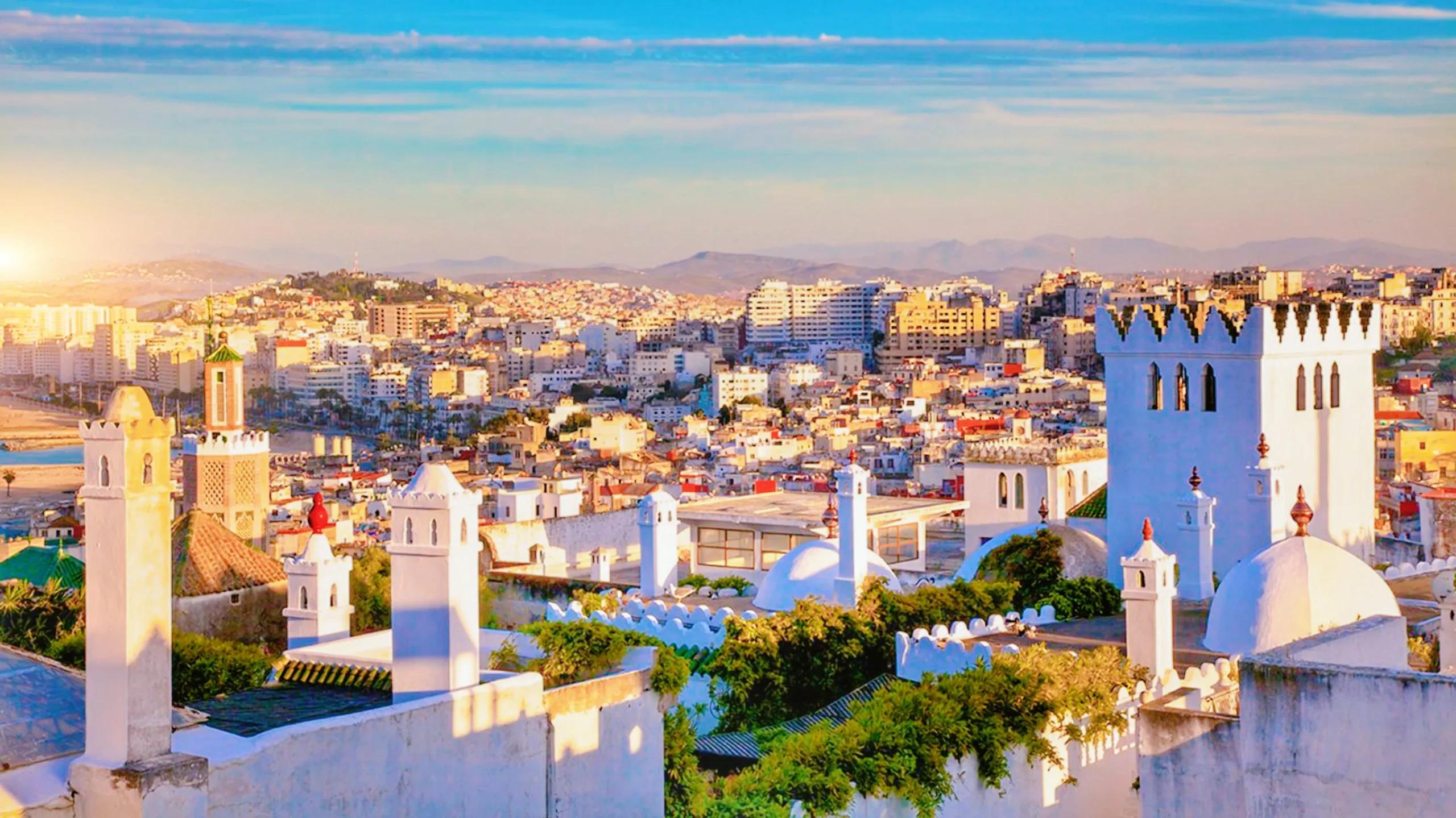
    Things to do in Tangier: view of the old town and the sea
    Tangier is compact, so most sights are close together.

    Why Now Is a Great Time for Things to Do in Tangier

    The city has changed fast. The new port, the waterfront promenade, the high-speed Al Boraq train and restored historic buildings have turned Tangier into one of the most pleasant stops in the country. The things to do in Tangier now include modern galleries and design shops, as well as the old cafés and lanes that writers loved.

    For wider planning, our travel to Morocco planning guide explains seasons, events and booking tips. Check dates for religious holidays too, for example Aid al-Fitr in Morocco, because opening hours and prices can change.

    • Setting: hills, cliffs and two seas.
    • Mood: relaxed, creative and open.
    • Best for: culture, food, views and short breaks.
    • Easy to link with: Chefchaouen, Asilah and Tetouan.

    1. The Kasbah: Top of the Things to Do in Tangier

    The Kasbah crowns the old town and is the best place to start. Enter by Bab el Assa, climb the quiet whitewashed lanes and reach the viewing terrace over the harbour and the bay. On a clear day you can see the coast of Spain.

    The old sultan’s palace, Dar el Makhzen, is now the Kasbah Museum. Carved cedar ceilings, mosaics, courtyards and a calm garden make it a perfect first visit among the things to do in Tangier. Go in the morning for soft light and few visitors.

    Tip: after the Kasbah, walk down through the medina instead of taking a taxi. It is the simplest loop in the city.

    2. The Medina and Petit Socco

    The medina is smaller and calmer than the old towns of Fes or Marrakech, which makes it ideal for beginners. Lanes wind between spice sellers, tailors, bakers and tiny workshops. Many of the best things to do in Tangier are simply walking, tasting and watching.

    The heart of the old town is the Petit Socco, a small square lined with cafés that once sat at the centre of the international city. Order mint tea, sit on a terrace and let the street pass by. It costs little and is one of the most typical things to do in Tangier.
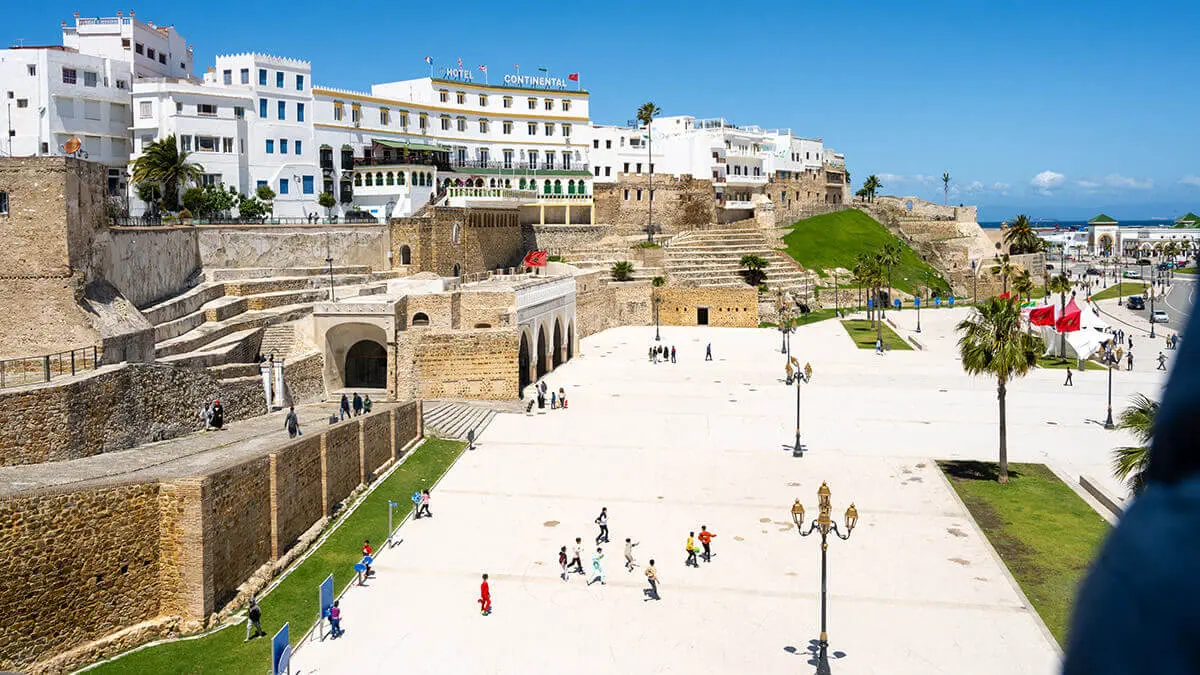
    Things to do in Tangier: the white old town and harbour
    White walls, blue doors and sea views define the old town.

    3. Grand Socco and the Mendoubia Gardens

    The Grand Socco is the large square between the old and new towns. Farmers, shoppers and taxi drivers meet here, and the nearby Mendoubia Gardens, with huge old trees, offer a shady rest. Fresh bread, olives and fruit are easy to buy around the square.

    From the Grand Socco you can reach Café de Paris and the main shopping streets in a few minutes, so it makes a handy base for the best things to do in Tangier on foot.

    4. Café Hafa at Sunset

    Built into the cliff in 1921, Café Hafa has terraces that step down toward the sea. Paul Bowles, William Burroughs and many musicians sat here. Order mint tea, add a simple pastry and stay for the golden hour.

    Among all the things to do in Tangier, this one is the most relaxing. Arrive before sunset to find a good seat, and bring a light jacket because the sea breeze is cool.

    5. Cap Spartel

    West of the city, the road follows the coast to Cap Spartel, the north-western tip of Africa. A lighthouse stands on the headland, and viewpoints show the Atlantic and the Mediterranean meeting. The light is best late in the afternoon.
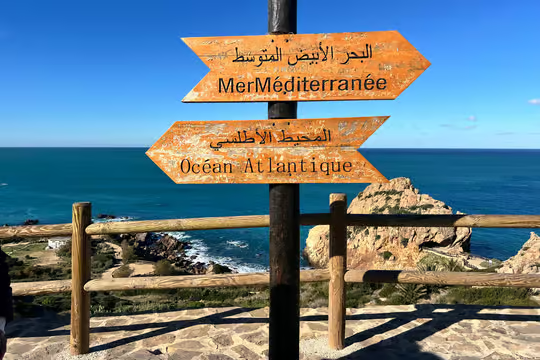
    Coastal view, one of the best things to do in Tangier
    The coast near Cap Spartel is wild, green and open.

    Most visitors take a private driver or a small taxi for this stop, because the sights lie along one road. Combine it with the caves and a beach lunch for a full half day of things to do in Tangier.

    6. The Caves of Hercules

    Legend says Hercules rested here before his labours. The cave opens to the sea through a natural window shaped a little like a map of Africa, and waves roll in below. It is a short visit, but it is one of the most photographed things to do in Tangier.

    Stop What you see Best time
    Cap Spartel Lighthouse, two seas Late afternoon
    Caves of Hercules Sea-facing cave Morning
    Achakar beach Wide Atlantic sand Warm days
    Cape viewpoints Sunset horizon Golden hour

    7. The American Legation Museum

    Morocco was one of the first countries to recognise the United States, and this building in the medina is the only American national historic landmark outside the country. Rooms hold maps, paintings and documents, and the staff are warm and knowledgeable.

    It is a small museum, so it fits easily into a morning. For culture lovers, it is one of the most surprising things to do in Tangier.

    8. Cinémathèque de Tanger and Modern Culture

    The old Cinema Rif building now hosts the Cinémathèque de Tanger, which shows classic and independent films and has a pleasant café. Small galleries in the new town show contemporary Moroccan art, and design shops sell local crafts.

    These modern places prove that things to do in Tangier are not only historic. The city has a creative scene that grows each year.

    9. Beaches and the Corniche

    A long sandy bay curves along the city, and the corniche is a pleasant promenade with palm trees and cafés. In the evening families gather, and in summer the beach is lively. For quieter sand, go west toward Achakar.
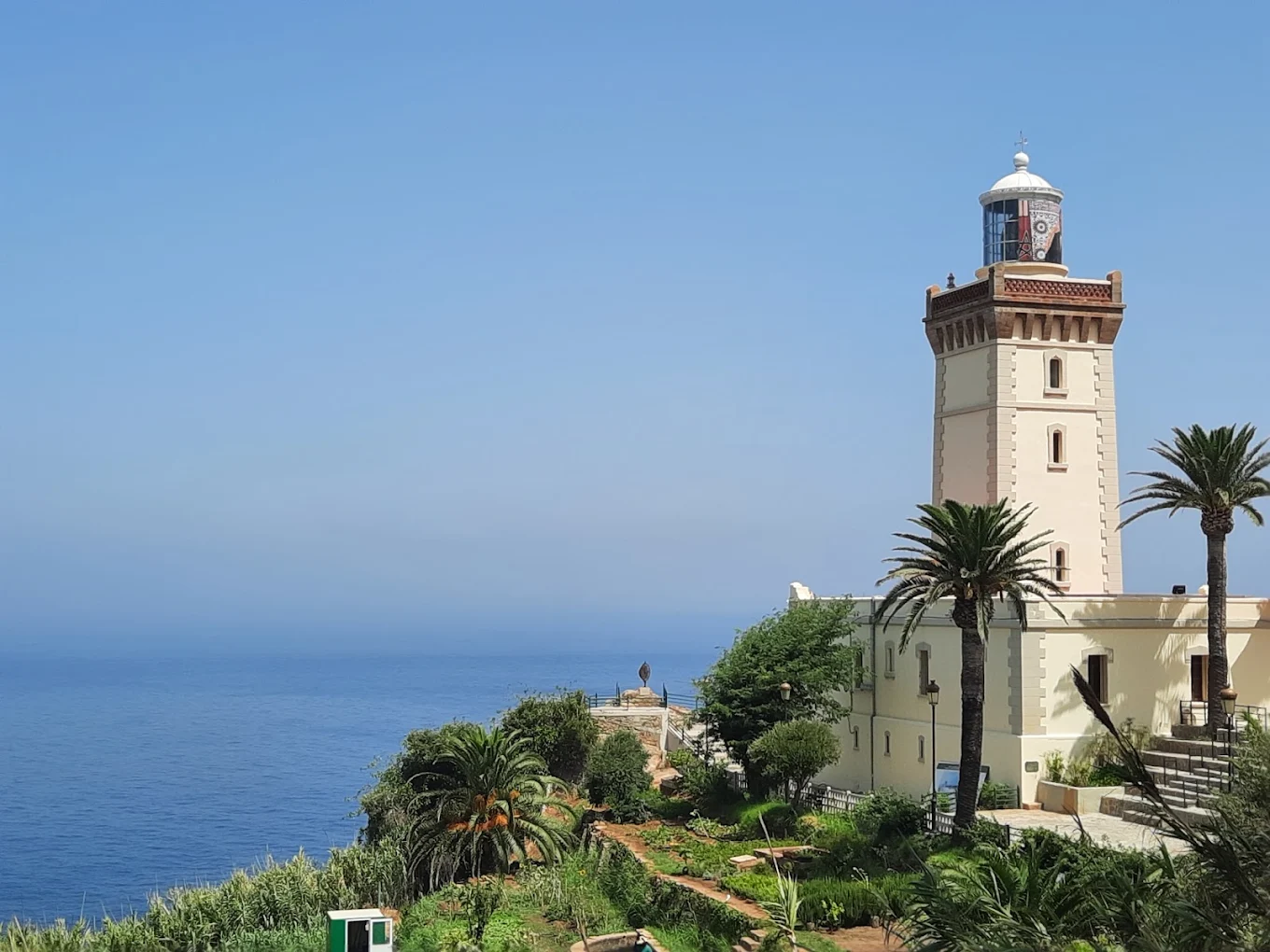
    Beach and coast, among the easy things to do in Tangier
    A beach afternoon balances a morning of sights.

    Swim only where the sea looks calm. The Atlantic side can be strong. A beach break is one of the easiest things to do in Tangier with children.

    10. Food: What to Eat in Tangier

    Tangier is a port, so seafood is excellent. Grilled fish, calamari, prawns and fried sardines appear at harbour restaurants and small family places. Eating is one of the best things to do in Tangier, and a simple plate with salad and lemon often beats a fancy menu.

    Dish What it is
    Grilled fish Fresh catch with lemon and spices
    Tagine Slow-cooked stew
    Pastilla Sweet and savoury pie
    Harira Tomato and lentil soup
    Churros and coffee Spanish-style breakfast

    Before you order, read what not to eat in Morocco for simple food safety advice.

    11. Day Trips: Asilah, Tetouan and Chefchaouen

    Day trips extend the things to do in Tangier without changing hotels. Asilah, about forty-five minutes south, is a whitewashed seaside town with painted walls and ramparts. Tetouan has an old medina that is a UNESCO World Heritage site.

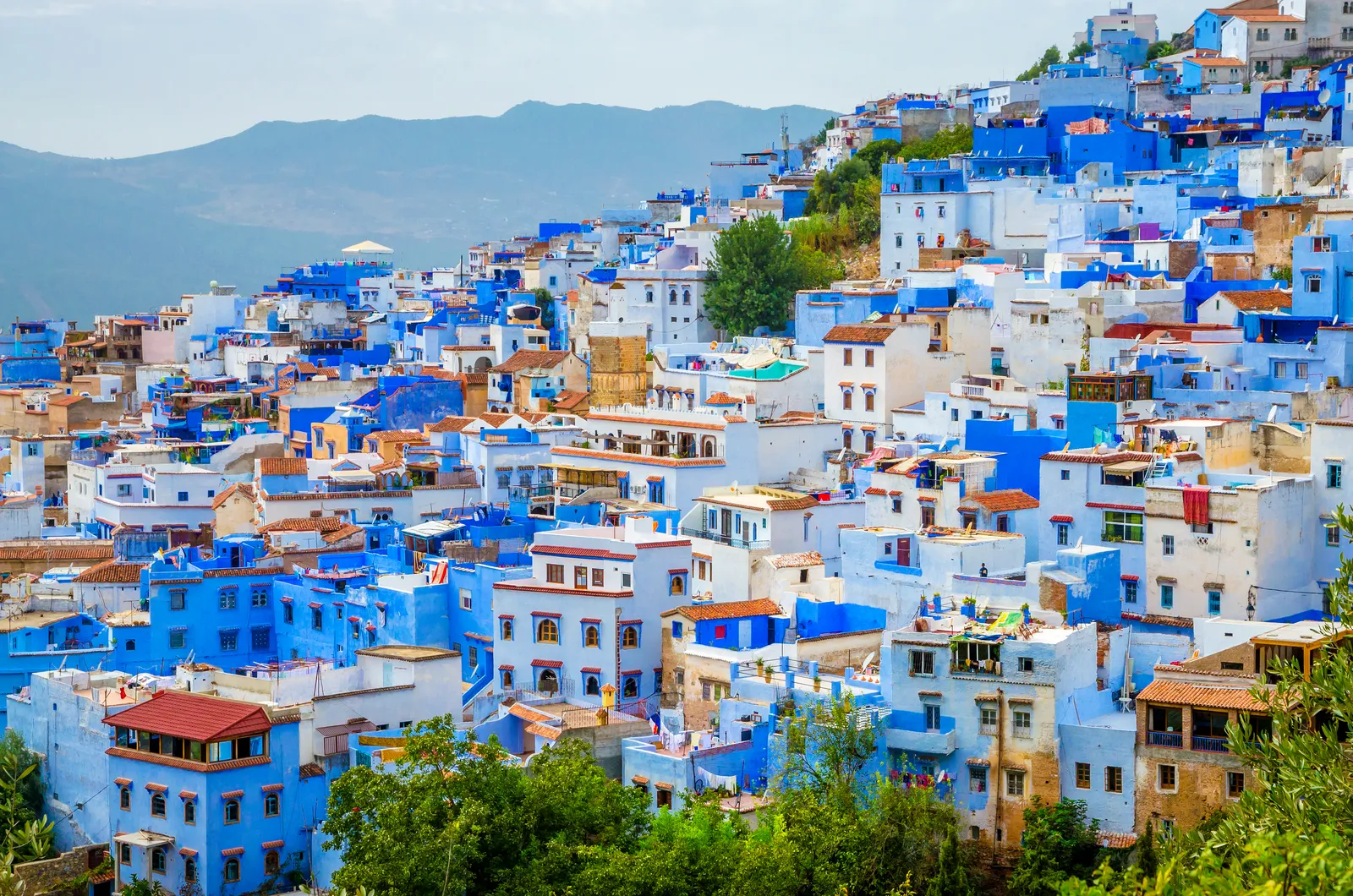
    Chefchaouen, the blue city, is about two hours away. Read things to do in Chefchaouen for a full plan, or book a private route such as 2 days from Casablanca to Chefchaouen.

    12. Evenings, Music and Late Dinners

    Some of the best things to do in Tangier happen after dark. The corniche fills with families, cafés around the Grand Socco glow and small venues play Andalusian, Gnawa and modern music. Dinner is late, so reserve for eight or nine o’clock.

    For a quiet night, walk the lit lanes of the Kasbah and take a last tea on a terrace. Many visitors say this calm hour is their favourite of all the things to do in Tangier.

    Things to Do in Tangier in 1, 2 and 3 Days

    Use these plans as a base and swap days to match the weather.

    Length Plan
    1 day Kasbah and museum, medina lunch, Café Hafa at sunset
    2 days Day one as above; day two Cap Spartel, Caves of Hercules, beach and seafood dinner
    3 days Add Asilah or Chefchaouen, the American Legation and a slow café afternoon

    With one day, focus on the old town. With two, add the coast. With three, the best things to do in Tangier include a trip to the blue mountains. If you plan a longer route, see Morocco itineraries and how do you organize a trip to Morocco.

    Getting to Tangier and Getting Around

    Tangier has an international airport with flights to Europe and a big port with ferries from Spain. The Al Boraq high-speed train links the city with Rabat and Casablanca, and buses and trains serve other towns. Roads to Tetouan, Asilah and Chefchaouen are good.

    Inside the city, small taxis are cheap. Confirm that the meter is used before you start. Walk the old town, and use a driver for the coast. This simple mix makes the things to do in Tangier easy to reach.

    If you continue south, see things to do in Casablanca and things to do in Fes for the next stops.

    Where to Stay

    The medina and Kasbah area suit travellers who want character, with small riads in old houses. The new town has modern hotels near the cafés and the station, and the corniche has beach hotels. Choose the old town for atmosphere and the new town for convenience.

    Book early for spring and summer, and check luggage access, because some lanes are too narrow for cars. Staying at least one night makes the things to do in Tangier much more enjoyable.

    Best Time for Things to Do in Tangier

    Spring and autumn are best: warm days, soft light and a pleasant sea. Summer is lively and the beach is busy. Winter can be windy and wet, but the city stays charming and calm. Pack a light jacket for any season, because the strait breeze can be cool.

    Season Mood
    Spring Green hills, mild days
    Summer Beach and long evenings
    Autumn Warm sea, fewer crowds
    Winter Quiet, windy, good for museums

    Safety and Etiquette

    Tangier is welcoming, and most visits are trouble-free. Keep your phone and wallet secure in crowds, ignore unofficial guides who insist on leading you and agree prices first. Dress comfortably and modestly in the medina and near mosques.

    Ask before photographing people, greet shopkeepers with a smile and accept tea as friendship. For broader advice, read is Morocco safe to travel.

    Mistakes to Avoid

    The most common mistake is treating Tangier as a ferry stop. Give it at least one night, because the evening mood is its best side. Do not rush the Kasbah at midday, and do not forget a jacket in windy months.

    Also avoid planning every minute. The best things to do in Tangier are slow: a tea, a view, a lane, a sunset. Leave gaps and the city fills them for you.

    A Short History Behind the Things to Do in Tangier

    Tangier has been a crossroads for thousands of years. Phoenicians and Romans used the harbour, Portuguese and British ruled it for periods, and from 1923 to 1956 it was an international zone run by several powers. That mix explains the cosmopolitan feel and the many languages you hear in the cafés.

    The traveller Ibn Battuta was born here in the fourteenth century, and painters such as Matisse and Delacroix loved its light. Knowing this story adds depth to every one of the things to do in Tangier, from the Kasbah to the old cafés.

    The nearby city of Tetouan shows another side of the north, with Andalusian roots and a UNESCO-listed medina. Together the two cities give a rich picture of how Morocco meets Europe.

    Things to Do in Tangier With Family or as a Couple

    Families enjoy the beach, the corniche playgrounds and short walks in the old town. Couples enjoy sunset terraces, quiet cafés and small riads. Both groups find the things to do in Tangier easy to adjust: slow days for children, romantic dinners for couples and short drives for everyone.

    Older relatives can enjoy the flat new town, the museums and the seaside cafés. Keep the steep Kasbah lanes for a fresh morning, and use a private driver for the coast.

    Shopping and Souvenirs

    Tangier is a relaxed place to shop. Look for leather bags, ceramics, spices, textiles and mint tea glasses. Prices are negotiable in the souks, so ask politely and compare. Our guide on what can you bring back from Morocco lists good gifts and tips.

    Shopping is one of the calm things to do in Tangier because there is little pressure. Visit in the morning, take your time and finish with tea.

    What to Pack

    • Shoes: flat and comfortable for steep lanes.
    • Layers: a light jacket for the sea breeze.
    • Sun: hat, sunglasses and sunscreen.
    • Phone: offline map and a local SIM or eSIM.
    • Documents: passport, bookings and insurance.

    With these items ready, the things to do in Tangier become a list of pleasures rather than a puzzle of logistics.

    Useful Words and Customs

    Arabic and Darija are the main languages, and many people speak French, Spanish and English. A few words, such as “shukran” for thank you, make every talk warmer. Greet people before asking a question, accept tea when offered and avoid public displays of affection.

    During Ramadan, be discreet when you eat or drink in public. Friday is the main prayer day, so some shops close at midday. Plan your things to do in Tangier around those rhythms.

    Myths About Tangier

    Some travellers think Tangier is only a port or a rough border town. In fact it is a calm, creative city with beautiful views. Others think it is too small to enjoy, but the best things to do in Tangier fill several days. A few believe it is not authentic, but the old lanes, cafés and families are very real.

    Visit with an open mind, and the city will surprise you.

    Travelling Responsibly in Tangier

    Buy from local artisans, eat in family restaurants, carry a refillable bottle and keep beaches clean. Stay in small riads, because they support the old town. Near Cap Spartel, stay on paths and leave the caves as you found them. Responsible choices keep the things to do in Tangier beautiful for future visitors.

    Rainy Day and Photo Ideas for Things to Do in Tangier

    Winter showers happen, but they do not ruin a visit. Museums, cafés and the Cinémathèque are perfect shelters, and the covered corners of the medina stay lively. The American Legation, the Kasbah Museum and a long lunch of hot harira and tagine make a cosy plan, so indoor things to do in Tangier never run out.

    Photographers love the city in any weather. The Kasbah terrace gives a wide view of the harbour, the blue doors of the lanes make a perfect frame and Cap Spartel is ideal at golden hour. The Petit Socco is best for street scenes in soft morning light. Ask permission before photographing people, and keep your gear simple in narrow lanes.

    Local Tips From Our Team

    • Start early: the best things to do in Tangier are quiet before ten.
    • Book dinner: good tables fill fast in spring and summer.
    • Keep a flexible slot: the unplanned hour often becomes the best memory.
    • Ask your host: riad staff know quiet viewpoints and tea houses that guidebooks miss.
    • Check opening days: some museums close one day a week, and shops pause for Friday prayer.

    Travellers arriving by ferry from Spain often have only a few hours. In that case choose the Kasbah, the Petit Socco and one café, and treat the rest of the things to do in Tangier as a reason to return. Those who stay longer can add the cape, the caves and a beach day, and slow travellers can use the city as a base for a week.

    Digital nomads also enjoy the city. Cafés with Wi-Fi, cheap taxis and a calm pace make it easy to work in the morning and explore in the afternoon. Whatever your style, the things to do in Tangier grow with every extra day you give them.

    Final Thoughts on Things to Do in Tangier

    Tangier rewards curious travellers. It is a city of views, stories and small moments. Whether you stay one night or three, the best things to do in Tangier are the mix of history, sea and people. Start with the Kasbah, end with a sunset and let the rest unfold.

    When you plan your wider journey, combine the north with the imperial cities and the desert. Our all Morocco tours page lists private routes for every pace, and our team can arrange drivers, hotels and day trips.

    If you are undecided, send us your dates. We will suggest the best things to do in Tangier for your interests and keep the pace gentle from the first transfer to the last farewell.

    Frequently Asked Questions

    What are the best things to do in Tangier?

    The Kasbah, the medina and Petit Socco, Café Hafa, Cap Spartel, the Caves of Hercules and the American Legation are the top choices.

    How many days do I need in Tangier?

    Two days cover the main sights, and three days allow a trip to Asilah or Chefchaouen.

    Is Tangier worth visiting?

    Yes. It offers history, views, food and an easy mood, and it is a great start or end to a Morocco trip.

    Is Tangier safe for tourists?

    Yes, with normal precautions. Keep valuables secure and avoid unofficial guides.

    Can I see Spain from Tangier?

    On a clear day the Spanish coast is visible from the Kasbah and Cap Spartel.

    How can I plan things to do in Tangier with a private guide?

    Send your dates on WhatsApp at +212 682 832 176 or through our contact page, and we will reply with a private plan.

    Plan Your Things to Do in Tangier With Us

    Tell us your dates, interests and pace. We will build a smooth plan with a driver-guide and the best moments of Tangier and the north.
    Request a Free QuoteWhatsApp Us

  • Essaouira Day Trip From Marrakech: Ultimate Guide to 12 Best Stops and Tips

    Essaouira Day Trip From Marrakech: Ultimate Guide to 12 Best Stops and Tips

    Essaouira · Atlantic Coast · Day Trip · Updated 2026

    Essaouira Day Trip From Marrakech: Ultimate Guide to 12 Best Stops and Tips

    Argan trees, ramparts, blue boats, fresh fish and Atlantic wind in one easy day

    An Essaouira day trip from Marrakech is one of the easiest and most rewarding excursions in Morocco. You leave the Red City in the morning, drive about three hours through argan country, walk the ramparts and the medina of Essaouira, eat fresh fish at the port and return in the evening.

    This guide explains how to plan an Essaouira day trip from Marrakech: the best stops, the timing, the route, what to eat, what to buy and how to avoid the common mistakes. We give no prices, because they change, and we focus on clear and honest advice.

    For more excursion ideas, read what excursions to do in Marrakech and things to do in Marrakech.

    Essaouira Day Trip From Marrakech: The Short Answer

    Quick answer: leave Marrakech at about 8 am, stop at an argan cooperative, reach Essaouira before noon, walk the ramparts and the port, eat fresh fish, shop in the medina and leave around 4 pm to be back in Marrakech in the evening. A private driver-guide makes the day easy.
    Part of the day Time What to expect
    Drive west About 3 hours Plains, argan trees, small villages
    Argan stop 30 minutes Women’s cooperative, oil and cosmetics
    Ramparts and port 1.5 hours Cannons, blue boats, gulls
    Lunch 1 hour Grilled fish and seafood
    Medina and shopping 2 hours Craft shops, galleries, cafes
    Return drive About 3 hours Sunset light on the plains

    Times are approximate and depend on traffic and stops. The day is long, so start early and keep a relaxed pace.

    Essaouira day trip from Marrakech: the old port town on the Atlantic coast
    Essaouira is a white and blue town on the Atlantic coast.

    1. The Road West From Marrakech

    An Essaouira day trip from Marrakech starts with a smooth drive on a good road. You leave the palm groves and the red walls behind, cross wide plains and slowly enter a greener, softer landscape of hills and argan trees. The distance is roughly 175 to 190 kilometres, and the drive takes about three hours with a short stop.

    A private driver-guide lets you stop for photos, tea and the trees. Leave early, because traffic is lighter in the morning, and the light on the plains is soft. Bring water and a light layer, because the coast is cooler than Marrakech.

    Tip: sit on the right side of the vehicle on the way out if you like long views over the plains. On the return, the sunset is often lovely.

    2. Argan Trees and Women’s Cooperatives

    The area between Marrakech and Essaouira is the home of the argan tree, which grows only in a small part of south-west Morocco. Its oil is used in cooking and in cosmetics, and it is made by hand in women’s cooperatives. A short visit shows how the nuts are cracked, ground and pressed.

    Ask questions, taste the amlou (a sweet spread of argan oil, almonds and honey) and buy only if you like the product. Stops where goats stand in trees are a popular photo opportunity, but they are often arranged for tourists, so be thoughtful. This stop adds culture to your Essaouira day trip from Marrakech and supports local women.

    3. Walk the Medina of Essaouira

    Essaouira, once called Mogador, has a medina that is listed by UNESCO as a World Heritage site. It was planned in the 18th century with straight streets, which makes it easier to walk than the medinas of Fes or Marrakech. The walls are white, the doors are blue and the mood is relaxed.

    Walk without a rush, and let your eyes follow the details: carved wooden doors, small squares, cats on steps and shops full of colour. It is the heart of any Essaouira day trip from Marrakech, and the best way to feel the town is simply to wander.

    Essaouira day trip from Marrakech: white and blue lanes of the old medina
    Calm lanes and blue doors in the old medina.

    4. The Skala de la Ville Ramparts

    The Skala de la Ville is the sea wall of the old town, lined with old bronze cannons that face the ocean. From the ramparts you see waves crash on black rocks, gulls above the port and the small Mogador island on the horizon. It is also a quiet place to watch the sunset, if you stay late.

    Walk the full length of the wall, climb the tower and take your time. The wind can be strong, so bring a jacket. This is one of the most photographed places on an Essaouira day trip from Marrakech, and it is easy to see why.

    5. The Fishing Port and the Blue Boats

    The fishing port is a living place. Wooden boats painted blue rest on the quay, fishermen mend nets and gulls follow every movement. In the afternoon, boats return with the catch, and the auction and the stalls come alive with noise and colour.

    Respect the workers, ask before taking photos of people and keep out of the way. The port is also the place for a fresh fish lunch, which is a highlight of the day. An Essaouira day trip from Marrakech without the port would feel incomplete.

    Essaouira day trip from Marrakech: boats and the sea near the port
    Boats, sea and sky near the port.

    6. A Fresh Seafood Lunch

    Next to the port, grill stalls offer fish, shrimp, calamari and shellfish. You choose your catch, and the cook grills it with salt, lemon and a simple sauce. Eat with bread and salad, and drink mint tea or fresh juice.

    Choose a busy stall, check that the fish looks fresh and ask about the price before you order. For general food advice, read what not to eat in Morocco. The meal is one of the tastiest parts of an Essaouira day trip from Marrakech, and a relaxed sit by the sea is a good break from the road.

    7. Place Moulay Hassan

    This is the main square by the port, with cafes, restaurants and views of the ramparts and the sea. It is a good place to rest, have a coffee and watch visitors and locals pass. In the evening, lights and music make it lively.

    Sit on a terrace and enjoy the Atlantic breeze. It is a calm stop in an Essaouira day trip from Marrakech, and a good place to plan the last part of the afternoon.

    8. Thuya Wood and Local Crafts

    Essaouira is known for thuya wood, a rare and fragrant wood carved into boxes, bowls and small furniture. Many workshops are small and family run, and you can see craftsmen at work. The town also has painted pottery, woven baskets, silver and leather items.

    Compare quality, bargain gently and buy items that you really like. For ideas, read what can you bring back from Morocco. Craft shopping is a pleasant part of any Essaouira day trip from Marrakech.

    9. The Beach and the Wind

    Essaouira has a long sandy bay, known for steady winds that attract windsurfers and kitesurfers. In summer the beach is lively, and camels and horses are offered for short rides. The water is often cool, and the wind can be strong, so check conditions before you swim.

    A short beach walk is refreshing after the medina. Bring a scarf for the wind and sunscreen for the sun. If you like sport, a lesson is possible, but a day trip leaves limited time.

    10. Galleries and Gnawa Music

    Essaouira has a strong art scene, with small galleries, painters and musicians. Gnawa music is part of the town’s identity, with drums, iron castanets and deep songs. A big world music festival has been held here in past years, usually in early summer, though dates change.

    Look for small galleries in the medina, and listen for musicians in cafes and squares. Art and music add a creative layer to the Essaouira day trip from Marrakech.

    11. The Mellah and Small Museums

    The old Jewish quarter, the Mellah, tells the story of the town’s mixed past. Essaouira was long home to a large Jewish community, and its old houses, synagogues and cemetery are part of the heritage. A small museum or two show local history, crafts and photographs.

    Check opening times, because small museums may close for lunch. A guide can add stories and context to these quiet places.

    12. Mogador Island and the Coast

    Off the coast, the island of Mogador is a protected area with birds and ruins. Access is limited, so check the rules. South of the town, small villages and beaches such as Diabat offer a quieter feel and a different view of the coast.

    With extra time, a short drive to a viewpoint or a quiet cove is an easy extension. For a relaxed Essaouira day trip from Marrakech, choose one extra stop only.

    The Best Timing for the Day

    Leave Marrakech by 8 am, stop for the argan visit around 10 am, reach Essaouira before noon, have lunch at about 1 pm, spend the afternoon in the medina and leave at about 4 pm. You will reach Marrakech at about 7 or 8 pm. This schedule gives time for lunch and a calm walk.

    If you prefer a slower day, stay overnight and return the next morning. A night in Essaouira lets you see the sunset on the ramparts and enjoy the evening mood. Ask us to arrange an overnight option for your Essaouira day trip from Marrakech.

    How to Do the Trip

    There are three main options. A private driver-guide is the most comfortable and flexible, with stops where you want. A shared tour is simpler but more fixed. Public buses run between Marrakech and Essaouira, and they are a budget option, though slower and with less flexibility.

    For most travellers, a private driver is the best choice for an Essaouira day trip from Marrakech, because it saves time and reduces stress. For wider planning, read how to organize a trip to Morocco.

    Best Season to Visit

    Spring and autumn are best, with mild weather and clear light. Summer is hot in Marrakech but pleasant on the coast, with cool wind. Winter can be cool and rainy, and the sea can be rough, but the town is quiet and atmospheric.

    Check the wind and the weather before you go. An Essaouira day trip from Marrakech works in every season, but the experience changes. See travel to Morocco 2027 for more planning ideas.

    What to Pack

    Bring a light jacket or scarf for the wind, comfortable walking shoes, sunscreen, sunglasses and a hat. Carry water, a small bag, some small cash for shops and cafes and a power bank. A light layer helps because the coast can feel cool even on sunny days.

    Wear modest clothes in the medina, and bring swimwear only if you plan to swim. With simple preparation, your Essaouira day trip from Marrakech will be more comfortable.

    Common Mistakes to Avoid

    The most common mistake is leaving Marrakech too late, and arriving at Essaouira after lunch with little time. Another is planning too many extra stops, and spending the day in the vehicle. A third is forgetting a warm layer for the wind.

    Others include buying from the first shop without comparing, ignoring the weather and expecting a calm sea in windy months. A clear plan with fewer stops makes the Essaouira day trip from Marrakech much better.

    Safety and Respect

    Essaouira is a relaxed and welcoming town. Keep valuables close, as in any tourist place, and use licensed guides and drivers. Dress modestly in the medina, ask before photographing people and respect local customs and prayer times.

    Take your litter with you, and be careful on the ramparts in strong wind. For general advice, read is Morocco safe to travel.

    Final Ideas for Your Day

    If you love history, spend more time on the ramparts and the Mellah. If you love food, plan a long fish lunch. If you love shopping, give priority to thuya workshops and galleries. If you love nature, add the beach and a walk along the coast.

    The best moments of an Essaouira day trip from Marrakech are often simple: a fresh fish at the port, the wind on the ramparts, a tea in a quiet square. Leave space for them. Our team can prepare a private Essaouira day trip from Marrakech, with a comfortable vehicle, a friendly guide and a plan that fits your pace.

    A Short History of Essaouira

    The area has been used as a port since ancient times, and Phoenician and Roman traders visited its shores. The modern town was planned in the 18th century by Sultan Mohammed ben Abdallah, with help from European engineers, to become a major trading port. It grew as a meeting place for Arab, Berber, Jewish and European merchants.

    Knowing this story adds depth to an Essaouira day trip from Marrakech. When you see the straight lanes, the sea wall and the old cannons, you are looking at a town built for trade and defence.

    Essaouira Day Trip From Marrakech With Family

    The town is easy for families. The medina has few cars, the beach gives space to play and children enjoy the boats, the gulls and the cannons. The drive is the main challenge, so bring snacks, games and water, and plan a stop for a break.

    For families, the best Essaouira day trip from Marrakech is slow, with a short walk, a beach stop and an early return. A private vehicle with child seats on request makes the day much easier.

    Photography Tips

    The light on the coast is bright and clear. Early afternoon gives strong colour on the blue boats, and late afternoon gives warm light on the ramparts. Look for details such as painted doors, fishing nets, cats on walls and gulls above the port.

    Always ask before photographing people, and respect a no. Protect your camera from wind and salt spray. Photography is a big pleasure of an Essaouira day trip from Marrakech, but remember to put the camera down and enjoy the moment.

    Should You Stay a Night?

    A day trip is possible, but it is long, with about six hours in the vehicle. If you can, stay one night in a riad in the medina. You will see the sunset on the ramparts, enjoy dinner at your own pace and wake up to a quiet morning by the sea.

    An overnight stay turns an Essaouira day trip from Marrakech into a calm coastal break. It also lets you add a beach walk, a sports lesson or a visit to a quieter village. Tell us your wishes, and we can build either option.

    Planning Your Trip for 2027

    Plan ahead for spring and autumn weekends and holidays, because drivers and riads fill early. Check the dates of Ramadan and Eid, which move each year, because they change opening hours and the mood of towns on the road. If you plan to visit during a music festival, book well in advance.

    Good planning makes your Essaouira day trip from Marrakech smoother, and it helps you choose the right season, the right pace and the right guide.

    Combine Essaouira With Other Trips

    Essaouira fits well with other Marrakech excursions. Many travellers spend a first day in the Red City, a second day in the Atlas or the Agafay desert and a third day on the coast. See day trip from Marrakech to Agafay desert for another easy option.

    If you have more days, add a desert tour such as 2 days from Marrakech to Merzouga. A mix of city, coast and desert shows the best side of the country, and an Essaouira day trip from Marrakech is the easy coastal piece.

    Useful Local Words

    A few words help in shops and cafes. “Salam” is hello, “shukran” is thank you, “la shukran” is no thank you, “afak” is please and “bslama” is goodbye. French is widely understood on the coast, and English is common in restaurants and galleries.

    Polite greetings open doors, and they make your Essaouira day trip from Marrakech friendlier and more personal.

    In short, an Essaouira day trip from Marrakech is easy, scenic and full of small pleasures. Whether you choose a quick visit or a night by the sea, the Essaouira day trip from Marrakech is a good way to feel the Atlantic side of Morocco. Use this guide to shape your own Essaouira day trip from Marrakech, and adapt it to your season, your energy and your 2027 dates.

    Frequently Asked Questions

    How long is the drive from Marrakech to Essaouira?

    About three hours each way, depending on traffic and stops.

    Is an Essaouira day trip from Marrakech worth it?

    Yes, for the coast, the medina, the port and the fresh fish. A night there is even better if you have time.

    What is the best time to leave Marrakech?

    About 8 am, to arrive before lunch and have enough time in the town.

    Can I swim in Essaouira?

    Yes, but the water is often cool and the wind can be strong. Check local conditions.

    What should I buy?

    Argan products, thuya wood items, pottery and woven baskets are popular local choices.

    Can you arrange my day trip?

    Yes. Send your dates and the number of travellers on WhatsApp at +212 682 832 176 or through our contact page, and we will arrange a private plan.

    Book Your Essaouira Day Trip From Marrakech

    Tell us your date and the number of travellers. We arrange a private driver-guide, an argan stop, a seafood lunch and a calm day on the Atlantic coast.

    Request a Free QuoteWhatsApp Us

  • Merzouga Desert Tour: Ultimate Guide to Camel Trek and Luxury Camp in Erg Chebbi

    Merzouga Desert Tour: Ultimate Guide to Camel Trek and Luxury Camp in Erg Chebbi

    Merzouga · Erg Chebbi · Sahara Desert · Updated 2026

    Merzouga Desert Tour: Ultimate Guide to Camel Trek and Luxury Camp in Erg Chebbi

    Golden dunes, a sunset camel trek, a night under the stars and a calm sunrise

    A Merzouga desert tour usually includes a long drive across the Atlas and the Ziz Valley, a camel trek into the Erg Chebbi dunes at sunset, a night in a desert camp and a quiet sunrise over the sand. Many travellers choose a luxury camp with a private tent, a real bed and a bathroom, to enjoy the desert in comfort.

    This guide explains how a Merzouga desert tour works, what a camel trek feels like, how to choose a luxury camp in Erg Chebbi and how to plan the route from Marrakech, Fes or Ouarzazate. We give no prices, because they change, and we focus on honest, practical advice.

    For more detail, read what to see and do in Merzouga and what to do in Merzouga.

    Merzouga Desert Tour: The Short Answer

    Quick answer: a good Merzouga desert tour takes two to four days, with a private driver-guide, a sunset camel trek, a night in a camp in Erg Chebbi, dinner with music, stars and a sunrise return. Choose a luxury camp for comfort, privacy and a bathroom in your tent.
    Part of the tour Time What to expect
    Drive to Merzouga 6 to 10 hours Mountains, valleys, oases and kasbahs
    Camel trek 1 to 2 hours Sunset ride into the dunes
    Camp night Evening Dinner, music, stars
    Sunrise Early morning Light on the sand, camel ride back
    Extra activities Half day 4×4, quad, villages, sandboarding

    Times are approximate and depend on your starting city, the road and the season. Plan a relaxed schedule, because the desert rewards slow travel.

    Merzouga desert tour: sunset over the golden dunes of Erg Chebbi
    Sunset turns the dunes of Erg Chebbi deep orange and gold.

    1. The Journey: Drive to Merzouga

    A big part of any Merzouga desert tour is the drive. From Marrakech, the road crosses the High Atlas by the Tizi n’Tichka pass, then reaches Ait Benhaddou, Ouarzazate, the Dades and Todra valleys and finally the Tafilalet region. From Fes, you cross the Middle Atlas, pass cedar forests and follow the Ziz Valley to the south.

    The trip is long, but the views are among the best in Morocco. Ait Benhaddou is listed by UNESCO, and it is a popular stop on the way. A private driver-guide lets you stop for photos, tea and lunch, and avoids the stress of long drives.

    Tip: start early, bring water and snacks, and take a light jacket. Mountain passes can be cold, even in spring.

    2. Erg Chebbi, the Great Dunes

    Erg Chebbi is a sea of sand on the edge of the Sahara, near the Algerian border. Its dunes rise to about 150 metres in places, and their colour changes from pale gold to deep red through the day. The dunes are close to Merzouga village, so you can reach them quickly.

    Every Merzouga desert tour is built around this place, because it is easy to access and very beautiful. Walking up a dune is hard work in loose sand, but the view from the top is worth it. For more about the dunes, read our page on Erg Chebbi.

    3. The Camel Trek

    The camel trek is the heart of the Merzouga desert tour. You meet your camel and the guide at the edge of the dunes, and you ride in a line into the sand, usually in the late afternoon. The trek lasts about one to two hours, and the pace is slow and rocking.

    No experience is needed. The guide helps you mount, adjusts your seat and leads the camels. Wear long, light trousers, a scarf for the sun and sand, and shoes that you can shake out. Hold the saddle handle when the camel stands up or sits down, because it moves in two steps.

    Merzouga desert tour: a camel trek at sunset in the Sahara dunes
    A camel caravan crossing the dunes in the late light.

    4. Sunset in the Dunes

    Sunset is the most magical moment of the day. As the sun goes down, shadows lengthen, the sand turns orange and red, and the air cools. The silence is deep, and the only sounds are the wind and the soft steps of the camels.

    Many guides stop at a high dune so that you can watch the sun set. This is a moment for photos and for quiet. A sunset camel trek is the best answer to what to do on a Merzouga desert tour, and it stays in memory for years.

    5. A Night in a Luxury Camp

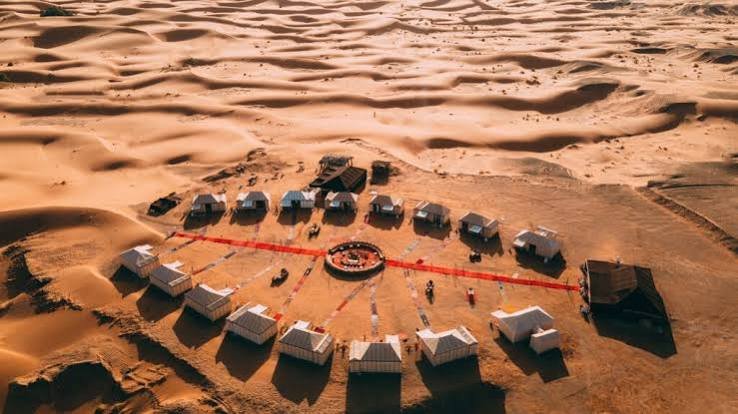
    A luxury camp in Erg Chebbi offers private tents with real beds, clean linen, rugs and often an en-suite bathroom with a shower and toilet. Many have a lounge tent, a dining tent and a fire pit. Some have heating or cooling, depending on the camp and the season.

    Compared with a standard camp, a luxury camp is quieter, more private and more comfortable. It suits couples, families and travellers who want to enjoy the desert without hardship. Ask about tent size, bed type, bathroom, power, water and distance from other camps when you book your Merzouga desert tour.

    Merzouga desert tour: a luxury desert camp at sunset in Erg Chebbi
    A luxury camp among the dunes at sunset.

    6. Dinner and Desert Music

    After you settle in, the camp serves dinner. Expect soup, bread, a tagine or couscous, salad, fruit and mint tea. Many camps cook with local ingredients and can adapt meals for vegetarians and allergies if you tell them in advance.

    After dinner, the staff often play traditional drums and songs around a fire, and sometimes invite guests to join. It is a warm and social time. Respect the mood, join in if you wish and enjoy the rhythm under the sky.

    7. Stargazing

    The desert has very dark skies, far from city lights. On a clear night, you can see thousands of stars and often the Milky Way. Walk a short way from the camp, let your eyes adjust and look up in silence.

    Bring a warm layer, because desert nights can be cold, even after a hot day. A red torch or a phone with a low light is better than a bright light. Stargazing is one of the best parts of a Merzouga desert tour, and it costs nothing.

    Merzouga desert tour: sand dunes at dusk before the stars appear
    Dusk on the dunes, before the stars appear.

    8. Sunrise and the Ride Back

    Many guests wake before dawn to climb a dune and watch the sunrise. The sand turns pink, then gold, and the air is cool and still. After a simple breakfast, you ride your camel back to the edge of the dunes, or walk if you prefer.

    The return ride in the morning light is quieter than the evening trek, and photos are lovely. Plan to leave the camp after breakfast, shower at your hotel or a nearby kasbah if needed, and continue your journey.

    9. 4×4 and Quad in the Dunes

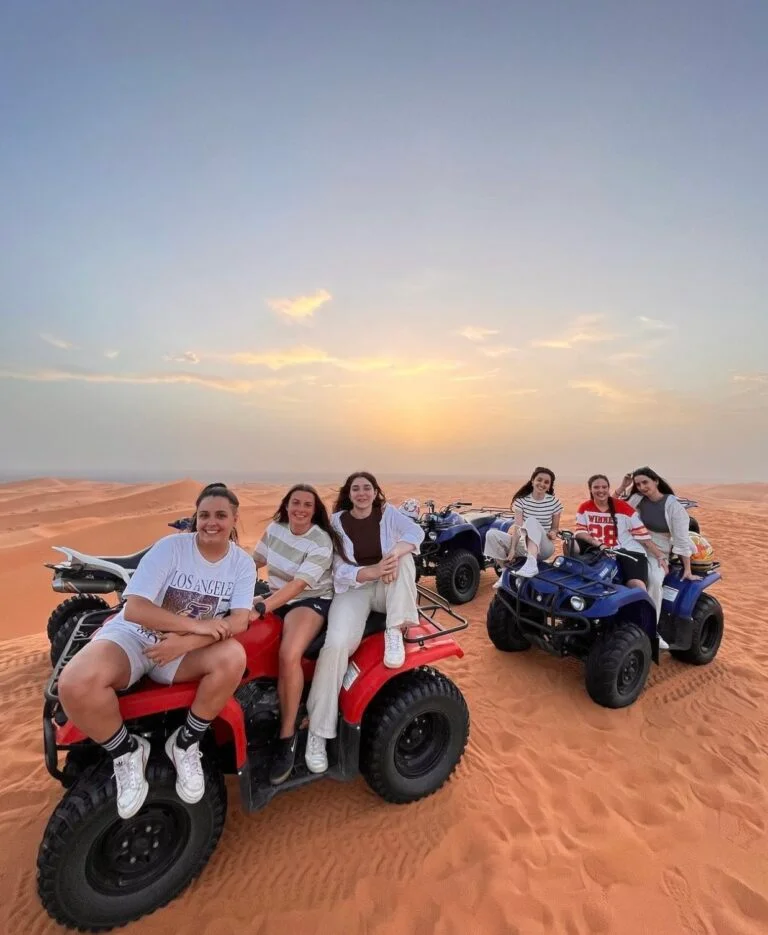
    If you want a more active day, add a 4×4 tour or a quad bike ride. A 4×4 driver can reach remote areas and nomad camps, and a quad ride gives a fast and fun way to cross the sand. Always ride with a guide, wear a helmet and follow instructions.

    Merzouga desert tour: quad bikes in the dunes for an active day
    Quad bikes give a fast view of the sand sea.
    Merzouga desert tour: a 4x4 crossing the plain near Erg Chebbi
    A 4×4 reaches places far from the village.

    For more activity ideas, read Merzouga activities. Many travellers combine a quiet camel trek with one active session during their Merzouga desert tour.

    10. Villages, Nomads and Local Music

    Around Merzouga, small villages show local life. Khamlia is known for its Gnawa music, with a community that descends from people from West Africa. Nomad families still live in tents or simple houses in some areas, and they may offer tea.

    Visit with a guide, ask before taking photos and respect people’s privacy. A short village visit adds culture to your Merzouga desert tour, and it supports local families.

    11. Sandboarding

    Sandboarding is a simple and fun activity, with boards on the slopes of the dunes. It is easy to try, and it makes a good break between trek and dinner. Wear closed clothes to protect from sand, and drink water.

    Children and adults enjoy it, and it is a good way to feel the dune under your feet. Sand can get everywhere, so keep cameras and phones in a bag.

    12. Dayet Srji, Rissani and the Oasis

    Near the dunes, Dayet Srji is a seasonal lake that can attract flamingos and other birds after rain. Rissani is a historic market town, with a lively souk and old ruins. The oasis villages have palm groves and irrigation channels.

    These stops add variety to your Merzouga desert tour and show another side of the Tafilalet. Check conditions, because the lake depends on rainfall and may be dry.

    How to Choose a Merzouga Desert Tour

    Choose a trusted local company with clear information, a private driver-guide and honest camp descriptions. Ask what is included, how many people share the vehicle, which camp you will stay in and how far it is from the dunes’ edge. Avoid last minute surprises and unclear promises.

    Check reviews, ask for photos of the real camp and make sure there is a plan for bad weather or a sandstorm. A good Merzouga desert tour is flexible, safe and respectful of local people and nature.

    Routes and Days: 2, 3 and 4 Day Options

    Two days is the minimum, and it is tiring from Marrakech, because most of the time is spent on the road. Three days is a good balance, with a calm pace and more stops. Four days or more let you add the Dades Valley, Todra Gorge, Ait Benhaddou and Ouarzazate.

    See our tour pages: 2 days from Marrakech to Merzouga, 3 days from Marrakech to Merzouga and 4 days tour from Fes to Merzouga. For wider planning, read how to organize a trip to Morocco.

    Luxury Camp or Standard Camp

    A standard camp has simple tents or shared facilities, and it is a good option for travellers on a tighter budget who want the real desert feeling. A luxury camp has more space, private bathrooms, better bedding and a calmer mood.

    If you are travelling as a couple, with family or for a special occasion, a luxury camp makes a Merzouga desert tour feel relaxed and special. If you are travelling as a group of friends, a standard camp can be fun and social. Choose according to your comfort needs and not only the price.

    What to Pack

    Pack light, breathable clothes for the day, and a warm layer and a jacket for the night. Bring a scarf or a light cover for sun and sand, sunglasses, sunscreen, a hat and comfortable shoes. A small bag for one night, a power bank and a head torch are also useful.

    Leave your big luggage at the hotel or in the vehicle, because the camp is reached by camel. With a simple kit, your Merzouga desert tour will be easy and comfortable.

    Best Season for a Merzouga Desert Tour

    Autumn and spring are the best seasons, with warm days and cool nights. Summer is very hot in the day, so plan the trek late and enjoy the night. Winter days are mild, but nights can be cold, so bring warm clothes and choose a camp with heating.

    Sandstorms and clouds can happen in any season, so keep your plan flexible. See travel to Morocco 2027 for more planning ideas.

    Safety and Respect

    A guided Merzouga desert tour is safe and well organised. Follow your guide, drink plenty of water, protect yourself from the sun and wear shoes in the sand. Do not wander far from camp in the dark, and keep your valuables in your tent bag.

    Respect local customs, dress modestly in villages and ask before photographing people. Take your litter with you, and do not drive off paths without a guide. For general advice, read is Morocco safe to travel.

    Common Mistakes to Avoid

    The most common mistake is planning a Merzouga desert tour that is too short, and spending most of the trip in the vehicle. Another is booking the cheapest camp without checking the real facilities. A third is packing only light clothes and being cold at night.

    Others include arriving late, ignoring sun protection and expecting a perfect weather window. A clear plan, a good camp and a flexible mind make the trip much better.

    The People of the Desert

    The Sahara around Merzouga has been home to nomadic and semi-nomadic families for many generations. They move with their animals, trade in markets such as Rissani and know the dunes better than anyone. Many guides and camp staff are from these families.

    Listening to their stories adds depth to a Merzouga desert tour. Ask about tea, about navigation by stars and about life in the oasis, and you will see the desert as a home, not only a view.

    Desert Food and Tea

    Desert meals are simple and warm. A typical dinner includes harira or vegetable soup, bread, a tagine of chicken, beef or vegetables, and fruit. A special meal is the Berber “pizza”, a baked bread stuffed with meat and spices, sometimes called madfouna.

    Mint tea is served throughout the day, and it is a sign of welcome. Accept a glass, sip slowly and enjoy the pause. Food is one of the quiet pleasures of a Merzouga desert tour.

    Photography in the Dunes

    The best light is early morning and late afternoon, when shadows draw lines on the sand. Look for ripples, ridges and footprints, and include a person or a camel for scale. Protect your camera from sand with a bag or a cloth, and change lenses in a sheltered place.

    A tripod helps for stars, and a wide lens is good for the dunes. Photography is a big part of a Merzouga desert tour, but remember to put the camera down and enjoy the view.

    Families and Couples

    Families will enjoy the camel trek, sandboarding and the fire at night. Children usually love the camels and the stars, but they need sun protection and warm clothes at night. A luxury camp with private tents and a bathroom is the easiest option with young children.

    Couples will enjoy the quiet, the stars and the sunrise. A private tent and a calm dinner make a Merzouga desert tour a romantic highlight of a Morocco trip. Tell the camp about any special occasion in advance.

    Final Ideas for Your Desert Trip

    If you have two days, focus on the camel trek, one night in the dunes and an early start. If you have three days, add stops on the way and a slower pace. If you have four days or more, add the gorges, kasbahs and villages.

    The best moments of a Merzouga desert tour are often simple: tea at a dune top, a silent walk in the night, the first colour at sunrise. Leave space for them. Our team can prepare a private Merzouga desert tour with a driver-guide, a camel trek and a luxury camp in Erg Chebbi, so that you can enjoy the Sahara with comfort and calm.

    A Sample 3 Day Merzouga Desert Tour

    Day 1: Marrakech to the Dades Valley

    Leave early, cross the High Atlas, visit Ait Benhaddou, have lunch near Ouarzazate and continue through the Dades Valley for the night. This first day is long, but it shows a big part of southern Morocco and prepares you for the dunes.

    Day 2: Todra Gorge to the Dunes

    Visit Todra Gorge in the morning, drive to Merzouga, meet your camels in the late afternoon and ride into Erg Chebbi for sunset. Spend the night in your camp with dinner, music and stars. This is the highlight of any Merzouga desert tour.

    Day 3: Sunrise and the Return

    Watch sunrise, ride back, have breakfast and start the long drive back through the Draa Valley or the same road. Add a stop at a kasbah or an oasis, and arrive in the evening. A calm return is as important as the arrival.

    This plan is a good base for your Merzouga desert tour. Our team can adapt the route to your starting city, your pace and your interests.

    Merzouga, Zagora or Agafay?

    Morocco has several desert areas, and each has its own character. Merzouga and Erg Chebbi have the tallest and most dramatic dunes, but they are far from the main cities. Zagora is closer to Marrakech, with a flatter and more rocky landscape. Agafay is a stone desert very close to Marrakech, good for a short trip.

    If you want the classic Sahara dunes, choose a Merzouga desert tour. If you have little time, choose Agafay or Zagora. See 2 days tour from Marrakech to Zagora and day trip from Marrakech to Agafay desert for options.

    Planning Your Merzouga Desert Tour for 2027

    Good camps and drivers fill early in spring and autumn, so plan ahead. Check the dates of Ramadan and Eid, which move each year, because they change opening hours and the mood of towns on the road. Decide your starting city, your number of days and your comfort level first.

    Then choose the camp type, the route and the extras. A clear plan makes your Merzouga desert tour smoother, and it lets your host prepare the best possible experience for you.

    How to Book Step by Step

    First, send your dates, number of travellers and starting city. Second, choose the number of days and the camp type. Third, confirm what is included, such as transport, meals, camel trek and hotels on the road. Fourth, share special needs, such as diet, mobility or a special occasion.

    Finally, confirm pickup details and bring an offline copy of your plan. Clear communication is the key to a happy Merzouga desert tour.

    Travel Responsibly in the Desert

    The desert is fragile. Take all your litter with you, use water carefully, stay on tracks with vehicles and respect the animals. Choose camps that manage waste and water well, and buy from local families.

    A responsible Merzouga desert tour protects the landscape for future visitors, and it supports the people who live there all year.

    Why a Merzouga Desert Tour Is Worth It

    A Merzouga desert tour is one of the most memorable parts of a Morocco trip. It gives you space, silence and a very different landscape from the cities. Many guests say that the night in the dunes was the highlight of their journey.

    The long drive is part of the story, and the camel trek, the camp and the sunrise make it worth every hour. A well planned Merzouga desert tour balances travel, rest and adventure, and it leaves you with real memories.

    Who It Suits

    A Merzouga desert tour suits couples, families, friends and solo travellers. Children from about six years old usually enjoy it, and older travellers can join with a calm camel and a comfortable camp. Tell your host about any health or mobility needs, and they will adapt the plan.

    What Makes It Special

    The scale of the dunes, the stars and the silence make every Merzouga desert tour special. When you combine them with warm hospitality, good food and a comfortable luxury camp, the experience feels both wild and easy. That balance is what we aim for in each Merzouga desert tour we organise.

    Frequently Asked Questions

    What is included in a Merzouga desert tour?

    A typical tour includes a driver-guide, transport, a camel trek at sunset, a night in a desert camp, dinner, breakfast and a sunrise ride. Extras such as 4×4, quad and sandboarding can be added.

    How long is the camel trek?

    Usually one to two hours each way, at a slow pace.

    What is a luxury camp in Erg Chebbi?

    A camp with private tents, real beds, often an en-suite bathroom, a lounge and a dining tent, in a quieter location in the dunes.

    How many days do I need?

    Two days is the minimum, three days is more comfortable and four days or more allow more stops.

    Is it cold at night?

    Yes, nights can be cold, especially in winter, so bring a warm layer.

    Can you plan my tour?

    Yes. Send your dates and the number of travellers on WhatsApp at +212 682 832 176 or through our contact page, and we will arrange a private plan.

    Book Your Merzouga Desert Tour With Us

    Tell us your dates and your starting city. We arrange a private driver-guide, a sunset camel trek and a comfortable luxury camp in Erg Chebbi.

    Request a Free QuoteWhatsApp Us

  • Things to Do in Fes: Ultimate Visitors Guide 2027 With 12 Best Sights

    Things to Do in Fes: Ultimate Visitors Guide 2027 With 12 Best Sights

    Fes · Visitors Guide 2027 · Imperial City · Morocco

    Things to Do in Fes: Ultimate Visitors Guide 2027 With 12 Best Sights

    The complete guide to Morocco’s oldest imperial city: medina, madrasas, crafts, food and day trips

    Things to do in Fes include getting lost in Fes el-Bali, visiting the tanneries, seeing the madrasas, shopping for ceramics and brass, tasting local food and climbing to a viewpoint at sunset. This 2027 visitors guide explains the best things to do in Fes and how to plan them with comfort.

    Fes is the oldest of Morocco’s imperial cities and one of its best preserved. Its medina is a maze of lanes, workshops and courtyards, where many people still live and work as in past centuries. We give 12 best sights, one, two and three day plans, food, transport, safety and respectful travel advice. We do not give prices, because they change.

    For wider planning, read how to organize a trip to Morocco, what to do in 3 days in Morocco and travel to Morocco 2027.

    Things to Do in Fes: The Short Answer

    Quick answer: walk Fes el-Bali with a guide, see the Blue Gate, visit the tanneries and one madrasa, shop for pottery and brass, eat local food, watch sunset from a viewpoint and add a day trip to Meknes and Volubilis.
    Sight Time needed Best moment
    Fes el-Bali walk 3 to 4 hours Morning
    Tanneries 45 minutes Morning
    Madrasas 1 hour Late morning
    Crafts and pottery 2 hours Afternoon
    Fes el-Jdid and Mellah 1.5 hours Afternoon
    Viewpoint 1 hour Sunset

    Times are approximate, and the medina rewards a slow pace. Plan fewer stops, and keep time for tea.

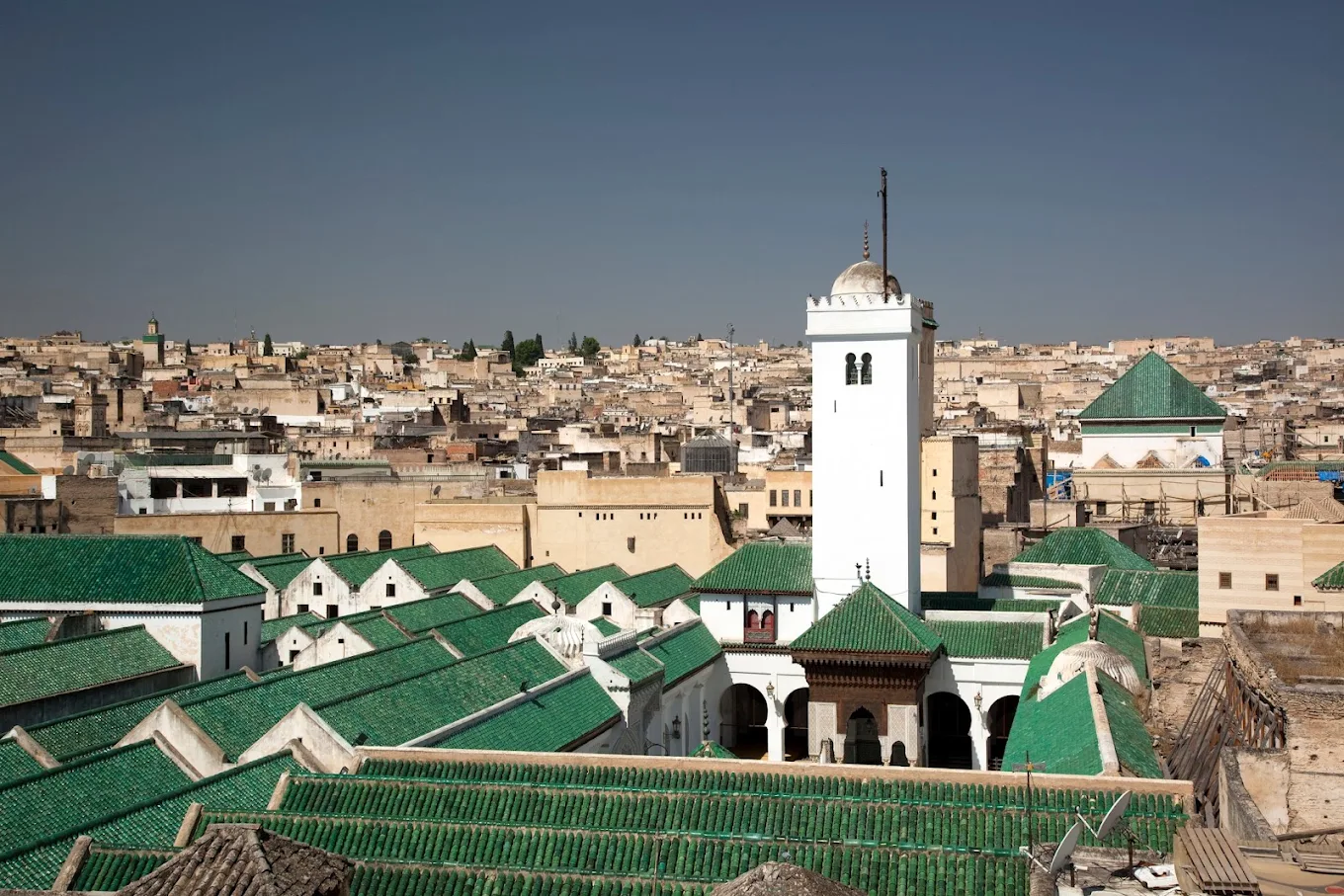
    Things to do in Fes: the old city and its rooftops
    The old city of Fes spreads across a valley of roofs, domes and minarets.

    1. Things to Do in Fes: Walk Fes el-Bali

    Fes el-Bali is the old walled medina and the heart of the city. It is one of the largest car-free urban areas in the world, with thousands of lanes, many of them very narrow. It is listed by UNESCO as a World Heritage site.

    The first of all things to do in Fes is to walk here. Go early with a licensed local guide, who will show you the main sights and keep you from getting lost. Look at doors, fountains, workshops and courtyards, and step aside for donkeys and carts.

    Tip: wear comfortable shoes, carry a small bag and download an offline map. The lanes are uneven, and signal can be weak.

    2. The Blue Gate (Bab Bou Jeloud)

    The Blue Gate is the main entrance to the old medina. It is blue on the outside and green on the inside, and the tile work is lovely. Cafes and small restaurants sit around it, and it is a good place to meet your guide or have tea.

    It is busy during the day and lively at night. Among the easy things to do in Fes, a short stop at the gate is a good start or end to a medina walk.

    3. The Chouara Tannery

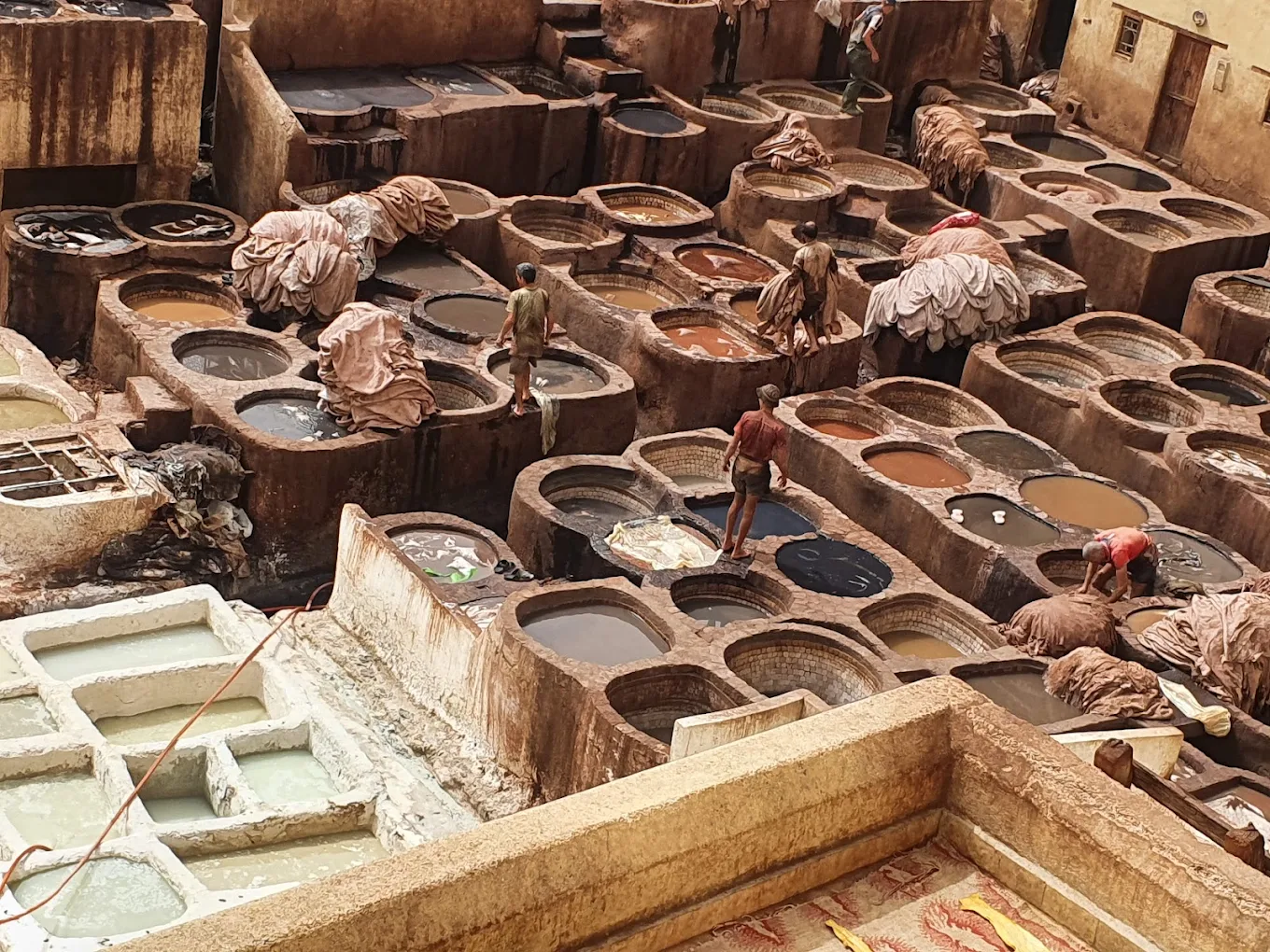
    The Chouara Tannery is the most famous sight in the city. From the terraces of the leather shops around it, you can see rows of stone vats filled with dye, and workers soaking and dyeing hides in the old way. The smell is strong, and shops often give a sprig of mint to hold near your nose.

    Visit in the morning, when the work is busiest. Respect the workers, ask before taking photos of people and do not feel forced to buy in the shop. It is one of the most memorable things to do in Fes, even for a short visit.

    Things to do in Fes: the medina with its minarets and old walls
    The medina is a living city, with workshops and homes side by side.

    4. The Madrasas

    The Marinid madrasas of Fes are among the most beautiful buildings in Morocco. The Bou Inania Madrasa has carved cedar, plaster and tile around a calm courtyard, and it is one of few religious buildings that non-Muslims may enter. The Al-Attarine Madrasa is smaller, with fine zellige tile and lovely proportions.

    Visit in the morning for soft light, and check the opening times. Visits are short, but they leave a strong impression. Madrasas are among the most beautiful things to do in Fes for lovers of architecture.

    5. Al-Qarawiyyin and Its Quarter

    Al-Qarawiyyin was founded in the 9th century by Fatima al-Fihri, and it is often described as one of the oldest continuously operating educational institutions in the world. The mosque and the library are not open to general visitors, but you can see the doors and the surrounding quarter from the lanes.

    A guide can explain the story and show the best places to look from outside. The area around it has bookshops, spice stalls and old fountains, and it adds depth to the things to do in Fes for history lovers.

    Things to do in Fes: the old city seen from above in the evening
    The old city seen from above in warm evening light.

    6. Crafts and Souks

    Fes is the craft capital of Morocco. Streets are grouped by trade, with leather workers, copper smiths, weavers, carpenters, dyers and sweets makers each in their own area. Watching the work is as interesting as shopping.

    Compare quality, bargain with a smile and buy only what you like. For ideas, read what can you bring back from Morocco. Craft browsing is one of the most social things to do in Fes.

    7. Fes el-Jdid and the Mellah

    Fes el-Jdid, or “new Fes”, was built in the 13th century by the Marinid dynasty. It has the Royal Palace with its famous brass doors, wide streets and gardens. The Mellah, the old Jewish quarter, has balconies, a historic cemetery and a synagogue that can be visited.

    The area is calmer than the old medina, and it is easy to walk. These are good afternoon things to do in Fes, especially when you want wider streets and more light.

    8. Viewpoints and Sunset

    To see the whole city, go up to the Borj Nord fort or the hills near the Marinid Tombs. From there, the old medina spreads out below, with roofs, minarets and domes. Sunset is the best time, when the light is warm and the call to prayer rises.

    Bring a jacket, because evenings can be cool. A sunset viewpoint is one of the best free things to do in Fes, and a good moment to end a busy day.

    9. Museums

    Fes has several small museums in old houses. The Dar Batha museum shows Moroccan arts, with wood, ceramics, embroidery and carpets. The Nejjarine Museum of Wooden Arts and Crafts is in a beautiful old inn with a fountain.

    Check opening hours before you go. These museums are a calm break from the lanes, and they help you understand the crafts you see in the markets. Museums are good rainy day things to do in Fes.

    10. Food and Cooking

    Fes is famous for its cuisine. Try pastilla, a sweet and savoury pie, rfissa, harira soup, tagines, couscous, fresh bread and sweets. Many riads offer cooking classes, where you learn to prepare a meal with local ingredients.

    Street snacks are tasty and cheap, but choose busy stalls. For food safety tips, read what not to eat in Morocco. Food is among the tastiest things to do in Fes.

    11. Pottery Workshops

    Fes is known for its blue pottery and mosaic work. In small workshops, artisans shape clay, paint patterns and cut tiny tile pieces by hand. Many welcome visitors, and some offer short workshops.

    A visit shows how much care goes into each piece. It is one of the more hands-on things to do in Fes, and a great way to bring home a real memory.

    Things to do in Fes: rooftops and minarets of the old medina
    Rooftops and minarets mark the skyline of the old medina.

    12. Day Trips From Fes

    Fes is a good base for day trips. Meknes, about one hour away, has grand gates and calm squares. Volubilis, near Meknes, is a large Roman site with mosaics. Moulay Idriss is a holy hill town, and Ifrane and Azrou offer cool mountain air and cedar forests.

    Chefchaouen is about four hours away, so a night there is better. See what to see around Chefchaouen. Add a day trip to your things to do in Fes if you have three days or more.

    Why Visit in 2027

    Fes is changing slowly, with restored riads, new cafes and growing interest in slow travel. In 2027, plan early for spring and autumn, and check the dates of Ramadan and Eid, which move each year and depend on the moon.

    Read Aid al-Fitr in Morocco 2027 for planning notes. Good planning makes all the things to do in Fes easier and more relaxed.

    One, Two and Three Day Plans

    One Day

    Meet your guide at the Blue Gate, walk through the medina, visit the tanneries and a madrasa, have lunch in a riad, shop for crafts and finish at a viewpoint for sunset. This covers the core things to do in Fes.

    Two Days

    Add Fes el-Jdid, the Mellah, a museum and a cooking class on day two. This gives a better balance of sights, rest and food.

    Three Days

    Use day three for Meknes and Volubilis, or for a quiet day in Ifrane. Three days let you feel the pace of the old city.

    Getting There and Getting Around

    Fes has an airport with flights to Europe and other Moroccan cities, and a train station with fast links to Rabat, Casablanca and Tangier. Petit taxis are common for short rides, and a private driver is the easiest choice for day trips. The medina itself is for walking only.

    Agree the taxi price or ask for the meter. For a desert extension, see 4 days tour from Fes to Merzouga.

    Where to Stay

    A riad inside the old medina is the best base for atmosphere. Many have quiet courtyards and rooftop terraces. If you prefer easy parking and modern comfort, choose a hotel in the new town (Ville Nouvelle) or near the gates.

    Ask your host about luggage access, because some lanes are too narrow for cars. A good base makes the things to do in Fes easy, and your host can arrange guides and drivers.

    Best Season to Visit

    Spring and autumn are best, with mild days and cool evenings. Summer can be very hot, so plan mornings and evenings outdoors. Winter can be cold and wet, but it is quiet and good for food and museums.

    Bring layers for winter evenings. Plan the outdoor things to do in Fes around the weather.

    Practical Tips

    Hire a licensed guide for the first day, and ask your riad for a trusted name. Dress modestly, keep valuables close and carry small cash for shops and cafes. Use bottled or filtered water, and wear shoes with good grip.

    Say a polite no to anyone who offers unasked help in the lanes. These simple habits make the things to do in Fes safer and calmer. For safety advice, read is Morocco safe to travel.

    Common Mistakes to Avoid

    The most common mistake is trying to enter the medina without a guide on the first day, and losing hours. Another is visiting for only a few hours between two long drives. A third is shopping at the first stall without comparing.

    A simple plan with fewer stops makes the things to do in Fes more enjoyable.

    A Short History of Fes

    Fes was founded at the end of the 8th century and grew quickly as a centre of learning, trade and craft. Families from Andalusia and Kairouan settled here, and they brought skills, books and styles. Later dynasties, such as the Marinids, built madrasas, palaces and gates.

    Knowing this story adds depth to the things to do in Fes. When you see a carved door, a fountain or a tiled courtyard, you are looking at centuries of care and craft.

    Things to Do in Fes in the Evening

    The old city is calm in the evening. Lanterns glow, shops close and families walk home. You can enjoy dinner on a rooftop terrace, a mint tea near the Blue Gate or a short walk to a viewpoint. Live music is sometimes offered in riads.

    The best evening things to do in Fes are quiet and local. Walk with a guide after dark, and keep valuables close.

    Things to Do in Fes With Family

    The medina can be tiring for young children, so plan short walks, shaded breaks and early starts. Children often enjoy the tanneries, the sweets, the donkeys and a pottery class. Parks and gardens in the new town give space to run.

    Good family things to do in Fes include a cooking class, a short viewpoint visit and a day trip to Ifrane. A private driver and a flexible plan make the trip easier.

    A Simple Shopping Guide

    Look for leather bags and slippers, brass and copper items, ceramics, textiles and sweets. Check seams, glaze and weight, and ask where the item was made. Bargain with respect, and ask for fixed prices in craft shops.

    Shopping is one of the most rewarding things to do in Fes, and it supports local families. For more advice, read what cheap things should I buy in Morocco.

    What to Pack

    Pack light layers, comfortable shoes with grip, a hat, sunscreen and a refillable bottle. Bring a scarf or light cover for shoulders and knees, a small day bag and a power bank. For winter, add a warm jacket.

    With the right kit, all the things to do in Fes feel easy.

    Useful Local Words

    A few words help in shops and cafes. “Salam” is hello, “shukran” is thank you, “la shukran” is no thank you, “afak” is please and “bslama” is goodbye. French is widely understood in Fes, and English is common in riads.

    Polite greetings open doors, and they make the things to do in Fes more personal and warm.

    Final Ideas for Your Visit

    If you have one day, focus on the medina, the tanneries and a madrasa. If you have two days, add Fes el-Jdid, a museum and a cooking class. If you have three days, add Meknes and Volubilis.

    The best things to do in Fes are often the small moments: a glass of mint tea in a courtyard, a talk with a craftsman, a sunset above the roofs. Leave space for them, and the old city will reward you.

    Our team can prepare a private plan with a driver-guide, a comfortable riad and your favourite things to do in Fes, so that you can enjoy the city in 2027 without stress. In short, the things to do in Fes suit many styles and seasons, and the best things to do in Fes are those that let you slow down.

    Fes by Area

    The city has three main parts. Fes el-Bali is the old medina, with the tanneries, madrasas and souks. Fes el-Jdid is the “new” old city, with the palace and the Mellah. The Ville Nouvelle is the modern French-built town, with wide streets, cafes and train links.

    Plan your things to do in Fes by area. Spend a full morning in Fes el-Bali, an afternoon in Fes el-Jdid and an evening in the Ville Nouvelle for dinner. This saves time and keeps your legs fresh.

    Fes el-Bali

    The most atmospheric part, with the oldest lanes and workshops. Go with a guide, and start early.

    Fes el-Jdid

    A calmer area with wide streets, gardens and the royal palace gates. It is good for a slow afternoon walk.

    The Ville Nouvelle

    A modern district with cafes, shops, hotels and easy taxis. It is a comfortable place to rest after the medina.

    Tea, Cafes and Slow Moments

    Tea is a ritual in Fes. Mint tea is served in small glasses with sugar, and it is offered in shops, homes and cafes. Accept a glass when it is offered, and take your time. The best cafes have a terrace with a view over the roofs.

    A tea break is one of the simplest things to do in Fes, and it often leads to the best conversations. Ask the owner about the neighbourhood, and you may learn a secret corner.

    Photography Tips

    The old city is a dream for photographers, with strong light, deep colours and old details. Early morning and late afternoon give the best light. Look for doors, tile work, hanging dyed wool and rooftop views.

    Always ask before you take a photo of a person, and respect a no. Do not block narrow lanes, and be careful with drones, which may be restricted. Photography is one of the most creative things to do in Fes.

    Events and Festivals

    Fes is known for its cultural life. A world sacred music festival has been held here in past years, usually in late spring or early summer, and other events bring music, film and art to the city. Dates and programmes change, so check before you plan.

    Events can fill hotels, so book early. Combining a festival with the usual things to do in Fes makes a trip richer, but it may also mean more crowds.

    Staying in a Riad

    A night in a riad is part of the Fes experience. A riad is an old house built around a courtyard, often with a fountain, carved plaster and a roof terrace. Breakfast is served in the courtyard, and the host can help with guides, meals and transport.

    Ask about luggage porters, because many riads can only be reached on foot. A good riad turns the things to do in Fes into a calm and welcoming rhythm.

    Travel Responsibly

    Small choices matter in a living city. Buy from local artisans, respect workers at the tanneries, use a refillable bottle and avoid plastic bags. Dress modestly, greet people kindly and do not enter private homes without invitation.

    Responsible habits keep the old city alive and welcoming. They also make the things to do in Fes feel more respectful and more rewarding.

    Common Myths About Fes

    Some visitors think the medina is dangerous or impossible to understand. In reality, it is welcoming when you go with a guide and a plan. Others think Fes is only about the tanneries, but it has gardens, museums, food and mountain day trips.

    The truth is simple. Fes rewards patience and curiosity. Take your time, ask questions and enjoy the details, and the best things to do in Fes will appear on their own.

    Frequently Asked Questions

    What are the best things to do in Fes?

    Walk Fes el-Bali with a guide, see the Blue Gate, visit the tanneries and a madrasa, shop for crafts, taste local food, watch sunset from a viewpoint and add a day trip to Meknes and Volubilis.

    How many days do I need in Fes?

    Two days cover the main sights, and three days allow a day trip.

    Do I need a guide in the medina?

    For the first day, yes. A licensed guide saves time and keeps you from getting lost.

    Is Fes safe for tourists?

    Yes, with normal care. Keep valuables close and ignore unasked help.

    When is the best time to visit?

    Spring and autumn, with mild weather and clear light.

    Can you plan my trip?

    Yes. Send your dates and the number of travellers on WhatsApp at +212 682 832 176 or through our contact page, and we will arrange a private plan.

    Plan Your Fes Trip for 2027 With Us

    Tell us your dates and interests. We arrange private driver-guides, comfortable riads and a calm route through the best things to do in Fes.

    Request a Free QuoteWhatsApp Us

  • Things to Do in Casablanca: Ultimate Visitors Guide 2027 With 12 Best Sights

    Things to Do in Casablanca: Ultimate Visitors Guide 2027 With 12 Best Sights

    Casablanca · Visitors Guide 2027 · Atlantic Coast · Morocco

    Things to Do in Casablanca: Ultimate Visitors Guide 2027 With 12 Best Sights

    The complete guide to Morocco’s big white city: mosque, medina, Art Deco, coast and food

    Things to do in Casablanca include visiting the Hassan II Mosque, walking the Corniche by the ocean, exploring the Old Medina and the Habous quarter, admiring Art Deco buildings downtown and eating fresh seafood. This 2027 visitors guide explains the best things to do in Casablanca and how to plan them with comfort.

    Casablanca is the largest city in Morocco and its economic heart. Many travellers pass through it quickly, but the city has a lot to offer when you give it a day or two. We give 12 best sights, one, two and three day plans, food, transport, safety and respectful travel advice. We do not give prices, because they change.

    For more detail, read Casablanca in one day, why is Casablanca famous and is Casablanca safe.

    Things to Do in Casablanca: The Short Answer

    Quick answer: see the Hassan II Mosque, walk the Corniche at sunset, wander the Old Medina and the Habous quarter, admire the Art Deco centre, visit the Central Market, eat seafood and add a day trip to Rabat or El Jadida.
    Sight Time needed Best moment
    Hassan II Mosque 1.5 to 2 hours Morning tour
    Corniche 1 to 2 hours Sunset
    Old Medina 1 hour Morning
    Habous quarter 1.5 hours Late morning
    Art Deco walk 1.5 hours Afternoon
    Central Market and food 1.5 hours Lunch

    Times are approximate, and traffic in the city can be heavy. Plan fewer stops and use a driver for longer distances.

    Things to do in Casablanca: the city and the Atlantic coast
    Casablanca sits on the Atlantic coast and mixes sea, mosque and modern towers.

    1. Things to Do in Casablanca: Visit the Hassan II Mosque

    The Hassan II Mosque is the landmark of the city and one of the largest mosques in the world. It stands on the edge of the ocean, and its minaret is among the tallest in the world. It was finished in 1993, and craftspeople from across Morocco worked on its carved wood, marble, plaster and tile.

    Non-Muslim visitors can enter on a guided tour at set times. Check the schedule before you go, dress modestly and plan about 90 minutes. The prayer hall, the fountains and the hammam below are the highlights. Of all the things to do in Casablanca, this is the one not to miss.

    Things to do in Casablanca: the Hassan II Mosque by the Atlantic ocean
    The mosque stands at the water’s edge.
    Tip: the esplanade outside is free and great for photos. Go at golden hour, when the stone turns warm.

    2. Walk the Corniche at Ain Diab

    The Corniche is the seafront promenade of the city, with beaches, cafes, pools and restaurants. It is where locals go to relax, to exercise and to watch the ocean. The air is fresher here than in the centre, and sunset is a favourite moment.

    Walk or drive along the coast, stop for a coffee and enjoy the waves. Among the easy things to do in Casablanca, a sunset on the Corniche is relaxing and free. In summer, beach clubs and pools are popular, and the area is busy at weekends.

    3. The Old Medina

    The Old Medina is smaller and quieter than the medinas of Fes or Marrakech. It has white lanes, small shops, bakeries and local life. It is a good place to see how people live and shop, and to buy simple items.

    Go in the morning, and walk with a local guide if you want stories. The area is calm in daytime, but keep valuables close, as in any city centre. A short visit adds a traditional layer to your list of things to do in Casablanca.

    4. The Habous Quarter

    The Habous quarter, also called the New Medina, was built in the 1930s in a mix of Moroccan style and French planning. It has arched streets, small shops, a royal palace area, a mosque, bookshops and pastry houses. The streets are calm, clean and easy to walk.

    It is a great place for shopping, for sweets and for a slow walk. Try local pastries and buy leather, brass or wooden items. Habous is one of the most rewarding things to do in Casablanca for culture lovers and families.

    Things to do in Casablanca: a view of the city from above
    A view over the city and its white buildings.

    5. Art Deco Downtown

    Casablanca has one of the richest collections of Art Deco and early modern buildings in Africa. They date mostly from the 1920s to the 1950s, when the city grew fast. Look at curved balconies, geometric details, tiles and old cinemas around Place Mohammed V and the nearby streets.

    A walking tour is a great way to see these buildings, because many details are above eye level. Look up, and you will find a different city. Architecture is among the most surprising things to do in Casablanca, and it is easy to combine with a coffee break.

    6. The Central Market

    The Central Market is the best place for a simple seafood lunch. Stalls sell fresh fish, shrimp, calamari and vegetables, and small grills cook your choice on the spot. The mood is lively and local.

    Choose a busy stall, ask about the catch of the day and eat with locals. For food safety tips, read what not to eat in Morocco. A seafood lunch is one of the tastiest things to do in Casablanca.

    7. The Sacre Coeur Cathedral

    The Sacre Coeur is a former Catholic cathedral from the 1930s in white concrete with tall towers and coloured glass. It is no longer used as a church, and today it is a cultural space. The building itself is striking, and the grounds are quiet.

    Check opening times, because access can change. Even from the outside, it is a good stop for architecture lovers, and it adds a fresh angle to the things to do in Casablanca.

    8. Rick’s Cafe

    Rick’s Cafe is a restaurant and piano bar inspired by the famous 1942 film. It opened in the 2000s, and it recreates the mood of the film with arches, lamps and a piano. It is not a real place from the film, but it is a fun evening.

    Book ahead for dinner, dress smart and enjoy the music. For the story behind the city’s fame, read why is Casablanca famous. A film night is among the more playful things to do in Casablanca.

    9. Parks and Gardens

    Casablanca has green spaces for a break. The Arab League Park is a large, shaded park with palm trees and walking paths. It is a good place to rest, to read or to walk with children.

    After a busy morning, a park visit is a calm option. These easy things to do in Casablanca are good in the afternoon, when the sun is strong. Bring water and a hat.

    10. Museums and Art

    The city has a growing art scene, with galleries, small museums and cultural centres. The Museum of Moroccan Judaism tells the story of the Jewish community in Morocco, and modern art spaces show Moroccan artists. Check opening hours and special exhibitions before you go.

    These cultural things to do in Casablanca suit rainy days and travellers who want a deeper view of the country. A guide can add context and stories.

    11. Food and Cafes

    Casablanca is a food city. Try seafood, tagines, pastilla, couscous, fresh bread and pastries. French style cafes serve strong coffee and croissants, and modern restaurants offer new Moroccan cooking. Fresh juice is sold in many corners.

    Eating well is easy, and there are options for all tastes, including vegetarians. The food scene is one of the best things to do in Casablanca in the evening, and a good way to meet locals.

    12. Day Trips From Casablanca

    Rabat is about one hour away, with royal sites and a historic old town. Rabat is listed by UNESCO as a World Heritage site. El Jadida has a Portuguese cistern and old walls. Mohammedia and Azemmour are quieter coast towns. Marrakech is a long day trip, so a night there is better.

    Add one day trip to your list of things to do in Casablanca if you have three days or more. See 2 days from Casablanca to Chefchaouen for a northern route.

    Why Visit in 2027

    Casablanca keeps changing, with new transport, new cafes and new galleries. In 2027, plan ahead for the main seasons, and check the dates of Ramadan and Eid, which move each year. They depend on the moon, and they change opening hours and the mood of the city.

    Read Aid al-Fitr in Morocco 2027 and travel to Morocco 2027 for planning notes. Good planning makes all the things to do in Casablanca simpler.

    One, Two and Three Day Plans

    One Day

    Visit the Hassan II Mosque in the morning, have lunch at the Central Market, walk the Art Deco streets and finish with sunset on the Corniche. For a detailed route, read Casablanca in one day.

    Two Days

    Add the Old Medina, the Habous quarter and a museum on day two, and enjoy dinner at Rick’s Cafe. This is the best balance of things to do in Casablanca.

    Three Days

    Add a day trip to Rabat or El Jadida, or a slow day at the beach and in the cafes. Three days let you feel the rhythm of the city.

    Getting There and Getting Around

    Mohammed V airport is the main international airport, and trains link it to the city centre. Casa Voyageurs station connects Casablanca with Rabat, Marrakech, Tangier and Fes. A modern tram and buses run in the city, and petit taxis are common for short rides.

    Agree the price or ask for the meter before you start. For longer days or day trips, a private driver-guide is the easiest choice. See how to organize a trip to Morocco for wider planning.

    Where to Stay

    For first visits, stay in the centre near Place Mohammed V or in the Maarif area, with restaurants and transport nearby. For a beach mood, stay near the Corniche in Ain Diab. A boutique hotel in an Art Deco building adds character.

    A good base makes the things to do in Casablanca easy, and your host can arrange guides and drivers.

    Best Season to Visit

    Spring and autumn are best, with mild weather and clear skies. Summer is warm and humid on the coast, and the Corniche is lively. Winter can be rainy and windy, but it is quiet and good for museums and food.

    Bring a light jacket for the ocean breeze. Plan the outdoor things to do in Casablanca around the weather.

    Practical Tips

    Dress modestly, especially for the mosque. Carry small cash for taxis and cafes, but cards work in many modern places. Keep your phone and wallet close in crowds, and use official taxis and guides. Traffic can be heavy at rush hour, so plan extra time.

    These simple habits make the things to do in Casablanca smoother. For safety details, read is Casablanca safe.

    Common Mistakes to Avoid

    The most common mistake is visiting only for a few hours between flights, and seeing only the mosque. Another is planning too many stops in one day, and losing time in traffic. A third is ignoring the mosque tour schedule.

    A simple plan with fewer stops makes the things to do in Casablanca more enjoyable.

    A Short History of the White City

    Casablanca means “white house” in Spanish, and the city grew from a small port into a large modern centre. In the early 20th century it expanded fast, with French planning, new ports and new buildings. After independence, it became the economic capital of Morocco.

    Understanding this story adds depth to the things to do in Casablanca. The Art Deco buildings, the Habous quarter, the port and the big mosque all tell a part of the same story of change.

    Things to Do in Casablanca in the Evening

    The city is lively after dark. Cafes, restaurants and lounges stay open, and the Corniche fills with walkers. You can enjoy dinner by the sea, a jazz night, a walk along the lit mosque or a quiet tea in a hotel lounge.

    The best evening things to do in Casablanca depend on your mood. Use licensed taxis at night, and keep valuables close.

    Things to Do in Casablanca With Family

    Families will enjoy parks, the beach, the Corniche, the mosque esplanade and ice cream stops. Choose short plans with breaks, and avoid midday sun in summer. A private driver makes the day easier with children.

    Good family things to do in Casablanca include a seafood lunch, a park visit and a sunset walk by the ocean.

    Shopping in Casablanca

    The city has modern malls, local markets and craft shops. The Habous quarter is good for leather, brass, pastries and books. The Old Medina offers everyday items. Modern malls have international brands, a cinema and restaurants.

    Compare quality, bargain with respect in markets and ask for fixed prices in shops. For gift ideas, read what can you bring back from Morocco. Shopping is one of the easy things to do in Casablanca on a rainy day.

    What to Pack

    Pack light layers, comfortable walking shoes, a light rain jacket, sunscreen and a hat. For the mosque, bring a scarf or a light cover for shoulders and knees. A small day bag, a power bank and a refillable bottle are also useful.

    With the right kit, all the things to do in Casablanca feel easy.

    Final Ideas for Your Visit

    If you have one day, focus on the mosque, the Art Deco centre and the Corniche. If you have two days, add the medina, the Habous quarter and a museum. If you have three days, add a day trip and a slow evening by the sea.

    The best things to do in Casablanca are a mix of big sights and small moments. A coffee in an old cafe, a walk along the waves, a talk with a baker and a sunset behind the mosque can matter more than any checklist.

    Our team can prepare a private plan with a driver-guide, a comfortable hotel and your favourite things to do in Casablanca, so that you can enjoy the city in 2027 without stress.

    Casablanca by Neighbourhood

    The city is large, so it helps to think in areas. The centre, around Place Mohammed V and the Art Deco streets, is best for architecture, cafes and the Central Market. The Old Medina and the port are close by. Habous, to the south, is calm and good for sweets and crafts.

    The Maarif area has restaurants, shops and nightlife, and Ain Diab on the coast has the Corniche, beaches and clubs. Plan your things to do in Casablanca by area, so that you do not cross the city many times in traffic.

    The Centre

    Here you find the main squares, old cinemas, banks and grand apartment blocks. Walk slowly and look up at the balconies, towers and carved details.

    The Coast

    The Corniche is the place for sunset, seafood and fresh air. It is livelier in summer and at weekends.

    The Quiet Quarters

    Habous and the older lanes feel slower and more traditional. They are ideal for a morning walk and a pastry break.

    Beaches and Seaside Things to Do in Casablanca

    The city is on the Atlantic, and the coast is part of local life. Ain Diab has beaches, pools and cafes, and the water can be cool and strong. Swim only where it is safe, and follow local advice and flags.

    If you prefer a quieter shore, drive to Mohammedia or the beaches north of the city. A walk on the sand at sunset is among the simplest things to do in Casablanca, and it costs nothing.

    A Foodie Guide to Casablanca

    Breakfast can be bread, eggs, olive oil, honey and mint tea, or a croissant and coffee in a French style cafe. Lunch is often a tagine, couscous on Friday or fresh fish. Dinner can be grilled seafood, pastilla or modern fusion.

    Try fresh sardines, grilled calamari, shrimp pil pil, msemen pancakes and sweet pastries. Taste local mint tea in the afternoon, and finish with fruit. Food is among the most enjoyable things to do in Casablanca, and each area has its own taste.

    Choose busy places and drink bottled or filtered water. Tell your host about allergies and diet, because vegetarian options are easy to find in modern restaurants.

    Hammam and Spa Time

    After a day of walking, a hammam is a lovely rest. Many hotels and spas offer steam, scrub and massage in a quiet setting, and local bathhouses give a traditional experience. Ask your hotel for a trusted place, and agree what is included before you start.

    It is one of the best things to do in Casablanca on a rainy day or after a long flight.

    A Northern Route From Casablanca

    Many travellers use Casablanca as the first or last stop on a northern route. Spend one or two days in the city, then continue to Rabat, Meknes, Fes and Chefchaouen. This route shows imperial cities, mountains and the blue town in a few days.

    See 4 days from Casablanca to Chefchaouen for a ready itinerary. A calm start in Casablanca makes the rest of the trip easier, and it adds to your list of things to do in Casablanca before you move on.

    Useful Local Words

    A few words help in shops and cafes. “Salam” is hello, “shukran” is thank you, “la shukran” is no thank you, “afak” is please and “bslama” is goodbye. French is widely spoken in Casablanca, and English is common in hotels and modern restaurants.

    Polite greetings open doors, and they make the things to do in Casablanca more personal and warm.

    Common Myths About Casablanca

    Some visitors expect a film set, but the real city is modern and busy. Others expect only business, but it has beaches, art and history. Some think it is not worth a stop, while others stay a week and love it.

    The truth is simple. The city rewards curious travellers who slow down. Enjoy the mosque, the sea and the cafes, and the best things to do in Casablanca will become clear on their own.

    In short, the things to do in Casablanca suit every style, from big sights to quiet cafes. Whether you stay a day or a week, the best things to do in Casablanca are those that let you feel the city’s pace. Use this guide as a base, and adapt the things to do in Casablanca to your season, your energy and your 2027 travel dates.

    Frequently Asked Questions

    What are the best things to do in Casablanca?

    Visit the Hassan II Mosque, walk the Corniche, explore the Old Medina and the Habous quarter, see the Art Deco centre, eat seafood at the Central Market and add a day trip to Rabat.

    How many days do I need in Casablanca?

    One day covers the main sights, and two to three days let you enjoy the city and a day trip.

    Is Casablanca worth visiting?

    Yes, for the mosque, the architecture, the coast and the food.

    Can non-Muslims enter the Hassan II Mosque?

    Yes, on guided tours at set times. Check the schedule before you go.

    Is Casablanca safe for tourists?

    Yes, with normal city care. Keep valuables close and use official taxis.

    Can you plan my trip?

    Yes. Send your dates and the number of travellers on WhatsApp at +212 682 832 176 or through our contact page, and we will arrange a private plan.

    Plan Your Casablanca Trip for 2027 With Us

    Tell us your dates and interests. We arrange private driver-guides, comfortable stays and a calm route through the best things to do in Casablanca.

    Request a Free QuoteWhatsApp Us

  • Things to Do in Chefchaouen: Ultimate Visitors Guide 2027 With 12 Best Sights

    Things to Do in Chefchaouen: Ultimate Visitors Guide 2027 With 12 Best Sights

    Chefchaouen · Visitors Guide 2027 · Blue City · Rif Mountains

    Things to Do in Chefchaouen: Ultimate Visitors Guide 2027 With 12 Best Sights

    The complete guide to the blue city: sights, plans, stays, seasons and practical tips

    Things to do in Chefchaouen include walking the blue medina, relaxing in the main square, visiting the kasbah, watching sunset at the Spanish Mosque, shopping for local crafts, tasting goat cheese and hiking in the mountains. This 2027 visitors guide explains the best things to do in Chefchaouen and how to plan them well.

    It is a complete guide for first time travellers. You will find 12 best sights, one, two and three day plans, advice on where to stay, when to go, how to get there and how to travel with respect. We give no prices, because they change from year to year.

    For more detail on single topics, read what to do in the blue city of Morocco, what to see around Chefchaouen and why are the houses in Chefchaouen blue.

    Things to Do in Chefchaouen: The Short Answer

    Quick answer: walk the blue lanes early, rest in Plaza Uta el-Hammam, see the kasbah, shop for weaving, eat local cheese, walk to Ras el-Maa and finish with sunset at the Spanish Mosque. With a second day, add Akchour or a mountain walk.
    Sight Time needed Best moment
    Blue medina 2 to 3 hours Early morning
    Kasbah and museum 1 hour Late morning
    Ras el-Maa 1 hour Afternoon
    Spanish Mosque 1.5 hours Sunset
    Crafts and food 2 hours Midday
    Akchour Half to full day Morning
    Things to do in Chefchaouen: the blue city in the Rif mountains
    Chefchaouen sits between two peaks in the Rif mountains of northern Morocco.

    1. Things to Do in Chefchaouen: Walk the Blue Lanes

    The first and best of all things to do in Chefchaouen is a slow walk through the old medina. Walls, steps, doors and flowerpots are painted in shades of blue, and every corner offers a new view. The town is small, so you can wander freely.

    Start early, when the lanes are quiet and the light is soft. Follow the steps up and down, stop in small squares and look for details such as carved doors and old fountains. Wear shoes with grip, because steps can be smooth.

    Things to do in Chefchaouen: blue walls and steps in the medina
    Blue walls and steps in the old medina.

    2. Plaza Uta el-Hammam

    The main square is the social heart of the town. Cafes and restaurants line its edges, the kasbah stands on one side and the Great Mosque on another. It is a good place to start and end the day, and to plan what to do next.

    Order mint tea or fresh juice, watch daily life and let the town set the pace. Among the easy things to do in Chefchaouen, this is the one that costs nothing but time.

    3. The Kasbah and Museum

    The kasbah is a small fortress from the 15th century with a quiet garden, a tower and a museum. From the tower you can see the roofs and the mountains. The museum gives a short introduction to local life, crafts and history.

    Plan about one hour. Check opening times before you go, because they can change. The garden is a good place to rest when the lanes are crowded.

    4. Sunset at the Spanish Mosque

    The Spanish Mosque stands on a hill above the town. The path takes about 30 to 40 minutes, and the view at the top is one of the best in the Rif. At sunset the town glows in blue, pink and gold.

    Go about an hour before sunset, carry water and a light jacket and come down before dark. Many guests rank this among the top things to do in Chefchaouen, and it is free.

    Things to do in Chefchaouen: blue lanes seen from above
    The town seen from above in the late afternoon.

    5. Ras el-Maa

    Ras el-Maa is the spring at the edge of the medina, where water flows from the mountain into a stream. Cafes sit by the water, and locals still gather here. It is cool, shaded and perfect for a pause in the afternoon.

    Walk upstream to see old washing places and small paths into the hills. It is an easy walk, and it shows a quieter side of the town.

    6. Weaving and Local Crafts

    The town is known for woven blankets, wool items, soap, leather and ceramics. Many shops are small family workshops, and some let you watch weavers at work. Ask politely, and you may see a loom in action.

    Craft shopping is one of the most rewarding things to do in Chefchaouen. Compare quality, bargain gently and buy items that you will really use. Read what can you bring back from Morocco for more ideas.

    7. Goat Cheese, Bread and Local Food

    The area is famous for goat cheese, olive oil, honey and fresh bread. Try cheese with bread and olives, then add a bowl of bissara soup, a tagine or grilled vegetables. Meals are slow and relaxed, and many places have terraces with views.

    Choose busy restaurants and drink bottled or filtered water. For safety tips, read what not to eat in Morocco. Food is a big part of the things to do in Chefchaouen, because every table feels like a small celebration.

    8. Hammam and Spa

    After steep lanes and hikes, a traditional hammam is a lovely treat. Many guesthouses and local bathhouses offer steam, scrub and massage. Ask your host for a trusted place, and agree what is included before you start.

    It is also one of the best things to do in Chefchaouen on a rainy afternoon.

    9. Akchour and the Waterfalls

    Akchour is a mountain area about 40 minutes from the town, with a river, pools and waterfalls. Many visitors walk to the Grand Cascade, and stronger walkers continue to the Bridge of God, a natural rock arch above a gorge.

    Start early, bring water and wear good shoes. Check the path and river level with your host, because conditions change after rain. For active travellers, Akchour is the best of the things to do in Chefchaouen outside the town.

    10. Talassemtane National Park

    The mountains around the town are part of a protected natural area, with forests, ridges and villages. A guided walk is the best way to enjoy it. A guide knows the paths, the plants and the quiet viewpoints.

    Choose a short loop or a full day trek, depending on your level. Follow the marked paths, take your litter with you and respect the villagers who live here.

    11. Photography and Slow Moments

    Photography is a joy here. The best light is early morning and late afternoon, and the best pictures often include a door, a staircase or a person in the lane. Ask permission before you photograph residents, and do not block narrow lanes.

    Not every moment needs a camera. A quiet tea, a talk with a shopkeeper and a slow walk are also among the best things to do in Chefchaouen.

    Things to do in Chefchaouen: a blue lane with painted doors and plants
    Painted doors and plants line many lanes.

    12. Day Trips From the Blue City

    With extra time, visit Tetouan for its white medina, Ouezzane for a quiet holy town, Tangier for the port and Asilah for the coast. Fes and Meknes also work well as a longer route. See what to see around Chefchaouen for details.

    The medina of Tetouan is on the UNESCO World Heritage list for Morocco. A private driver-guide makes the day easy.

    Why Visit in 2027

    The town keeps growing as a calm base for hikers, photographers and culture lovers. In 2027, plan early for spring and autumn, which are the most popular seasons. Good guesthouses fill up fast, and a private driver-guide is easier to arrange with notice.

    Check the dates of Ramadan and Eid, which move each year. They are expected in early 2027 and mid 2027, but exact dates depend on the moon. Read Aid al-Fitr in Morocco 2027 and travel to Morocco 2027 for planning notes.

    How to Get to Chefchaouen

    The town is about two to three hours from Tangier, four hours from Fes and five hours from Casablanca by road. A private driver-guide is the most comfortable option, and you can stop at viewpoints. Buses and shared taxis also run, but they are slower.

    See 2 days from Casablanca to Chefchaouen and 4 days from Casablanca to Chefchaouen for ready routes. Park outside the medina, because most lanes are for walking.

    Where to Stay

    A small guesthouse inside the medina is the best base. You wake up among the blue lanes and walk to the square in minutes. Many have roof terraces with mountain views. If you prefer easy parking, choose a hotel at the edge of the old town.

    Book early for spring and autumn. A good base makes all the things to do in Chefchaouen easier, and your host can arrange guides and drivers.

    Best Season to Visit

    Spring and autumn are best, with mild weather and clear light. Summer is warm, with cool evenings in the mountains. Winter can be misty and wet, but it is quiet and atmospheric.

    Mornings are best for walking, and afternoons for cafes and crafts. Whatever the month, bring a light jacket and plan the outdoor things to do in Chefchaouen around the weather.

    One, Two and Three Day Plans

    One Day

    Walk the lanes early, visit the kasbah, have lunch in the square, shop for crafts, walk to Ras el-Maa and finish at the Spanish Mosque for sunset. For details, read what to do in one day in Chefchaouen.

    Two Days

    Spend day one in the town and day two in Akchour or the mountains, with a hammam in the evening. This is the best balance of things to do in Chefchaouen.

    Three Days

    Add a day trip to Tetouan, Ouezzane or the coast, or simply rest and explore the quiet corners. Three days give you time to feel the pace of the town.

    Practical Tips

    Carry small cash for cafes and shops, because some places do not accept cards. Wear comfortable shoes and a light jacket. Mobile signal is usually good in town but can be weak on trails, so download a map first.

    Tell your host where you are going on hikes, and carry water. These simple habits make the things to do in Chefchaouen safer and more relaxed.

    Respect and Safety

    Chefchaouen is a living town. Dress modestly, ask before taking photos of people, do not enter courtyards without invitation and keep noise low in residential lanes. Be patient in shops, and say a polite no if you do not want to buy.

    The town is generally calm, and normal care is enough. Keep valuables close and use licensed guides. For general advice, read is Morocco safe to travel.

    Common Mistakes to Avoid

    The most common mistake is visiting for only an hour between two long drives. Another is coming at midday in peak season, when the lanes are crowded. A third is wearing smooth shoes on steep steps.

    Others include taking photos without permission and skipping the mountains. A clear plan and a slow pace make the things to do in Chefchaouen more enjoyable.

    Free Things to Do in Chefchaouen

    Many of the best experiences cost nothing. Walking the lanes, sitting in the square, climbing to the Spanish Mosque, following the stream at Ras el-Maa and watching the light change on the mountains need only time and good shoes.

    These free things to do in Chefchaouen suit travellers who like to wander without a plan. Add a small tip for any helpful local, and buy a drink in a cafe to support the owner.

    Things to Do in Chefchaouen When It Rains

    Rain is common in the Rif from late autumn to early spring, and the town stays lovely in wet weather. The blue walls look deeper, the lanes are quiet and the cafes feel cosy.

    On a wet day, the best things to do in Chefchaouen are a hammam, the kasbah museum, craft shops, a long lunch and a hot tea on a covered terrace. Bring a light waterproof jacket and shoes with grip.

    Things to Do in Chefchaouen With Family

    The town is relaxed for families. The lanes have few cars, children enjoy the colours and the cats, and the square is a safe place to rest. Keep the pace slow and plan short walks with many breaks.

    Good family things to do in Chefchaouen include Ras el-Maa, the kasbah garden, a craft stop and a picnic with local bread and cheese. Older children may enjoy a short guided walk in the hills.

    Things to Do in Chefchaouen for Couples

    Couples come for the calm mood. Plan a slow morning in the lanes, a long lunch with a view, a late afternoon by the stream and a sunset walk to the Spanish Mosque. In the evening, choose a rooftop terrace for dinner.

    A small guesthouse in the medina, a quiet breakfast on the terrace and one day with no fixed plan are among the most romantic things to do in Chefchaouen.

    Things to Do in Chefchaouen as a Solo Traveller

    The town is friendly and compact, and it is a good place for solo travellers. Walk in daylight, keep your phone and wallet close and ask your host for tips. Many guesthouses have shared terraces where you can meet other guests.

    A half day guided walk is one of the best solo things to do in Chefchaouen, because you learn the history and feel more at ease in the lanes.

    Travel Responsibly

    Small choices make a big difference in a small town. Buy from local families, use a refillable bottle, take your litter with you on trails and respect private doors and homes. Visit early or late to avoid crowds, and give space to residents in narrow lanes.

    Responsible habits keep the town beautiful, and they are part of the best things to do in Chefchaouen for any visitor in 2027.

    Final Ideas for Your Visit

    If you have one day, focus on the lanes, the kasbah and sunset. If you have two days, add Akchour or a mountain walk. If you have three days, add a day trip and a slow rest day.

    The best things to do in Chefchaouen are often the simple ones: a tea in the square, a talk with a weaver, a quiet step in a blue lane. Leave room for them, and the town will do the rest.

    Our team can prepare a private plan with a driver-guide, a comfortable stay and your favourite things to do in Chefchaouen, so that you can enjoy the blue city in 2027 without stress.

    A Short History of the Blue City

    Chefchaouen was founded in the 15th century as a small fortress to defend the area against Portuguese raids. Its name is often explained as “look at the horns”, a reference to the two peaks above the town. Later, Muslim and Jewish families who left Spain settled here, and they brought building styles, crafts and recipes that are still visible.

    Knowing this story adds depth to the things to do in Chefchaouen. When you see an arched door, a tiled roof or a white and blue courtyard, you are looking at a mix of Andalusian and mountain Berber styles. Many local families still follow old trades, such as weaving and baking.

    The town stayed quiet and closed to outsiders for a long time, and it opened to visitors only in the 20th century. Today it is a calm centre for craft, hiking and slow travel, and the old habits of hospitality are still strong.

    The Medina by Neighbourhood

    The medina is easier to enjoy when you divide it into areas. Around the main square you find cafes, shops and the kasbah. Higher up, the lanes become quieter and more residential, with families, bakeries and small mosques. Near the spring, you find stream-side cafes and old washing places.

    Plan your things to do in Chefchaouen by area. Start in the upper lanes at dawn, move down to the square for breakfast, shop in the middle lanes at midday and finish by the stream in the afternoon. This route avoids backtracking and keeps your legs fresh.

    The Upper Lanes

    These streets are the calmest and the most photogenic in the morning. Residents hang laundry, children play and cats sleep on steps. Be quiet, smile and give space.

    The Central Lanes

    Here you find most shops, workshops and small restaurants. It is the best part of town for crafts, snacks and conversation. Take your time, and do not buy from the first stall.

    The Stream and Spring

    This area is cooler and greener. It is a great place for a late afternoon pause, and for a short walk into the hills.

    Hiking Levels From Easy to Hard

    Walking is one of the most rewarding things to do in Chefchaouen, and the town has trails for all levels. Choose the one that fits your fitness, the weather and your time.

    Easy Walks

    The walk to Ras el-Maa and the path to the Spanish Mosque are easy and short. They need little preparation, good shoes and water. They suit families, older travellers and anyone who wants a gentle start.

    Medium Walks

    The first sections of Akchour, along the river to the Grand Cascade, are medium. Expect uneven paths, small stream crossings and some uphill sections. Start early and carry food and water.

    Hard Walks

    The route to the Bridge of God and long treks in Talassemtane are hard. They need fitness, experience and a local guide. Check the weather, carry a charged phone and tell your host the plan.

    Whatever your level, match your plan to the season. Spring and autumn give the best hiking weather, and these walks are among the best things to do in Chefchaouen for active visitors.

    A Simple Shopping Guide

    Shopping is a pleasure when you know what to look for. Wool blankets and scarves are warm and practical. Natural soaps and olive oil are easy to pack. Leather bags and slippers are common, and ceramics and woven baskets make nice home items.

    Check the quality by touch and by looking at the seams. Ask where an item was made, and bargain with respect. A fair price is one where both sides are happy. Shopping is one of the most social things to do in Chefchaouen, and it leaves you with a story, not only an object.

    For wider advice, read what cheap things should I buy in Morocco.

    A Local Food Guide

    Breakfast is often bread with olive oil, honey, jam and goat cheese, with mint tea or coffee. Lunch may be a tagine, couscous on Friday, grilled vegetables or a bowl of bissara. Dinner can be light, with soup, salad and grilled meat or fish.

    Try local pastries and fresh fruit in season. The food is simple, fresh and made to share. Eating is one of the most relaxing things to do in Chefchaouen, because there is no rush, and many terraces have mountain views.

    Vegetarians will find vegetable tagines, salads, soups and cheese. Tell your host about allergies, and ask what is in each dish. Choose busy places, because fresh food moves fast.

    Things to Do in Chefchaouen in the Evening

    The evening is calm. After sunset, lights turn on in the lanes and the square, and families come out to walk. Cafes stay open, and some terraces have live music.

    The best evening things to do in Chefchaouen are a slow dinner on a terrace, a walk through the lit lanes, a mint tea in the square and an early night. There is little nightlife, which is part of the charm. Walk with care on steps, and carry a small light.

    A Four Day Route With the Blue City

    If you travel across Morocco, the blue city fits well into a four day northern route. Day one, arrive from Tangier or Fes, and walk the lanes. Day two, enjoy the kasbah, the crafts and the sunset. Day three, hike at Akchour. Day four, continue to Meknes, Volubilis and Fes.

    This route shows many of the best things to do in Chefchaouen and the north in a calm way. See 4 days from Casablanca to Chefchaouen for a ready itinerary, and Morocco itineraries for longer ideas.

    What to Pack

    Pack light layers, because mornings and evenings are cool even in summer. Bring comfortable walking shoes with grip, a light rain jacket, a hat, sunscreen and a refillable bottle. A small day bag, a power bank and a few small notes for cafes are also useful.

    For women and men alike, loose clothes that cover shoulders and knees are respectful and comfortable. Good shoes matter more than anything else, because the steps are steep. With the right kit, all the things to do in Chefchaouen feel easy.

    Useful Local Words

    A few words go a long way. “Salam” is hello, “shukran” is thank you, “la shukran” is no thank you, “afak” is please and “bslama” is goodbye. French and Spanish are widely understood in the north, and English is common in guesthouses.

    A friendly greeting opens many doors. People respond warmly when you try, and it makes the things to do in Chefchaouen more personal.

    Common Myths About the Blue City

    Some visitors expect the whole town to be bright blue, but the shades vary, and some walls are white or ochre. Others expect an empty town, but it can be busy at peak hours. Some think one day is not enough, while others stay a week.

    The truth is simple: the town rewards a slow plan. Do not chase the perfect photo. Enjoy the lanes, the people and the mountain air, and the best things to do in Chefchaouen will find you.

    In short, the things to do in Chefchaouen are simple, calm and rich in small details. Whether you stay one day or one week, the best things to do in Chefchaouen are those that slow you down. Use this guide as a map, and add your own discoveries. With good planning, the things to do in Chefchaouen can fit any style and any season of 2027.

    Frequently Asked Questions

    What are the best things to do in Chefchaouen?

    Walk the blue lanes, relax in the square, visit the kasbah, shop for weaving, taste local cheese, walk to Ras el-Maa and watch sunset at the Spanish Mosque. Add Akchour if you have a second day.

    How many days do I need?

    One day covers the main sights, and two days let you hike and relax.

    Is Chefchaouen worth visiting?

    Yes, for its colours, calm mood, crafts and mountain views.

    When is the best time in 2027?

    Spring and autumn, with mild weather and clear light.

    How do I get there?

    By private driver-guide, which is the easiest, or by bus from nearby cities.

    Can you help me plan my trip?

    Yes. Send your dates and the number of travellers on WhatsApp at +212 682 832 176 or through our contact page, and we will arrange a private plan.

    Plan Your Chefchaouen Trip for 2027 With Us

    Tell us your dates and interests. We arrange private driver-guides, comfortable stays and a calm route through the best things to do in Chefchaouen.

    Request a Free QuoteWhatsApp Us

  • Things to Do in Marrakech: Ultimate Guide to 12 Best Experiences

    Things to Do in Marrakech: Ultimate Guide to 12 Best Experiences

    Marrakech · The Red City · Medina · Updated 2026

    Things to Do in Marrakech: Ultimate Guide to 12 Best Experiences

    Souks, palaces, gardens, hammams, food and calm corners in the Red City

    Things to do in Marrakech start with the medina, Jemaa el-Fna square and the souks. After that, add the Koutoubia, the Bahia and Saadian sites, a hammam, a cooking class, a quiet garden and a sunset terrace. This guide groups the best things to do in Marrakech into 12 clear experiences.

    It is written for first time visitors and for returning travellers who want a calmer plan. We give no prices, because they change, and we focus on timing, comfort and respect for local life.

    For more detail, read Marrakech tourism, what can you see in Marrakech for free and what excursions to do in Marrakech.

    Things to Do in Marrakech: The Short Answer

    Quick answer: walk the medina early, visit Jemaa el-Fna at sunset, explore the souks, see a palace and the Saadian Tombs, relax in a garden and a hammam, eat well and finish with a rooftop view.
    Experience Time needed Best moment
    Medina walk 2 to 3 hours Early morning
    Jemaa el-Fna 1 to 2 hours Sunset and evening
    Souks and crafts 2 hours Late morning
    Palaces and tombs 2 to 3 hours Morning
    Gardens 1 to 2 hours Afternoon
    Hammam 1.5 hours After sightseeing
    Day trip Full day Early start

    Times are approximate, and Marrakech rewards a slow pace. Leave space for tea breaks, because the heat and the crowds can be tiring.

    Things to do in Marrakech: the Red City and its old medina
    The Red City mixes old walls, palm trees and the Atlas mountains.

    1. Things to Do in Marrakech: Walk the Medina

    The medina is the old walled city, and it is the heart of Marrakech. It is a maze of lanes, courtyards, mosques, workshops and small cafes. Walking here is the first of the things to do in Marrakech, and it needs no ticket.

    Start early, when the streets are quiet and shopkeepers are opening. Take a map or use a local guide, and do not worry about getting a little lost. Most lanes lead back to a main road or a square.

    Tip: wear comfortable shoes and keep one hand free. Motorbikes and carts pass through narrow lanes, so step aside and stay alert.

    2. Jemaa el-Fna Square

    Jemaa el-Fna is the great square of the medina. By day it is calm, with juice stalls and snake charmers. At sunset it fills with food stalls, musicians, storytellers and crowds. It is on the UNESCO World Heritage list as part of the medina.

    Arrive in late afternoon, take a seat on a cafe terrace and watch the square change. Among the things to do in Marrakech, this is the one that guests remember most. Keep valuables close, and agree on any photo or performance gift before you take a picture.

    3. Explore the Souks

    North of the square lie the souks, a large network of covered markets. Each area has its own trade: spices, leather, metal, lanterns, carpets, textiles and babouches. The sounds, colours and smells are strong, and they are a big part of the Marrakech experience.

    Bargain gently and with a smile. Compare prices in two or three shops, and buy only what you like. For ideas, read shopping in Marrakech. Among the things to do in Marrakech, a slow souk walk with a local guide is both fun and safe.

    Things to do in Marrakech: walking through the busy souks of the medina
    The souks are a maze of colour, craft and conversation.

    4. See the Koutoubia Mosque

    The Koutoubia minaret is the landmark of the city, and you can see it from many places. The mosque is for worship, so non-Muslim visitors usually admire it from outside. The gardens around it are open, shady and perfect for a short rest.

    Go in the morning or at golden hour for the best light. A walk around the gardens is one of the easy, free things to do in Marrakech, and it fits well before or after a visit to the square.

    Things to do in Marrakech: the Koutoubia mosque among palm trees in the morning
    The Koutoubia minaret rises above palm trees in the morning light.

    5. Bahia Palace and El Badi Palace

    The Bahia Palace is a 19th century palace with painted ceilings, tiled courtyards and quiet gardens. The El Badi Palace is a large ruin from the Saadian period, with open courts and storks nesting on the walls. Together they show two very different sides of royal history.

    Visit in the morning when it is cooler and quieter. Check opening times before you go, because they can change. A local guide adds stories and context, and these two sites are among the most rewarding things to do in Marrakech for history lovers.

    6. The Saadian Tombs

    The Saadian Tombs are a royal burial ground from the 16th century, hidden for a long time and found again in the 20th century. The rooms have carved cedar, marble columns and fine plaster. The garden outside is small and peaceful.

    The site is small and can be crowded, so go early. Allow about one hour. Pair it with the Bahia or El Badi Palace for a morning of history, and rest afterwards in a nearby cafe.

    7. Gardens and Quiet Corners

    When the medina feels busy, gardens are the answer. Marrakech has shady parks, palm groves and well known gardens with blue buildings, cacti and water pools. They give a calm break and good photo spots.

    Plan one garden visit in the afternoon, when the heat is high. Bring water, a hat and a camera. Among the things to do in Marrakech with children or older travellers, a garden stop is easy and gentle.

    8. Relax in a Hammam

    A traditional hammam is a steam bath with a scrub and often a massage. It is a very Moroccan way to relax after a day of walking. Many riads and spas offer a private option, and local bathhouses give a more traditional experience.

    Ask your host for a trusted place, and agree what is included before you start. A hammam is one of the best things to do in Marrakech on a hot afternoon or a rainy day.

    9. Taste the Food and Join a Cooking Class

    Moroccan food is a highlight. Try tagine, couscous, pastilla, grilled meat, harira soup, fresh juices and sweet pastries. Street food at the square is lively, and small family restaurants are often better value and quieter.

    A cooking class is a lovely activity. You visit a market, choose vegetables and spices, and learn to cook a tagine with a local host. Among the things to do in Marrakech, this one gives you a skill and a meal. For safety tips, read what not to eat in Morocco.

    10. Sunset on a Rooftop Terrace

    Many cafes and riads have rooftop terraces with views of the minarets and the Atlas. Climb up in late afternoon, order mint tea or a cold drink and watch the sky turn pink and orange. The call to prayer drifts over the roofs, and the city softens.

    This is the easiest of the things to do in Marrakech, and often the most peaceful. Book a table in advance for popular terraces.

    11. Meet the Craftspeople

    Marrakech has a long tradition of metal work, leather, wood carving, pottery and weaving. Some workshops welcome visitors, and you can watch artisans at work. Ask politely, and do not feel forced to buy.

    A craft visit helps you understand the objects you see in the souks. It also supports local families. To plan your purchases, read what can you bring back from Morocco.

    Things to do in Marrakech: the medina and its old rooftops
    The medina seen from a quiet corner.

    12. Day Trips From Marrakech

    Marrakech is a great base for day trips. Choose the Atlas mountains and Ourika Valley for nature, the Agafay desert for a camel ride and sunset, Ouzoud waterfalls for a green day, Essaouira for the Atlantic coast or Ait Benhaddou for desert architecture.

    Many travellers add one day trip to their list of things to do in Marrakech. Read day trip from Marrakech to Agafay desert for a popular choice. Start early, and bring water and a light jacket.

    One Day Plan

    With one day, start in the medina at 8 am, visit a palace and the Saadian Tombs, have lunch in a quiet restaurant, explore the souks and finish at Jemaa el-Fna at sunset. It is a full day, but it covers the core things to do in Marrakech.

    Three Day Plan

    With three days, use day one for the medina and square, day two for palaces, a garden and a hammam, and day three for a day trip. This gives a better balance and leaves time to rest. See what to do in 3 days in Morocco for a wider plan.

    Who These Things to Do in Marrakech Suit

    First time visitors will enjoy the medina, the square, the souks and the palaces. Families will like gardens, short walks and cooking classes. Couples will enjoy hammams, rooftops and quiet dinners. Solo travellers will enjoy guided walks and shared classes. Read visiting Marrakech as a woman for safety tips.

    Best Season to Visit

    Spring and autumn are best, with warm days and cool evenings. Summer is hot, so plan mornings and evenings outside and rest in the afternoon. Winter is mild by day but cold at night. The things to do in Marrakech work in every season if you plan around the weather. See travel to Morocco 2027 for details.

    Common Mistakes to Avoid

    The most common mistake is trying to do too much in one day. Another is shopping without comparing prices, or following strangers who offer help in the lanes. A third is walking at midday in summer without water and a hat.

    Keep a simple plan, use official guides and drivers, dress modestly and stay polite. These habits make the things to do in Marrakech safer, calmer and more fun.

    Things to Do in Marrakech in the Evening

    Marrakech comes alive after sunset. The square fills with food stalls and music, rooftop cafes glow with lanterns, and many restaurants open late. It is the best time to feel the energy of the city, and the heat of the day is gone.

    Good evening things to do in Marrakech include dinner on a terrace, a walk through the lit square, a show of traditional music and a quiet tea before bed. Walk in groups or with a guide, keep your phone safe and agree a taxi price before you ride.

    Things to Do in Marrakech on a Rainy or Hot Day

    Rain is rare but possible in winter, and summer can be very hot. In both cases, plan indoor activities. A hammam, a cooking class, a museum, a craft workshop or a long lunch in a shaded courtyard all work well.

    These slower things to do in Marrakech also help you rest between busy sightseeing days. In the heat, start at 8 am, rest from 1 pm to 4 pm and go out again at sunset. Drink water often and wear a light hat.

    Things to Do in Marrakech With Children

    Children enjoy the colours, the animals, the juice stalls and the open spaces. Choose short walks, shaded breaks and early starts. Gardens, a camel ride at the edge of the city and a cooking class are good ideas.

    When you plan things to do in Marrakech with a family, avoid the busiest lanes at midday and keep children close in crowds. Carry snacks, water and wet wipes. A private driver-guide makes the day easier, because you can stop when you need.

    Tip: agree on a meeting point with older children in case you get separated in the medina, and keep a card with your riad address in their pocket.

    Where to Stay in Marrakech

    The best choice for most visitors is a riad inside the medina. A riad is a traditional house around a quiet courtyard, often with a plunge pool and a roof terrace. You walk out into the lanes and return to calm in a minute.

    If you prefer modern comfort, choose a hotel in the new town (Gueliz) or near the gardens, with taxis for the medina. Whichever you pick, a good base makes the things to do in Marrakech easier, and your host can arrange guides and drivers.

    Getting Around Marrakech

    The medina is for walking. Outside it, use petit taxis (small city taxis) and agree the price before you start, or ask that the meter is used. Ride share apps may work in some areas, and private drivers are the easiest for day trips.

    Do not follow people who offer to guide you, and say a polite no. If you need help, ask a shopkeeper or a hotel. With a little care, the things to do in Marrakech are simple to reach, and you save energy for what matters.

    Respect, Photos and Local Etiquette

    Dress modestly in the medina, with covered shoulders and knees, especially in religious areas. Ask before you take a photo of a person, and expect that some will say no or ask for a small gift. Use your right hand for greetings and when you eat.

    Be patient in shops and polite in all exchanges. Respect makes the things to do in Marrakech warmer, and people will respond with kindness and help.

    Safety Tips

    Marrakech is a busy tourist city, and normal care is enough. Keep valuables in a front bag, avoid showing a lot of cash and be careful in crowds. Use official guides, and ignore pressure from touts. Drink bottled or filtered water.

    For more detail, read is Morocco safe to travel. A calm and prepared visitor will enjoy the things to do in Marrakech without stress.

    Final Ideas for Your Marrakech Plan

    If you have one day, focus on the medina, the square and one palace. If you have two days, add the souks, a garden and a hammam. If you have three or four days, add a day trip and a cooking class, and keep one slow morning to rest.

    The best things to do in Marrakech are not only places. They are small moments, such as the smell of spices, a glass of mint tea, a conversation with a craftsman and a sunset from a roof. Leave room for them, and your trip will feel richer.

    Our team can prepare a private plan with a driver-guide, a comfortable riad and your favourite things to do in Marrakech, so that you can relax and enjoy the Red City.

    Frequently Asked Questions

    What are the best things to do in Marrakech?

    Walk the medina, visit Jemaa el-Fna at sunset, explore the souks, see a palace and the Saadian Tombs, relax in a hammam, enjoy a garden and take a day trip.

    How many days do I need in Marrakech?

    Two to three days cover the main sights, and four days allow a day trip.

    Is Marrakech safe for tourists?

    Yes, with normal care. Keep valuables close and use official guides.

    What is the best time of day for the square?

    Late afternoon and evening, when the food stalls and music begin.

    Should I take a guide?

    A guide helps in the medina and souks, and saves time at busy sites.

    Can you plan my trip?

    Yes. Send your dates and the number of travellers on WhatsApp at +212 682 832 176 or through our contact page, and we will arrange a private plan.

    Plan Your Marrakech Days With Us

    Tell us your dates and interests. We arrange private driver-guides, comfortable riads and a calm route through the best things to do in Marrakech.

    Request a Free QuoteWhatsApp Us

  • What to See Around Chefchaouen? Ultimate Guide to 12 Best Places

    What to See Around Chefchaouen? Ultimate Guide to 12 Best Places

    Chefchaouen · Rif Mountains · Day Trips · Updated 2026

    What to See Around Chefchaouen? Ultimate Guide to 12 Best Places

    Waterfalls, mountain trails, historic cities and the coast near the blue city

    What to see around Chefchaouen? The best places near the blue city are Akchour and its waterfalls, the Talassemtane mountains, the white medina of Tetouan, the port city of Tangier, the seaside town of Asilah and the holy town of Ouezzane. Fes, Meknes and Volubilis also work well as longer trips.

    This guide explains what to see around Chefchaouen in 12 clear ideas, with timing, road notes and a simple plan. We do not give prices, because they change, and we focus on calm and practical advice that helps you choose well.

    If you have not yet planned the town itself, read what to do in the blue city of Morocco and what to do in one day in Chefchaouen first.

    What to See Around Chefchaouen? The Short Answer

    Quick answer: for nature, choose Akchour and the Talassemtane hills. For history, choose Tetouan, Ouezzane, Fes, Meknes and Volubilis. For sea and city life, choose Tangier, Asilah and the Mediterranean coast.
    Place Type Time from the town
    Akchour Nature and waterfalls About 40 minutes
    Talassemtane Mountain walks 30 to 60 minutes
    Ouezzane Holy town About 1.5 hours
    Tetouan Old medina About 1 hour
    Tangier Port city About 2 to 2.5 hours
    Asilah Coast and murals About 2 hours
    Fes Imperial city About 4 hours

    Times are approximate and depend on traffic and road works. Always add time for photo stops, because the mountain views are part of the journey.

    What to see around Chefchaouen: the blue city and the Rif mountains
    The blue city sits on a green mountain slope, with many places to explore nearby.

    1. What to See Around Chefchaouen: Akchour and the Waterfalls

    Akchour is the favourite answer for nature lovers. It is a mountain area with a river, green pools, small waterfalls and shaded paths. The drive from town takes about 40 minutes, and the road climbs through villages and olive groves.

    Many visitors walk along the river to the Grand Cascade, then rest in a simple cafe by the water. The path can be rocky, so wear shoes with grip, bring water and start early. In summer, the water is cool and welcome after a long walk.

    When people ask what to see around Chefchaouen in one half day, we usually suggest Akchour first. It gives a clear change from the blue lanes, and it shows the wilder side of the Rif.

    Tip: check the river level and the path with your host before you leave. After heavy rain, some sections can be slippery or closed.

    2. The Bridge of God

    The Bridge of God is a natural rock arch above a gorge, and it is the best known sight of the Akchour area. It is reached by a longer, steeper walk, with views of the valley along the way. Plan several hours for the round trip, and allow time to rest.

    The route is rewarding but tiring. Take food, plenty of water, a hat and a small first aid kit. If you are not used to hiking, go with a local guide, or choose a shorter walk to the first waterfalls instead.

    It is one of the strongest answers to what to see around Chefchaouen for active travellers, and it makes a memorable full day with a picnic and a quiet return to town.

    What to see around Chefchaouen: blue steps in the town before a mountain day trip
    Start the day in the blue lanes, then head into the mountains.

    3. Talassemtane National Park

    Talassemtane is a protected mountain area close to the town. It has forests, rocky ridges, small villages and trails for different levels. Cedar and fir trees grow in the higher parts, and the air is cool even in summer.

    A guided walk is the best way to enjoy the park. A guide knows the paths, explains the plants and birds, and takes you to viewpoints that are hard to find alone. Choose a short loop if you have little time, or a full day trek if you love hiking.

    For nature, Talassemtane is a core part of what to see around Chefchaouen. Follow the marked paths, take your litter with you and respect the villagers who live and farm here.

    4. Bouhachem Forest and the Western Rif

    West of the town, the Bouhachem area offers forest roads, quiet picnic spots and views over the hills. It is less visited than Akchour, so it suits travellers who want silence and space.

    Ask your host about current road and path conditions, because mountain tracks can change after rain. A private driver-guide makes the day easy, and you can stop in small villages for tea and bread.

    If you want a calm answer to what to see around Chefchaouen away from the crowds, this green area is a good choice. Bring a light jacket, because the forest can be cool and damp.

    5. Rif Villages and Local Life

    The mountains around the blue city are dotted with small villages, terraced fields and olive trees. Many families grow vegetables, keep goats and make cheese. A short village visit shows how people live beyond the tourist lanes.

    Go with a local guide, ask before you take photos and buy small items from village shops. A simple lunch of bread, cheese, olives and tea in a family home or small cafe is often the highlight of the day.

    What to see around Chefchaouen: a blue city lane before a village day trip
    Lanes in the old medina, before a day in the countryside.

    6. Ouezzane, the Quiet Holy Town

    Ouezzane is a hillside town with a long religious and cultural history. It has a calm old quarter, a respected zawiya and views over olive groves. It is quieter than the blue city, and fewer tourists come here.

    The trip takes about an hour and a half by road. Respect local customs, dress modestly and ask before you enter or photograph religious buildings. It is a good choice for travellers who like culture and slow travel.

    For history lovers, Ouezzane is one of the more unusual answers to what to see around Chefchaouen, and it pairs well with a stop in the countryside on the way back.

    7. Tetouan and Its White Medina

    Tetouan is a historic city with a white medina, Andalusian heritage and a lively market. The old town is listed by UNESCO as a World Heritage site, and the lanes, doors and courtyards show a different style from the blue city.

    Walk through the medina, visit the craft school, taste local pastries and enjoy lunch in a small restaurant. The drive from town takes about one hour, so it is an easy and rich day trip.

    When you plan what to see around Chefchaouen with a love of history, Tetouan should be near the top of your list. It also shows how close northern Morocco is to Spain in culture and food.

    8. The Mediterranean Coast

    From Tetouan, the coast is short drive away. Towns such as Martil, M’diq and Cabo Negro have long beaches, seafood restaurants and walks by the water. It is a pleasant change after the mountains, especially in warm months.

    Swim only where the water is calm and where lifeguards or locals are present. Beaches can be busy in summer, so go early or choose spring and early autumn for a quieter day.

    A coast stop is a relaxed answer to what to see around Chefchaouen when you want sea air, fresh fish and an easy evening.

    9. Tangier, the Port City

    Tangier sits where the Atlantic meets the Mediterranean. It has a historic medina, the kasbah, old cafes, a lively port and views toward Spain. The city has a long story of artists, writers and travellers.

    Visit the kasbah, walk through the medina, drink tea in a classic cafe and finish with a sunset on the seafront. The drive is about two to two and a half hours, so we suggest going with a private driver-guide and not rushing.

    Many guests ask what to see around Chefchaouen before they fly out of Tangier, and a night or a long afternoon here fits very well. For a wider plan, read how to organize a trip to Morocco.

    10. Asilah and Its Painted Walls

    Asilah is a small, calm town on the Atlantic coast. White walls, blue doors, ramparts by the sea and bright murals make it a lovely stop. It is easy to walk in one or two hours, and the sunset on the ramparts is beautiful.

    Asilah fits well on the road between the blue city and Tangier or Rabat. Add a seafood lunch and a short walk on the beach, and you have a full and gentle day.

    What to see around Chefchaouen: blue doors and plants in the old town
    Blue doors and plants are a common sight in the north.
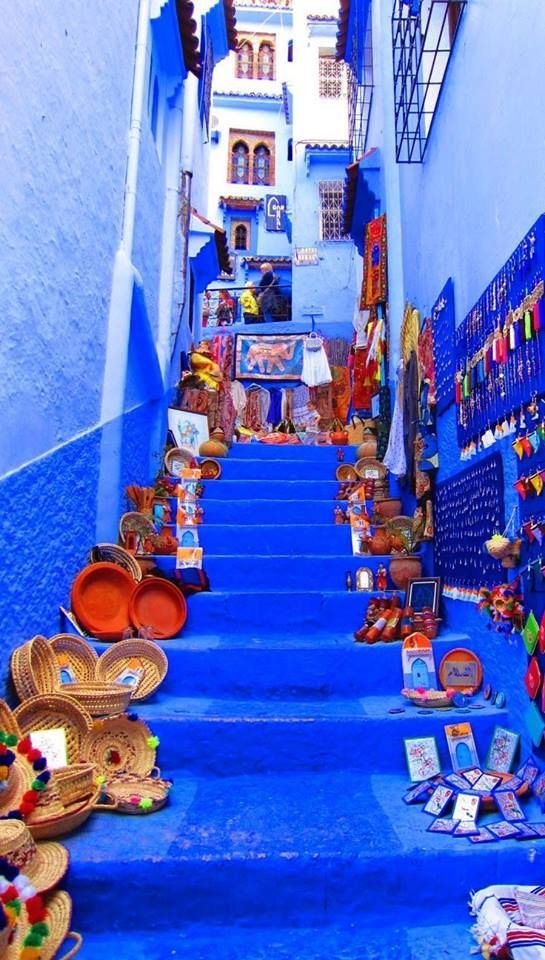
    11. Fes and Meknes

    With more time, Fes and Meknes make a rich cultural extension. Fes has the oldest living medina in Morocco, with tanneries, madrasas and craft quarters. Meknes is calmer, with grand gates, old stables and a lovely main square.

    The drive from the blue city to Fes takes around four hours, so we advise a night or two there. See our tour idea 4 days tour from Fes to Merzouga if you want to continue to the desert.

    For travellers with a full week, Fes is the best long answer to what to see around Chefchaouen, because the old city feels like another world.

    12. Volubilis

    Volubilis is a large Roman site near Meknes, with mosaics, columns and an arch among open fields. It is listed by UNESCO and shows a very different side of Moroccan history. Go in the morning or late afternoon for softer light and fewer people.

    It is an easy stop between the blue city and Fes if you leave early. A local guide adds stories about the people who lived here and about the craft of the mosaics. Wear a hat, bring water and allow about two hours on site.

    A Simple Two Day Plan Around the Blue City

    On day one, spend the morning in Akchour, return for lunch in town and end with sunset at the Spanish Mosque. On day two, visit Tetouan in the morning, enjoy the coast for lunch and continue to Tangier or return to town.

    This plan answers what to see around Chefchaouen with a good balance of nature, history and sea. If you have more time, add Ouezzane or Talassemtane, and keep one slow evening free in the medina.

    Family and Photography Tips

    Families should choose short walks, shaded rests and early starts. Akchour has easy sections near the river, and Tetouan and Asilah are comfortable for children. Carry water, snacks and sun protection.

    Photographers will love the early light in the mountains and the blue doors of the old town. Ask before photographing people, and do not use drones without checking local rules. Good light and patience matter more than expensive gear when you decide what to see around Chefchaouen.

    Getting Around the Region

    A private driver-guide is the easiest way to see several places in one day. The roads are good on main routes, but mountain roads are narrow and winding. Public buses and shared taxis run between towns, but they are slower and less flexible.

    See 2 days from Casablanca to Chefchaouen and 4 days from Casablanca to Chefchaouen for ready routes with transport included.

    Best Season to Explore

    Spring and autumn are best for walking, with mild weather and clear light. Summer is warm and good for the coast and for cool mountain pools. Winter brings rain and mist, but also quiet trails and green hills.

    Whatever the month, check the weather before you plan what to see around Chefchaouen outdoors. Mountain weather changes quickly, so carry a light layer. For longer planning, read travel to Morocco 2027.

    Common Mistakes to Avoid

    The most common mistake is trying to see too much in one day. The roads are slow, and the best moments need time. Another is starting late for hikes, which leaves little daylight for the return.

    Others include wearing poor shoes, forgetting water, ignoring local customs and skipping a local guide on long trails. A realistic plan makes the question what to see around Chefchaouen much easier to answer, and it keeps the trip relaxed.

    What to See Around Chefchaouen for Hikers

    Hikers have more choice here than in most Moroccan towns. Akchour, the Bridge of God and the Talassemtane ridges give routes from easy to hard. Some paths follow rivers, and others climb through forest to open views.

    If you love walking, plan what to see around Chefchaouen over two or three days. Day one can be a gentle river walk, day two a long trek with a guide and day three a rest in the medina. Good boots, a map, a charged phone and a light rain jacket are the basics.

    Tell your host where you go and when you plan to return. Mountain weather changes fast, and a local guide gives safety, stories and access to quiet trails.

    What to See Around Chefchaouen for History Lovers

    For history, build your plan around Tetouan, Ouezzane, Tangier, Meknes, Fes and Volubilis. Together they show Andalusian, Arab, Berber, Roman and Atlantic port history in one region. Each place has its own mood, food and craft.

    The best way to enjoy what to see around Chefchaouen for history is a slow route with a night in each main city. A private guide helps you understand the stories behind gates, courtyards and old walls, and it saves time at busy sites.

    Read where is Morocco if you want a clear picture of how the north connects with the rest of the country.

    Local Food to Try Around the Blue City

    The region is known for goat cheese, olive oil, honey and fresh bread. In Tetouan, try local pastries and fish. In Tangier and Asilah, try grilled fish and seafood. In the mountains, try simple soups, tagines and mint tea.

    Food is a big part of what to see around Chefchaouen, because every town has its own taste. Eat where locals eat, choose busy places and drink bottled or filtered water. For safety notes, read what not to eat in Morocco.

    Shopping and Crafts on the Way

    Each stop has its own craft. The blue city is known for wool blankets and soap, Tetouan for leather and woodwork, Fes for ceramics and brass, and Asilah for art. Compare quality, bargain gently and buy only what you will use.

    Shopping stops make a day trip richer, and they support local families. For ideas, read what can you bring back from Morocco. Add a few craft stops when you decide what to see around Chefchaouen, and you will return with memories and useful gifts.

    Where to Stay for Day Trips

    Most travellers stay in the blue city and do day trips from there. A guesthouse in the medina is the best base, with easy walking and calm evenings. For Tangier and Asilah, a night on the coast saves driving.

    If you plan Fes and Volubilis, sleep in Fes or Meknes and continue to the desert or to Marrakech. A good base makes your plan for what to see around Chefchaouen less tiring and more flexible.

    Safety and Respect on the Road

    The region is welcoming, and normal care is enough. Keep your valuables close, use licensed drivers and avoid driving mountain roads at night. Dress modestly in small towns, ask before taking photos and be polite in shops and markets.

    On trails, stay on marked paths, carry water and respect farmland. A little attention keeps every trip smooth, and it helps you enjoy what to see around Chefchaouen without stress. For general advice, see is Morocco safe to travel.

    Final Ideas for Your Route

    If you have one day, choose Akchour or Tetouan. If you have two days, add the coast or Ouezzane. If you have three or four days, add Tangier, Asilah or Fes. The more time you have, the more slowly you can enjoy each place.

    Whatever you choose, keep a free evening in the blue city. After a day on the road, a quiet tea in the main square is a perfect end to what to see around Chefchaouen. Our team can prepare a private route, with a driver-guide and stays that match your pace.

    To sum up, what to see around Chefchaouen depends on your time, your energy and your taste. Nature fans should pick Akchour and Talassemtane, culture fans should pick Tetouan and Fes, and sea lovers should pick Asilah and the coast. Ask yourself what to see around Chefchaouen that matches your style, and build the plan from that one answer.

    Many guests tell us that the best part of what to see around Chefchaouen was the quiet time between places, such as a tea on a mountain terrace or a slow lunch in a village. Leave room for those moments.

    Frequently Asked Questions

    What to see around Chefchaouen?

    Akchour and its waterfalls, the Talassemtane mountains, Tetouan, Ouezzane, Tangier, Asilah, the Mediterranean coast, Fes, Meknes and Volubilis are the best places near the blue city.

    What is the best day trip from Chefchaouen?

    Akchour is the best nature trip, and Tetouan is the best cultural trip.

    Can I visit Tangier from Chefchaouen in one day?

    Yes, but it is a long day. We suggest a night in Tangier if you want to enjoy it.

    Is Akchour hard to walk?

    The first section is easy, while the Bridge of God route is longer and more demanding.

    Do I need a guide?

    For easy visits, no. For long hikes and mountain villages, a local guide is a good idea.

    Can you plan my trip?

    Yes. Send your dates and the number of travellers on WhatsApp at +212 682 832 176 or through our contact page, and we will arrange a private plan.

    Plan Your Trip Around the Blue City With Us

    Tell us your dates and interests. We arrange private driver-guides and a calm route that answers what to see around Chefchaouen.

    Request a Free QuoteWhatsApp Us

  • What to Do in the Blue City of Morocco? Ultimate Guide to 12 Best Things

    What to Do in the Blue City of Morocco? Ultimate Guide to 12 Best Things

    Chefchaouen · The Blue City · Rif Mountains · Updated 2026

    What to Do in the Blue City of Morocco? Ultimate Guide to 12 Best Things

    Blue lanes, mountain walks, crafts, cheese and quiet sunsets in Chefchaouen

    What to do in the blue city of Morocco? The blue city is Chefchaouen, a small mountain town in the Rif. The best things to do are walking the blue medina, relaxing in Plaza Uta el-Hammam, visiting the kasbah, watching sunset at the Spanish Mosque, shopping for weaving and cheese, and hiking in the hills nearby.

    This guide explains what to do in the blue city of Morocco in 12 clear ideas, with timing, a two day plan, food, shopping, day trips and respectful travel tips. We do not give prices, because they change, and we focus on calm, practical advice.

    If you only have a short time, read what to do in one day in Chefchaouen. To understand the colour, read why are the houses in Chefchaouen blue.

    What to Do in the Blue City of Morocco? The Short Answer

    Quick answer: walk the medina early, have coffee in the main square, see the kasbah, buy local crafts, eat cheese and bread, walk to the spring and the Spanish Mosque, and add a hike or day trip if you have a second day.
    Activity Time needed Best moment
    Blue lanes 2 to 3 hours Early morning
    Kasbah and museum 1 hour Late morning
    Craft shopping 1 to 2 hours Afternoon
    Ras el-Maa 1 hour Afternoon
    Spanish Mosque 1.5 hours Sunset
    Hike or Akchour Half to full day Morning
    What to do in the blue city of Morocco: Chefchaouen in the Rif mountains
    Chefchaouen sits on a mountain slope in northern Morocco.

    1. What to Do in the Blue City of Morocco: Walk the Blue Lanes

    The main answer is the simplest: walk. The medina is small, and the blue lanes, steps and doors are the reason people come. Start early, when the streets are quiet and the colour looks soft.

    Enter through the main gate and follow any lane that looks inviting. You will pass flowerpots, craft shops, cats on steps and small squares. It is hard to get truly lost, and the best views often appear by chance.

    Tip: wear shoes with good grip. Blue steps can be smooth and steep, especially after rain.
    What to do in the blue city of Morocco: blue walls and steps in the medina
    Blue walls and steps in the old medina.

    2. Relax in Plaza Uta el-Hammam

    The main square is the heart of town. Cafes and restaurants surround it, and the kasbah and the Great Mosque stand on its sides. It is a good place to sit with mint tea, to watch daily life and to plan your next steps.

    When people ask what to do in the blue city of Morocco in the middle of the day, the best answer is often to sit here. Order a juice or a coffee, enjoy the shade and let the town go by.

    3. Visit the Kasbah and Museum

    The kasbah is a small fortress with a quiet garden, a tower and a museum. It gives a view over the roofs and the mountains and a short introduction to the history of the town and the region.

    Plan about one hour. Check opening times before you go, because they can change. The garden is a calm place to rest when the lanes are busy.

    4. Climb to the Spanish Mosque for Sunset

    The Spanish Mosque is on a hill east of the town. The walk takes about 30 to 40 minutes on a clear path, and the view at sunset is one of the best in the Rif. The whole town glows in blue and gold.

    Go about an hour before sunset, bring water and a light jacket and come down before full dark. For many guests, this is the most memorable answer to what to do in the blue city of Morocco.

    What to do in the blue city of Morocco: view of the town from above
    The town seen from above at the end of the day.

    5. Walk to Ras el-Maa

    Ras el-Maa is a spring at the edge of the medina, where water comes from the mountain into a stream. Cafes sit along the water, and locals still gather here. It is cool, shaded and perfect for a pause in the afternoon.

    Walk upstream a little to see old washing places and small paths into the hills. It is an easy and free activity, and it shows another side of the town beyond the blue walls.

    6. Discover Weaving and Local Crafts

    Chefchaouen is known for woven blankets, wool items, soap, leather and ceramics. Many shops are small family workshops, and some let you watch weavers at work. Ask politely, and you may see a loom in action.

    For more ideas, read what cheap things should I buy in Morocco. Compare quality, bargain gently and choose items that you will really use at home.

    7. Taste Goat Cheese, Bread and Local Food

    The area is famous for goat cheese, olive oil, honey and fresh bread. Try cheese with bread and olives for breakfast or lunch, and add a bowl of soup, a tagine or a plate of grilled vegetables.

    Food is a big part of what to do in the blue city of Morocco, because meals are slow and relaxed. Choose busy places, and for safety tips read what not to eat in Morocco.

    8. Relax in a Hammam or Spa

    After walking steep lanes, a traditional hammam is a lovely treat. Many hotels and local bathhouses offer steam, scrub and massage. Ask your hotel for a trusted place, and choose a comfortable time.

    It is a good activity on a rainy afternoon or after a hike. Agree what is included before you start, and bring a swimsuit or follow the local advice.

    9. Hike or Drive to Akchour

    Akchour is a mountain area about 30 to 40 minutes from the town, with a river, pools, waterfalls and walking trails. Many visitors walk to a famous rock arch known as the Bridge of God, though the route can be tiring and the paths change.

    It is the best answer to what to do in the blue city of Morocco for active travellers. Start early, bring water and good shoes, and check conditions with your host or guide before you go.

    10. Explore Talassemtane National Park

    The mountains around Chefchaouen are part of a protected natural area, with forests, ridges and villages. A guided walk is a good way to see the landscape and to learn about plants, birds and rural life.

    Choose a local guide who respects the area, take your litter with you and follow the path. Nature is as important as the blue walls when you decide what to do in the blue city of Morocco with extra time.

    11. Take a Day Trip to Tetouan or the Coast

    With extra time, you can visit Tetouan, a historic city with a white medina and Andalusian heritage, or head to the Mediterranean coast. These trips make a good change from the mountains.

    The medina of Tetouan is on the UNESCO World Heritage list for Morocco. A private driver-guide makes the day easy, and you can return in the evening or continue to Tangier.

    12. Photography and Slow Moments

    Photography is a joy here. The best light is early morning and late afternoon, and the best shots often include a person, a door or a staircase. Ask permission before photographing residents, and do not block narrow lanes.

    Not every moment needs a camera. A quiet tea, a conversation with a shopkeeper and a slow walk are also part of what to do in the blue city of Morocco.

    What to do in the blue city of Morocco: a blue lane with doors and plants
    A blue lane with painted doors and plants.

    A Two Day Plan for the Blue City

    Two days is the ideal time. On day one, walk the lanes, visit the square and the kasbah, enjoy a long lunch, explore crafts and finish at the Spanish Mosque. On day two, hike to Akchour or the hills, have lunch in a small village and rest with a hammam.

    This plan answers what to do in the blue city of Morocco without hurrying. If you only have one day, use what to do in one day in Chefchaouen as your guide.

    How to Get to the Blue City

    Chefchaouen is about two to three hours from Tangier, around four hours from Fes and about five hours from Casablanca by road. A private driver-guide is the most comfortable way to arrive, and you can stop at viewpoints.

    See 2 days from Casablanca to Chefchaouen and how to organize a trip to Morocco for ready routes. Park outside the medina and carry only a small bag into the lanes.

    Best Season to Visit

    Spring and autumn are best, with mild weather and clear light. Summer is warm, with cooler evenings in the mountains. Winter can be misty and wet, but it is quiet and atmospheric.

    Whatever the month, plan what to do in the blue city of Morocco around the weather. Mornings are best for walking, and afternoons for cafes and crafts. See travel to Morocco 2027 for planning notes.

    Common Mistakes to Avoid

    The most common mistake is visiting for only an hour, between two long drives. Another is coming at midday in peak season, when the lanes are crowded. A third is wearing smooth shoes on steep steps.

    Others include ignoring local customs, taking photos of people without asking and buying from the first shop. A clear plan and a slow pace solve most problems, and they make the question what to do in the blue city of Morocco much easier to answer.

    Finally, remember that this is a living town. Be kind, quiet and curious.

    What to Do in the Blue City of Morocco When It Rains

    Rain is common in the Rif, especially from late autumn to early spring. The good news is that the town is still lovely in wet weather. The blue walls look deeper, the streets are quiet and the cafes feel warm and cosy.

    If you are wondering what to do in the blue city of Morocco on a wet day, start with a long breakfast, then visit the kasbah museum, browse the craft shops and book a hammam. Many shops and cafes have covered terraces, so you can watch the rain with a hot mint tea.

    Bring a light waterproof jacket and shoes with grip. Steps and lanes can be slippery, and a small umbrella is useful for short walks between stops.

    What to Do in the Blue City of Morocco With Family

    Chefchaouen is a relaxed place for families. The lanes are mostly free of cars, children enjoy the colours and the cats, and the main square is a safe place to rest. Keep the pace slow and plan short walks with many breaks.

    For families, the best ideas for what to do in the blue city of Morocco are an easy walk to Ras el-Maa, a visit to the kasbah garden, a craft stop where children can see wool and weaving, and a picnic with local bread and cheese. Older children may enjoy a short hike in the hills with a guide.

    Tip: carry a small bag with water, snacks and a hat. Some steps are steep, so a light baby carrier is easier than a stroller.

    What to Do in the Blue City of Morocco as a Couple

    Couples often come for the calm mood. Plan a slow morning in the lanes, a long lunch with a view, a late afternoon at Ras el-Maa and a sunset walk to the Spanish Mosque. In the evening, choose a rooftop terrace for dinner and tea.

    When couples ask what to do in the blue city of Morocco for a romantic stay, we suggest a small guesthouse inside the medina, a quiet breakfast on the terrace and one unhurried day with no fixed plan. The best moments here are simple ones.

    What to Do in the Blue City of Morocco as a Solo Traveller

    The town is friendly and compact, which makes it a good place for solo travellers. Walk in daylight, keep your phone and wallet close and ask your host for tips. Evenings in the main square are lively, and many guesthouses have common terraces where you can meet other guests.

    If you travel alone, a half day guided walk is a good answer to what to do in the blue city of Morocco. You will learn about the history, the craft traditions and the hidden corners, and you will feel more at ease in the lanes. For general safety advice, see is Morocco safe to travel.

    Where to Stay in the Blue City

    The best choice is a small guesthouse (riad or dar) inside the medina. You wake up among the blue lanes, and you can walk to the square, the kasbah and the spring in a few minutes. Many have roof terraces with views of the mountains.

    If you prefer easy parking and modern comfort, choose a hotel at the edge of the old town. Either way, book early for spring and autumn weekends. A good base makes everything easier, and it is the first step in deciding what to do in the blue city of Morocco without stress.

    Food Ideas Beyond Cheese and Bread

    Besides cheese, try bissara (a warm bean soup), harira in the evening, grilled meat or vegetable tagines and fresh fruit juices. Breakfast with olive oil, honey, bread and local cheese is one of the best meals in the Rif.

    Food is also part of what to do in the blue city of Morocco, because tables with a view are everywhere. Ask your host for a family kitchen or a small cooking session, where you learn to prepare a tagine and eat it together.

    Practical Tips Before You Go

    Carry small cash for cafes and craft shops, because some small places do not accept cards. Dress modestly in the medina, and ask before you take photos of people. Be patient in shops, and say a polite no if you do not want to buy.

    Wear comfortable shoes, bring a light jacket for evenings and keep water with you. Mobile signal is usually good in town, but it can be weak on mountain trails. Download a map before a hike, and tell your host where you are going.

    These small habits make your visit smoother and more respectful. They also help you enjoy what to do in the blue city of Morocco at a relaxed pace.

    Combine the Blue City With Other Cities

    Chefchaouen fits well into a longer route. Many travellers combine it with Tangier, Fes, Meknes and Volubilis, or with a trip from Casablanca. A few days in the mountains also balance a trip that includes Marrakech and the desert.

    See what to do in 3 days in Morocco and Morocco itineraries for route ideas. Our team can build a private plan, so that your days in the blue city feel calm and not rushed.

    Whatever route you choose, keep at least one night in town. The quiet evening and the early morning are the best answers to what to do in the blue city of Morocco.

    Travel Responsibly in the Blue City

    Chefchaouen is a living town, and small choices make a big difference. Buy from local families, drink water from refillable bottles, take your litter with you on trails and respect private doors and homes. Do not climb on walls or enter courtyards without invitation.

    Visit early or late to avoid crowds, and give space to residents in narrow lanes. Responsible travel keeps the town beautiful, and it is part of every good plan for what to do in the blue city of Morocco.

    More Ideas: What to Do in the Blue City of Morocco Off the Beaten Path

    When the main lanes feel busy, small choices lead to quieter moments. Walk up to the upper neighbourhoods, where families still live in plain blue and white houses. Sit on a bench near the old walls and watch the light change on the mountains.

    Another good idea for what to do in the blue city of Morocco is to visit on a weekday morning. Shops are opening, bread is coming out of the oven and the lanes are almost empty. You will see local life at its most natural.

    Look for small details too. Painted doors, carved windows, old fountains and flowerpots on every step make the town a gallery without walls. A slow walk of one hour can show more than a fast tour of three.

    A Simple Half Day Walk

    Start at the main gate, walk to the square, take the lane to the kasbah, then follow the water to Ras el-Maa. Finish with tea by the stream. This easy loop is a perfect answer to what to do in the blue city of Morocco when time is short.

    A Full Day for Active Travellers

    Leave early for Akchour, walk the main trail, rest by the river and return for a hammam. In the evening, climb to the Spanish Mosque for sunset. It is a full day, but it shows the best of the mountains and the town together.

    A Slow Day for Rest

    Spend the morning on a terrace, visit one or two craft shops, eat a long lunch and read or write in the kasbah garden. Many guests tell us that this quiet day was their favourite part of the trip, and it proves that what to do in the blue city of Morocco can be very little.

    Whichever style you prefer, the town rewards patience. Plan less, walk slowly and let the blue lanes lead you. If you want help with transport, guides or a private route, our team will prepare what to do in the blue city of Morocco around your dates and your pace.

    Frequently Asked Questions

    What to do in the blue city of Morocco?

    Walk the blue lanes, relax in the main square, visit the kasbah, shop for weaving, taste local cheese, walk to Ras el-Maa and watch sunset at the Spanish Mosque. Add a hike if you have a second day.

    Which city is the blue city of Morocco?

    Chefchaouen, a mountain town in the Rif region of northern Morocco.

    How many days do I need?

    One day covers the main sights, and two days let you hike and relax.

    Is Chefchaouen worth visiting?

    Yes, for its colours, calm mood, crafts and mountain views.

    How do I get there?

    By private driver-guide, which is the easiest, or by bus from nearby cities.

    Can you help me plan my trip?

    Yes. Send your dates and the number of travellers on WhatsApp at +212 682 832 176 or through our contact page, and we will arrange a private plan.

    Plan Your Trip to the Blue City With Us

    Tell us your dates and interests. We arrange private driver-guides, comfortable stays and a calm route that answers what to do in the blue city of Morocco.

    Request a Free QuoteWhatsApp Us

  • Why Are the Houses in Chefchaouen Blue? Ultimate Guide to 7 Best Theories

    Why Are the Houses in Chefchaouen Blue? Ultimate Guide to 7 Best Theories

    Chefchaouen · The Blue City · Rif Mountains · Updated 2026

    Why Are the Houses in Chefchaouen Blue? Ultimate Guide to 7 Best Theories

    Sky, spirit, summer heat, insects and tourism: the stories behind the colour

    Why are the houses in Chefchaouen blue? There is no single proven answer. The most common stories say the blue represents the sky and heaven, was brought by Jewish families who settled in the town, keeps houses cool in summer, helps repel insects, or was later encouraged to attract visitors. Most likely, several reasons grew together over time.

    This guide explains why are the houses in Chefchaouen blue through 7 popular theories, what is known and unknown, how the walls are painted and how to visit the town respectfully. We avoid prices and made-up facts, and we say clearly when a story is a tradition and not a proven record.

    To plan your visit, read what to do in one day in Chefchaouen and where is Morocco.

    Why Are the Houses in Chefchaouen Blue? The Short Answer

    Quick answer: nobody can prove one reason. Locals and historians mention the sky and spirituality, Jewish traditions, cooler walls, insect control and a later wish to keep the town beautiful for visitors. The colour is now the identity of Chefchaouen.
    Theory The idea How certain is it?
    Sky and heaven Blue reminds people of God and the sky A popular tradition
    Jewish families Settlers brought a custom of blue paint Often told, hard to prove
    Cool walls Light blue lime wash reflects heat Plausible
    Insects Blue wash may repel mosquitoes Common belief
    Tourism Colour kept and renewed for visitors Likely in recent years
    Community pride Neighbours repaint together Observed today
    Why are the houses in Chefchaouen blue: the blue city in the Rif mountains
    The blue town of Chefchaouen on its mountain slope.

    About Chefchaouen and Its History

    Chefchaouen sits in the Rif mountains in northern Morocco, and its history helps explain why are the houses in Chefchaouen blue. The town was founded in the 15th century as a fortress, and later many Muslim and Jewish families arrived from Andalusia, bringing architecture, crafts and food that you can still notice today.

    When visitors ask why are the houses in Chefchaouen blue, they often assume there is a simple written record. In fact, most explanations come from oral stories, local memory and travel writing, so they should be read as traditions and not as proven facts.

    The medina is small, with steep lanes, stairs and arches. It is easy to walk, and the blue colour gives it a calm, cool mood, even on bright days.

    1. Blue as the Colour of Sky and Heaven

    One popular explanation of why are the houses in Chefchaouen blue is spiritual. Blue is the colour of the sky and the sea, and many cultures link it to peace, protection and the divine. People say the walls remind residents of heaven and God.

    This idea is easy to feel when you walk the lanes at dawn, when the light is soft and the walls look like a calm lake. It is not a written rule, but it fits the quiet mood of the town.

    Tip: ask your guide or host what the colour means to them. Personal answers are often the most interesting.

    2. The Story of Jewish Families and Blue Paint

    A very common story says that Jewish families who settled in Chefchaouen, including refugees who came in the 20th century, began painting walls blue. In Jewish tradition, blue is linked with the sky, with divine presence and with a thread dyed blue in ritual clothing.

    Why are the houses in Chefchaouen blue according to this story? Because the community brought a custom, and neighbours of all faiths later adopted the colour. Historians do not all agree on the dates or the details, and some say the town was blue earlier, or later, than the story suggests.

    It is wise to present this as a tradition. It shows the mixed heritage of the town, where several communities lived side by side.

    Why are the houses in Chefchaouen blue: blue steps and walls in the medina
    Blue stairs and walls in the old medina.

    3. Blue to Keep Houses Cool

    Another answer to why are the houses in Chefchaouen blue is practical. Lime wash is a traditional wall finish in many warm countries, and light colours reflect sunlight. Pale blue can look cooler than dark paint, and lime wash also helps walls breathe.

    The mountain climate here is milder than in the plains, but summers can still be hot, which is why many people link the climate to why are the houses in Chefchaouen blue. Light-coloured walls in narrow lanes help the town feel fresh. This explanation is simple and believable, though it does not prove why blue was chosen over white.

    4. Blue and Insects

    A frequent belief says the blue colour helps repel mosquitoes and other insects. Some accounts say lime wash was mixed with a mineral additive that insects dislike. Locals mention it often, and many visitors repeat it.

    Why are the houses in Chefchaouen blue if the insect idea is true? Because the wash had a practical use, and the colour became a habit. Still, there is no strong public evidence that blue itself stops insects, so treat it as a popular belief.

    Whatever the truth, a clean lime-washed wall is healthy and bright, and it is easy to renew every year.

    5. Tourism and the Image of the Town

    In recent decades, the blue town has become famous around the world. Photographs, travel blogs and films spread its image, and many residents and shops keep the colour fresh because visitors love it.

    So why are the houses in Chefchaouen blue today? Partly because blue is now the brand of the town. Some owners repaint to keep the streets beautiful, and local authorities support the tradition. This does not mean the colour is fake, only that it is cared for, like a living heritage.

    Why are the houses in Chefchaouen blue: a blue lane with doors and plants
    A blue lane with painted doors and plants.

    6. Community Pride and Daily Care

    Residents often paint their own walls and steps, sometimes together with neighbours. A fresh coat of lime wash brings light into narrow lanes, and people like to keep their street clean and pretty.

    This daily care is part of why are the houses in Chefchaouen blue year after year. Colour is not only history, it is also a habit of the community. When you see someone sweeping a step or repainting a wall, you are seeing the tradition alive.

    7. A Mix of Reasons, Not One Secret

    The most honest answer to why are the houses in Chefchaouen blue is that several reasons overlap. Spiritual meaning, community traditions, practical use and modern pride may all play a part.

    That is why guides, hosts and shop owners often give different answers. Each one is a piece of the story. Listen kindly, compare what you hear and enjoy the diversity of explanations.

    How the Walls Are Painted

    Traditional walls are painted with lime wash, a mix of slaked lime, water and pigment, and this craft is a practical part of why are the houses in Chefchaouen blue. It is applied by brush in several thin coats. Lime wash fades with sun and rain, so houses need renewing regularly.

    Today, some owners use modern paints, and the shades vary from sky blue to deep indigo. Steps, doorways and walls may have different tones, which gives the lanes their layered look.

    If you are curious, ask a local painter or craft seller how the colour is made. Many are happy to show tools and explain the process.

    The Many Shades of Blue

    Look closely and you will see more than one blue. Some walls are pale turquoise, others are soft violet-blue, and some are deep, almost navy. The light changes them during the day, from cool morning tones to warm evening colours.

    Doors, windows and steps are often accented with white, green or yellow. Flowerpots and hanging plants add contrast. This is part of why are the houses in Chefchaouen blue but never boring.

    Are There Other Blue Towns?

    Yes. Several places in the world have blue-painted houses, for different reasons, and Chefchaouen is the best known in Morocco, so the question why are the houses in Chefchaouen blue often leads to comparisons. Comparing them shows that blue has been chosen for beauty, faith and climate in many cultures.

    Within Morocco, nothing else matches the full blue medina. For more places to visit, browse all Morocco tours and read how to organize a trip to Morocco.

    Visiting the Blue City

    Chefchaouen is about two to three hours from Tangier, around four hours from Fes and about five hours from Casablanca by road. A private driver-guide is the easiest way to arrive. See 2 days from Casablanca to Chefchaouen for a ready route.

    Plan at least one day. Walk the medina in the morning, relax in the main square, visit the kasbah, taste local cheese and climb to the Spanish Mosque viewpoint for sunset. Knowing why are the houses in Chefchaouen blue makes every lane more meaningful.

    Wear comfortable shoes, because the stones are steep and smooth. Bring a light layer for the evening and a water bottle.

    Best Season to See the Blue

    Spring and autumn are the best seasons to see why are the houses in Chefchaouen blue, with clear light and mild weather. Early morning and late afternoon give the best colours, while midday can be bright and busy. After rain, the walls look deeper, and the town feels calm.

    Winter can be cool and misty, with fewer visitors. Summer is lively, with warm days and cool evenings. Check travel to Morocco 2027 for planning notes.

    Respect, Photos and Local Life

    Chefchaouen is a living town, not a film set. People live behind those blue doors, so keep your voice low, do not enter private doorways and ask before photographing residents. Dress modestly and greet people politely.

    Buy crafts from local sellers, eat in small family places and tip fairly. Responsible habits help keep the town beautiful for the next visitor, and they answer the question why are the houses in Chefchaouen blue with respect for those who maintain the colour.

    For general advice, read is Morocco safe to travel.

    Common Mistakes to Avoid

    The most common mistake is repeating one story as a fact. Another is arriving at midday and leaving before the best light. A third is walking in smooth shoes on steep stones.

    Others include photographing people without asking, climbing on walls and expecting an empty town in peak season. Plan early starts, slow walks and respectful photography.

    Finally, do not look only for the perfect picture. Sit in a cafe, talk with locals and enjoy the calm, because the best answer to why are the houses in Chefchaouen blue is often a feeling.

    Myths and Facts About the Blue City

    You may hear that the whole town was painted blue by a single decision or in one year. There is no clear proof of this. You may also hear that every house is blue, but some walls are white, green or natural stone, especially outside the old medina.

    Another myth is that the blue paint is only for tourists. Tourism helps today, but locals also keep the tradition for their own pleasure. The most useful answer to why are the houses in Chefchaouen blue is open and humble: we know the colour matters, and we know several reasons add up.

    If you want to go deeper, visit the kasbah museum, talk to craftspeople and read local history in the town.

    Why Are the Houses in Chefchaouen Blue? What Locals Say

    If you ask ten people why are the houses in Chefchaouen blue, you may hear ten answers. A shop owner may talk about family tradition. A guide may mention the sky. An older resident may remember the smell of fresh lime wash in spring.

    These conversations are part of the visit. Ask politely, listen without arguing and thank them for their time. You will learn more from a short chat in a lane than from a long article.

    Questions to Ask a Local Host

    Try simple questions: Who paints your street? How often do you renew the colour? Which shade do you like best? What did your grandparents say about why are the houses in Chefchaouen blue?

    Many hosts are proud to share. Some will show you old photographs, tools or a freshly painted wall. A small purchase or a tip is a kind way to say thank you.

    Take a Walking Tour

    A short walking tour with a local guide gives context to every corner. You learn where Andalusian families settled, why the lanes bend and which doors are the oldest. It is also a good way to understand why are the houses in Chefchaouen blue in different districts.

    Choose a guide who agrees the price and duration in advance, and who respects residents. Ask your hotel for a trusted name, or book with a private driver-guide who knows the town.

    A Simple Plan to See the Blue Town

    With one day, start early and keep the order simple. Walk the medina at 8:30, have coffee in the main square, visit the kasbah and garden, eat lunch with goat cheese and bread, walk to the spring at the edge of the town and finish at the Spanish Mosque for sunset.

    This plan gives you time to enjoy the colours and to think about why are the houses in Chefchaouen blue while you walk. For a full hour-by-hour version, read what to do in one day in Chefchaouen.

    If you have two days, add a hike, a slow breakfast and a visit to local weavers. The second morning in the quiet lanes is often the best part of the trip.

    Pair It With Other Cities

    Many travellers combine Chefchaouen with Tangier, Fes or Casablanca. The town works well as an overnight stop on the way between the coast and the imperial cities. See what can I see and do in Casablanca in one day if you begin on the Atlantic coast.

    Whatever route you choose, give the blue town enough time. People who rush often leave without feeling the mood, while those who stay slowly understand why are the houses in Chefchaouen blue in a deeper way.

    Blue as Culture, Not Only Colour

    For many residents, the colour is part of a shared identity. It appears on doors, steps, shop signs and craft products. Weavers, painters and photographers use it in their work, and visitors take it home in pictures and souvenirs.

    That is why the question why are the houses in Chefchaouen blue is never only about paint. It is about memory, community, faith, climate and pride, all expressed in a simple wash of colour.

    A Gentle Final Thought

    Next time you stand in a blue lane, look up and notice the sky between the walls. Whatever the original reason, the effect is calm and beautiful. That calm is the best answer to why are the houses in Chefchaouen blue, and it is a good reason to visit.

    If you want help planning the trip, send us your dates and interests. We arrange private driver-guides, comfortable stays and a pace that leaves time to enjoy every lane.

    Frequently Asked Questions

    Why are the houses in Chefchaouen blue?

    There is no single proven reason. Popular explanations include the sky and spirituality, Jewish traditions, cooler walls, insect control and the town’s later image for visitors.

    When did the town become blue?

    Accounts differ. Some stories point to the 20th century, but the exact date is not clearly documented.

    Is the whole town blue?

    Mostly the old medina. Other areas have white and natural colours.

    Is the blue paint repainted often?

    Lime wash fades, so many owners renew it regularly.

    What is the best time to see the colours?

    Early morning and late afternoon, in spring or autumn.

    Can you help me plan a visit?

    Yes. Send your dates and the number of travellers on WhatsApp at +212 682 832 176 or through our contact page, and we will arrange a private plan.

    Visit the Blue City With Us

    Tell us your dates and interests. We arrange a private driver-guide and a calm route, so you can enjoy the lanes and learn why are the houses in Chefchaouen blue on the spot.

    Request a Free QuoteWhatsApp Us